 Preview
 Send
Send Share
Share
 Details

 Download
 Similars
 X-Ray
X-Ray Diaporama
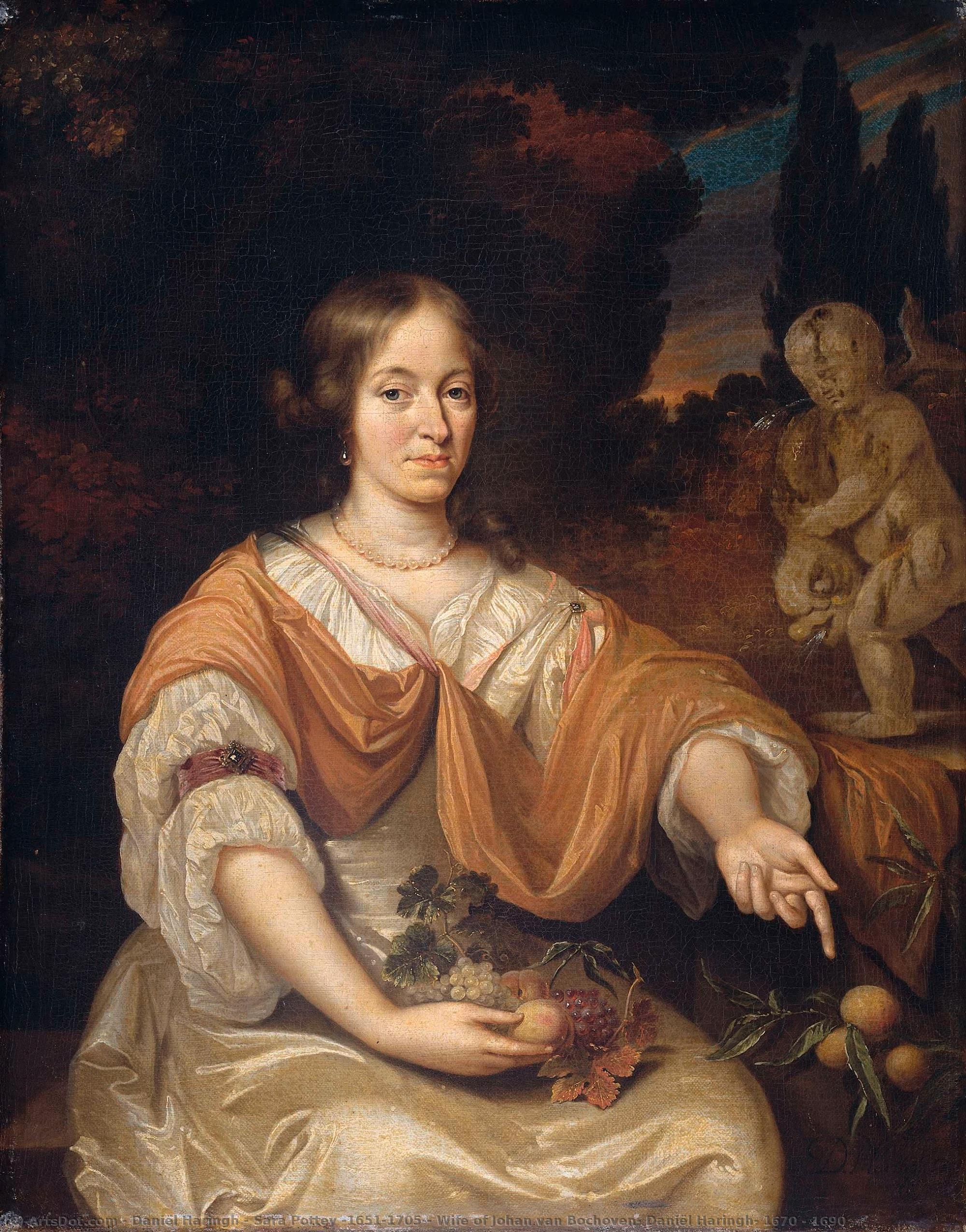
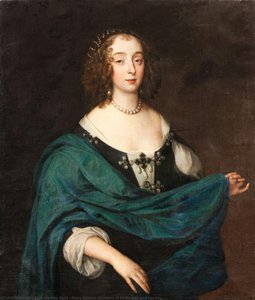
Sara Pottey (1651-1705), Wife of Johan van Bochoven, Daniël Haringh, 1670 - 1690
 1690
1690 61.0 x 49.0 cm
 Read More
Giclée / Art Print
Museum-quality giclée or canvas print with fast production and flexible finish options. ( Buy Hand Made Painting Buy Image)




































Pick from our preset sizes that match the artwork's original proportions.

You may enter your own dimensions to fit a specific frame or space. If your selected size does not match the original image's proportions, we will either crop the artwork or extend the image with a mirrored or solid-fill edge. A digital mockup will be sent for your approval before production begins.
Please note that the on-screen preview does not reflect the actual cropping or extension. Only the mockup will accurately show the final composition.
While custom sizes are available, we recommend selecting a dimension from the predefined list to preserve the original proportions.
Worldwide Delivery () in 2 weeks instead of standard 4/5 weeks. (4 September)

Free Worldwide Express Shipping

High-Quality Linen Canvas

Full Shipping Insurance

Customs Tax Refund Guarantee

True Color Matching Guarantee

60-Day Return Policy (Defects Only)

100% Money-Back Guarantee

Bulk Discount Offer
 Glass option is only available in size under 110 CM

Sara Pottey (1651-1705), Wife of Johan van Bochoven, Daniël Haringh, 1670 - 1690
Giclée / Art Print
Reproduction Size
-


Total Price
$ 63
Related Artworks








Artist Biography
The Quiet Elegance of Daniel Haringh: A Life in Portraits
Daniel Haringh, born in Leiden in 1641 and passing away in 1713, occupies a fascinating, if somewhat understated, position within the Dutch Golden Age painting tradition. He wasn’t a flamboyant innovator like Rembrandt or Vermeer, but rather a skilled and sensitive portraitist who captured the essence of his sitters with a refined technique and an air of quiet dignity. His life unfolded during a period of immense prosperity and artistic flourishing in the Netherlands, yet he carved out a niche for himself through meticulous observation and a dedication to representing the social fabric of his time. Haringh’s story is one of diligent apprenticeship, successful practice, and the subtle evolution of style within the established conventions of portraiture.Formative Years and Artistic Training
The details surrounding Haringh's early life remain somewhat sparse, typical for artists outside the immediate circle of celebrity. What we do know is that he began his artistic journey as a pupil of Arnold van Ravesteyn, a respected Leiden painter known for his historical scenes and portraits. This initial training likely instilled in Haringh a foundation in draftsmanship and composition. However, it was his subsequent apprenticeship with Caspar Netscher, beginning around 1664, that proved truly pivotal. Netscher, celebrated for his elegant portraiture of affluent families and refined depictions of everyday life, imparted to Haringh a distinctive style characterized by smooth surfaces, delicate coloring, and an emphasis on capturing the personality of the subject. This influence is readily apparent in Haringh’s early works, which often echo Netscher's sophisticated aesthetic. He joined the Confrerie Pictura in 1669, signifying his acceptance into the guild and establishing him as a professional artist within Leiden’s artistic community.A Portraitist of Middle-Class Society
Unlike some of his contemporaries who focused on grand allegorical paintings or dramatic biblical scenes, Haringh largely dedicated himself to portraiture—specifically, portraits of members of the prosperous middle class. His clientele consisted primarily of merchants, magistrates, and other prominent citizens of Leiden and surrounding areas. These were individuals eager to project an image of respectability, wealth, and social standing, and Haringh proved adept at fulfilling their desires. He wasn’t interested in ostentatious displays of grandeur; instead, his portraits are marked by a sense of intimacy and realism. His sitters are typically depicted in comfortable domestic settings, often surrounded by objects that signify their profession or status—a meticulously rendered book for a scholar, fine textiles for a wealthy merchant's wife. The interiors he created were not merely backdrops but integral parts of the composition, adding depth and narrative context to each portrait.Technique and Style: Echoes of Netscher and Beyond
Haringh’s technique was characterized by a remarkable smoothness of brushwork, achieved through careful layering of paint and a mastery of glazing. He employed a warm, luminous palette, favoring rich browns, reds, and golds that created an atmosphere of understated elegance. While deeply indebted to Netscher's influence, Haringh gradually developed his own distinctive style. His compositions often exhibit a greater sense of spatial depth than those of his teacher, and he demonstrated a particular skill in rendering textures—the sheen of silk, the gleam of metal, the softness of skin. His attention to detail was meticulous, yet never at the expense of capturing the individual character of his sitters. He wasn’t simply reproducing likenesses; he was striving to convey their inner lives and social positions through subtle gestures, expressions, and the carefully chosen details of their surroundings. The influence of Johannes Vermeer can be detected in some of his interior scenes, particularly in the quality of light and the precise rendering of domestic objects.Legacy and Historical Significance
Daniel Haringh’s legacy lies not in groundbreaking innovation but in the consistent quality and sensitivity of his work. He was a highly respected portraitist during his lifetime, attracting a loyal clientele who valued his ability to capture their likenesses with dignity and grace. While he didn't achieve the same level of fame as some of his more celebrated contemporaries, his paintings offer valuable insights into the social and cultural life of 17th-century Netherlands.- He trained a number of successful pupils
- Richard van Bleeck, Michiel Godijn, Abraham van Hoogstraten, and Dirk Kindt were among them.
- His works are now held in museums and private collections around the world.
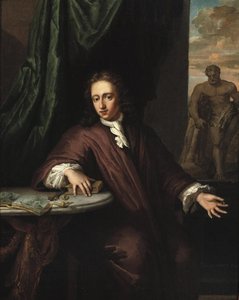
daniel haringh
1641 - 1713 , Netherlands
Quick Facts
- Artistic Movement Or Style: Portraiture, Interior scenes
- Artists Or Movements Influenced By This Artist: ['Richard van Bleeck']
- Artists Who Influenced This Artist:
- Arnold van Ravesteyn
- Caspar Netscher
- Date Of Birth: 1641
- Date Of Death: 1713
- Full Name: Daniel Haringh
- Nationality: Dutch
- Place Of Birth: Leiden, Netherlands