 Preview
 Send
Send Share
Share
 Details

 Download
 Similars
 X-Ray
X-Ray Diaporama
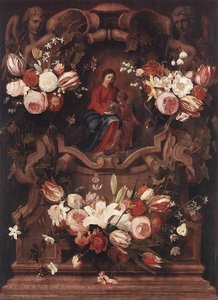
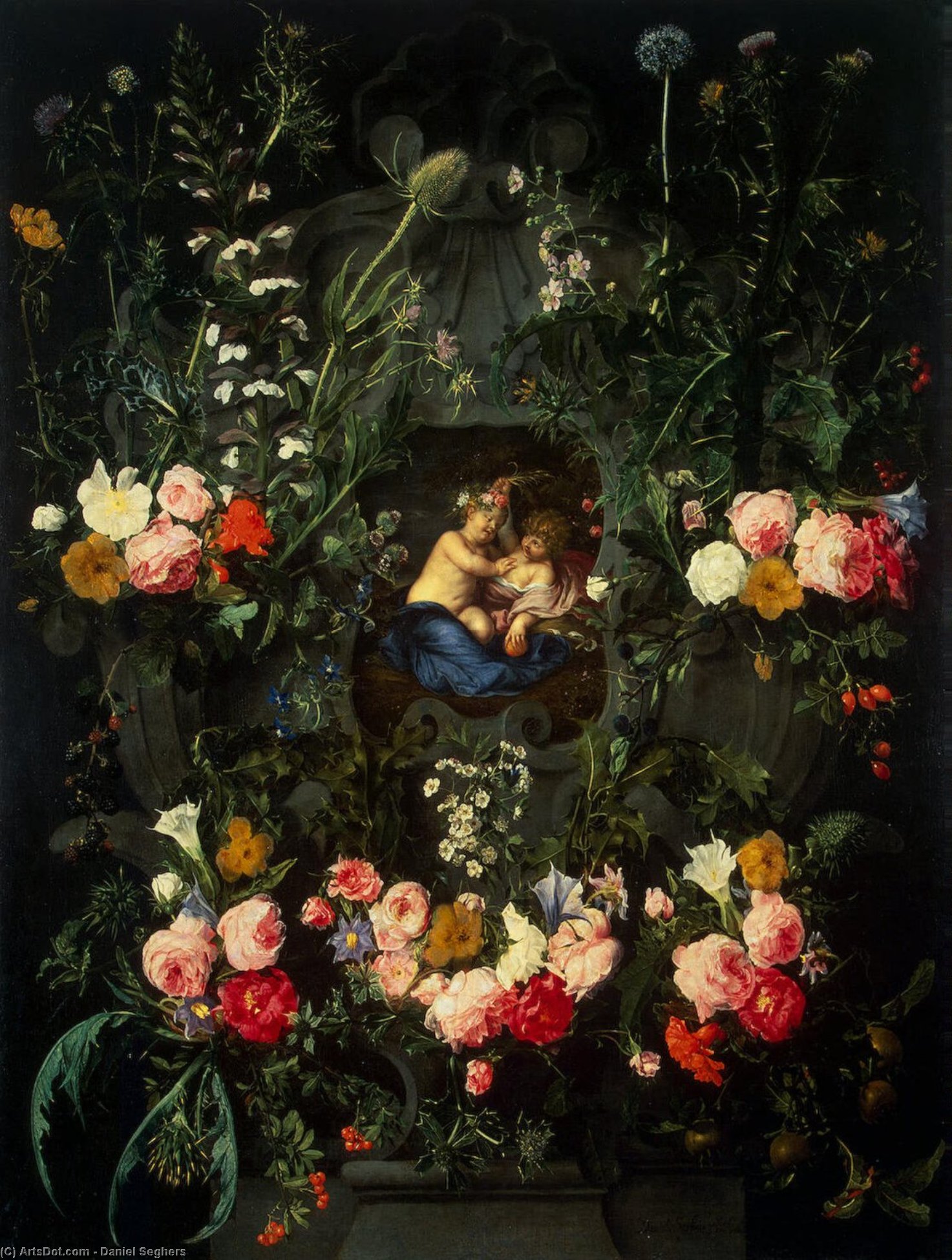
Garland of Flowers
 Oil On Canvas
- WallArt
- Baroque Floral Still Life
 1650
1650- Early Modern
 129.0 x 97.0 cm
 Hermitage Museum
 Read More
Hand Made Oil Reproduction
Hand-painted oil on canvas in your size and frame, made to order by our artists. ( Buy Print Buy Image)




P118B $10

P118H $10

P118W $10

P438Z $10

P508JH $12

P508YH $12

P805H $10

P805Z $10

P919BZ $10

P919G $10

P919XJ $10

P959ZH $10

P968JZ $12

W106C $8

W218G $10

W218JH $8

W218Y $10

W307PJ $10

W316G $10

W316PJ $8

W316Y $10

W398PJ $8

W4111J $10

W500HY $15

W500JH $15

W692G $12

W849H $8

W940BG $15

W953PJ $8




Pick from our preset sizes that match the artwork's original proportions.

You may enter your own dimensions to fit a specific frame or space. If your selected size does not match the original image's proportions, we will either crop the artwork or extend the painting with additional hand-painted elements. A digital mockup will be sent for your approval before production begins.
Please note that the on-screen preview does not reflect the actual cropping or extension. Only the mockup will accurately show the final composition.
While custom sizes are available, we recommend selecting a dimension from the predefined list to preserve the original proportions.
After order, ArtsDot.com team will email client for instructions and provide a mockup preview
Worldwide Delivery () in 3/4 weeks instead of standard 5 weeks. (25 August). No compromise on quality.

Free Worldwide Express Shipping

High-Quality Linen Canvas

Full Shipping Insurance

Customs Tax Refund Guarantee

True Color Matching Guarantee

60-Day Return Policy (Defects Only)

100% Money-Back Guarantee

Bulk Discount Offer
 Glass option is only available in size under 110 CM

Garland of Flowers
Reproduction Medium
Reproduction Size
-


Total Price
$ 263
Artwork Description
A Symphony of Faith and Floral Elegance
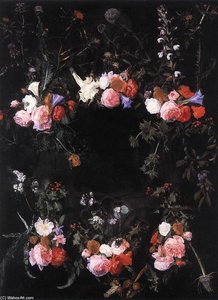
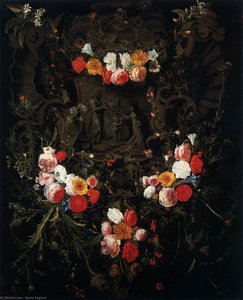
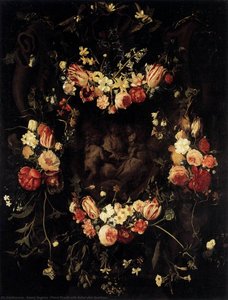
In the heart of the Flemish Baroque era, few artists captured the delicate intersection of earthly beauty and divine devotion as masterfully as Daniel Seghers. His masterpiece, Garland of Flowers, completed around 1650, serves as a breathtaking window into a world where botanical precision meets spiritual transcendence. This work is not merely a depiction of flora; it is a carefully orchestrated meditation on grace. As one gazes upon the canvas, they are transported to an idealized garden—a sanctuary of peace that echoes the legendary landscapes of Jan Brueghel the Elder. The painting presents a tender, sacred moment: the Virgin Mary cradling the infant Jesus, surrounded by a celestial presence. An angel hovers above the child, completing a composition that breathes tranquility and eternal serenity into the viewer's soul.
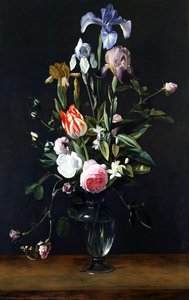
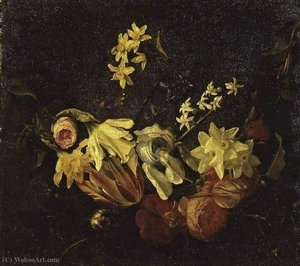
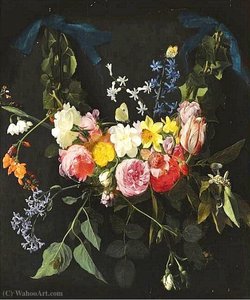
The visual narrative is anchored by an opulent tapestry of color and texture. Seghers meticulously renders a lush variety of blossoms, including the velvety petals of roses, the simple purity of daisies, and the intricate layers of carnations. Each flower is more than a decorative element; they are potent symbols within Christian iconography. The garden serves as a metaphor for Paradise, representing humanity's profound yearning for spiritual purity and the abundance of God's creation. For the collector or interior designer, this piece offers a profound sense of depth, where every petal carries the weight of historical meaning and religious reverence.
Mastery of Light and Technique
To behold Garland of Flowers is to witness the pinnacle of seventeenth-century oil painting technique. Seghers was a master of luminosity, employing a painstaking process of building up multiple layers of translucent glazes. This method allowed him to capture the subtle nuances of light as it filters through petals and rests upon the soft skin of the holy figures. His use of sfumato—the delicate blurring of edges and softening of contours—creates an ethereal, dreamlike atmosphere that lifts the scene from the physical realm into the divine. The interplay of light and shadow, or chiaroscuro, lends a three-dimensional realism to the blossoms, making them appear almost tactile, as if one could reach out and catch their fragrance.
This level of technical brilliance makes the artwork an extraordinary choice for high-quality reproductions. A hand-painted tribute to Seghers's work preserves that essential glow and the velvety texture of the oil medium, ensuring that the emotional impact remains undiminished. Whether placed in a grand gallery, a quiet study, or a sophisticated living space, the painting acts as a focal point of elegance. It invites contemplation and provides a sense of timelessness, making it an invaluable asset for those looking to infuse their surroundings with the sophisticated splendor of the Flemish Baroque tradition.
Related Artworks



Artist Biography
A Life in Flowers and Faith
Daniël Seghers, a name synonymous with the exquisite beauty of 17th-century Flemish flower painting, was more than just an artist; he was a man deeply entwined with the religious currents and artistic fervor of his time. Born in Antwerp in 1590, a city then pulsating with Renaissance energy, Seghers’s life unfolded against a backdrop of shifting allegiances and profound spiritual awakening. His early years were marked by upheaval – the death of his father, Pieter, and his mother's subsequent conversion to Calvinism prompted a relocation to the Dutch Republic around 1601, likely settling in Utrecht. This period, though shrouded in some mystery regarding his initial artistic training, undoubtedly laid the groundwork for his future mastery. By 1611, however, Antwerp beckoned once more, and Seghers formally entered the studio of Jan Brueghel the Elder within the prestigious Guild of Saint Luke. This apprenticeship proved pivotal, immersing him in the established conventions of Flemish painting and shaping his nascent style.Conversion, Collaboration, and Artistic Flourishing
A defining moment arrived in 1614 with Seghers’s re-conversion to Catholicism, a decision that irrevocably altered the course of his life and art. He embraced the Jesuit order in Mechelen, dedicating himself to a path of faith and service. While debate lingers regarding whether he was formally ordained as a priest, his commitment to the religious life profoundly influenced his artistic trajectory. His work became imbued with a spiritual depth, reflecting the Counter-Reformation’s emphasis on piety and emotional resonance. His talent quickly gained recognition, leading to commissions such as the two flower garland paintings created for the Cathedral of St. Michael and St. Gudula in Brussels in 1621. A sojourn to Rome between 1625 and 1627 proved invaluable. There, he collaborated with some of the era’s most celebrated painters, notably assisting Nicolas Poussin on religious paintings and contributing a flower garland for Cardinal Ludovisi's commission alongside Domenichino. This exposure to Roman artistic circles broadened his horizons and refined his technique before his return to Antwerp in 1627, where he continued painting prolifically until his death.The Art of the Garland: Innovation and Style
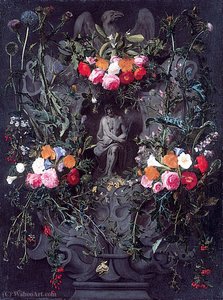
Seghers didn’t merely replicate the flower garland tradition established by Jan Brueghel the Elder; he elevated it to new heights of artistry and symbolism. While initially influenced by his master's style, Seghers gradually moved towards a more naturalistic depiction of flowers, evolving from uniform garlands to arrangements composed of diverse groupings. His later works are characterized by vibrant colors, a sculptural quality, and a dramatic interplay of light and shadow, with blossoms illuminated against dark backgrounds. He possessed a keen eye for detail, favoring locally-grown roses and tulips often depicted just before full bloom, capturing their ephemeral beauty. A distinctive innovation was his incorporation of stone cartouches as framing elements within his compositions, adding architectural depth and visual interest. Furthermore, Seghers created unique “pietà” garlands featuring thistles, thorns, and other thorny plants – poignant symbols of Christ’s suffering and a testament to his devout faith. He frequently employed oil on copper, a popular support for cabinet paintings prized for its smooth surface and ability to showcase intricate detail.Patronage, Legacy, and Enduring Appeal
The exquisite quality of Seghers's work attracted the attention of Europe’s most discerning patrons. Cardinal-Infante Ferdinand of Austria, Archduke Leopold Wilhelm of Austria, Queen Christina of Sweden, and King Charles II of England all sought his paintings for their collections. This aristocratic patronage not only secured his financial stability but also cemented his reputation as a leading artist of his time. Seghers was also a generous mentor, sharing his knowledge with several notable artists including Jan Philip van Thielen, Ottmar Elliger, Ignace Raeth, and Andries Bosman, ensuring the continuation of his artistic legacy. His contribution to the flower garland genre is undeniable; he transformed it from mere decoration into a vehicle for profound symbolic meaning and technical mastery. His meticulous attention to detail, vibrant color palettes, and innovative compositions secured his place as a pivotal figure in 17th-century Flemish art. Today, Daniel Seghers’s floral still lifes continue to captivate audiences with their timeless beauty and enduring spiritual resonance, offering a glimpse into a world where faith, artistry, and the fleeting splendor of nature converge.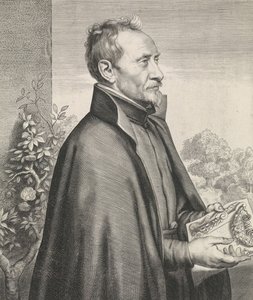
Daniel Seghers
1590 - 1661 , Belgium
Quick Facts
- Artistic Movement Or Style: Baroque, Still life
- Artists Or Movements Influenced By This Artist:
- Jan Philip van Thielen
- Ottmar Elliger
- Artists Who Influenced This Artist: ['Jan Brueghel the Elder']
- Date Of Birth: 1590
- Date Of Death: 1661
- Full Name: Daniel Seghers
- Nationality: Flemish
- Notable Artworks:
- Wreath of Pink Roses
- Flowers in a Glass Vase
- Garland of Flowers
- Place Of Birth: Antwerp, Belgium
Related Articles
Cultivating Paradise: A Historical & Artistic Exploration of Gardens in Painting
Explore the rich history of gardens in painting! Discover masterpieces from Renaissance to Impressionism & beyond. Learn about symbolism, artists like Monet & Klimt, and find your perfect artwork at ArtsDot.

The Dramatic Flourish: Exploring the Baroque Movement's Enduring Legacy in Art History
Explore the dramatic world of Baroque art! Discover iconic artists like Caravaggio & Rubens, defining techniques, and its lasting impact on art history. Expert insights for collectors & enthusiasts at ArtsDot.

The Visceral Stage: Exploring Dramatic Narratives & Emotional Intensity in Baroque Art
Explore the dramatic world of Baroque art! Discover iconic masters like Caravaggio & Rembrandt, their techniques, and the movement's lasting impact. Expert insights for collectors & enthusiasts at ArtsDot.

Baroque Masterpieces: 10 Paintings That Defined an Era |
Journey through the drama & grandeur of Baroque art! Explore 10 masterpieces by Caravaggio, Rembrandt, Rubens & more. Discover stunning oil paintings, rich colors & timeless stories. Find museum-quality reproductions at .

Baroque Drama: Bringing Opulence & Emotion into Contemporary Interiors
Explore the opulent world of Baroque interior design! Discover key elements, modern applications & how to bring dramatic elegance into your home with 's authentic reproductions.