 Preview
 Send
Send Share
Share
 Details

 Download
 Similars
 X-Ray
X-Ray Diaporama
The Last Supper
 1624
1624 335.0 x 220.0 cm
 Pinacoteca di Brera
 Read More
Hand Made Oil Reproduction
Hand-painted oil on canvas in your size and frame, made to order by our artists. ( Buy Print Buy Image)




































Pick from our preset sizes that match the artwork's original proportions.

You may enter your own dimensions to fit a specific frame or space. If your selected size does not match the original image's proportions, we will either crop the artwork or extend the painting with additional hand-painted elements. A digital mockup will be sent for your approval before production begins.
Please note that the on-screen preview does not reflect the actual cropping or extension. Only the mockup will accurately show the final composition.
While custom sizes are available, we recommend selecting a dimension from the predefined list to preserve the original proportions.
After order, ArtsDot.com team will email client for instructions and provide a mockup preview
Worldwide Delivery () in 3/4 weeks instead of standard 5 weeks. (17 August). No compromise on quality.

Free Worldwide Express Shipping

High-Quality Linen Canvas

Full Shipping Insurance

Customs Tax Refund Guarantee

True Color Matching Guarantee

60-Day Return Policy (Defects Only)

100% Money-Back Guarantee

Bulk Discount Offer
 Glass option is only available in size under 110 CM

The Last Supper
Reproduction Medium
Reproduction Size
-


Total Price
$ 613
Related Artworks
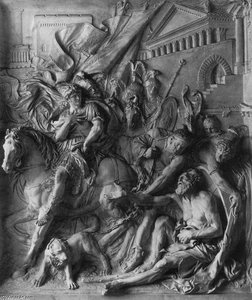
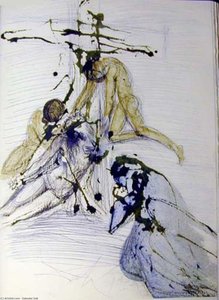
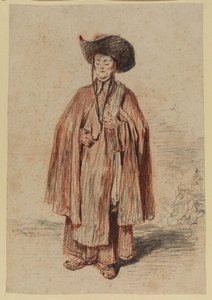
Artist Biography
Gian Lorenzo Bernini: The Architect of Baroque Emotion
Gian Lorenzo Bernini, a name synonymous with the High Renaissance and the dawn of the Baroque era, was more than just an artist; he was a transformative force in 17th-century Rome. Born on December 7, 1598, in Naples, Italy, to Pietro Bernini, a sculptor, and Felice Musci, his early life foreshadowed his destined path into the world of art. His father’s workshop provided an invaluable foundation, immersing him in the techniques and traditions of sculpture from a young age. This formative period instilled within him a deep respect for classical forms while simultaneously laying the groundwork for his revolutionary approach to artistic expression. Bernini's life was marked by both extraordinary success and personal complexities, ultimately culminating in a legacy that continues to captivate and inspire awe centuries later.Early Life and Artistic Training
Bernini’s early years were spent honing his skills under the tutelage of his father and later with Guido Reni, a prominent painter and teacher in Rome. However, it was his apprenticeship with Matthew Danieli, a Florentine sculptor working on the tomb of Pope Urban VIII, that proved pivotal. This experience exposed Bernini to the intricacies of large-scale sculptural projects and instilled within him an understanding of how art could serve as a powerful tool for religious devotion. Crucially, Danieli’s workshop provided Bernini with his first major commission: the *Ecstasy of Saint Bartholomew*, a dramatic depiction of the saint's conversion, which showcased his burgeoning talent for capturing intense emotion and dynamic movement. This early work established him as a rising star within the Roman art scene, quickly attracting the attention of influential patrons and setting the stage for his future achievements.A Master of Baroque Style: Sculpture and Architecture
Bernini’s artistic genius manifested across multiple disciplines – sculpture, architecture, painting, and even theatrical design. He didn't merely replicate classical forms; he reimagined them with a fervent passion and an unprecedented understanding of human psychology. His sculptures are characterized by their dramatic dynamism, intense emotionality, and masterful use of marble to create the illusion of texture and movement. Works like *David*, *Apollo and Daphne*, and *The Rape of Proserpina* exemplify this approach, capturing fleeting moments of action with breathtaking realism and conveying a profound sense of narrative. Beyond sculpture, Bernini’s architectural contributions were equally significant. He played a crucial role in the design and construction of St. Peter's Basilica, notably overseeing the creation of the monumental Baldacchino over the high altar and designing the elaborate colonnades that expanded the church’s piazza, creating an overwhelming sense of grandeur and welcoming visitors into the sacred space. His architectural designs were not simply functional; they were carefully orchestrated theatrical spaces designed to evoke awe and inspire religious devotion.Key Works and Lasting Influence
Bernini's most celebrated works continue to resonate with audiences today. *David*, a masterpiece of youthful strength and vulnerability, stands as a testament to his anatomical precision and ability to capture the essence of human emotion. *Apollo and Daphne* is renowned for its exquisite detail and the palpable tension between the two figures. The *Ecstasy of Saint Teresa*, housed in the Cornaro Chapel of Santa Maria della Vittoria, remains one of the most emotionally charged sculptures ever created, a testament to Bernini’s mastery of light, color, and dramatic composition. His design for the Fontana dei Quattro Fiumi (Fountain of Four Rivers) in Piazza Navona is an iconic example of Baroque urban planning, seamlessly integrating sculpture and architecture to create a visually stunning public space. Bernini's influence extended far beyond his own lifetime. He established a new standard for artistic excellence, inspiring generations of artists – including Michelangelo Merisi da Caravaggio – to embrace dramatic lighting, dynamic composition, and emotional intensity in their work. His innovative approach to sculpture and architecture fundamentally shaped the Baroque style, leaving an indelible mark on Western art history.Legacy and Historical Significance
Gian Lorenzo Bernini died on November 28, 1680, at the age of 81, leaving behind a vast and influential body of work. He was considered by many to be the greatest sculptor of his time, surpassing even Michelangelo in terms of popularity and influence. His legacy is not merely one of technical skill but also of artistic vision—a profound understanding of how art could move, inspire, and transform viewers. Bernini’s works continue to be studied and admired for their beauty, emotional power, and innovative approach to the representation of human form and religious themes. He remains a towering figure in the history of art, embodying the spirit of the Renaissance and the dynamism of the Baroque era.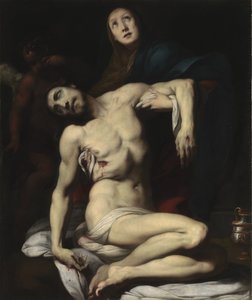
daniele crespi
1598 - 1630 , Italy
Quick Facts
- Artistic Movement Or Style: Baroque
- Artists Who Influenced This Artist: ['Michelangelo, Raphael],\n "Artists or movements influenced by this artist": ["Caravaggio", "Baroque style"]\n}']
- Date Of Birth: December 7, 1598
- Date Of Death: November 28, 1680
- Full Name: Gian Lorenzo Bernini
- Nationality: Italian
- Notable Artworks:
- David
- Apollo and Daphne
- Ecstasy of Saint Teresa
- Fontana dei Quattro Fiumi
- Place Of Birth: Rome, Italy