

 Preview
 Send
Send Share
Share
 Details

 Download
 Similars
 X-Ray
X-Ray Diaporama
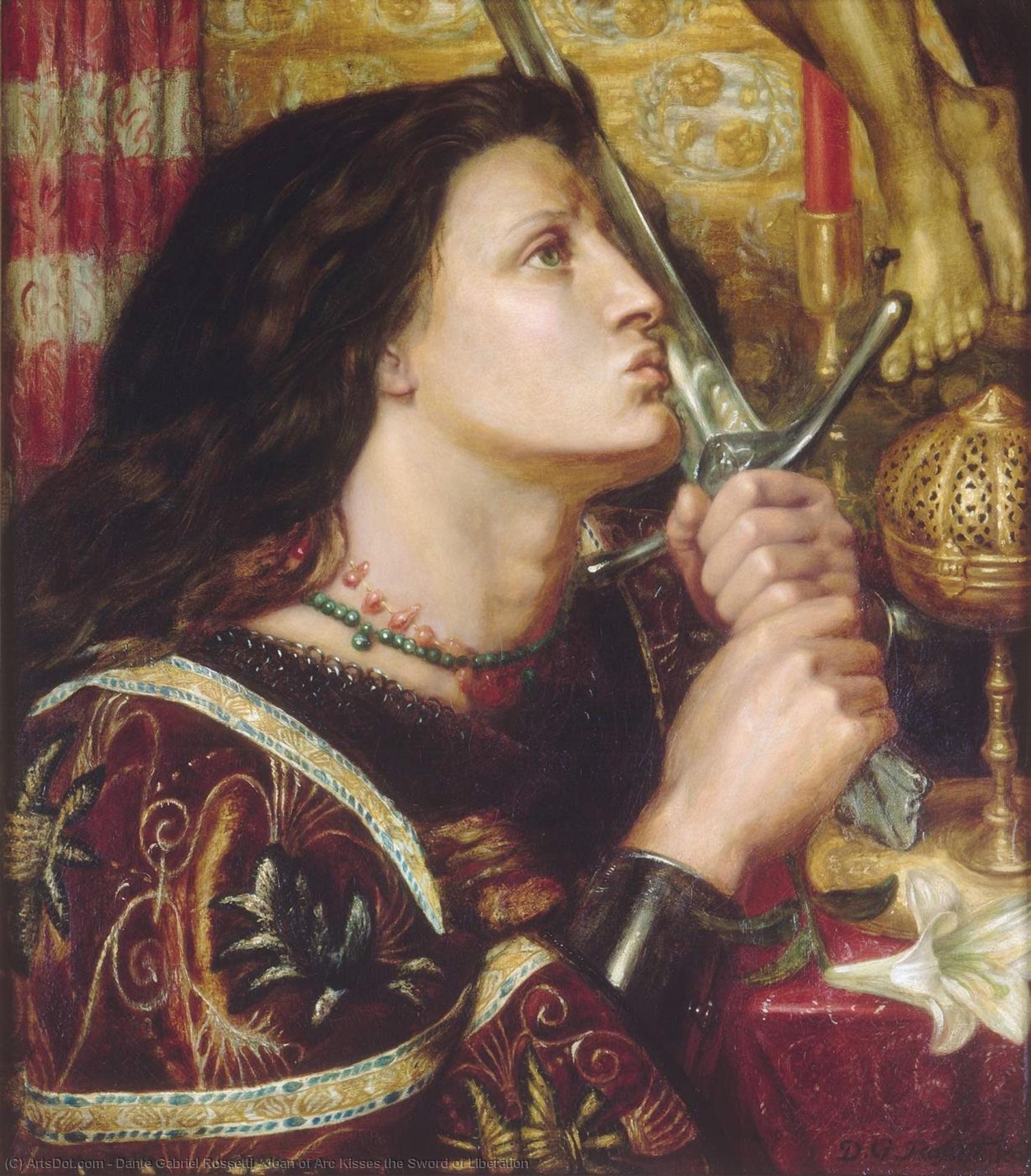
Joan of Arc Kisses the Sword of Liberation


 Read More
Purchase a high-resolution, enhanced digital image, far superior to the online preview.
Each file is meticulously prepared by our in-house specialists using advanced tools and expert manual retouching. We ensure every image has exceptional clarity, precise color accuracy, and fine detail.
The final file is delivered via email within 72 hours, optimized for immediate use in professional, editorial, and print environments. This is the same quality trusted by top-tier design studios, publishers, and galleries.
Digital Image
Download a high-resolution file for personal display, printing, and creative projects. ( Buy Print Buy Hand Made Painting)
Included in Every Digital Image Order
Expert Digital Delivery, Guaranteed
When you choose ArtsDot.com, you're not just getting an image - you're receiving a professionally enhanced digital artwork, crafted with precision and backed by a satisfaction guarantee. Here's everything that comes with your order, automatically:

Fast Email Delivery
Your high-resolution digital image file will be emailed to you within 72 hours of ordering - ready for immediate use.

AI-Enhanced Digital File
Your artwork is professionally optimized using advanced AI tools and manual editing, ensuring maximum detail, clarity, and color accuracy.

Free Lifetime Re-Delivery
Accidentally deleted or lost your file? No worries - we'll resend it to you anytime, free of charge.

No Import Fees - Ever
Enjoy your artwork instantly with zero customs, duties, or delivery fees - digital downloads are always tax-free.

Color Accuracy Guarantee
We ensure your digital image reflects the original colors as closely as possible using professional tools and color management.

60-Day Satisfaction Guarantee
If you're not satisfied with your digital image, we'll revise it or refund 100% within 60 days - no questions asked.

100% Money-Back Guarantee
Not satisfied? Get a full refund within 60 days of receiving your digital file - no questions asked.

Bulk Order Discounts
Buy 3 images, save 10% - Buy 5, save 15% - Buy 10+, save 20%. Great for creative projects, galleries, and agencies.
A Moment of Divine Devotion
In the profound stillness of Dante Gabriel Rossetti’s 1863 masterpiece, Joan of Arc Kisses the Sword of Liberation, we are invited to witness a singular moment of spiritual and martial intersection. The painting captures the legendary French heroine not in the heat of battle, but in a quiet, transcendent state of communion with her destiny. As she tilts her head upward, eyes searching the heavens, her lips press against the cold steel of her blade—a gesture that transforms a weapon of war into a sacred relic of faith. This is not merely a depiction of a historical figure; it is an evocative study of intense devotion and the heavy weight of divine calling.
Rossetti, a founding member of the Pre-Raphaelite Brotherhood, imbues this work with the characteristic richness and medieval revivalism that defined his early career. The composition is charged with a dramatic tension, where the physical reality of the swords meets the ethereal longing in Joan's gaze. Through his masterful use of light and shadow, Rossetti creates an atmosphere that feels both intimate and epic, making the viewer feel like a silent witness to a private prayer whispered in the midst of a looming crusade.
Symbolism and the Pre-Raphaelite Spirit
The symbolism within this piece is as layered as the artist's own poetic soul. The swords themselves serve as dual symbols: they represent both the violent necessity of liberation and the purity of Joan’s mission. By kissing the blade, the subject sanctifies her struggle, suggesting that her strength is derived from a source far greater than human will. The presence of subtle details—the heavy textures of her medieval attire and the enigmatic elements in the background—adds to the narrative depth, grounding the spiritual ecstasy in a tangible, historical reality.
Rossetti’s technique during this period was marked by a move toward a denser, more opulent style, drawing inspiration from the Italian Renaissance. In this painting, we see the seeds of that evolution through his careful attention to texture and the emotional weight of the subject's posture. For the collector or the interior designer, this work offers more than just visual beauty; it provides a focal point of profound character. It is a piece that commands attention through its narrative complexity, making it an ideal centerpiece for spaces designed to inspire contemplation, strength, and historical reverence.
An Eternal Inspiration for Modern Spaces
For those seeking to curate a collection that speaks to the soul, Joan of Arc Kisses the Sword of Liberation offers an unparalleled emotional resonance. Whether placed in a grand library, a sophisticated study, or a contemporary living space, the painting brings with it an aura of timelessness and heroic grace. The dramatic interplay of light and the rich, somber tones allow it to integrate seamlessly into various high-end decors, providing a sense of historical continuity and intellectual depth.
Owning a high-quality reproduction of this Rossetti classic allows one to inhabit the same world of Romanticism and intense beauty that captivated the Victorian era. It is an investment in art that does not merely decorate a wall but tells a story of courage, faith, and the indomitable human spirit—a legacy that remains as potent today as it was in 1863.
Artist Biography
A Life Immersed in Beauty: The World of Dante Gabriel Rossetti
Dante Gabriel Rossetti, born Gabriel Charles Dante Rossetti in 1828 London, was a figure profoundly shaped by the currents of his time—a Romantic spirit blossoming into the Victorian era. His lineage itself hinted at the artistic destiny that awaited him; his father, an Italian political refugee and scholar of Dante Alighieri, instilled within young Gabriel a deep reverence for literature and the arts. This early exposure, coupled with a mother who nurtured his intellectual curiosity, laid the foundation for a life dedicated to creative expression. Though initially considering a clerical career, Rossetti’s true calling lay in the realm of aesthetics—a path he would forge as a poet, illustrator, and, most notably, a painter whose works continue to captivate audiences today. His formative years were steeped in the literary giants of his age – Shakespeare, Dickens, Scott, Byron – all contributing to a rich imaginative landscape that would later define his artistic vision.The Pre-Raphaelite Rebellion and Artistic Awakening
Rossetti’s name is inextricably linked with the Pre-Raphaelite Brotherhood, a revolutionary movement he co-founded in 1848 alongside William Holman Hunt and John Everett Millais. This wasn't merely an artistic shift; it was a rebellion against the perceived artificiality of academic painting prevalent at the time. The Brotherhood sought to return to the detailed realism, vibrant colors, and spiritual intensity found in Italian and Flemish art *before* the High Renaissance – hence “Pre-Raphaelite.” This meant rejecting the idealized forms and conventional compositions favored by the Royal Academy, instead embracing a meticulous observation of nature and a commitment to truthful representation. Rossetti’s early works, such as *The Girlhood of Mary Virgin*, exemplify this dedication, showcasing an almost photographic level of detail alongside symbolic imagery drawn from religious texts. However, Rossetti's contribution extended beyond technical skill; he brought a distinctly literary sensibility to the group, often choosing subjects inspired by poetry and mythology. The Brotherhood’s manifesto wasn’t just about *how* to paint, but *what* to paint – focusing on themes of morality, spirituality, and beauty with an intensity that challenged Victorian sensibilities.Evolving Styles: Symbolism, Sensuality, and the Female Muse
As Rossetti's career progressed, his artistic style underwent a fascinating evolution. While initially adhering to the strict tenets of Pre-Raphaelite realism, he gradually moved towards more symbolic and dreamlike imagery. His paintings became increasingly infused with sensuality, exploring themes of love, loss, and spiritual longing with an emotional depth that resonated deeply with audiences. This shift was partly influenced by his personal life, particularly his complex relationships with the women who served as his models and muses – Elizabeth Siddal, Fanny Cornforth, and Jane Morris. These women weren’t merely passive subjects; they embodied a particular aesthetic ideal for Rossetti—often depicted with flowing red hair, melancholic expressions, and an air of enigmatic beauty. Paintings like *Proserpine* are prime examples of this later style, showcasing his mastery of symbolism and his ability to evoke a sense of otherworldly allure. The rich colors, dramatic lighting, and evocative poses all contribute to the painting’s haunting atmosphere. He also began to seamlessly blend poetry and visual art, often writing sonnets to accompany his paintings, creating a unified artistic experience that engaged both the eye and the mind. *Behold the handmaid of the Lord! (The Annunciation)* is a testament to this integrated approach.Legacy and Lasting Influence
Dante Gabriel Rossetti’s impact on the art world extends far beyond his own lifetime. He was profoundly influenced by the poetry of John Keats and William Blake, as well as the Italian Renaissance masters, but he, in turn, became a major influence on subsequent generations of artists and writers. His work played a crucial role in the development of both the Aesthetic Movement and Symbolism, movements that emphasized beauty, emotion, and subjective experience above all else. Artists like William Morris and Edward Burne-Jones were deeply inspired by his aesthetic principles, incorporating them into their own distinctive styles. Rossetti’s emphasis on symbolism and emotional intensity also paved the way for later artistic explorations of the subconscious mind. Even today, his paintings continue to inspire artists and art lovers alike, cementing his place as one of the most important figures in 19th-century British art. He challenged conventional norms, embraced beauty in all its forms, and left behind a legacy that continues to resonate with those who seek meaning and emotion in art.A Revolutionary Spirit: Rossetti’s Historical Significance
Rossetti was more than just an artist; he was a cultural provocateur who dared to challenge the prevailing artistic conventions of his time. His emphasis on symbolism, emotion, and individual vision resonated with a generation seeking alternatives to Victorian realism. He helped pave the way for new forms of expression, encouraging artists to explore their inner worlds and embrace subjective experience. His work provides valuable insight into the cultural and intellectual currents of the 19th century—a period marked by rapid social change, scientific advancements, and a growing sense of spiritual uncertainty. Rossetti’s art reflects these anxieties and aspirations, offering a glimpse into the complex emotional landscape of his era. He remains an important figure in understanding not only the history of art but also the broader cultural context in which it was created. His enduring appeal lies in his ability to tap into universal themes of love, loss, beauty, and spirituality—themes that continue to resonate with audiences today.
Dante Gabriel Rossetti
1828 - 1882 , United Kingdom
Quick Facts
- Artistic Movement Or Style: Pre-Raphaelite, Symbolism
- Artists Or Movements Influenced By This Artist:
- Aesthetic Movement
- Symbolism
- Artists Who Influenced This Artist:
- John Keats
- William Blake
- Date Of Birth: May 12, 1828
- Date Of Death: April 9, 1882
- Full Name: Dante Gabriel Rossetti
- Nationality: British
- Notable Artworks:
- Proserpine
- Joan of Arc
- King Rene's Honeymoon
- The House of Life
- Place Of Birth: London, UK

