 Preview
 Send
Send Share
Share
 Details

 Download
 Similars
 X-Ray
X-Ray Diaporama
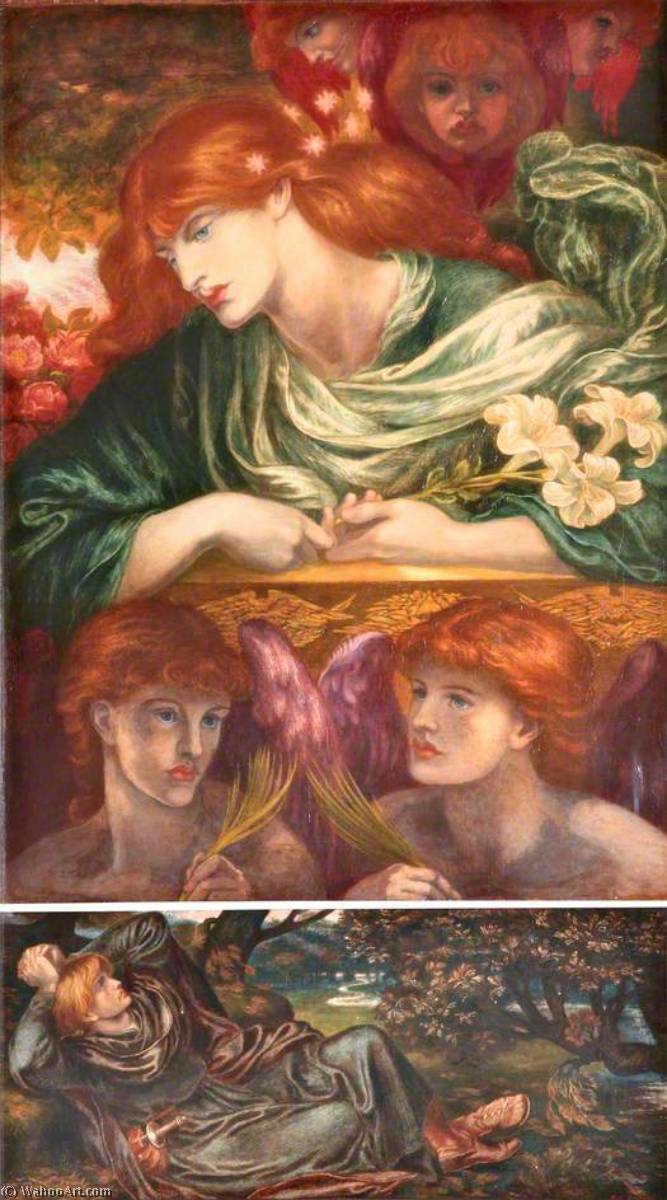
The Blessed Damozel
 Acrylic
- WallArt
- Romantic Symbolism
 1879
1879 111.0 x 83.0 cm
 Read More
Hand Made Oil Reproduction
Hand-painted oil on canvas in your size and frame, made to order by our artists. ( Buy Print Buy Image)




P118B $10

P118H $10

P118W $10

P438Z $10

P508JH $12

P508YH $12

P805H $10

P805Z $10

P919BZ $10

P919G $10

P919XJ $10

P959ZH $10

P968JZ $12

W106C $8

W218G $10

W218JH $8

W218Y $10

W307PJ $10

W316G $10

W316PJ $8

W316Y $10

W398PJ $8

W4111J $10

W500HY $15

W500JH $15

W692G $12

W849H $8

W940BG $15

W953PJ $8




Pick from our preset sizes that match the artwork's original proportions.

You may enter your own dimensions to fit a specific frame or space. If your selected size does not match the original image's proportions, we will either crop the artwork or extend the painting with additional hand-painted elements. A digital mockup will be sent for your approval before production begins.
Please note that the on-screen preview does not reflect the actual cropping or extension. Only the mockup will accurately show the final composition.
While custom sizes are available, we recommend selecting a dimension from the predefined list to preserve the original proportions.
After order, ArtsDot.com team will email client for instructions and provide a mockup preview
Worldwide Delivery () in 3/4 weeks instead of standard 5 weeks. (17 August). No compromise on quality.

Free Worldwide Express Shipping

High-Quality Linen Canvas

Full Shipping Insurance

Customs Tax Refund Guarantee

True Color Matching Guarantee

60-Day Return Policy (Defects Only)

100% Money-Back Guarantee

Bulk Discount Offer
 Glass option is only available in size under 110 CM

The Blessed Damozel
Reproduction Medium
Reproduction Size
-


Total Price
$ 263
Artwork Description
A Vision of Paradise Lost: Exploring Dante Gabriel Rossetti’s “The Blessed Damozel”
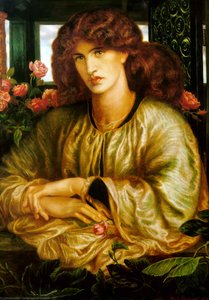
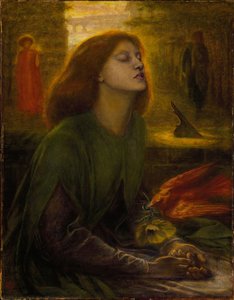
The painting "The Blessed Damozel" by Dante Gabriel Rossetti, completed in 1879, stands as a quintessential emblem of Victorian Romanticism—a movement obsessed with beauty, imagination, and the yearning for transcendence. More than just a depiction of figures, it’s an invitation into a realm of ethereal serenity, meticulously crafted to evoke profound emotion and intellectual contemplation. Examining its elements reveals layers of artistic intention and symbolic resonance that continue to fascinate scholars and inspire artists alike.Subject Matter and Composition
At first glance, the artwork presents three women—a reclining figure bathed in soft light, standing woman gazing intently at the viewer, and a bird perched delicately near the center—arranged within an opulent floral setting. This deliberate composition isn’t merely decorative; it's designed to convey a narrative of spiritual aspiration. The central woman embodies grace and contemplation, while her posture suggests repose and acceptance of divine grace. Her gaze directs our attention outwards, mirroring the viewer’s own desire for connection with something beyond the earthly realm. The birds symbolize purity and innocence—a recurring motif in Rossetti's oeuvre—representing messengers of heaven and hinting at a transcendent beauty.Style and Technique: Pre-Raphaelite Idealism
Rossetti’s masterful execution exemplifies the hallmarks of the Pre-Raphaelite Brotherhood, a group of artists who rejected academic conventions and sought inspiration from medieval art and literature. Unlike the polished surfaces favored by their contemporaries, Rossetti employed a technique characterized by luminous glazing—a layering of thin translucent paints that creates an illusion of depth and luminosity. This painstaking process resulted in colors that shimmer with vibrancy yet retain an understated elegance. The artist’s meticulous attention to detail is evident in every petal of the flowers adorning the scene—each rendered with astonishing realism, contributing to the overall impression of idealized beauty.Historical Context: Victorian Yearnings for Spiritual Renewal
“The Blessed Damozel” emerged during a period marked by anxieties surrounding scientific advancements and societal upheaval – a time when Victorians grappled with questions of faith and morality. Rossetti’s artistic vision responded directly to this spiritual climate, reflecting the movement's fascination with mythology and folklore—particularly Arthurian legends—and its belief in the power of imagination to access realms beyond the material world. The painting speaks to a desire for solace amidst uncertainty, offering viewers a glimpse into an idealized paradise untouched by earthly sorrows.Symbolism: Flowers, Light, and Divine Presence
The floral arrangement itself is laden with symbolic significance. Lilies, roses, and violets—flowers traditionally associated with purity, love, and mourning—intertwine to create a harmonious tapestry of color and form. The pervasive use of diffused light underscores the painting’s spiritual atmosphere, symbolizing divine illumination and illuminating the figures within. More subtly, the positioning of the women suggests an upward gaze—a gesture of reverence towards God and an aspiration for eternal bliss. Rossetti's deliberate choices communicate a profound understanding of symbolism as a tool for conveying complex emotional and intellectual ideas.Emotional Impact: A Momentary Escape
Ultimately, “The Blessed Damozel” transcends mere visual representation; it aspires to evoke a feeling—a poignant contemplation of beauty and mortality. The painting’s serene stillness invites viewers into a meditative state, prompting reflection on themes of faith, love, and the pursuit of spiritual perfection. It's a testament to Rossetti’s ability to capture not just what he saw but also what he felt—creating an artwork that continues to resonate with audiences centuries later as a timeless expression of Romantic idealism.Related Artworks
![Stanze Vaticane - The Mass At Bolsena (detail) [03] — Raphael, Renaissance Humanism](/media/artworks/images/thumbnails/58/35/5835691a32524663b6c7afaf7aa080e1.jpg)
Artist Biography
A Life Immersed in Beauty: The World of Dante Gabriel Rossetti
Dante Gabriel Rossetti, born Gabriel Charles Dante Rossetti in 1828 London, was a figure profoundly shaped by the currents of his time—a Romantic spirit blossoming into the Victorian era. His lineage itself hinted at the artistic destiny that awaited him; his father, an Italian political refugee and scholar of Dante Alighieri, instilled within young Gabriel a deep reverence for literature and the arts. This early exposure, coupled with a mother who nurtured his intellectual curiosity, laid the foundation for a life dedicated to creative expression. Though initially considering a clerical career, Rossetti’s true calling lay in the realm of aesthetics—a path he would forge as a poet, illustrator, and, most notably, a painter whose works continue to captivate audiences today. His formative years were steeped in the literary giants of his age – Shakespeare, Dickens, Scott, Byron – all contributing to a rich imaginative landscape that would later define his artistic vision.The Pre-Raphaelite Rebellion and Artistic Awakening
Rossetti’s name is inextricably linked with the Pre-Raphaelite Brotherhood, a revolutionary movement he co-founded in 1848 alongside William Holman Hunt and John Everett Millais. This wasn't merely an artistic shift; it was a rebellion against the perceived artificiality of academic painting prevalent at the time. The Brotherhood sought to return to the detailed realism, vibrant colors, and spiritual intensity found in Italian and Flemish art *before* the High Renaissance – hence “Pre-Raphaelite.” This meant rejecting the idealized forms and conventional compositions favored by the Royal Academy, instead embracing a meticulous observation of nature and a commitment to truthful representation. Rossetti’s early works, such as *The Girlhood of Mary Virgin*, exemplify this dedication, showcasing an almost photographic level of detail alongside symbolic imagery drawn from religious texts. However, Rossetti's contribution extended beyond technical skill; he brought a distinctly literary sensibility to the group, often choosing subjects inspired by poetry and mythology. The Brotherhood’s manifesto wasn’t just about *how* to paint, but *what* to paint – focusing on themes of morality, spirituality, and beauty with an intensity that challenged Victorian sensibilities.Evolving Styles: Symbolism, Sensuality, and the Female Muse
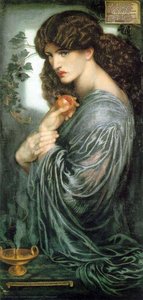
As Rossetti's career progressed, his artistic style underwent a fascinating evolution. While initially adhering to the strict tenets of Pre-Raphaelite realism, he gradually moved towards more symbolic and dreamlike imagery. His paintings became increasingly infused with sensuality, exploring themes of love, loss, and spiritual longing with an emotional depth that resonated deeply with audiences. This shift was partly influenced by his personal life, particularly his complex relationships with the women who served as his models and muses – Elizabeth Siddal, Fanny Cornforth, and Jane Morris. These women weren’t merely passive subjects; they embodied a particular aesthetic ideal for Rossetti—often depicted with flowing red hair, melancholic expressions, and an air of enigmatic beauty. Paintings like *Proserpine* are prime examples of this later style, showcasing his mastery of symbolism and his ability to evoke a sense of otherworldly allure. The rich colors, dramatic lighting, and evocative poses all contribute to the painting’s haunting atmosphere. He also began to seamlessly blend poetry and visual art, often writing sonnets to accompany his paintings, creating a unified artistic experience that engaged both the eye and the mind. *Behold the handmaid of the Lord! (The Annunciation)* is a testament to this integrated approach.Legacy and Lasting Influence
Dante Gabriel Rossetti’s impact on the art world extends far beyond his own lifetime. He was profoundly influenced by the poetry of John Keats and William Blake, as well as the Italian Renaissance masters, but he, in turn, became a major influence on subsequent generations of artists and writers. His work played a crucial role in the development of both the Aesthetic Movement and Symbolism, movements that emphasized beauty, emotion, and subjective experience above all else. Artists like William Morris and Edward Burne-Jones were deeply inspired by his aesthetic principles, incorporating them into their own distinctive styles. Rossetti’s emphasis on symbolism and emotional intensity also paved the way for later artistic explorations of the subconscious mind. Even today, his paintings continue to inspire artists and art lovers alike, cementing his place as one of the most important figures in 19th-century British art. He challenged conventional norms, embraced beauty in all its forms, and left behind a legacy that continues to resonate with those who seek meaning and emotion in art.A Revolutionary Spirit: Rossetti’s Historical Significance
Rossetti was more than just an artist; he was a cultural provocateur who dared to challenge the prevailing artistic conventions of his time. His emphasis on symbolism, emotion, and individual vision resonated with a generation seeking alternatives to Victorian realism. He helped pave the way for new forms of expression, encouraging artists to explore their inner worlds and embrace subjective experience. His work provides valuable insight into the cultural and intellectual currents of the 19th century—a period marked by rapid social change, scientific advancements, and a growing sense of spiritual uncertainty. Rossetti’s art reflects these anxieties and aspirations, offering a glimpse into the complex emotional landscape of his era. He remains an important figure in understanding not only the history of art but also the broader cultural context in which it was created. His enduring appeal lies in his ability to tap into universal themes of love, loss, beauty, and spirituality—themes that continue to resonate with audiences today.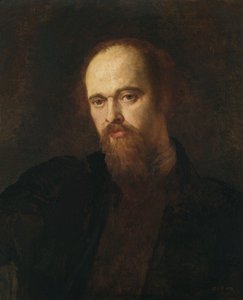
Dante Gabriel Rossetti
1828 - 1882 , United Kingdom
Quick Facts
- Artistic Movement Or Style: Pre-Raphaelite, Symbolism
- Artists Or Movements Influenced By This Artist:
- Aesthetic Movement
- Symbolism
- Artists Who Influenced This Artist:
- John Keats
- William Blake
- Date Of Birth: May 12, 1828
- Date Of Death: April 9, 1882
- Full Name: Dante Gabriel Rossetti
- Nationality: British
- Notable Artworks:
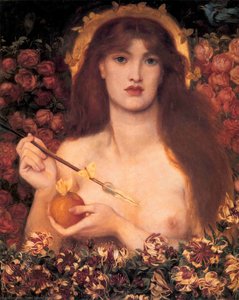
- Proserpine
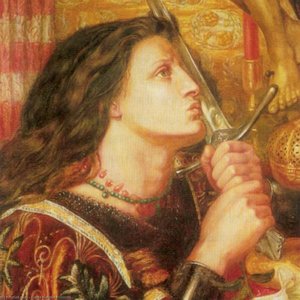
- Joan of Arc
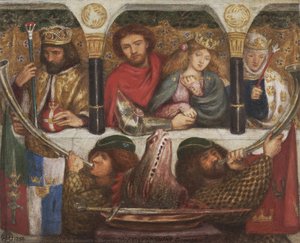
- King Rene's Honeymoon
- The House of Life
- Place Of Birth: London, UK
Related Articles
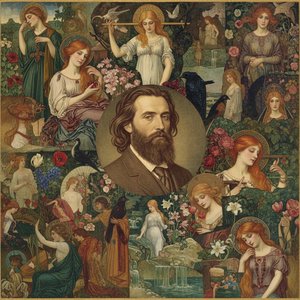
Dante Gabriel Rossetti's 25 Masterpieces: A Journey Through Victorian Art & Symbolism | ArtsDot
Explore 25 iconic artworks by Dante Gabriel Rossetti, a leading Pre-Raphaelite artist. Discover the stories behind masterpieces like 'Proserpine' & 'Beata Beatrix'. Find museum-quality art reproductions and elevate your home decor with ArtsDot.com.
Silent Narratives: Exploring the Enduring Appeal of Still Life Painting Across Centuries
Explore the rich history of still life painting with ArtsDot. Discover Dutch Masters, decode vanitas symbolism & learn about collecting timeless art. Expert insights and museum-quality reproductions.
Romantic Realism's Finest: 10 Masterpieces for Your Home | ArtsDot
Explore 10 defining masterpieces of Romantic Realism! Discover Courbet, Millet & Daumier's powerful paintings—capturing emotion and social realities. Find museum-quality reproductions for your home at ArtsDot.com.
The Enduring Appeal of Still Life: A Historical & Contemporary Exploration
Explore the rich history & symbolism of still life painting with ArtsDot. Discover masterpieces from the Dutch Golden Age, learn about vanitas art, and find expert guidance for collecting timeless artworks.
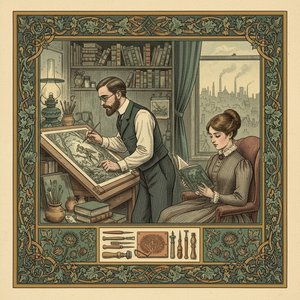
The Refined Aesthetic of Victorian Illustration: A Study in Narrative & Technique
Explore the captivating world of Victorian illustration! Discover Pre-Raphaelite influences, key artists like Rossetti & Stephens, and the era's rich narrative detail. A deep dive for art enthusiasts.