

 Preview
 Send
Send Share
Share
 Details

 Download
 Similars
 X-Ray
X-Ray Diaporama
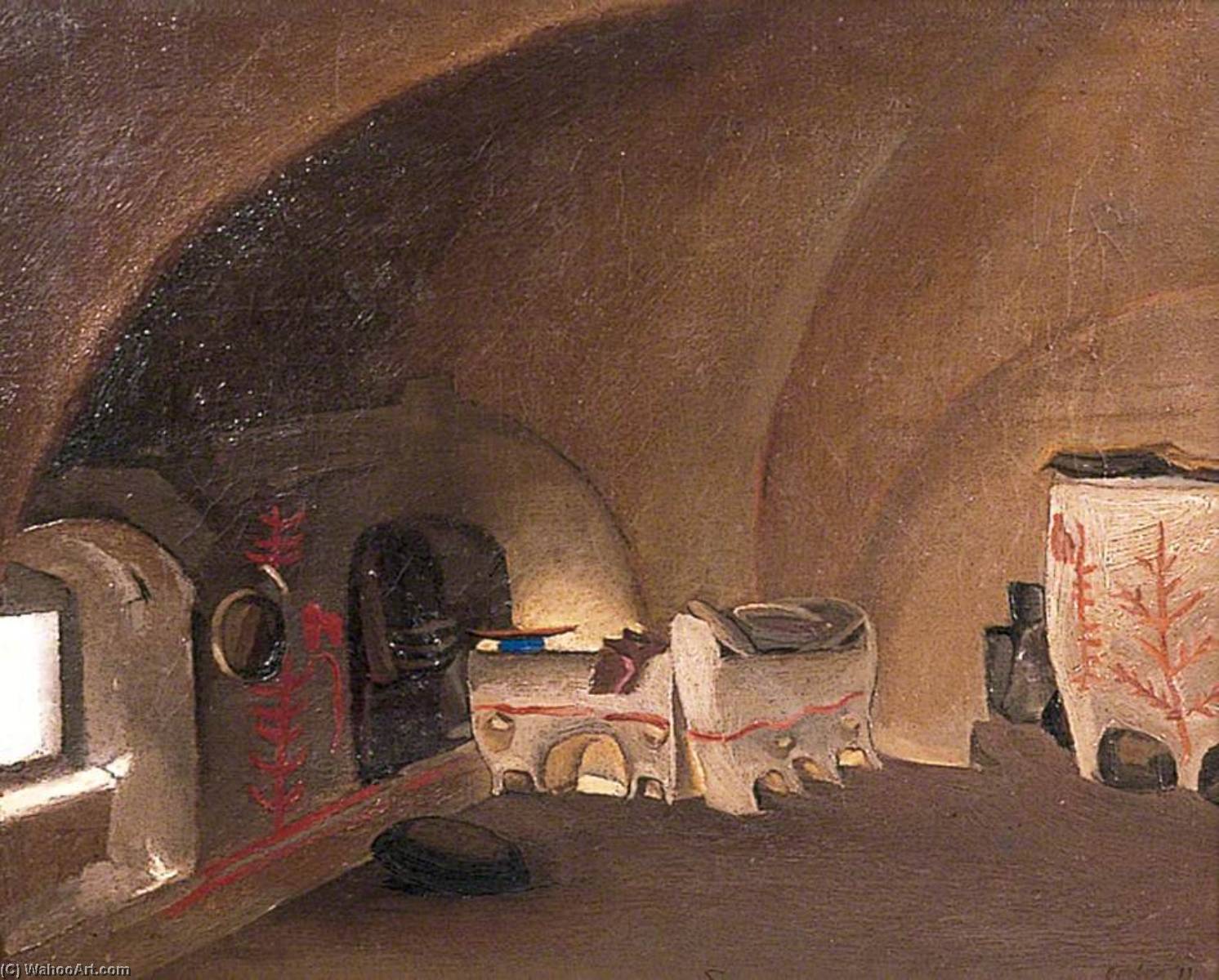
Interior of a Peasant House, Kolonia
 Cubism
 1923
1923- Modern
 41.0 x 51.0 cm
 Pallant House Gallery
 Read More
Purchase a high-resolution, enhanced digital image, far superior to the online preview.
Each file is meticulously prepared by our in-house specialists using advanced tools and expert manual retouching. We ensure every image has exceptional clarity, precise color accuracy, and fine detail.
The final file is delivered via email within 72 hours, optimized for immediate use in professional, editorial, and print environments. This is the same quality trusted by top-tier design studios, publishers, and galleries.
Digital Image
Download a high-resolution file for personal display, printing, and creative projects. ( Buy Print Buy Hand Made Painting)
Included in Every Digital Image Order
Expert Digital Delivery, Guaranteed
When you choose ArtsDot.com, you're not just getting an image - you're receiving a professionally enhanced digital artwork, crafted with precision and backed by a satisfaction guarantee. Here's everything that comes with your order, automatically:

Fast Email Delivery
Your high-resolution digital image file will be emailed to you within 72 hours of ordering - ready for immediate use.

AI-Enhanced Digital File
Your artwork is professionally optimized using advanced AI tools and manual editing, ensuring maximum detail, clarity, and color accuracy.

Free Lifetime Re-Delivery
Accidentally deleted or lost your file? No worries - we'll resend it to you anytime, free of charge.

No Import Fees - Ever
Enjoy your artwork instantly with zero customs, duties, or delivery fees - digital downloads are always tax-free.

Color Accuracy Guarantee
We ensure your digital image reflects the original colors as closely as possible using professional tools and color management.

60-Day Satisfaction Guarantee
If you're not satisfied with your digital image, we'll revise it or refund 100% within 60 days - no questions asked.

100% Money-Back Guarantee
Not satisfied? Get a full refund within 60 days of receiving your digital file - no questions asked.

Bulk Order Discounts
Buy 3 images, save 10% - Buy 5, save 15% - Buy 10+, save 20%. Great for creative projects, galleries, and agencies.
Collectible Description
A Window into Rural Solitude
In the quiet, evocative depths of David Bomberg’s Interior of a Peasant House, Kolonia, we are invited to step across the threshold of time and into a world defined by its profound simplicity. Painted in 1923, this work serves as a poignant meditation on the rhythms of humble existence. The scene unfolds within a rustic dwelling, where the earth itself forms the floor, grounding the composition in an unyielding connection to the land. Scattered across this earthen stage are the quiet artifacts of daily survival: two weathered bowls resting near the center and edges, a solitary cup, and a single chair that stands as a silent sentinel amidst the stillness. Through Bomberg’s lens, the mundane becomes monumental, transforming a mere domestic space into a sanctuary of historical memory.
The composition is breathed into life by the presence of three figures, positioned with a deliberate, almost rhythmic spacing that guides the viewer's eye through the room. One figure lingers near the left periphery, another occupies the center-left, while a third rests toward the right, creating a triangular tension that holds the space together. There is no grand drama here, only the heavy, beautiful weight of presence. The figures do not perform for us; they simply exist within their environment, embodying the quiet dignity of the peasantry. For the collector or interior designer, this painting offers more than just visual interest; it provides a soulful anchor, a piece that commands attention through its understated strength and its ability to evoke a sense of peace and groundedness.
Mastery of Form and Earthly Tones
Technically, this work showcases the burgeoning maturity of Bomberg’s approach during the early 20th century. While his contemporaries were often lost in the frenetic energy of pure abstraction, Bomberg possessed a unique ability to marry structural form with emotional resonance. In Interior of a Peasant House, we see a masterful command of light and shadow that defines the volume of the room. The palette is deeply rooted in the organic—ochres, umbers, and muted earth tones that mirror the very soil of the floor. This tonal harmony creates an immersive atmosphere, making the viewer feel as though they could reach out and touch the textured surfaces of the wooden objects and the coarse fabric of the inhabitants' lives.
The brushwork, while controlled, retains a vitality that prevents the scene from feeling static. There is a palpable sense of texture that suggests the grit of the dirt floor and the worn smoothness of the ceramic bowls. This tactile quality makes the piece an exceptional choice for high-quality reproductions intended for sophisticated interiors. When placed in a modern setting, such a reproduction acts as a bridge between the rugged authenticity of the past and the refined aesthetics of the present. It brings a layer of historical depth and organic warmth to any room, offering a sophisticated way to introduce narrative and texture into contemporary decor.
A Legacy of Human Connection
To understand this painting is to understand the spirit of the Whitechapel Boys and the era of profound artistic transition in which Bomberg lived. Emerging from the vibrant, often turbulent art scene of East London, Bomberg’s work often sought to find the structural essence of his subjects. In this particular piece, he moves away from the aggressive geometry of his earlier Vorticist tendencies toward a more soulful, observational realism. He captures not just a room, but a way of being—a moment of stillness in a world that was rapidly changing following the Great War.
For those seeking to curate a collection that speaks to the human condition, this artwork is an invaluable find. It symbolizes resilience, the beauty of the overlooked, and the enduring sanctity of home. Whether displayed as a focal point in a study or as a subtle accent in a dining space, Interior of a Peasant House, Kolonia serves as a constant reminder of the profound stories hidden within the simplest of settings. Owning a reproduction of this masterpiece is an opportunity to preserve and celebrate a fragment of art history that remains as relevant and moving today as it was in 1923.
Related Artworks
Artist Biography
Early Life and Artistic Training
- Born: Birmingham, United Kingdom (December 5, 1890)
- Died: London, United Kingdom (August 19, 1957)
- One of the 'Whitechapel Boys' – a group of East End artists who emerged in the early 20th century.
Born to Polish-Jewish immigrant parents, Abraham and Rebecca Bomberg, initially studied at the City and Guilds Technical Art School before training as a lithographer in Birmingham.
Studied under Walter Sickert at Westminster School of Art (1908-1910), influenced by Sickert's focus on form and urban life. Significant exposure to Paul Cézanne through the 1910 Roger Fry exhibition "Manet and the Post-Impressionists." Attended the Slade School of Art (1911), winning the Tonks Prize for his drawing of fellow student Isaac Rosenberg.
The Avant-Garde Years: Cubism, Futurism, and Controversy
- At the Slade, Bomberg was part of a remarkable generation including Mark Gertler, Stanley Spencer, C.R.W. Nevinson, and Dora Carrington.
- Influenced by the 1912 London exhibitions of Italian Futurists and Fry's second Post-Impressionist exhibition (Picasso, Matisse, Fauvists, Wyndham Lewis).
- Developed a distinctive style combining Cubism and Futurism – characterized by geometric compositions, limited color palettes, angular figures, and grid-like structures.
- His radical approach led to expulsion from the Slade School of Art in 1913, deemed too audacious for the institution's conventional methods.
- Briefly associated with Bloomsbury Group’s Omega Workshops and exhibited with the Camden Town Group. Showed affinity with Wyndham Lewis’s Vorticist movement but remained independent, refusing full involvement.
From War to Landscape: A Shift in Style
Experiences as a private soldier during World War I profoundly impacted his artistic vision, leading to a move away from abstraction.
The 1920s saw Bomberg adopt a more figurative style, focusing on portraits and landscapes drawn directly from nature. Developed an increasingly expressionist technique, marked by textured impasto and emotional intensity.
Extensive travels through the Middle East (particularly Palestine) and Europe significantly influenced his later work. His depictions of Jerusalem are particularly notable.
Later Years and Legacy
- From 1945 to 1953, taught at Borough Polytechnic (now London South Bank University), influencing a generation of artists including Frank Auerbach, Leon Kossoff, Philip Holmes, Cliff Holden, Edna Mann, Dorothy Mead, Gustav Metzger, Dennis Creffield, Cecil Bailey and Miles Richmond.
- Married landscape painter Lilian Holt.
- Despite periods of relative obscurity during his lifetime, Bomberg's work has gained increasing recognition in recent decades as a significant contribution to British modern art.
- David Bomberg House at London South Bank University is named in his honor.
- His legacy lies in his unique synthesis of European avant-garde movements and his later development of a powerful, expressive landscape style that captured the essence of place and human experience.
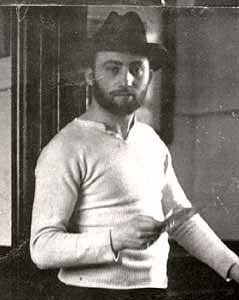
David Bomberg
1890 - 1957 , United Kingdom
Quick Facts
- Artistic Movement Or Style:
- Cubism
- Futurism
- Expressionism
- Artists Or Movements Influenced By This Artist:
- Frank Auerbach
- Leon Kossoff
- Artists Who Influenced This Artist:
- Paul Cézanne
- Walter Sickert
- Wyndham Lewis
- Date Of Birth: December 5, 1890
- Date Of Death: August 19, 1957
- Full Name: David Garshen Bomberg
- Nationality: British
- Notable Artworks:
- Self Portrait (1937)
- Kitty, the Artist’s Sister (1929)
- Study for a Painting
- Jerusalem
- Place Of Birth: Birmingham, United Kingdom

