

 Preview
 Send
Send Share
Share
 Details

 Download
 Similars
 X-Ray
X-Ray Diaporama
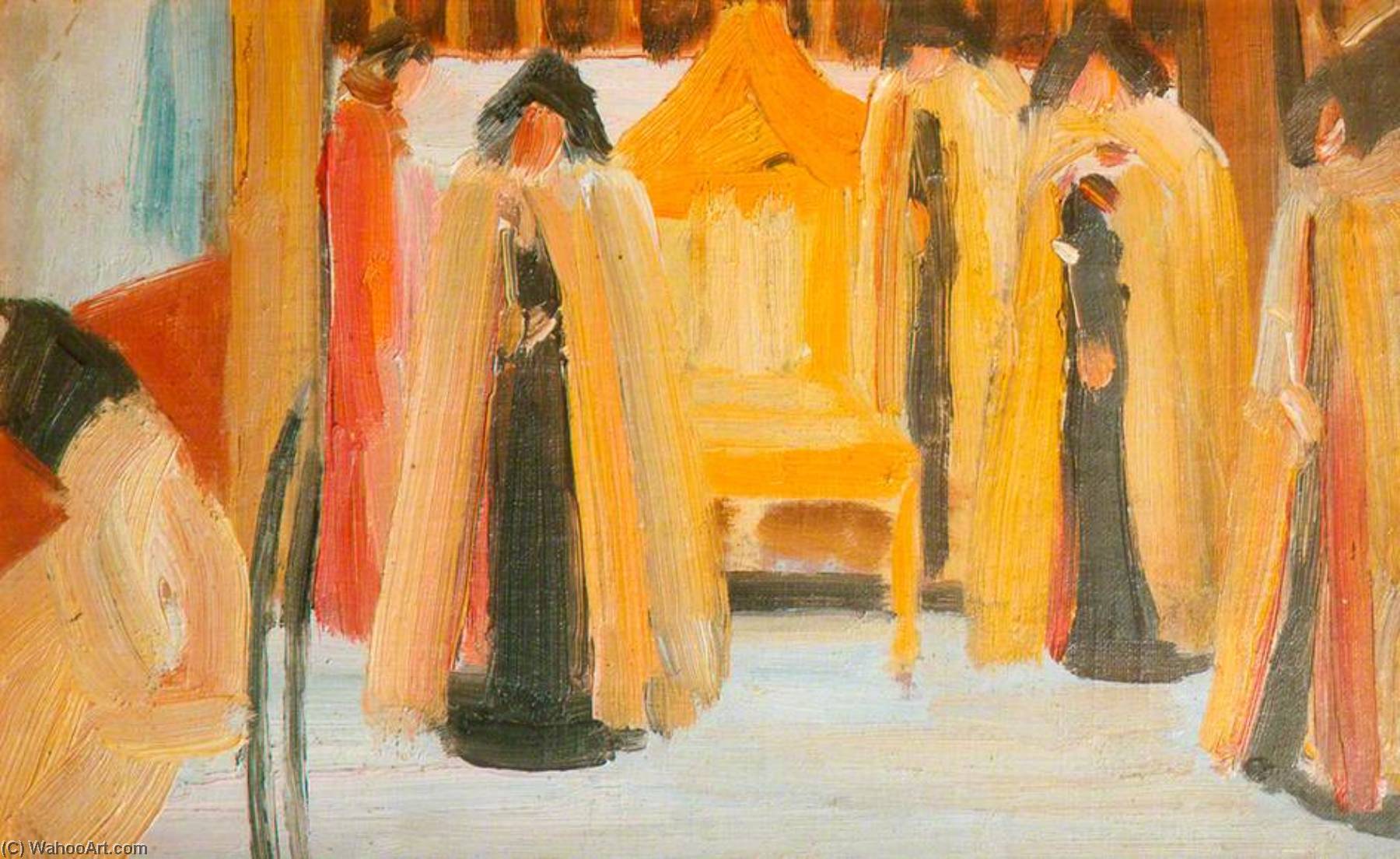
Interior of the Armenian Church, Jerusalem
 Oil
Oil- WallArt
- Expressionism
 1925
1925- Modern
 23.0 x 36.0 cm
 Government Art Collection
 Read More
Purchase a high-resolution, enhanced digital image, far superior to the online preview.
Each file is meticulously prepared by our in-house specialists using advanced tools and expert manual retouching. We ensure every image has exceptional clarity, precise color accuracy, and fine detail.
The final file is delivered via email within 72 hours, optimized for immediate use in professional, editorial, and print environments. This is the same quality trusted by top-tier design studios, publishers, and galleries.
Digital Image
Download a high-resolution file for personal display, printing, and creative projects. ( Buy Print Buy Hand Made Painting)
Included in Every Digital Image Order
Expert Digital Delivery, Guaranteed
When you choose ArtsDot.com, you're not just getting an image - you're receiving a professionally enhanced digital artwork, crafted with precision and backed by a satisfaction guarantee. Here's everything that comes with your order, automatically:

Fast Email Delivery
Your high-resolution digital image file will be emailed to you within 72 hours of ordering - ready for immediate use.

AI-Enhanced Digital File
Your artwork is professionally optimized using advanced AI tools and manual editing, ensuring maximum detail, clarity, and color accuracy.

Free Lifetime Re-Delivery
Accidentally deleted or lost your file? No worries - we'll resend it to you anytime, free of charge.

No Import Fees - Ever
Enjoy your artwork instantly with zero customs, duties, or delivery fees - digital downloads are always tax-free.

Color Accuracy Guarantee
We ensure your digital image reflects the original colors as closely as possible using professional tools and color management.

60-Day Satisfaction Guarantee
If you're not satisfied with your digital image, we'll revise it or refund 100% within 60 days - no questions asked.

100% Money-Back Guarantee
Not satisfied? Get a full refund within 60 days of receiving your digital file - no questions asked.

Bulk Order Discounts
Buy 3 images, save 10% - Buy 5, save 15% - Buy 10+, save 20%. Great for creative projects, galleries, and agencies.
Collectible Description
A Vision of Devotion: Inside the Armenian Church
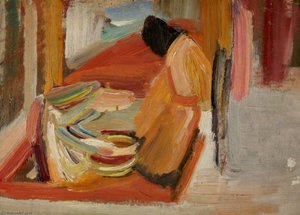
In the evocative oil painting Interior of the Armenian Church, Jerusalem, created in 1925, the viewer is not merely an observer but a participant in a profound moment of spiritual gathering. David Bomberg, a master of capturing the raw energy of human movement, presents a scene that feels both ancient and immediate. The composition is densely packed, almost claustrophobic, pulling the eye into a swirling sea of figures and drapery. There is a palpable sense of weight and presence within the frame; the crowd moves with a collective identity, their individual features obscured by heavy robes, suggesting that the focus is not on specific personalities, but on the shared, rhythmic pulse of religious devotion. A central, throne-like object in a striking shade of yellow serves as a focal point, anchoring the chaotic energy and hinting at the sacred authority residing within this hallowed space.
The technique employed by Bomberg is nothing short of visceral. Utilizing an impasto method, he applies thick, textured layers of paint that give the canvas a sculptural quality. These heavy strokes do not merely represent fabric; they embody it, creating a tactile landscape of oranges, deep reds, and warm yellows that seem to glow from within. The lighting is masterfully uneven, casting dramatic shadows that dance against brightly illuminated patches, heightening the emotional intensity of the scene. This play of light and shadow, combined with a flattened perspective, strips away traditional depth to create an immersive, almost dreamlike atmosphere where the boundaries between the physical world and the spiritual realm begin to blur.
Historically situated within the transformative era of early 20th-century modernism, this work reflects Bomberg’s unique ability to blend the structural lessons of Cubism with the emotional fervor of Expressionism. While his contemporaries were often preoccupied with pure abstraction, Bomberg retained a deep connection to the human form and its capacity for drama. The loose, gestural lines and organic shapes found in this piece evoke a sense of motion that is both controlled and wild. For the discerning collector or interior designer, this painting offers more than just a decorative element; it provides a sophisticated centerpiece that commands attention through its rich color palette and profound emotional depth. It is a piece that invites contemplation, making it an ideal acquisition for those looking to infuse a space with history, texture, and a sense of timeless mystery.
Related Artworks
Artist Biography
Early Life and Artistic Training
- Born: Birmingham, United Kingdom (December 5, 1890)
- Died: London, United Kingdom (August 19, 1957)
- One of the 'Whitechapel Boys' – a group of East End artists who emerged in the early 20th century.
Born to Polish-Jewish immigrant parents, Abraham and Rebecca Bomberg, initially studied at the City and Guilds Technical Art School before training as a lithographer in Birmingham.
Studied under Walter Sickert at Westminster School of Art (1908-1910), influenced by Sickert's focus on form and urban life. Significant exposure to Paul Cézanne through the 1910 Roger Fry exhibition "Manet and the Post-Impressionists." Attended the Slade School of Art (1911), winning the Tonks Prize for his drawing of fellow student Isaac Rosenberg.
The Avant-Garde Years: Cubism, Futurism, and Controversy
- At the Slade, Bomberg was part of a remarkable generation including Mark Gertler, Stanley Spencer, C.R.W. Nevinson, and Dora Carrington.
- Influenced by the 1912 London exhibitions of Italian Futurists and Fry's second Post-Impressionist exhibition (Picasso, Matisse, Fauvists, Wyndham Lewis).
- Developed a distinctive style combining Cubism and Futurism – characterized by geometric compositions, limited color palettes, angular figures, and grid-like structures.
- His radical approach led to expulsion from the Slade School of Art in 1913, deemed too audacious for the institution's conventional methods.
- Briefly associated with Bloomsbury Group’s Omega Workshops and exhibited with the Camden Town Group. Showed affinity with Wyndham Lewis’s Vorticist movement but remained independent, refusing full involvement.
From War to Landscape: A Shift in Style
Experiences as a private soldier during World War I profoundly impacted his artistic vision, leading to a move away from abstraction.
The 1920s saw Bomberg adopt a more figurative style, focusing on portraits and landscapes drawn directly from nature. Developed an increasingly expressionist technique, marked by textured impasto and emotional intensity.
Extensive travels through the Middle East (particularly Palestine) and Europe significantly influenced his later work. His depictions of Jerusalem are particularly notable.
Later Years and Legacy
- From 1945 to 1953, taught at Borough Polytechnic (now London South Bank University), influencing a generation of artists including Frank Auerbach, Leon Kossoff, Philip Holmes, Cliff Holden, Edna Mann, Dorothy Mead, Gustav Metzger, Dennis Creffield, Cecil Bailey and Miles Richmond.
- Married landscape painter Lilian Holt.
- Despite periods of relative obscurity during his lifetime, Bomberg's work has gained increasing recognition in recent decades as a significant contribution to British modern art.
- David Bomberg House at London South Bank University is named in his honor.
- His legacy lies in his unique synthesis of European avant-garde movements and his later development of a powerful, expressive landscape style that captured the essence of place and human experience.
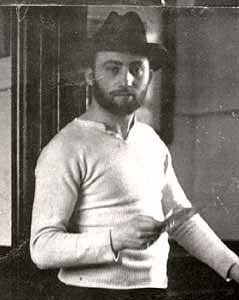
David Bomberg
1890 - 1957 , United Kingdom
Quick Facts
- Artistic Movement Or Style:
- Cubism
- Futurism
- Expressionism
- Artists Or Movements Influenced By This Artist:
- Frank Auerbach
- Leon Kossoff
- Artists Who Influenced This Artist:
- Paul Cézanne
- Walter Sickert
- Wyndham Lewis
- Date Of Birth: December 5, 1890
- Date Of Death: August 19, 1957
- Full Name: David Garshen Bomberg
- Nationality: British
- Notable Artworks:
- Self Portrait (1937)
- Kitty, the Artist’s Sister (1929)
- Study for a Painting
- Jerusalem
- Place Of Birth: Birmingham, United Kingdom

