

 Preview
 Send
Send Share
Share
 Details

 Download
 Similars
 X-Ray
X-Ray Diaporama
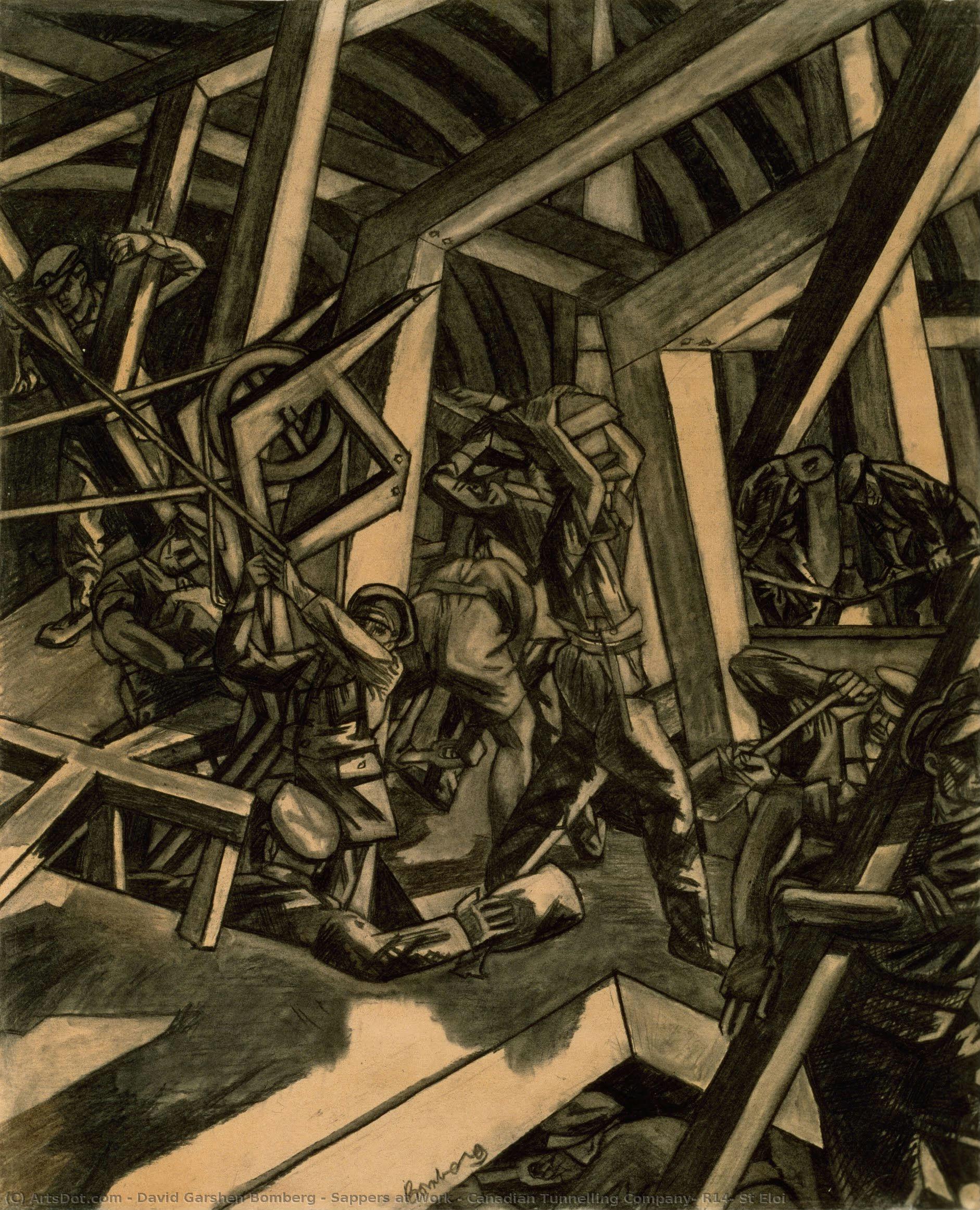
Sappers at Work : Canadian Tunnelling Company, R14, St Eloi
 Acrylic On Canvas
- WallArt
- Cubist Futurism
 1919
1919 55.0 x 67.0 cm
 Imperial War Museums
 Read More
Purchase a high-resolution, enhanced digital image, far superior to the online preview.
Each file is meticulously prepared by our in-house specialists using advanced tools and expert manual retouching. We ensure every image has exceptional clarity, precise color accuracy, and fine detail.
The final file is delivered via email within 72 hours, optimized for immediate use in professional, editorial, and print environments. This is the same quality trusted by top-tier design studios, publishers, and galleries.
Digital Image
Download a high-resolution file for personal display, printing, and creative projects. ( Buy Print Buy Hand Made Painting)
Included in Every Digital Image Order
Expert Digital Delivery, Guaranteed
When you choose ArtsDot.com, you're not just getting an image - you're receiving a professionally enhanced digital artwork, crafted with precision and backed by a satisfaction guarantee. Here's everything that comes with your order, automatically:

Fast Email Delivery
Your high-resolution digital image file will be emailed to you within 72 hours of ordering - ready for immediate use.

AI-Enhanced Digital File
Your artwork is professionally optimized using advanced AI tools and manual editing, ensuring maximum detail, clarity, and color accuracy.

Free Lifetime Re-Delivery
Accidentally deleted or lost your file? No worries - we'll resend it to you anytime, free of charge.

No Import Fees - Ever
Enjoy your artwork instantly with zero customs, duties, or delivery fees - digital downloads are always tax-free.

Color Accuracy Guarantee
We ensure your digital image reflects the original colors as closely as possible using professional tools and color management.

60-Day Satisfaction Guarantee
If you're not satisfied with your digital image, we'll revise it or refund 100% within 60 days - no questions asked.

100% Money-Back Guarantee
Not satisfied? Get a full refund within 60 days of receiving your digital file - no questions asked.

Bulk Order Discounts
Buy 3 images, save 10% - Buy 5, save 15% - Buy 10+, save 20%. Great for creative projects, galleries, and agencies.
Collectible Description
A Frozen Moment of Labor: David Bomberg’s ‘Sappers at Work’
David Bomberg's “Sappers at Work : Canadian Tunnelling Company, R14, St Eloi” isn’t merely a depiction of soldiers toiling in a tunnel; it’s a visceral embodiment of the brutal realities and extraordinary resilience forged during World War I. Painted in 1919, this preparatory sketch offers a rare glimpse into the heart of the Messines offensive – a pivotal moment in British military history where innovative tunneling techniques were employed to devastating effect against German defenses. Bomberg, a key figure within London’s avant-garde movement and deeply influenced by Cubism and Futurism, masterfully translates the chaotic energy of this subterranean operation onto paper, transforming a scene of grueling labor into a powerfully geometric composition.
The drawing immediately arrests the eye with its dynamic arrangement. Bomberg eschews traditional representational accuracy in favor of fractured forms and sharp angles, mirroring the claustrophobic and inherently unstable environment of the tunnel itself. The figures – soldiers engaged in digging, hauling timber, and operating pulleys – are reduced to simplified, almost skeletal shapes, their bodies rendered as a series of interlocking planes and lines. This deliberate abstraction isn’t an exercise in detachment; rather, it amplifies the sense of tension and urgency, conveying the immense physical strain and psychological pressure endured by these men. The rhythmic repetition of geometric forms—the converging beams, the stacked timber, the figures themselves—creates a mesmerizing visual rhythm that echoes the relentless hammering and scraping sounds within the tunnel walls.
The Context of St Eloi: Engineering Warfare
To fully appreciate “Sappers at Work,” one must understand the strategic significance of the St. Eloi tunnel system. In 1914, German forces initiated a campaign of mining under British positions at Festubert in Belgium, employing sophisticated tunneling techniques to destabilize and ultimately destroy Allied defenses. The British responded by forming specialized tunnelling companies – units comprised primarily of experienced miners recruited from across the Empire – who were tasked with counter-mining operations. The tunnel at St. Eloi, a staggering 1,650 feet long and 125 feet deep, became the site of one of the largest and most ambitious mine explosions of the war. The British employed a complex network of tunnels to detonate massive charges beneath German lines, resulting in catastrophic casualties and ultimately contributing to the Allied victory at Messines.
Bomberg’s sketch captures this pivotal moment with remarkable precision. It's not just a record of construction; it’s a visual testament to the engineering prowess and sheer audacity required to execute such a daring operation. The inclusion of details like the tools – hammers, saws, pulleys – grounds the abstract composition in the tangible reality of the work being performed. The presence of David Bomberg himself, depicted carrying a heavy beam, subtly underscores the immense burden borne by these men, highlighting their dedication and sacrifice.
Bomberg’s Artistic Vision: Bridging Abstraction and Representation
Initially, Bomberg's approach to depicting this scene was met with resistance from the Canadian authorities. His early sketches, characterized by a more overtly Futurist style – bold colors, fragmented forms, and an emphasis on dynamism – were deemed too abstract and lacking in representational accuracy for their intended purpose. However, recognizing the value of Bomberg’s artistic vision, they requested he compromise, moving towards a more balanced approach that retained the geometric energy of his earlier work while incorporating greater clarity and detail. This final sketch represents this successful negotiation—a masterful synthesis of abstract principles and observational realism.
The influence of Cubism and Futurism is undeniable in Bomberg’s treatment of space, form, and movement. Yet, he skillfully avoids the cold detachment often associated with these movements, imbuing his work with a palpable sense of human drama. The limited color palette – primarily charcoal tones – further enhances the drawing's starkness and intensity, focusing attention on the interplay of light and shadow within the claustrophobic confines of the tunnel. “Sappers at Work” is not simply a historical document; it’s a profoundly moving exploration of human endurance, ingenuity, and sacrifice—a testament to the artist’s ability to transform a scene of war into a work of enduring artistic power.
A Reproduction for Your Space
ArtsDot offers meticulously crafted hand-painted reproductions of David Bomberg's “Sappers at Work,” ensuring that this powerful artwork is accessible to collectors and art enthusiasts alike. Our skilled artists replicate the drawing’s intricate details, dynamic composition, and evocative atmosphere with exceptional precision. Available in a range of sizes, from 55 x 67 cm to larger formats, our reproductions are printed on archival-quality canvas using vibrant pigments that faithfully capture the original's nuanced tones and textures. Bring this poignant snapshot of wartime labor into your home or office – a striking addition that speaks volumes about history, artistry, and the enduring spirit of humanity.
Related Artworks





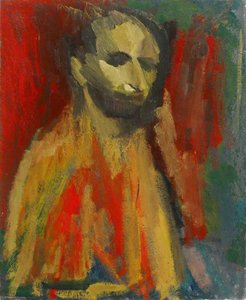
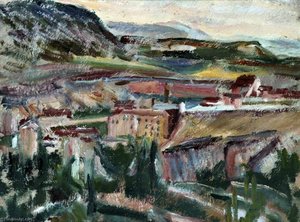
Artist Biography
Early Life and Artistic Training
- Born: Birmingham, United Kingdom (December 5, 1890)
- Died: London, United Kingdom (August 19, 1957)
- One of the 'Whitechapel Boys' – a group of East End artists who emerged in the early 20th century.
Born to Polish-Jewish immigrant parents, Abraham and Rebecca Bomberg, initially studied at the City and Guilds Technical Art School before training as a lithographer in Birmingham.
Studied under Walter Sickert at Westminster School of Art (1908-1910), influenced by Sickert's focus on form and urban life. Significant exposure to Paul Cézanne through the 1910 Roger Fry exhibition "Manet and the Post-Impressionists." Attended the Slade School of Art (1911), winning the Tonks Prize for his drawing of fellow student Isaac Rosenberg.
The Avant-Garde Years: Cubism, Futurism, and Controversy
- At the Slade, Bomberg was part of a remarkable generation including Mark Gertler, Stanley Spencer, C.R.W. Nevinson, and Dora Carrington.
- Influenced by the 1912 London exhibitions of Italian Futurists and Fry's second Post-Impressionist exhibition (Picasso, Matisse, Fauvists, Wyndham Lewis).
- Developed a distinctive style combining Cubism and Futurism – characterized by geometric compositions, limited color palettes, angular figures, and grid-like structures.
- His radical approach led to expulsion from the Slade School of Art in 1913, deemed too audacious for the institution's conventional methods.
- Briefly associated with Bloomsbury Group’s Omega Workshops and exhibited with the Camden Town Group. Showed affinity with Wyndham Lewis’s Vorticist movement but remained independent, refusing full involvement.
From War to Landscape: A Shift in Style
Experiences as a private soldier during World War I profoundly impacted his artistic vision, leading to a move away from abstraction.
The 1920s saw Bomberg adopt a more figurative style, focusing on portraits and landscapes drawn directly from nature. Developed an increasingly expressionist technique, marked by textured impasto and emotional intensity.
Extensive travels through the Middle East (particularly Palestine) and Europe significantly influenced his later work. His depictions of Jerusalem are particularly notable.
Later Years and Legacy
- From 1945 to 1953, taught at Borough Polytechnic (now London South Bank University), influencing a generation of artists including Frank Auerbach, Leon Kossoff, Philip Holmes, Cliff Holden, Edna Mann, Dorothy Mead, Gustav Metzger, Dennis Creffield, Cecil Bailey and Miles Richmond.
- Married landscape painter Lilian Holt.
- Despite periods of relative obscurity during his lifetime, Bomberg's work has gained increasing recognition in recent decades as a significant contribution to British modern art.
- David Bomberg House at London South Bank University is named in his honor.
- His legacy lies in his unique synthesis of European avant-garde movements and his later development of a powerful, expressive landscape style that captured the essence of place and human experience.
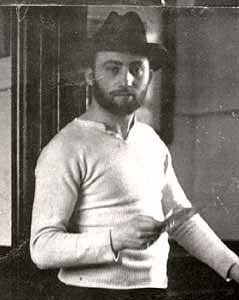
David Bomberg
1890 - 1957 , United Kingdom
Quick Facts
- Artistic Movement Or Style:
- Cubism
- Futurism
- Expressionism
- Artists Or Movements Influenced By This Artist:
- Frank Auerbach
- Leon Kossoff
- Artists Who Influenced This Artist:
- Paul Cézanne
- Walter Sickert
- Wyndham Lewis
- Date Of Birth: December 5, 1890
- Date Of Death: August 19, 1957
- Full Name: David Garshen Bomberg
- Nationality: British
- Notable Artworks:
- Self Portrait (1937)
- Kitty, the Artist’s Sister (1929)
- Study for a Painting
- Jerusalem
- Place Of Birth: Birmingham, United Kingdom

