 Preview
 Send
Send Share
Share
 Details

 Download
 Similars
 X-Ray
X-Ray Diaporama
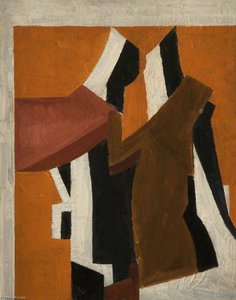
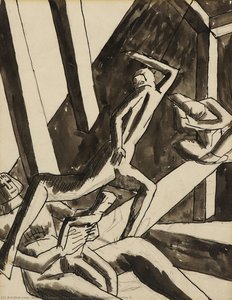
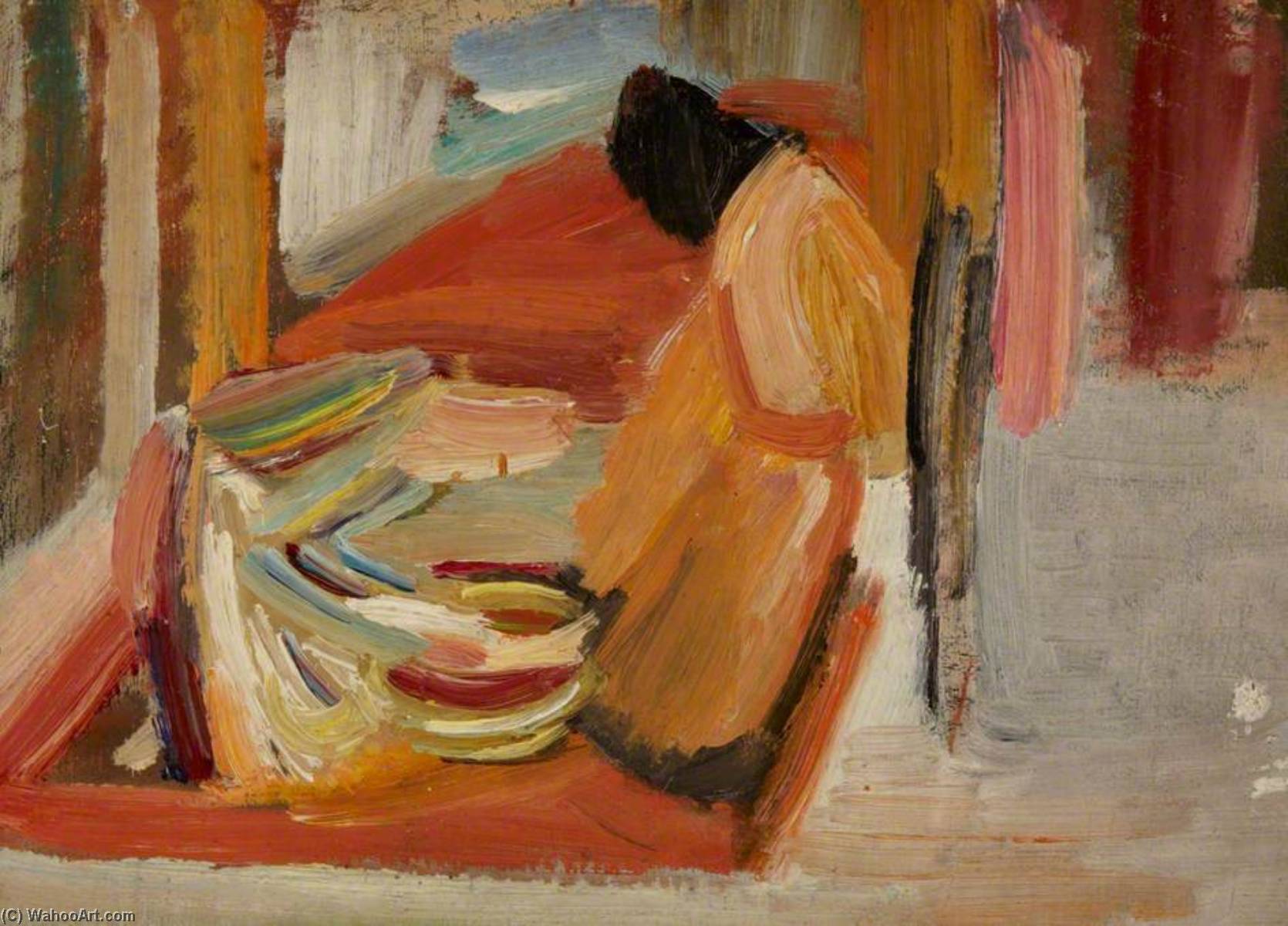
Washing of the Feet, Church of St James, Jerusalem
 Post-Impressionism
 1925
1925- Modern
 20.0 x 29.0 cm
 London South Bank University
 Read More
Giclée / Art Print
Museum-quality giclée or canvas print with fast production and flexible finish options. ( Buy Hand Made Painting Buy Image)




P118B $10

P118H $10

P118W $10

P438Z $10

P508JH $12

P508YH $12

P805H $10

P805Z $10

P919BZ $10

P919G $10

P919XJ $10

P959ZH $10

P968JZ $12

W106C $8

W218G $10

W218JH $8

W218Y $10

W307PJ $10

W316G $10

W316PJ $8

W316Y $10

W398PJ $8

W4111J $10

W500HY $15

W500JH $15

W692G $12

W849H $8

W940BG $15

W953PJ $8




Pick from our preset sizes that match the artwork's original proportions.

You may enter your own dimensions to fit a specific frame or space. If your selected size does not match the original image's proportions, we will either crop the artwork or extend the image with a mirrored or solid-fill edge. A digital mockup will be sent for your approval before production begins.
Please note that the on-screen preview does not reflect the actual cropping or extension. Only the mockup will accurately show the final composition.
While custom sizes are available, we recommend selecting a dimension from the predefined list to preserve the original proportions.
Worldwide Delivery () in 2 weeks instead of standard 4/5 weeks. (6 September)

Free Worldwide Express Shipping

High-Quality Linen Canvas

Full Shipping Insurance

Customs Tax Refund Guarantee

True Color Matching Guarantee

100-Day Return Policy (Defects Only)

100% Money-Back Guarantee

Bulk Discount Offer
 Glass option is only available in size under 110 CM

Washing of the Feet, Church of St James, Jerusalem
Giclée / Art Print
Reproduction Size
-


Total Price
$ 63
A Moment of Quietude: The Soul of David Bomberg’s Vision
In the delicate interplay of light and shadow, Washing of the Feet, Church of St James, Jerusalem emerges as a profound meditation on solitude and introspection. Created in 1925 by the visionary British artist David Bomberg, this piece transcends its literal subject matter to capture a universal human experience: the heavy, beautiful stillness of reflection. The painting presents a woman seated upon a bench, her head bowed in a posture that suggests both weariness and deep contemplation. Clad in a vibrant yellow dress that serves as the composition's luminous heart, she sits against the soft textures of a red cushion, creating a warm, inviting focal point amidst the more muted surroundings. The presence of two simple bowls resting on the bench hints at a ritualistic or domestic narrative, yet the true subject remains the internal landscape of the figure herself.
Bomberg, a pivotal figure among the 'Whitechapel Boys' and a master of form, brings a sophisticated structural sensibility to this work. While his later years would see him exploring more radical, avant-garde abstractions, this 1925 composition showcases his ability to marry the influence of Post-Impressionism with a deeply emotive, figurative approach. One can sense the echoes of Cézanne in the way the artist organizes the space—the placement of the chair behind the woman and the rhythmic positioning of the bowls create a balanced, architectural stability. The technique relies on a masterful handling of color and light, where the brightness of the yellow fabric contrasts with the somber, quiet atmosphere of the background, drawing the viewer into her private world.
For the discerning collector or interior designer, this artwork offers more than mere decoration; it provides an emotional anchor for a room. The painting’s palette—rich in ochre, crimson, and earthy tones—is exceptionally versatile, capable of adding warmth to a contemporary minimalist space or providing a sophisticated historical depth to a classical study. Because the piece focuses on a moment of quietude rather than overt action, it possesses a calming influence, making it an ideal centerpiece for environments designed for relaxation and thought. It is a work that invites the eye to linger, encouraging a slow, rhythmic engagement with its textures and tones.
Owning a high-quality reproduction of this Bomberg masterpiece allows one to bring a piece of early 20th-century art history into the modern home. The painting serves as a testament to the power of the singular, quiet moment—a reminder that even in a world of constant motion, there is profound beauty to be found in the stillness of a bowed head and a resting soul. Whether placed in a sunlit gallery or a cozy corner of a private library, this work continues to resonate with the timeless human search for peace and introspection.
Related Artworks
Artist Biography
Early Life and Artistic Training
- Born: Birmingham, United Kingdom (December 5, 1890)
- Died: London, United Kingdom (August 19, 1957)
- One of the 'Whitechapel Boys' – a group of East End artists who emerged in the early 20th century.
Born to Polish-Jewish immigrant parents, Abraham and Rebecca Bomberg, initially studied at the City and Guilds Technical Art School before training as a lithographer in Birmingham.
Studied under Walter Sickert at Westminster School of Art (1908-1910), influenced by Sickert's focus on form and urban life. Significant exposure to Paul Cézanne through the 1910 Roger Fry exhibition "Manet and the Post-Impressionists." Attended the Slade School of Art (1911), winning the Tonks Prize for his drawing of fellow student Isaac Rosenberg.
The Avant-Garde Years: Cubism, Futurism, and Controversy
- At the Slade, Bomberg was part of a remarkable generation including Mark Gertler, Stanley Spencer, C.R.W. Nevinson, and Dora Carrington.
- Influenced by the 1912 London exhibitions of Italian Futurists and Fry's second Post-Impressionist exhibition (Picasso, Matisse, Fauvists, Wyndham Lewis).
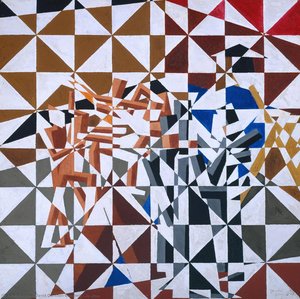
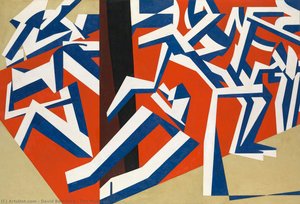
- Developed a distinctive style combining Cubism and Futurism – characterized by geometric compositions, limited color palettes, angular figures, and grid-like structures.
- His radical approach led to expulsion from the Slade School of Art in 1913, deemed too audacious for the institution's conventional methods.
- Briefly associated with Bloomsbury Group’s Omega Workshops and exhibited with the Camden Town Group. Showed affinity with Wyndham Lewis’s Vorticist movement but remained independent, refusing full involvement.
From War to Landscape: A Shift in Style
Experiences as a private soldier during World War I profoundly impacted his artistic vision, leading to a move away from abstraction.
The 1920s saw Bomberg adopt a more figurative style, focusing on portraits and landscapes drawn directly from nature. Developed an increasingly expressionist technique, marked by textured impasto and emotional intensity.
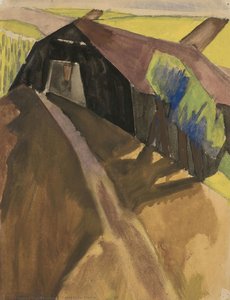
Extensive travels through the Middle East (particularly Palestine) and Europe significantly influenced his later work. His depictions of Jerusalem are particularly notable.
Later Years and Legacy
- From 1945 to 1953, taught at Borough Polytechnic (now London South Bank University), influencing a generation of artists including Frank Auerbach, Leon Kossoff, Philip Holmes, Cliff Holden, Edna Mann, Dorothy Mead, Gustav Metzger, Dennis Creffield, Cecil Bailey and Miles Richmond.
- Married landscape painter Lilian Holt.
- Despite periods of relative obscurity during his lifetime, Bomberg's work has gained increasing recognition in recent decades as a significant contribution to British modern art.
- David Bomberg House at London South Bank University is named in his honor.
- His legacy lies in his unique synthesis of European avant-garde movements and his later development of a powerful, expressive landscape style that captured the essence of place and human experience.
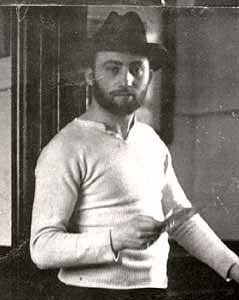
David Bomberg
1890 - 1957 , United Kingdom
Quick Facts
- Artistic Movement Or Style:
- Cubism
- Futurism
- Expressionism
- Artists Or Movements Influenced By This Artist:
- Frank Auerbach
- Leon Kossoff
- Artists Who Influenced This Artist:
- Paul Cézanne
- Walter Sickert
- Wyndham Lewis
- Date Of Birth: December 5, 1890
- Date Of Death: August 19, 1957
- Full Name: David Garshen Bomberg
- Nationality: British
- Notable Artworks:
- Self Portrait (1937)
- Kitty, the Artist’s Sister (1929)
- Study for a Painting
- Jerusalem
- Place Of Birth: Birmingham, United Kingdom
Related Articles

Crimson Threads of Narrative: Exploring Symbolism & Representation in Artworks Featuring the Red Dress
Explore the rich symbolism of the red dress in art history! From ancient power displays to iconic portraits like Cézanne’s 'Madame Cezanne', discover the cultural and artistic significance behind this captivating color. Expert analysis & insights.
Mark Rothko's Masterpieces: 25 Paintings That Define Abstract Expressionism | ArtsDot
Explore 25 iconic Mark Rothko paintings that define Abstract Expressionism. Discover the stories, colors & emotions behind these masterpieces. Find museum-quality art reproductions and curated decor ideas at ArtsDot.com.
Modigliani's Masterpieces: 25 Iconic Paintings & Sculptures | ArtsDot
Explore 25 iconic artworks by Amedeo Modigliani, from his haunting portraits to captivating sculptures. Discover the stories behind these masterpieces of early 20th-century art & find museum-quality reproductions at ArtsDot.com.
Edward Hopper's Masterpieces: 25 Iconic Paintings & Their Enduring Legacy | ArtsDot
Explore 25 iconic Edward Hopper paintings & their stories. Discover American realism, urban loneliness, and timeless beauty through his masterpieces. Find museum-quality art reproductions & curated decor ideas at ArtsDot.com.
Golden Hues: 10 Masterpieces Dominated by Chrome Yellow | ArtsDot
Immerse yourself in golden light! Explore 10 famous paintings dominated by 'Chrome Yellow', from Van Gogh’s Sunflowers to Monet's Haystacks. Discover the stories behind these iconic Impressionist & Post-Impressionist masterpieces and find museum-quality art reproductions at ArtsDot.com.