 Preview
 Send
Send Share
Share
 Details

 Download
 Similars
 X-Ray
X-Ray Diaporama
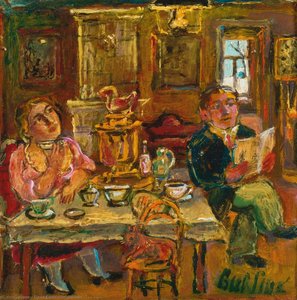
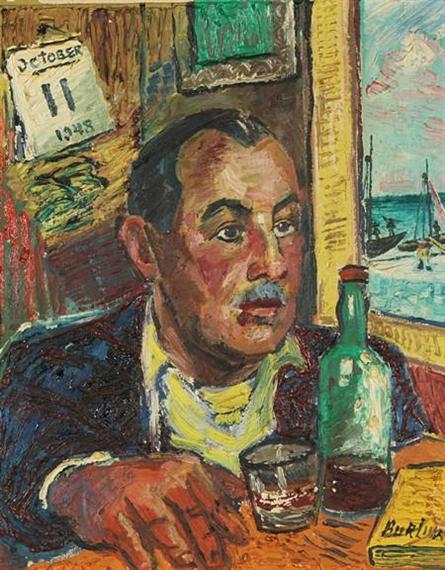
Portrait of Frank Banker
 Post-Impressionism
 1948
1948 50.0 x 40.0 cm
 Read More
Giclée / Art Print
Museum-quality giclée or canvas print with fast production and flexible finish options. ( Buy Hand Made Painting Buy Image)




































Pick from our preset sizes that match the artwork's original proportions.

You may enter your own dimensions to fit a specific frame or space. If your selected size does not match the original image's proportions, we will either crop the artwork or extend the image with a mirrored or solid-fill edge. A digital mockup will be sent for your approval before production begins.
Please note that the on-screen preview does not reflect the actual cropping or extension. Only the mockup will accurately show the final composition.
While custom sizes are available, we recommend selecting a dimension from the predefined list to preserve the original proportions.
Worldwide Delivery () in 2 weeks instead of standard 4/5 weeks. (24 August)

Free Worldwide Express Shipping

High-Quality Linen Canvas

Full Shipping Insurance

Customs Tax Refund Guarantee

True Color Matching Guarantee

60-Day Return Policy (Defects Only)

100% Money-Back Guarantee

Bulk Discount Offer
 Glass option is only available in size under 110 CM

Portrait of Frank Banker
Giclée / Art Print
Reproduction Size
-


Total Price
$ 63
Collectible Description
Artistic Style and Influences
Burliuk's work was heavily influenced by the Post-Impressionist movement, which emerged as a reaction against the naturalistic depiction of light and color in Impressionist art. As seen in the Portrait of Frank Banker, Burliuk's use of bold colors and distorted forms creates a sense of tension and emotional depth. This style is reminiscent of other notable Post-Impressionist artists, such as Pablo Picasso, who also explored the possibilities of primitivism and naive art.Composition and Symbolism
The composition of the Portrait of Frank Banker is characterized by a sense of simplicity and intimacy. The subject, Frank Banker, is seated at a table with a bottle in front of him, lost in thought. The presence of two clocks in the background adds a sense of melancholy and contemplation to the scene. This use of symbolism is typical of Burliuk's style, which often incorporated everyday objects and scenes to convey deeper emotional and psychological meanings.- The Portrait of Frank Banker is a testament to Burliuk's skill as a portrait artist, capturing the essence and personality of his subject with remarkable accuracy.
- The painting's use of color and composition creates a sense of depth and emotion, drawing the viewer into the world of the subject.
- As a representative of the Post-Impressionist movement, the Portrait of Frank Banker is an important work in the history of modern art, influencing generations of artists to come.
The Portrait of Frank Banker is a remarkable example of Burliuk's unique style and technique, showcasing his ability to capture the essence of his subjects with remarkable accuracy. As a piece of Post-Impressionist art, it continues to inspire and influence artists to this day, solidifying its place in the history of modern art.
Related Artworks
Artist Biography
The Wild Steppe Horse: A Life Forged in Futurism
David Davidovich Burliuk, a name synonymous with the explosive birth of Russian Futurism, was more than just an artist; he was a provocateur, a poet, and a tireless champion of the new. Born on July 21, 1882, in the small Ukrainian village of Semyrotivka, his lineage hinted at the spirited character to come – descended from Ukrainian Cossacks who once held positions of power within the Hetmanate. This heritage instilled in him a sense of independence and a connection to the land that would permeate his artistic vision. His mother, of Belarusian descent, further enriched this cultural tapestry. From an early age, Burliuk displayed an exuberant energy, a quality recognized by his professor Anton Ažbe at the Royal Academy in Munich, who famously dubbed him a “wonderful wild steppe horse.” This wasn’t merely a descriptor of personality; it captured the untamed force that would define his artistic trajectory.
Burliuk's formal training began at art schools in Kazan and Odesa before leading him to Munich and later Paris. These experiences exposed him to the burgeoning avant-garde movements sweeping across Europe – Fauvism, Cubism – but he didn’t simply adopt these styles; he synthesized them with his own unique sensibility, deeply rooted in Ukrainian folklore and a fascination with Scythian art. He wasn't content to merely reflect reality; he sought to shatter it, to reconstruct it into something dynamic and utterly new. This desire for radical change led him to become a pivotal figure in the formation of Hylaea, an artistic collective that embraced experimentation and challenged conventional notions of beauty.
A Slap in the Face: Pioneering Russian Futurism
The early 20th century was a period of intense social and political upheaval, and art became a battleground for new ideas. Burliuk, along with fellow artists like Vladimir Mayakovsky and Vasily Kamensky, recognized this potential. In 1912, they published the manifesto “A Slap in the Face of Public Taste,” a defiant declaration that rejected traditional artistic values and embraced the energy of modernity. This wasn’t simply an aesthetic statement; it was a call to arms, a rejection of bourgeois complacency, and a demand for art to reflect the dynamism of the machine age. The Futurists weren't just creating paintings; they were staging performances, shocking audiences with their unconventional attire – gaudy waistcoats, painted faces, even radishes worn as lapel pins – and challenging the very definition of what constituted art.
Burliuk’s artistic style during this period was a vibrant fusion of influences. He employed bold colors reminiscent of Fauvism, fragmented forms inspired by Cubism, and incorporated elements of Ukrainian folk art and Scythian motifs. His paintings weren't merely representations of objects; they were explorations of movement, energy, and the underlying forces that shaped reality. Works like Time (1918/1919) and Carrousel (1921) exemplify this approach, showcasing his mastery of cubist techniques while retaining a distinctly personal vision. He produced an astonishing volume of work – approximately 30,000 paintings throughout his career – demonstrating an unrelenting creative drive.
From Russia to America: A Life in Exile
The Russian Revolution brought immense upheaval and ultimately forced Burliuk into exile. He journeyed through Siberia, Japan, where he introduced Futurism to a new audience, before finally settling in the United States in 1922. This relocation marked a significant shift in his life and work. While he continued to paint prolifically, adapting his style to reflect his new surroundings, he also took on various roles – art editor for the Russian-language newspaper The Russian Voice, teacher, and tireless promoter of modern art.
Despite facing challenges as an émigré artist, Burliuk remained committed to his artistic vision. His later works often depicted American landscapes and scenes from everyday life, but they retained the energy and experimentation that characterized his earlier paintings. He continued to explore themes of vitality, transformation, and the interconnectedness of all things. He never abandoned his love for Ukrainian culture, weaving elements of its folklore and history into his art even while living thousands of miles away.
A Lasting Legacy: The Father of Russian Futurism
David Burliuk passed away on January 15, 1967, in Southampton, New York, leaving behind a vast and diverse body of work that continues to inspire artists and scholars today. His contributions to the development of Russian Futurism were immense, and his influence can be seen in the works of countless subsequent generations of artists. He wasn’t just an artist who painted pictures; he was a cultural force who challenged conventions, sparked debate, and helped to redefine the boundaries of art itself.
Today, Burliuk's paintings are held in numerous museums around the world, including the Museum Fridericia in Denmark, which boasts an impressive collection of his work. His legacy as the “father of Russian Futurism” is secure, a testament to his unwavering commitment to innovation and his enduring belief in the power of art to transform the world. He remains a compelling figure – a wild steppe horse who galloped fearlessly into the future, leaving an indelible mark on the history of modern art.
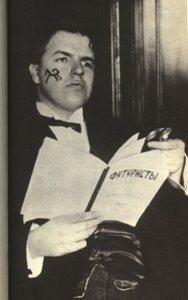
David Davidovich Burliuk
1882 - 1967
Quick Facts
- Artistic Movement Or Style: Futurism, Neo-Primitivism
- Artists Or Movements Influenced By This Artist: Russian Futurism
- Date Of Birth: July 21, 1882
- Date Of Death: January 15, 1967
- Full Name: David Davidovich Burliuk
- Nationality: Russian/Ukrainian
- Notable Artworks:
- Time
- Carrousel
- Two tastes in one
- Place Of Birth: Semyrotivka, Ukraine