 Preview
 Send
Send Share
Share
 Details

 Download
 Similars
 X-Ray
X-Ray Diaporama
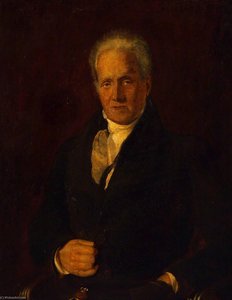
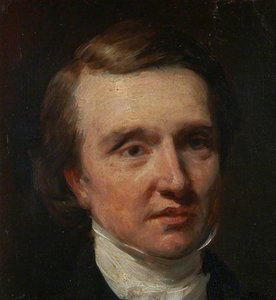
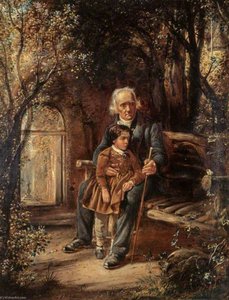
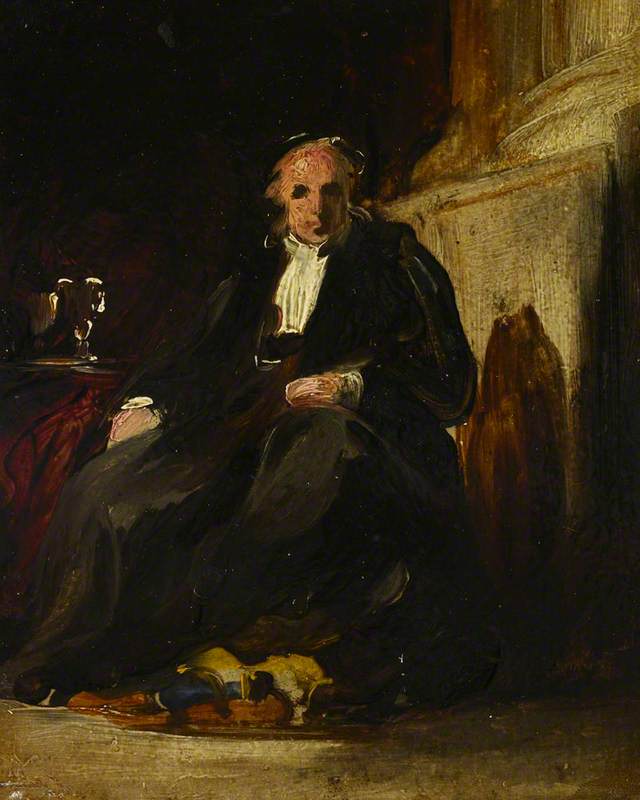
Portrait of a Minister
 13.0 x 12.0 cm
 Read More
Giclée / Art Print
Museum-quality giclée or canvas print with fast production and flexible finish options. ( Buy Hand Made Painting Buy Image)




































Pick from our preset sizes that match the artwork's original proportions.

You may enter your own dimensions to fit a specific frame or space. If your selected size does not match the original image's proportions, we will either crop the artwork or extend the image with a mirrored or solid-fill edge. A digital mockup will be sent for your approval before production begins.
Please note that the on-screen preview does not reflect the actual cropping or extension. Only the mockup will accurately show the final composition.
While custom sizes are available, we recommend selecting a dimension from the predefined list to preserve the original proportions.
Worldwide Delivery () in 2 weeks instead of standard 4/5 weeks. (25 August)

Free Worldwide Express Shipping

High-Quality Linen Canvas

Full Shipping Insurance

Customs Tax Refund Guarantee

True Color Matching Guarantee

60-Day Return Policy (Defects Only)

100% Money-Back Guarantee

Bulk Discount Offer
 Glass option is only available in size under 110 CM

Portrait of a Minister
Giclée / Art Print
Reproduction Size
-


Total Price
$ 63
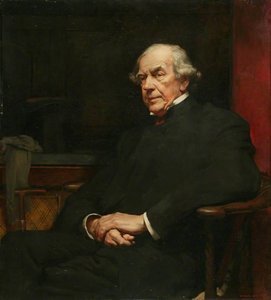
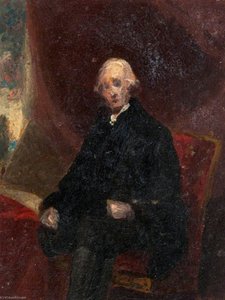
Related Artworks








Artist Biography
The Visionary Light of David Octavius Hill
In the mid-nineteenth century, as the world stood on the precipice of a technological revolution, David Octavius Hill emerged not merely as a chronicler of reality, but as a poet of light. Born in 1802 in Perth, Scotland, Hill possessed an intellect shaped by the rigorous disciplines of mathematics and natural philosophy at Edinburgh University. This scientific foundation, paired with his early training in lithography and painting, allowed him to approach the nascent medium of photography with a rare duality: the precision of a scientist and the soul of an artist. While many saw the camera as a mere tool for mechanical reproduction, Hill envisioned it as a brush capable of capturing the profound psychological depths of the human condition.
His journey into the heart of photographic history was inextricably linked to his partnership with the engineer Robert Adamson. Together, they established the first photography studio in Scotland in 1843, creating a collaborative sanctuary where chemistry and art converged. Their work was defined by the use of the calotype process, a revolutionary method pioneered by William Henry Fox Talbot. Unlike the sharp, clinical clarity of the daguerreotype, the calotype offered a soft, textured grain that allowed for a more painterly expression. Through this medium, Hill and Adamson achieved a Rembrandtesque mastery of chiaroscuro, using dramatic shadows and luminous highlights to imbue their portraits with an almost spiritual weight.
A Legacy Etched in Shadow and Silver
The partnership of Hill and Adamson was brief but incandescent, lasting only from 1843 until Adamson's untimely death in 1847. Yet, in those few years, they produced a body of work that remains the cornerstone of Scottish photographic art. Their subjects ranged from the rugged, salt-laced faces of Newhaven fishermen to the dignified silhouettes of Edinburgh’s intellectual elite. Hill’s innate ability to put sitters at ease—a skill honed during his years as a prominent painter—allowed him to capture more than just a likeness; he captured an essence. In images such as those featuring Reverend Thomas Chalmers, one can sense the heavy atmosphere of Victorian morality and the quiet dignity of a life dedicated to social reform.
<- The Calotype Revolution: Hill utilized the negative-positive process to create multiple prints, allowing for an artistic consistency that helped establish photography as a fine art.
- Artistic Composition: Drawing from his background in painting, Hill applied classical principles of composition and light to much earlier photographic subjects.
- Cultural Documentation: His work serves as a vital visual archive of 19th-century Scottish landscapes, industry, and social strata.
Beyond the studio walls, Hill’s influence extended into the very fabric of the Scottish art scene. As an arts activist and painter, his contributions to the development of local institutions were as significant as his photographic prints. Even as he moved away from the camera following Adamson's death, the aesthetic principles he helped pioneer—the emphasis on tonal depth, texture, and emotional resonance—continued to ripple through the generations of photographers who followed. Today, the name David Octavius Hill stands as a testament to the moment when the mechanical eye first learned to see with the heart of an artist.
david octavius hill
1802 - 1870
Quick Facts
- Artistic Movement Or Style: Calotype Photography
- Artists Or Movements Influenced By This Artist: ['Romanticism']
- Artists Who Influenced This Artist: ['Rembrandt']
- Date Of Birth: 1802
- Date Of Death: 1870
- Full Name: David Octavius Hill
- Nationality: Scottish
- Notable Artworks:
- Kilmarnock Cross
- David Octavius Hill & Robert Adamson
- Thomas Hill
- Place Of Birth: Edinburgh, Scotland