 Preview
 Send
Send Share
Share
 Details

 Download
 Similars
 X-Ray
X-Ray Diaporama
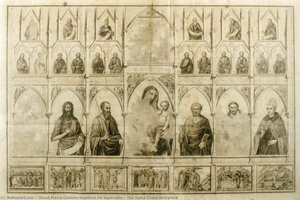
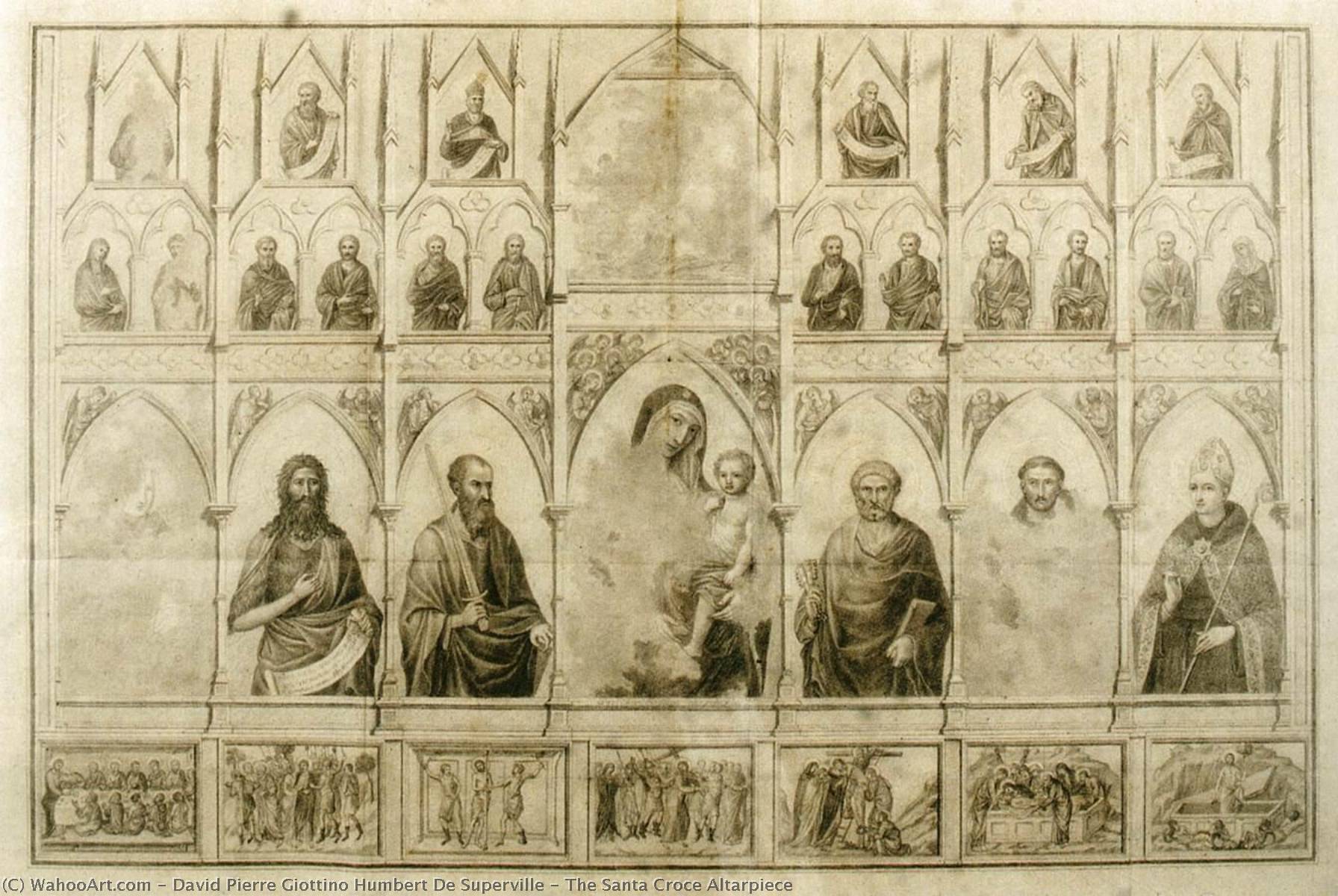
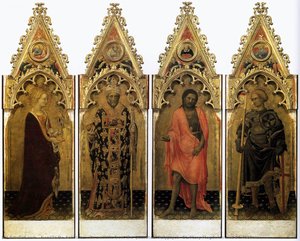
The Santa Croce Altarpiece
 Read More
Giclée / Art Print
Museum-quality giclée or canvas print with fast production and flexible finish options. ( Buy Hand Made Painting Buy Image)




































Pick from our preset sizes that match the artwork's original proportions.

You may enter your own dimensions to fit a specific frame or space. If your selected size does not match the original image's proportions, we will either crop the artwork or extend the image with a mirrored or solid-fill edge. A digital mockup will be sent for your approval before production begins.
Please note that the on-screen preview does not reflect the actual cropping or extension. Only the mockup will accurately show the final composition.
While custom sizes are available, we recommend selecting a dimension from the predefined list to preserve the original proportions.
Worldwide Delivery () in 2 weeks instead of standard 4/5 weeks. (28 August)

Free Worldwide Express Shipping

High-Quality Linen Canvas

Full Shipping Insurance

Customs Tax Refund Guarantee

True Color Matching Guarantee

60-Day Return Policy (Defects Only)

100% Money-Back Guarantee

Bulk Discount Offer
 Glass option is only available in size under 110 CM

The Santa Croce Altarpiece
Giclée / Art Print
Reproduction Size
-


Total Price
$ 63
Related Artworks


Artist Biography
The Visionary Architect of Signs: David Pierre Giottino Humbert de Superville
In the grand tapestry of nineteenth-century European art, few figures possess a legacy as intellectually profound and stylistically enigmatic as David Pierre Giottino Humbert de Superville. Born in The Hague on July 18, 1770, Giottino emerged from a lineage deeply embedded in the artistic fabric of Europe. His father, Jean Humbert, was a painter of Swiss and French descent, providing a foundation of classical training and aesthetic curiosity. This early immersion in a world of pigment and form was further enriched by his brother, the military engineer Jean Emile Humbert, whose archaeological exploits in the rediscovery of Carthage instilled in David a lifelong fascination with uncovering hidden narratives and the profound mysteries buried beneath the surface of history.
Giottino’s artistic identity was forged through a unique synthesis of Northern precision and Italian inspiration. His formative years spent traversing Italy left an indelible mark on his soul, leading him to adopt the moniker “giottino” in homage to the master Giotto di Bondone. This connection to the early Renaissance masters informed a visual language that sought to bridge the gap between meticulous realism and a deeper, more spiritualized truth. His draughtsmanship, characterized by subtle tonal gradations and an almost obsessive attention to detail, allowed him to navigate diverse mediums—from the delicate intimacy of lithography and etching to the commanding presence of oil portraiture.
A Mastery of Form and Psychological Depth
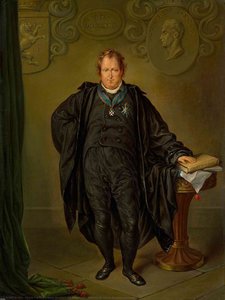
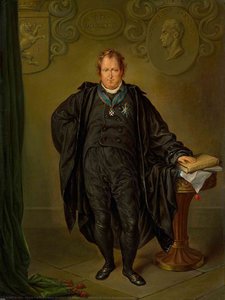
The breadth of Giottino’s technical repertoire is a testament to his versatility as a creator. As a portrait painter, he possessed a rare ability to transcend mere likeness, capturing the psychological essence and nuanced emotions of his subjects. His 1815 portrait of the statesman Johan Melchological Kemper, now preserved in the prestigious Rijksmuseum in Amsterdam, stands as a pinnacle of this achievement, showcasing a profound command over light and shadow to convey the gravity of character. Yet, it was perhaps in his more allegorical and symbolic works where his true visionary spirit resided.
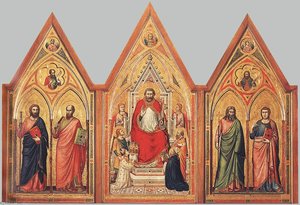
His 1801 etching, Allegory, serves as a hauntingly beautiful example of his ability to evoke the sublime. The work’s evocative power is so potent that it has been noted as a potential visual precursor to the later Symbolist masterpieces, such as Paul Gauguin's Spirit of the Dead Watching. In works like The Santa Croce Altarpiece, Giottino demonstrated how color and composition could be harnessed not just for literal depiction, but to resonate with the emotional and spiritual frequencies of the viewer, prioritizing a sense of atmospheric mystery over anatomical rigidity.
The Scholar’s Legacy: Pioneering Symbolist Thought
Beyond the physical creation of art, Giottino was a formidable intellectual force whose writings helped shape the trajectory of modern art theory. He was not merely a practitioner but a profound scholar of the visual language itself. His seminal 1827 treatise, Essai sur les signes inconditionnels dans l'art (Essay on Unconditional Signs in Art), remains a landmark contribution to art history. In this work, he explored the semiotics of imagery, investigating how certain forms and symbols could communicate universal truths that bypass linguistic barriers.
This scholarly pursuit positioned him as a precursor to the Symbolist movement, long before the term became a defined artistic era. By championing the idea that art could function through a system of "unconditional signs," he paved the way for future generations to explore the subconscious and the metaphysical through visual metaphor. His life, which concluded in Leiden on January 9, 1849, left behind a dual legacy: a body of work that captures the exquisite detail of the age, and a theoretical framework that continues to challenge how we perceive the profound meaning hidden within every line and shadow.
david pierre giottino humbert de superville
1770 - 1849
Quick Facts
- Artistic Movement Or Style: Symbolist
- Artists Or Movements Influenced By This Artist: ['']
- Artists Who Influenced This Artist: ['Giotto']
- Date Of Birth: 1770
- Date Of Death: 1849
- Full Name: David Pierre Giottino Humbert de Superville
- Nationality: Dutch
- Notable Artworks:
- Portrait of Johan Melchior Kemper
- The Santa Croce Altarpiece
- Place Of Birth: The Hague, Netherlands