

 Preview
 Send
Send Share
Share
 Details

 Download
 Similars
 X-Ray
X-Ray Diaporama
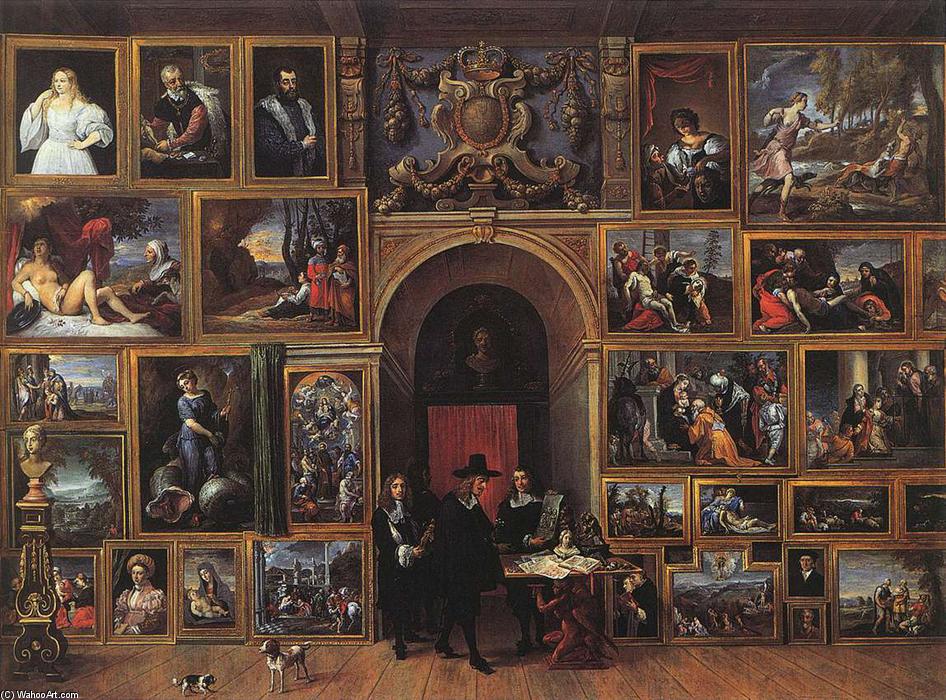
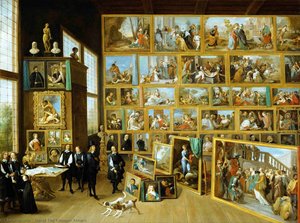
Archduke Leopold Wilhelm of Austria in his Gallery
 Oil On Canvas
- WallArt
- Baroque
 1651
1651- Early Modern
 96.0 x 129.0 cm
 Musées Royaux des Beaux-Arts
 Read More
Purchase a high-resolution, enhanced digital image, far superior to the online preview.
Each file is meticulously prepared by our in-house specialists using advanced tools and expert manual retouching. We ensure every image has exceptional clarity, precise color accuracy, and fine detail.
The final file is delivered via email within 72 hours, optimized for immediate use in professional, editorial, and print environments. This is the same quality trusted by top-tier design studios, publishers, and galleries.
Digital Image
Download a high-resolution file for personal display, printing, and creative projects. ( Buy Print Buy Hand Made Painting)
Included in Every Digital Image Order
Expert Digital Delivery, Guaranteed
When you choose ArtsDot.com, you're not just getting an image - you're receiving a professionally enhanced digital artwork, crafted with precision and backed by a satisfaction guarantee. Here's everything that comes with your order, automatically:

Fast Email Delivery
Your high-resolution digital image file will be emailed to you within 72 hours of ordering - ready for immediate use.

AI-Enhanced Digital File
Your artwork is professionally optimized using advanced AI tools and manual editing, ensuring maximum detail, clarity, and color accuracy.

Free Lifetime Re-Delivery
Accidentally deleted or lost your file? No worries - we'll resend it to you anytime, free of charge.

No Import Fees - Ever
Enjoy your artwork instantly with zero customs, duties, or delivery fees - digital downloads are always tax-free.

Color Accuracy Guarantee
We ensure your digital image reflects the original colors as closely as possible using professional tools and color management.

60-Day Satisfaction Guarantee
If you're not satisfied with your digital image, we'll revise it or refund 100% within 60 days - no questions asked.

100% Money-Back Guarantee
Not satisfied? Get a full refund within 60 days of receiving your digital file - no questions asked.

Bulk Order Discounts
Buy 3 images, save 10% - Buy 5, save 15% - Buy 10+, save 20%. Great for creative projects, galleries, and agencies.
A Grand Tableau of Flemish Splendor
In the heart of the mid-seventeenth century, amidst the opulent corridors of the Spanish Netherlands, David Teniers the Younger captured more than just a portrait; he froze a moment of profound cultural prestige. His 1651 masterpiece, Archduke Leopold Wilhelm of Austria in his Gallery, serves as an exquisite window into the soul of the Flemish Baroque. The painting presents us with a meticulously staged scene where the boundaries between reality and art dissolve. We find the Archduke not merely posing for posterity, but actively participating in the intellectual life of his era, surrounded by a breathtaking assembly of sculptures and canvases that speak to a lifetime of curated passion.
The composition is a masterclass in narrative depth. As the viewer’s eye wanders through the gallery, it encounters the Archduke engaged in animated discourse with two gentlemen, their gestures suggesting the spirited debate of connoisseurs. This is not a static memorial but a living, breathing space filled with movement and social grace. The presence of other figures, some lost in quiet observation and others caught in mid-conversation, creates a sense of a bustling, vibrant salon. For the modern collector or interior designer, this painting offers an unparalleled sense of grandeur and intellectual vitality, making it a centerpiece that commands attention through its sheer narrative complexity.
The Mastery of Light and Texture
Technically, Teniers demonstrates why he was the preeminent genre painter of his day. Utilizing the dramatic chiaroscuro characteristic of the Baroque period, he employs sharp contrasts between light and shadow to sculpt the figures from the darkness of the gallery. This technique does more than provide depth; it directs our gaze, illuminating the Archduke’s dignified countenance and the fine textures of his aristocratic attire. One can almost feel the weight of the heavy fabrics and the cool smoothness of the marble pedestals through the artist's precise brushwork.
The artist’s ability to render atmospheric perspective is equally profound. As the eye moves toward the rear of the gallery, the distant artworks soften, creating an immersive sense of vastness that draws the viewer into the room itself. Every element, from the glint of light on a polished sculpture to the intricate details of the paintings hanging on the walls, is rendered with a realism that celebrates the tactile beauty of the physical world. This level of detail ensures that a high-quality reproduction remains a captivating focal point, offering layers of discovery upon every viewing.
A Legacy of Patronage and Prestige
Beyond its aesthetic brilliance, the work carries immense historical weight. The painting serves as a visual manifesto for Archduke Leopold Wilhelm, documenting his role as a premier patron of the arts. By depicting himself amidst his collection, the Archduke asserts his status not just as a political leader, but as a man of refined taste and scholarly pursuit. This intersection of power and culture is what gives the piece its enduring emotional impact; it evokes a sense of nostalgia for an age where art was the ultimate currency of prestige.
For those looking to infuse their spaces with a sense of history and sophistication, this work provides more than decoration. It brings into a contemporary home the spirit of the 17th-century Flemish court—a spirit of curiosity, elegance, and an unwavering devotion to beauty. Whether placed in a formal study or a grand living hall, Teniers' vision continues to inspire awe, reminding us that true art is a dialogue between the past and the present.
Related Artworks

Artist Biography
David Teniers the Younger: Life and Legacy
Early Life and Family Background
- Born: Antwerp, Belgium, December 15, 1610.
- David Teniers the Younger came from a family deeply rooted in the artistic tradition of Flanders. His father, David Teniers the Elder, was also a painter, and several of his siblings pursued careers as artists.
- Training: He initially studied under his father, receiving foundational training in painting techniques and styles.
- The family faced financial difficulties at times, leading young David to make copies of older master paintings to contribute to the household income.
Artistic Development and Influences
- Early Influences: His early work was heavily influenced by his father’s style, focusing on smaller-scale cabinet paintings. He also absorbed influences from other Flemish masters like Pieter Bruegel the Elder.
- Rubens' Impact: A pivotal moment in Teniers’ development came through his association with Peter Paul Rubens. He married Anna Brueghel, daughter of Jan Brueghel the Elder, and Rubens served as a witness at their wedding, establishing a close relationship.
- Genre Specialization: Teniers gradually specialized in genre painting – depictions of everyday life – becoming renowned for his lively scenes of peasant festivals (kermesses), tavern interiors, and village landscapes.
Major Works and Artistic Style
- Genre Scenes: His most celebrated works are his genre paintings. These often depict bustling scenes of peasant life filled with merriment, dancing, drinking, and games.
- Kermess Paintings: The “Flemish Kermess” series exemplifies his style – vibrant colors, detailed compositions, and a keen observation of human behavior.
- Landscape Painting: Teniers also produced charming landscape paintings, often incorporating figures engaged in rural activities.
- Tavern Interiors: His tavern scenes are particularly notable for their realistic portrayal of everyday life and the lively atmosphere within these establishments.
Court Painter and Curator
- Service to Archduke Leopold Wilhelm: Teniers’ talent gained recognition at the Habsburg court. He became a court painter and curator for Archduke Leopold Wilhelm, the Governor General of the Spanish Netherlands.
- Collection Management: As curator, he was responsible for managing the Archduke's extensive art collection, creating an inventory and cataloging the works.
- Founding the Antwerp Academy: Teniers played a crucial role in establishing the Antwerp Academy of Fine Arts, aiming to revitalize Flemish painting after a period of decline following the deaths of Rubens and Van Dyck.
Historical Significance and Legacy
- Leading Genre Painter: David Teniers the Younger is considered the leading Flemish genre painter of his time, capturing the essence of 17th-century life with remarkable skill.
- Influence on Later Artists: His work influenced subsequent generations of Northern European painters and even impacted French Rococo artists like Antoine Watteau.
- Prolific Output: Teniers was an incredibly prolific artist, producing a vast body of work that continues to be admired for its charm, detail, and historical insight.
- Death: He died in Antwerp on April 25, 1690, leaving behind a lasting legacy as one of Flanders’ most important Baroque painters.
David Teniers the Younger
1610 - 1690 , Belgium
Quick Facts
- Birth Date: 1610
- Birth Place: Antwerp, Belgium
- Death Date: 1690
- Influenced By: Peter Paul Rubens
- Movement: Baroque
- Name: David Teniers the Younger
- Nationality: Flemish
- Notable Works:
- Two Drunkards
- Village Scene
- Kitchen Scene
- Flemish Kermess

