

 Preview
 Send
Send Share
Share
 Details

 Download
 Similars
 X-Ray
X-Ray Diaporama
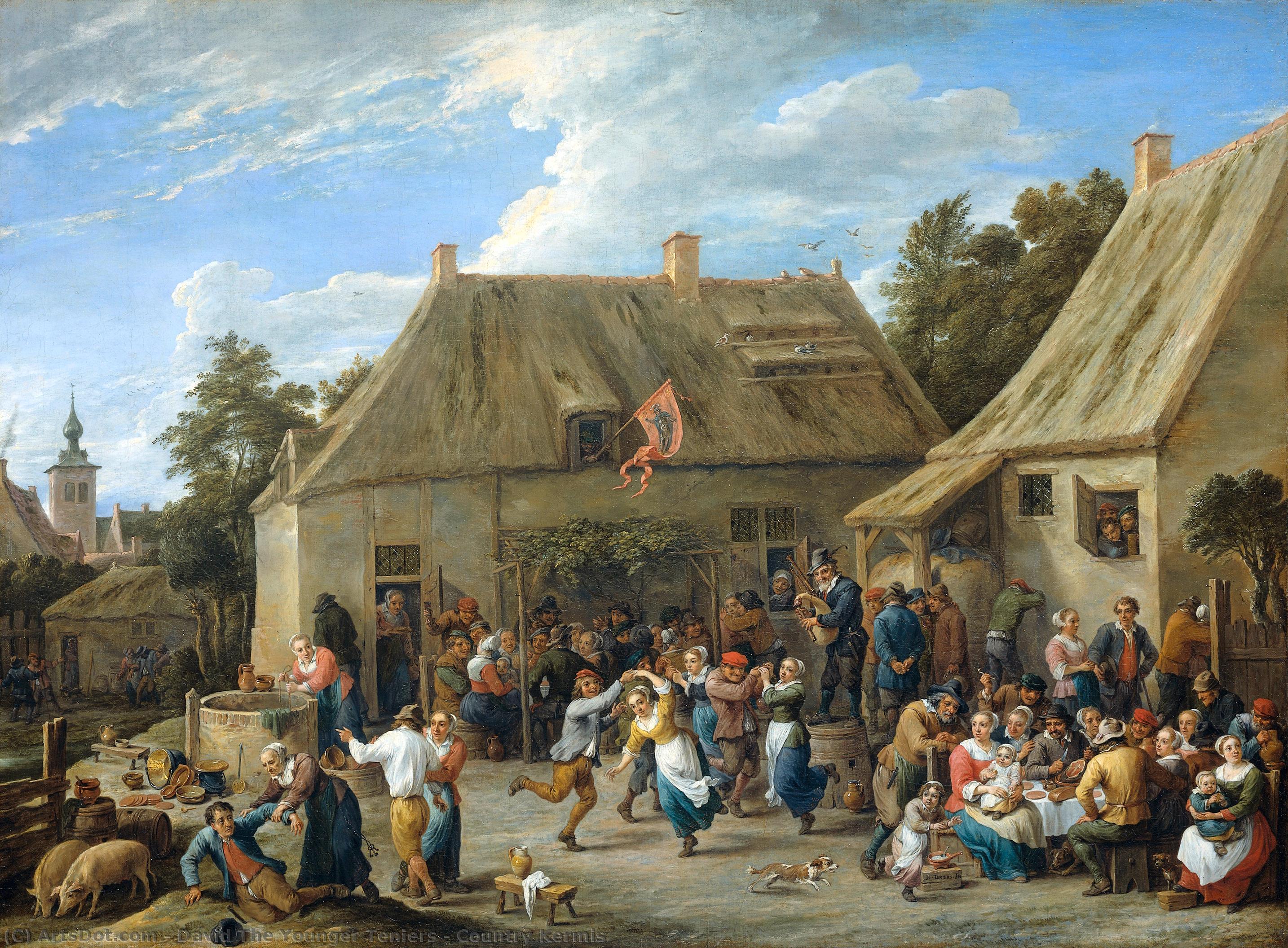
Country Kermis
 Oil On Canvas
- WallArt
- Baroque Genre Painting
 1650
1650 78.0 x 106.0 cm
 Rijksmuseum
 Read More
Purchase a high-resolution, enhanced digital image, far superior to the online preview.
Each file is meticulously prepared by our in-house specialists using advanced tools and expert manual retouching. We ensure every image has exceptional clarity, precise color accuracy, and fine detail.
The final file is delivered via email within 72 hours, optimized for immediate use in professional, editorial, and print environments. This is the same quality trusted by top-tier design studios, publishers, and galleries.
Digital Image
Download a high-resolution file for personal display, printing, and creative projects. ( Buy Print Buy Hand Made Painting)
Included in Every Digital Image Order
Expert Digital Delivery, Guaranteed
When you choose ArtsDot.com, you're not just getting an image - you're receiving a professionally enhanced digital artwork, crafted with precision and backed by a satisfaction guarantee. Here's everything that comes with your order, automatically:

Fast Email Delivery
Your high-resolution digital image file will be emailed to you within 72 hours of ordering - ready for immediate use.

AI-Enhanced Digital File
Your artwork is professionally optimized using advanced AI tools and manual editing, ensuring maximum detail, clarity, and color accuracy.

Free Lifetime Re-Delivery
Accidentally deleted or lost your file? No worries - we'll resend it to you anytime, free of charge.

No Import Fees - Ever
Enjoy your artwork instantly with zero customs, duties, or delivery fees - digital downloads are always tax-free.

Color Accuracy Guarantee
We ensure your digital image reflects the original colors as closely as possible using professional tools and color management.

60-Day Satisfaction Guarantee
If you're not satisfied with your digital image, we'll revise it or refund 100% within 60 days - no questions asked.

100% Money-Back Guarantee
Not satisfied? Get a full refund within 60 days of receiving your digital file - no questions asked.

Bulk Order Discounts
Buy 3 images, save 10% - Buy 5, save 15% - Buy 10+, save 20%. Great for creative projects, galleries, and agencies.
Collectible Description
A Snapshot of Flemish Festivity: David Teniers the Younger’s “Country Kermis”
David Teniers the Younger's "Country Kermis" (c. 1650) isn’t merely a depiction of a village fair; it’s a vibrant distillation of 17th-century Flemish life, brimming with social commentary and painted with an almost palpable sense of joyous chaos. This oil on canvas offers a captivating glimpse into the heart of rural Belgium, capturing not just the event itself but also the intricate relationships and everyday rituals that defined community in a rapidly changing world. The painting’s immediate appeal lies in its sheer abundance – a teeming throng of figures engaged in a multitude of activities: dancing, eating, drinking, gossiping, and simply enjoying each other's company. Yet, beneath this surface exuberance, Teniers subtly layers observations about social hierarchy, local customs, and the fleeting nature of pleasure.
The Scene Unfolds: Composition and Detail
The composition is masterfully orchestrated, drawing the viewer into the bustling center of the kermis. A thatched-roof building anchors the scene, providing a sense of stability amidst the swirling activity. The artist employs a dynamic arrangement, utilizing diagonal lines created by the figures to guide the eye across the canvas. Notice the careful attention to detail – from the richly colored clothing and hairstyles to the scattered objects like bottles, bowls, and cups, each element contributes to the overall atmosphere. A dog playfully weaves through the crowd, adding an element of domesticity and perhaps even a touch of mischief. The horse on the left side acts as a visual anchor, grounding the scene in the rural landscape.
Technique and Style: Baroque Charm with a Local Touch
Painted in the vibrant style characteristic of the Baroque period, “Country Kermis” showcases Teniers’ skill in capturing light and shadow. He masterfully employs chiaroscuro – the dramatic contrast between light and dark – to create depth and volume within the scene. The colors are rich and saturated, reflecting the warmth of the sun and the festive mood. Teniers' training under his father, David Teniers the Elder, is evident in the detailed rendering of fabrics and objects, while influences from Pieter Bruegel the Elder can be seen in the artist’s ability to depict a large number of figures within a relatively small space. However, unlike Bruegel’s often satirical observations, Teniers presents a more idealized vision of rural life – a celebration of community and shared experience.
Symbolism and Social Commentary
Beyond the simple depiction of a village fair, “Country Kermis” offers subtle social commentary. The variety of activities suggests a microcosm of society – merchants, farmers, laborers, and women all mingling together. The presence of drinking and dancing hints at a loosening of social constraints, while the careful observation of clothing and possessions reveals insights into local wealth and status. The inclusion of the dog, a common companion in rural life, reinforces the connection between people and their environment. Ultimately, Teniers’ painting is not just a record of a specific event; it's a nuanced portrait of a community at play, capturing both its joys and its complexities. It invites us to contemplate the enduring appeal of communal gatherings and the timeless human desire for social connection.
For a high-quality hand-painted reproduction of “Country Kermis,” visit ArtsDot.com.
Related Artworks
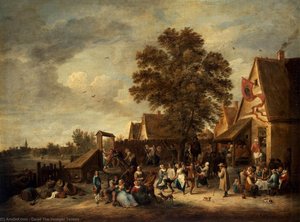
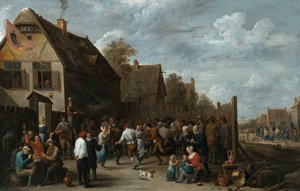
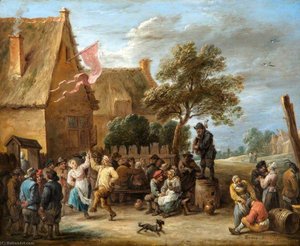
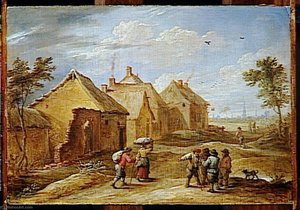
Artist Biography
David Teniers the Younger: Life and Legacy
Early Life and Family Background
- Born: Antwerp, Belgium, December 15, 1610.
- David Teniers the Younger came from a family deeply rooted in the artistic tradition of Flanders. His father, David Teniers the Elder, was also a painter, and several of his siblings pursued careers as artists.
- Training: He initially studied under his father, receiving foundational training in painting techniques and styles.
- The family faced financial difficulties at times, leading young David to make copies of older master paintings to contribute to the household income.
Artistic Development and Influences
- Early Influences: His early work was heavily influenced by his father’s style, focusing on smaller-scale cabinet paintings. He also absorbed influences from other Flemish masters like Pieter Bruegel the Elder.
- Rubens' Impact: A pivotal moment in Teniers’ development came through his association with Peter Paul Rubens. He married Anna Brueghel, daughter of Jan Brueghel the Elder, and Rubens served as a witness at their wedding, establishing a close relationship.
- Genre Specialization: Teniers gradually specialized in genre painting – depictions of everyday life – becoming renowned for his lively scenes of peasant festivals (kermesses), tavern interiors, and village landscapes.
Major Works and Artistic Style
- Genre Scenes: His most celebrated works are his genre paintings. These often depict bustling scenes of peasant life filled with merriment, dancing, drinking, and games.
- Kermess Paintings: The “Flemish Kermess” series exemplifies his style – vibrant colors, detailed compositions, and a keen observation of human behavior.
- Landscape Painting: Teniers also produced charming landscape paintings, often incorporating figures engaged in rural activities.
- Tavern Interiors: His tavern scenes are particularly notable for their realistic portrayal of everyday life and the lively atmosphere within these establishments.
Court Painter and Curator
- Service to Archduke Leopold Wilhelm: Teniers’ talent gained recognition at the Habsburg court. He became a court painter and curator for Archduke Leopold Wilhelm, the Governor General of the Spanish Netherlands.
- Collection Management: As curator, he was responsible for managing the Archduke's extensive art collection, creating an inventory and cataloging the works.
- Founding the Antwerp Academy: Teniers played a crucial role in establishing the Antwerp Academy of Fine Arts, aiming to revitalize Flemish painting after a period of decline following the deaths of Rubens and Van Dyck.
Historical Significance and Legacy
- Leading Genre Painter: David Teniers the Younger is considered the leading Flemish genre painter of his time, capturing the essence of 17th-century life with remarkable skill.
- Influence on Later Artists: His work influenced subsequent generations of Northern European painters and even impacted French Rococo artists like Antoine Watteau.
- Prolific Output: Teniers was an incredibly prolific artist, producing a vast body of work that continues to be admired for its charm, detail, and historical insight.
- Death: He died in Antwerp on April 25, 1690, leaving behind a lasting legacy as one of Flanders’ most important Baroque painters.
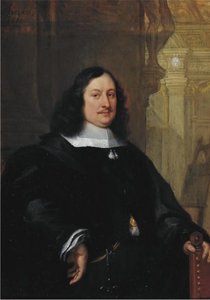
David Teniers the Younger
1610 - 1690 , Belgium
Quick Facts
- Birth Date: 1610
- Birth Place: Antwerp, Belgium
- Death Date: 1690
- Influenced By: Peter Paul Rubens
- Movement: Baroque
- Name: David Teniers the Younger
- Nationality: Flemish
- Notable Works:
- Two Drunkards
- Village Scene
- Kitchen Scene
- Flemish Kermess

