 Preview
 Send
Send Share
Share
 Details

 Download
 Similars
 X-Ray
X-Ray Diaporama
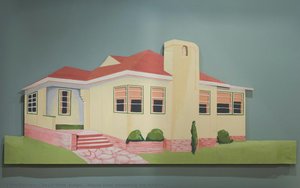
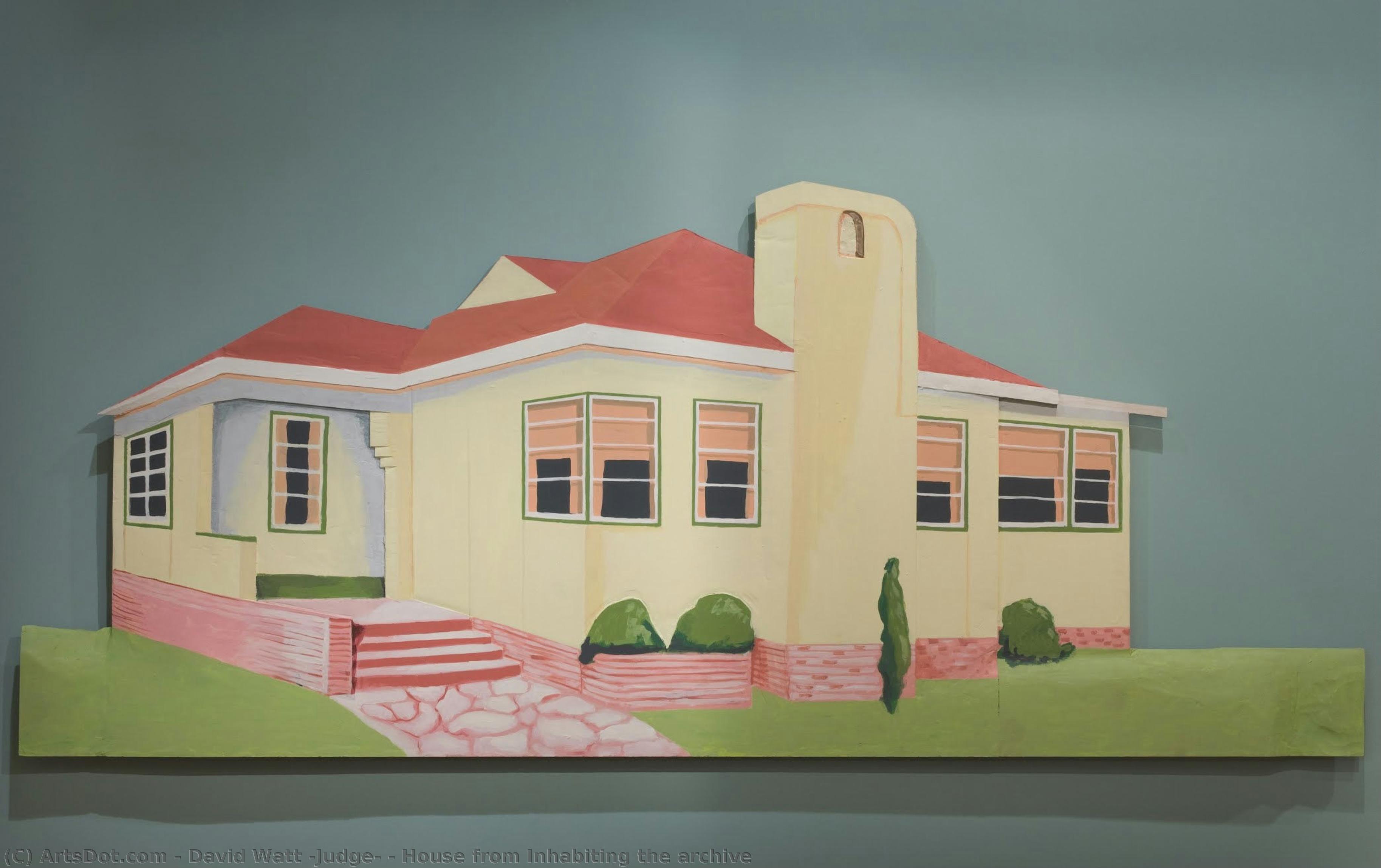
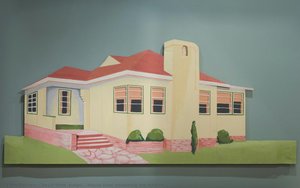
House from Inhabiting the archive
 116.0 x 272.0 cm
 Canberra Museum and Gallery
 Read More
Hand Made Oil Reproduction
Hand-painted oil on canvas in your size and frame, made to order by our artists. ( Buy Print Buy Image)




































Pick from our preset sizes that match the artwork's original proportions.

You may enter your own dimensions to fit a specific frame or space. If your selected size does not match the original image's proportions, we will either crop the artwork or extend the painting with additional hand-painted elements. A digital mockup will be sent for your approval before production begins.
Please note that the on-screen preview does not reflect the actual cropping or extension. Only the mockup will accurately show the final composition.
While custom sizes are available, we recommend selecting a dimension from the predefined list to preserve the original proportions.
After order, ArtsDot.com team will email client for instructions and provide a mockup preview
Worldwide Delivery () in 3/4 weeks instead of standard 5 weeks. (3 September). No compromise on quality.

Free Worldwide Express Shipping

High-Quality Linen Canvas

Full Shipping Insurance

Customs Tax Refund Guarantee

True Color Matching Guarantee

60-Day Return Policy (Defects Only)

100% Money-Back Guarantee

Bulk Discount Offer
 Glass option is only available in size under 110 CM

House from Inhabiting the archive
Reproduction Medium
Reproduction Size
-


Total Price
$ 263
Related Artworks










Artist Biography
David Watt: A Judge’s Unexpected Journey into Art
The name David Watt might initially conjure images of a courtroom, a gavel, and the weighty pronouncements of justice. Indeed, for over two decades, he served as a Justice of the Court of Appeal for Ontario, presiding over complex criminal cases with a reputation for meticulousness and a surprisingly sharp legal mind. However, beyond the judicial robes lies an unexpected artistic legacy – one that reveals a deeply thoughtful and profoundly evocative artist grappling with themes of memory, identity, and the human condition. Watt’s journey from judge to painter is a compelling narrative of intellectual curiosity, personal reflection, and a willingness to explore new creative avenues, ultimately producing work that resonates with both legal precision and emotional depth.
Born in Canada in 1946, Watt's early life was shaped by a strong academic foundation. He excelled at the University of Waterloo, earning degrees in French and Criminology – disciplines that would later inform his approach to both law and art. His legal career began with a call to the bar in 1972, followed by years as a lawyer and Crown Counsel, culminating in his appointment as a judge in 1985. Throughout his judicial tenure, Watt developed a keen eye for detail, an appreciation for narrative structure, and a remarkable ability to dissect complex situations – qualities that would prove invaluable to his artistic practice.
The Shift to Painting: A Late-Career Revelation
Watt’s foray into painting wasn't a sudden decision but rather a gradual evolution driven by a desire to understand the human experience on a deeper level. Initially, he began experimenting with watercolor as a means of capturing fleeting moments and observations – a way to translate his legal insights into visual form. His early works were characterized by a restrained palette and a focus on architectural details, reflecting his background in law and his meticulous attention to observation. However, it was during his time as a judge that Watt began to develop the core themes that would dominate his later paintings: memory, loss, and the enduring power of place.
The turning point came with a landmark decision in 2006 – a case involving a domestic murder conviction. Watt’s ruling was notable not only for its legal precision but also for its strikingly evocative prose, reminiscent of the writing style of American crime novelist Elmore Leonard. This experience ignited a spark within him, prompting him to explore the potential of painting as a means of conveying complex narratives and emotional truths. He began to incorporate elements of storytelling into his work, using visual metaphors and symbolic imagery to create layered meanings that invited contemplation.
A Distinctive Style: Narrative Painting with Legal Precision
Watt’s paintings are immediately recognizable for their distinctive style – a blend of realism and abstraction that reflects both his legal training and his artistic sensibilities. He often depicts domestic interiors, landscapes, and portraits, but rarely offers straightforward representations. Instead, he employs fragmented compositions, subtle color palettes, and carefully chosen details to suggest narratives and evoke emotional responses. His paintings are not merely depictions of objects or scenes; they are invitations to engage in a dialogue with the past, present, and future.
A key element of Watt’s style is his use of “memory painting.” He frequently incorporates elements that allude to personal recollections and historical events, creating works that resonate with a sense of nostalgia and longing. His paintings often feature recurring motifs – such as doorways, windows, and shadows – which serve as symbolic anchors for these narratives. The influence of legal precedent is also evident in his meticulous attention to detail and his ability to construct complex visual arguments within each painting.
Major Works and Lasting Influence
Among Watt’s most notable works are “House from Inhabiting the Archive,” a haunting depiction of an abandoned house that evokes themes of loss, memory, and the passage of time; and "The Study," a meticulously rendered interior scene that suggests a hidden narrative within the confines of domestic space. His model jury instructions, particularly his innovative approach to visual aids for jurors, have had a profound impact on legal practice across Canada, demonstrating his commitment to clarity, accessibility, and effective communication.
Watt’s artistic legacy extends beyond his individual paintings. He has served as an influential mentor to emerging artists, sharing his insights into the intersection of law, art, and human experience. His work continues to be exhibited in galleries across Canada and internationally, attracting critical acclaim for its intellectual depth, emotional resonance, and unique visual style. David Watt’s journey from judge to painter is a testament to the transformative power of creativity – a reminder that even those who have dedicated their lives to upholding justice can find new ways to explore the complexities of human existence through the language of art.
david watt (judge)
Canada
Quick Facts
- Artistic Movement Or Style: Legal realism, Crime fiction
- Artists Or Movements Influenced By This Artist: ['James B. Zagel']
- Artists Who Influenced This Artist: ['Elmore Leonard']
- Date Of Death: 2021-11-02
- Full Name: David Watt
- Nationality: Canadian
- Notable Artworks: ['House from Inhabiting the Archive']
- Place Of Birth: Canada