

 Preview
 Send
Send Share
Share
 Details

 Download
 Similars
 X-Ray
X-Ray Diaporama
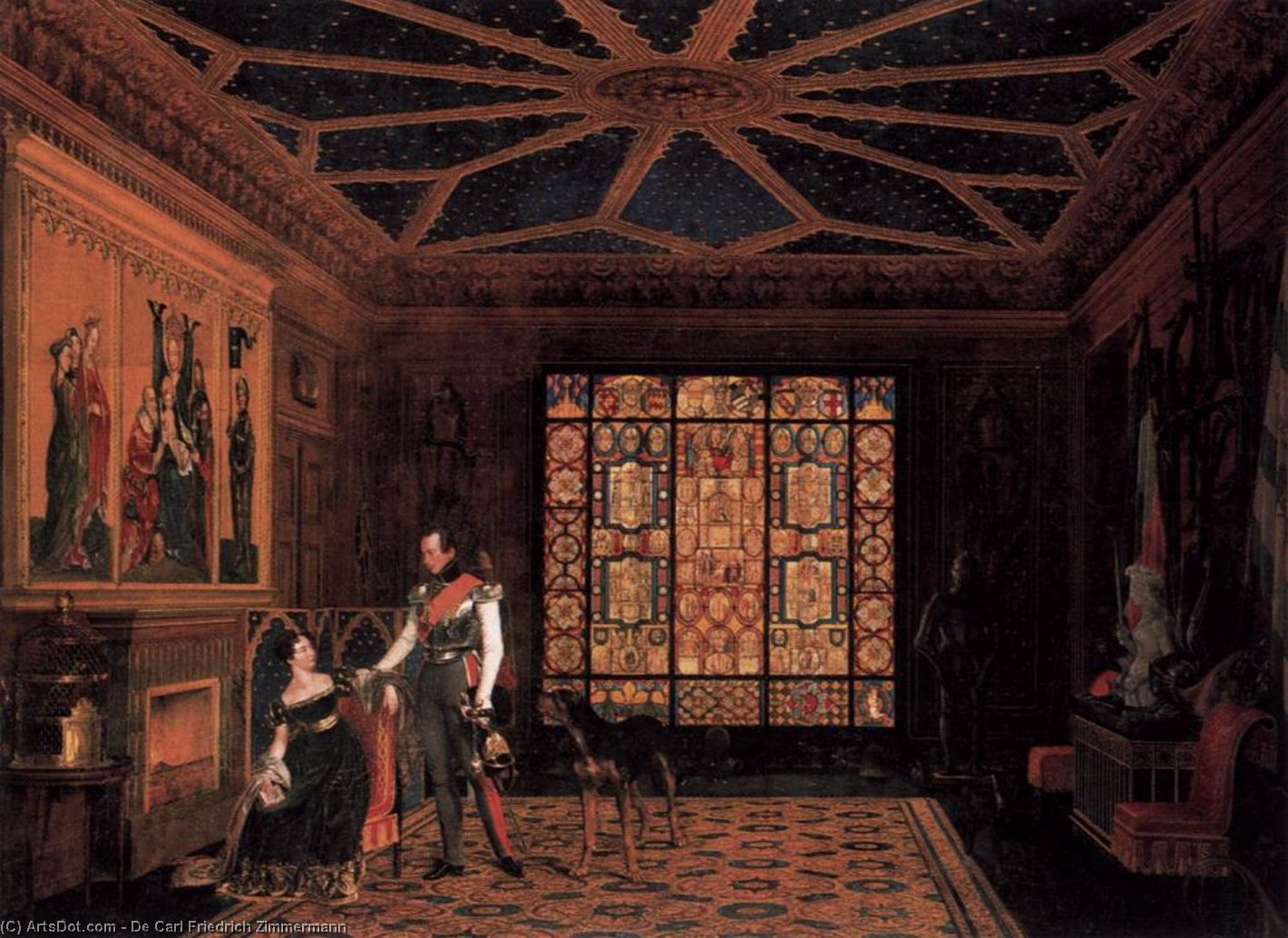
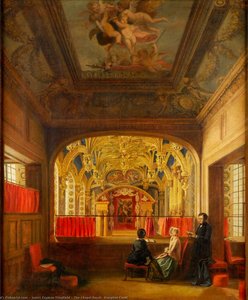
Armour Room in the Palace of Prince Frederick of Prussia
 Romanticism
 73.0 x 97.0 cm
 Schloss Charlottenburg
 Read More
Purchase a high-resolution, enhanced digital image, far superior to the online preview.
Each file is meticulously prepared by our in-house specialists using advanced tools and expert manual retouching. We ensure every image has exceptional clarity, precise color accuracy, and fine detail.
The final file is delivered via email within 72 hours, optimized for immediate use in professional, editorial, and print environments. This is the same quality trusted by top-tier design studios, publishers, and galleries.
Digital Image
Download a high-resolution file for personal display, printing, and creative projects. ( Buy Print Buy Hand Made Painting)
Included in Every Digital Image Order
Expert Digital Delivery, Guaranteed
When you choose ArtsDot.com, you're not just getting an image - you're receiving a professionally enhanced digital artwork, crafted with precision and backed by a satisfaction guarantee. Here's everything that comes with your order, automatically:

Fast Email Delivery
Your high-resolution digital image file will be emailed to you within 72 hours of ordering - ready for immediate use.

AI-Enhanced Digital File
Your artwork is professionally optimized using advanced AI tools and manual editing, ensuring maximum detail, clarity, and color accuracy.

Free Lifetime Re-Delivery
Accidentally deleted or lost your file? No worries - we'll resend it to you anytime, free of charge.

No Import Fees - Ever
Enjoy your artwork instantly with zero customs, duties, or delivery fees - digital downloads are always tax-free.

Color Accuracy Guarantee
We ensure your digital image reflects the original colors as closely as possible using professional tools and color management.

100-Day Satisfaction Guarantee
If you're not satisfied with your digital image, we'll revise it or refund 100% within 100 days - no questions asked.

100% Money-Back Guarantee
Not satisfied? Get a full refund within 100 days of receiving your digital file - no questions asked.

Bulk Order Discounts
Buy 3 images, save 10% - Buy 5, save 15% - Buy 10+, save 20%. Great for creative projects, galleries, and agencies.
Related Artworks

Artist Biography
George Frederic Watts: A Life Dedicated to Symbol and Soul
George Frederic Watts, born on February 23rd, 1817, in Marylebone, London, was more than just a painter; he was a profound explorer of the human condition, a translator of emotion into visual form. His life, marked by early loss and a deep engagement with classical ideals, ultimately shaped him into one of the most significant figures of the Symbolist movement. Watts’s artistic journey wasn't defined by mere technical skill but by an unwavering commitment to conveying universal truths through allegorical narratives and intensely personal symbolism. From his childhood fascination with Elgin Marbles to his later recognition as a Royal Academician, Watts consistently sought to capture the essence of human experience—love, life, energy, and the eternal quest for meaning—within his canvases.Early Influences and Artistic Training
Watts’s early life was profoundly shaped by tragedy and intellectual rigor. The death of his mother when he was young instilled in him a contemplative nature, while his father, a piano maker, fostered a love of classical music and literature. His education was largely self-directed, fueled by a deep appreciation for the classics—particularly Homer’s *Iliad*—and an early fascination with sculpture, beginning at the tender age of ten under the tutelage of William Behnes. This formative period instilled in him a reverence for ancient Greek art and its emphasis on idealized beauty and moral virtue. He enrolled at the Royal Academy Schools at eighteen, immersing himself in the study of anatomy, perspective, and technique, though he quickly found himself dissatisfied with the prevailing academic conventions. His time at the Academy was brief, but it provided a crucial foundation upon which he would build his unique artistic vision.The “House of Life” and Symbolic Narratives
Watts’s most ambitious project, and arguably his greatest achievement, was the “House of Life,” a series of allegorical paintings intended to represent the totality of human experience. This epic cycle, conceived in the 1860s and continued throughout his life, explored themes of love, death, energy, and the soul’s journey toward enlightenment. Key works within this project—*Hope*, *Love and Life*, and *Physical Energy*—became instantly recognizable symbols of Watts's artistic philosophy. These paintings weren’t simply decorative; they were complex visual metaphors designed to provoke contemplation and evoke profound emotional responses. The figures in these works are often rendered with a striking physicality, imbued with an almost sculptural quality, reflecting Watts’s lifelong interest in sculpture and his belief that the body was inextricably linked to the soul. The influence of Symbolism is evident in the dreamlike atmosphere, the use of muted colors, and the emphasis on subjective experience characteristic of the movement.Orientalist Themes and Artistic Development
While Watts is primarily known for his allegorical works, he also produced a significant body of Orientalist paintings, particularly during the 1870s and 1880s. These paintings, often depicting scenes from ancient Persia or India, demonstrate his growing interest in exotic cultures and his ability to capture the beauty and mystery of distant lands. His depictions are not merely picturesque; they are infused with a sense of spiritual longing and a fascination with the timelessness of human experience across different eras and continents. This period saw a shift in his style, incorporating brighter colors and looser brushwork, reflecting his engagement with contemporary artistic trends. His portraits, too, evolved, moving beyond mere likeness to capture the inner character and emotional state of his subjects.Legacy and Historical Significance
George Frederic Watts died on July 1st, 1904, in London, leaving behind a substantial body of work that continues to fascinate and inspire. He is remembered as a pivotal figure in the Symbolist movement, whose profound exploration of human emotion and spiritual themes resonated deeply with his contemporaries. His influence can be seen in the works of later artists such as Aubrey Beardsley and Edward Burne-Jones. Watts’s commitment to conveying universal truths through symbolic imagery established him as one of the most important artists of the Victorian era, a testament to the enduring power of art to illuminate the complexities of human existence. His work remains a powerful reminder of the importance of seeking meaning and beauty in a world often characterized by chaos and uncertainty.
de carl friedrich zimmermann
1817 - 1898 , Germany
Quick Facts
- Artistic Movement Or Style: Symbolism
- Artists Or Movements Influenced By This Artist: ['Symbolism']
- Artists Who Influenced This Artist:
- Richard Dadd
- Charles-François Daubigny
- Date Of Birth: Feb 23, 1817
- Date Of Death: July 1, 1904
- Full Name: George Frederic Watts
- Nationality: British
- Notable Artworks:
- Hope
- Love and Life
- Physical Energy
- Place Of Birth: London, England