 Preview
 Send
Send Share
Share
 Details

 Download
 Similars
 X-Ray
X-Ray Diaporama
José Bonifácio de Andrade e Silva


 Read More
Giclée / Art Print
Museum-quality giclée or canvas print with fast production and flexible finish options. ( Buy Hand Made Painting Buy Image)




P118B $10

P118H $10

P118W $10

P438Z $10

P508JH $12

P508YH $12

P805H $10

P805Z $10

P919BZ $10

P919G $10

P919XJ $10

P959ZH $10

P968JZ $12

W106C $8

W218G $10

W218JH $8

W218Y $10

W307PJ $10

W316G $10

W316PJ $8

W316Y $10

W398PJ $8

W4111J $10

W500HY $15

W500JH $15

W692G $12

W849H $8

W940BG $15

W953PJ $8




Pick from our preset sizes that match the artwork's original proportions.

You may enter your own dimensions to fit a specific frame or space. If your selected size does not match the original image's proportions, we will either crop the artwork or extend the image with a mirrored or solid-fill edge. A digital mockup will be sent for your approval before production begins.
Please note that the on-screen preview does not reflect the actual cropping or extension. Only the mockup will accurately show the final composition.
While custom sizes are available, we recommend selecting a dimension from the predefined list to preserve the original proportions.
Worldwide Delivery () in 2 weeks instead of standard 4/5 weeks. (23 August)

Free Worldwide Express Shipping

High-Quality Linen Canvas

Full Shipping Insurance

Customs Tax Refund Guarantee

True Color Matching Guarantee

60-Day Return Policy (Defects Only)

100% Money-Back Guarantee

Bulk Discount Offer
 Glass option is only available in size under 110 CM

José Bonifácio de Andrade e Silva
Giclée / Art Print
Reproduction Size
-


Total Price
$ 63
Collectible Description
A Portrait of Statesmanship: The Legacy of José Bonifácio
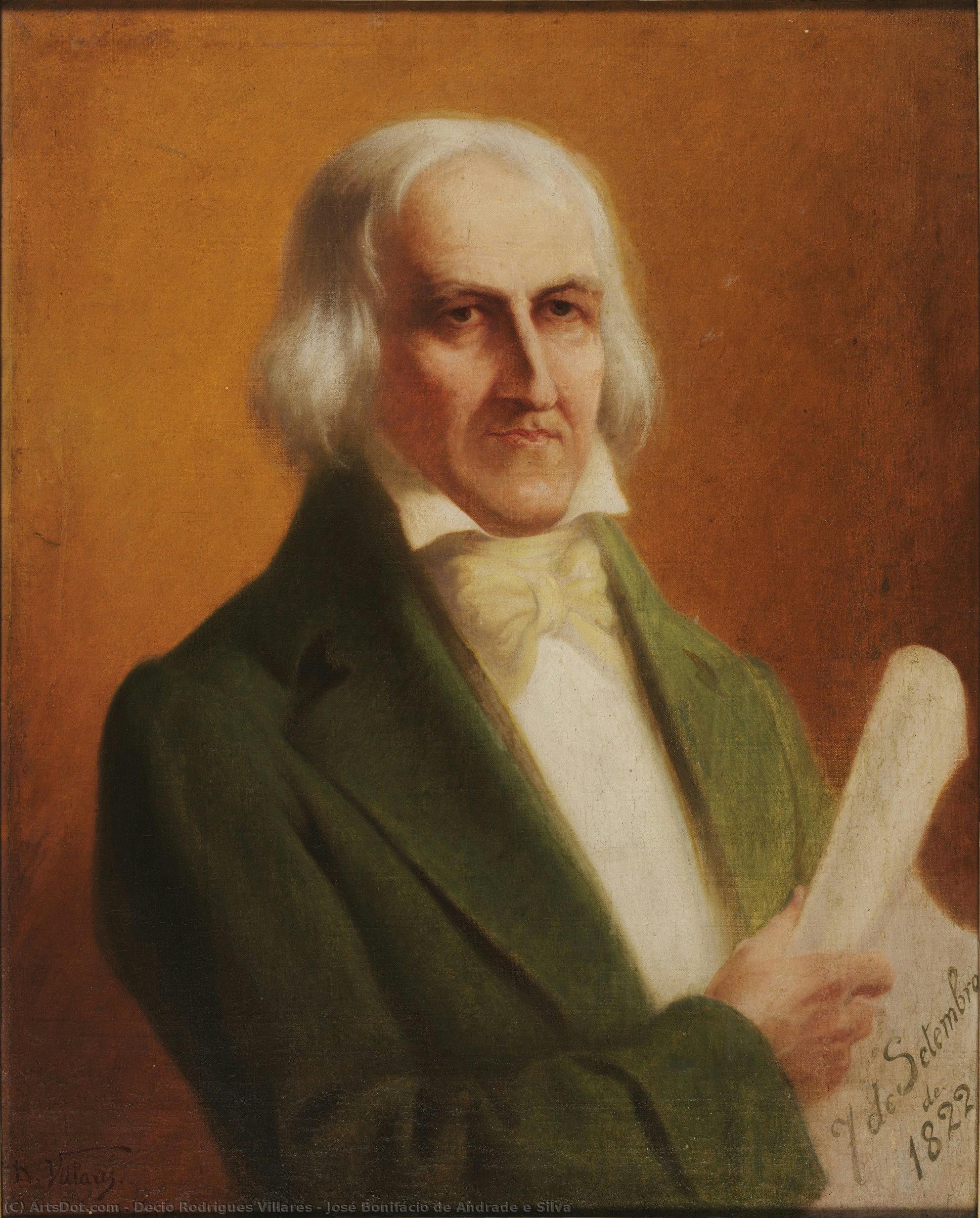
In the quiet, dignified presence of Decio Rodrigues Villares’ 1914 portrait, José Bonifácio de Andrade e Silva, one encounters more than just a likeness; one meets the very soul of Brazilian history. The painting captures the venerable statesman in a moment of profound intellectual repose, his gaze steady and penetrating, as if peering through the veil of time to contemplate the destiny of a nation. Clad in a rich, deep green coat that speaks to both formal elegance and a connection to the lush landscapes of his homeland, the subject holds a book—a silent but powerful symbol of the wisdom, law, and literacy that underpin civilization. The soft, diffused light catches the texture of his white hair and mustache, lending an air of venerable authority to his features, while the warm, golden hue of the background creates an intimate atmosphere that draws the viewer into his personal orbit.
The technique employed by Villares reflects the masterful academic training he received under the giants of Brazilian Romanticism, such as Victor Meirelles. There is a palpable sense of weight and substance in the brushwork, particularly in the way the fabric of the green coat drapes over the figure, suggesting a tactile reality that invites the eye to linger. The artist utilizes a subtle interplay of light and shadow—a chiaroscuro effect—to sculpt the face of José Bonifácio, emphasizing the lines of experience and the gravity of his historical role. This meticulous approach ensures that every detail, from the slight furrow of the brow to the delicate way the fingers grip the book, contributes to a cohesive narrative of intellectual strength and civic duty.
For the discerning collector or interior designer, this reproduction offers an unparalleled opportunity to introduce a sense of historical gravitas and timeless sophistication into a curated space. The painting’s palette—dominated by earthy golds, deep forest greens, and ivory tones—is remarkably versatile, making it a commanding centerpiece for a traditional study, a stately library, or a formal dining room. It serves not merely as decoration, but as a conversation piece that evokes the era of nation-building and the enduring power of the intellect. To possess such a work is to bring a fragment of Brazil's golden age into the modern home, providing an emotional anchor of stability, wisdom, and profound cultural heritage.
Related Artworks




Artist Biography
Early Life and Artistic Formation
Décio Rodrigues Villares, born December 1, 1851, in Rio de Janeiro, Brazil, emerged from a family steeped in political engagement—his father served as a lieutenant colonel and held a prominent position on the city council of Nova Iguazu. Despite modest financial circumstances, this lineage instilled in him an appreciation for civic responsibility and fostered connections within influential circles. Crucially, Villares’ education was nurtured by institutions that championed artistic excellence: he attended Pedro II College and the Imperial Academy of Fine Arts, where he honed his skills under the tutelage of Victor Meirelles and Pedro Américo—artists deeply rooted in Brazilian Romanticism and committed to portraying national identity. These formative influences would profoundly shape Villares’ artistic vision.Career Highlights: Design for National Symbols
Villares’ professional trajectory commenced in 1870 with his involvement as a caricaturist for Comédia Social, a satirical magazine spearheaded by Aurélio de Figueiredo and his brother Américo—a publication known for its critical stance toward societal conventions. This early experience cultivated his observational acuity and honed his ability to convey complex ideas through visual humor. Recognizing the importance of artistic representation in shaping collective consciousness, Villares embarked on a transformative journey to Paris in 1876, immersing himself in the workshops of Alexandre Cabanel—a celebrated portrait painter whose meticulous technique epitomized Academic Impressionism. His dedication yielded considerable recognition; he secured a gold medal at the Salon for his painting “L’Aube,” lauded by Eugène Véron for its masterful depiction of light and atmosphere. This accomplishment solidified Villares' reputation as a gifted artist and cemented Cabanel’s influence on his artistic style.The Emblematic Blue Disc: Designing Brazil’s Flag
Villares achieved enduring fame through his pivotal contribution to the creation of Brazil’s national flag—a symbol that embodies the nation’s history, values, and aspirations. Faced with the daunting task of selecting a design for the banner representing Brazil at international gatherings, Villares skillfully navigated artistic considerations alongside political imperatives. He proposed a circular disc emblazoned with blue—a hue chosen to evoke the vast expanse of the Atlantic Ocean and symbolizing faith and hope—and a white band adorned with yellow—representing Brazil’s mineral wealth and signifying purity and generosity. This innovative design resonated deeply within Brazilian society, becoming an instantly recognizable emblem of national identity.Monumental Sculpture: Honoring Júlio de Castilhos
Villares' artistic endeavors extended beyond painting into sculpture, where he tackled ambitious projects aimed at commemorating significant figures in Brazilian history. Notably, he spearheaded the design and construction of a monumental statue honoring Júlio de Castilhos—a revered statesman who championed republican ideals during Brazil’s transition from monarchy to democracy. Villares collaborated closely with architects and sculptors to realize this ambitious undertaking, incorporating elements of Neoclassical style that conveyed dignity and solemnity. The resulting sculpture stands as a testament to Villares' artistic versatility and his commitment to celebrating Brazilian heritage—a lasting symbol of Castilhos’ legacy and the nation’s republican aspirations.Legacy and Recognition
Décio Rodrigues Villares passed away in 1931, leaving behind an impressive body of work that continues to inspire admiration for its artistic merit and historical significance. His paintings—such as “Model Resting”—demonstrate a masterful command of technique and convey profound emotional depth. Furthermore, his contribution to the Brazilian flag and the Castilhos monument cemented his place in Brazilian cultural history. Villares’ oeuvre resides prominently within the Museu Antônio Parrêiras in Niteroi, Brazil, ensuring that his artistic legacy endures for generations to come.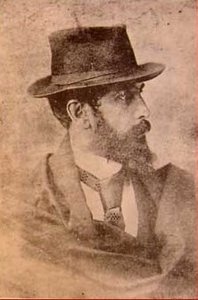
decio rodrigues villares
1851 - 1931 , Brazil
Quick Facts
- Artistic Movement Or Style: Positivism art
- Artists Or Movements Influenced By This Artist: ['José Bonifácio de Andrade e Silva']
- Artists Who Influenced This Artist:
- Victor Meirelles
- Pedro Américo
- Date Of Birth: December 1, 1851
- Date Of Death: 1931
- Full Name: Décio Rodrigues Villares
- Nationality: Brazilian
- Notable Artworks:
- A República
- Model resting
- Place Of Birth: Rio de Janeiro, Brazil
Related Articles

White on Canvas: 10 Masterpieces & Timeless Elegance for Your Home Decor
Explore 10 iconic white paintings by Monet, Whistler & Rothko! Discover the stories behind these serene masterpieces and their impact on art history. Find museum-quality reproductions for your home decor at .

Goya's Masterpieces: Explore 25 Iconic Paintings & Art Prints | ArtsDot
Delve into the world of Francisco Goya with ArtsDot. Explore 25 iconic paintings – from 'The Third of May' to his haunting Black Paintings. Discover the stories, techniques & emotions behind these Spanish masterpieces. Find museum-quality art reproductions for your home at ArtsDot.com!
Verdant Visions: Exploring the Symbolism & Aesthetic Impact of Green in Art History
Explore the rich history & symbolism of green in art! Discover iconic paintings, techniques, and how to bring verdant harmony into your home with ArtsDot's expert guide.
Chrome Green Masterpieces: 10 Famous Paintings & Their Alluring Hues |
Explore 10 famous paintings where 'Chrome Green' reigns supreme! Discover Monet, Manet & Van Gogh’s masterpieces. Learn the stories behind these iconic artworks and find museum-quality art reproductions for your home at .
Emerald Visions: Top 10 Paintings Dominated by Cadmium Green |
Explore 10 iconic paintings where cadmium green reigns supreme! From Monet to Van Gogh, discover the stories behind these masterpieces & the power of color. Find museum-quality art reproductions and elevate your home decor on .