 Preview
 Send
Send Share
Share
 Details

 Download
 Similars
 X-Ray
X-Ray Diaporama
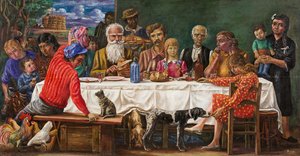
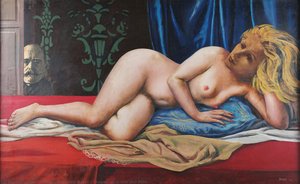
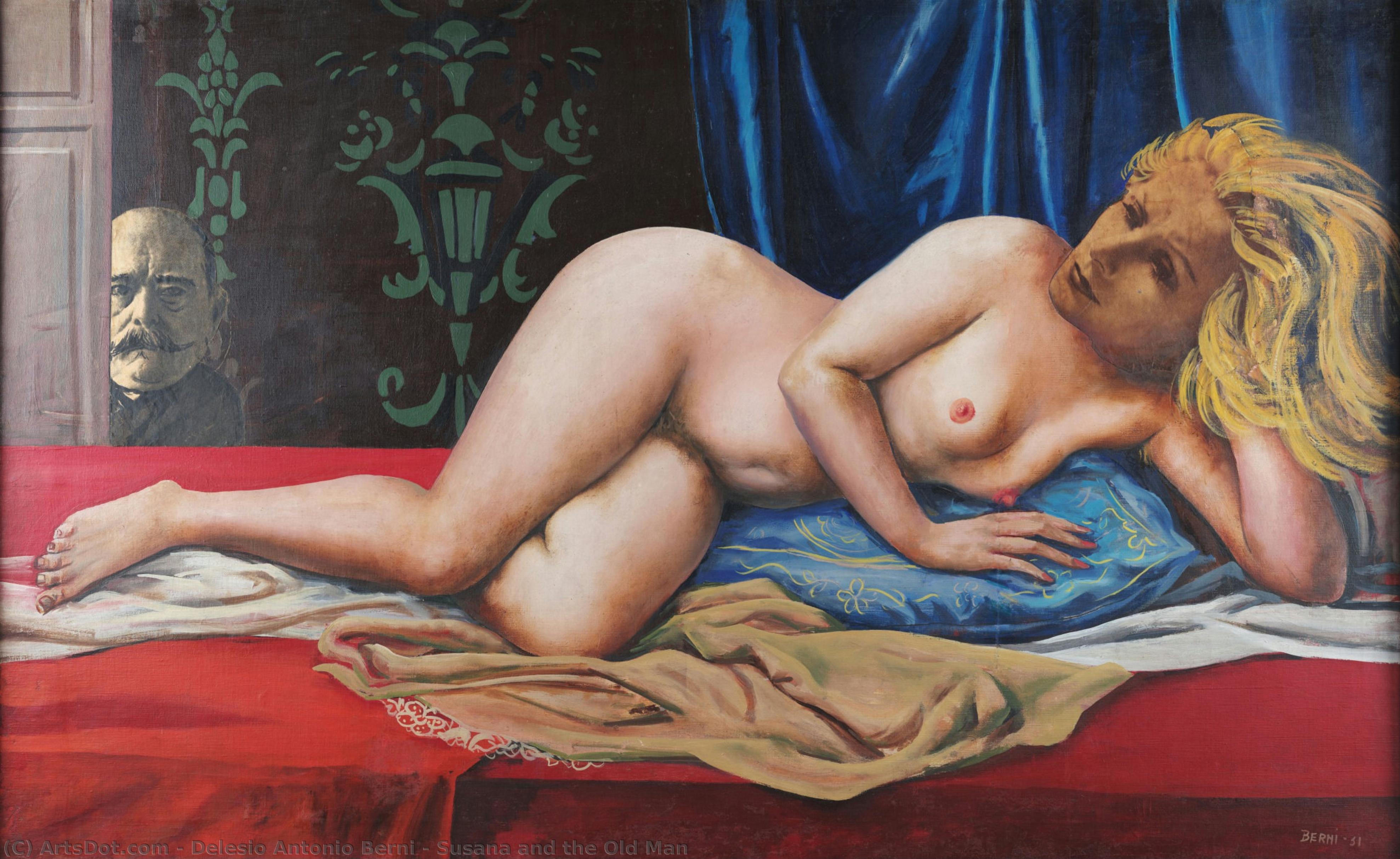
Susana and the Old Man

 Read More
Giclée / Art Print
Museum-quality giclée or canvas print with fast production and flexible finish options. ( Buy Hand Made Painting Buy Image)




































Pick from our preset sizes that match the artwork's original proportions.

You may enter your own dimensions to fit a specific frame or space. If your selected size does not match the original image's proportions, we will either crop the artwork or extend the image with a mirrored or solid-fill edge. A digital mockup will be sent for your approval before production begins.
Please note that the on-screen preview does not reflect the actual cropping or extension. Only the mockup will accurately show the final composition.
While custom sizes are available, we recommend selecting a dimension from the predefined list to preserve the original proportions.
Worldwide Delivery () in 2 weeks instead of standard 4/5 weeks. (23 August)

Free Worldwide Express Shipping

High-Quality Linen Canvas

Full Shipping Insurance

Customs Tax Refund Guarantee

True Color Matching Guarantee

60-Day Return Policy (Defects Only)

100% Money-Back Guarantee

Bulk Discount Offer
 Glass option is only available in size under 110 CM

Susana and the Old Man
Giclée / Art Print
Reproduction Size
-


Total Price
$ 63
Collectible Description
Related Artworks







Artist Biography
The Soul of Argentine Realism: The Life and Legacy of Antonio Berni
Delesio Antonio Berni stands as a monumental figure in the landscape of Argentine art, embodying the profound spirit and conviction of Nuevo Realismo—a movement that sought to confront social injustices with unflinching honesty. Born in Rosario, Argentina, on May 14, 1905, Berni’s artistic journey was marked by an unwavering dedication to portraying the realities of everyday life, particularly those experienced by marginalized communities. His legacy continues to resonate through powerful canvases and enduring influence, serving as a bridge between the avant-garde experiments of Europe and the visceral social struggles of his homeland.
Berni's formative years were steeped in intellectual curiosity and engagement with socialist ideals. He pursued studies at Rosario University, immersing himself in philosophy and literature—influences that would profoundly shape his artistic vision. His early training was surprisingly tactile; in 1914, he became an apprentice at a stained glass company, a period that likely instilled in him a deep appreciation for texture and material. Recognizing the transformative potential of art as a tool for social critique, Berni embarked on a path dedicated to capturing the struggles and aspirations of ordinary Argentinians. This commitment fueled his early explorations into collage and mural painting, establishing him as an innovator within the burgeoning Nuevo Realismo movement.
A Journey Through Europe and the Birth of New Realism
The mid-20th century witnessed significant transformations in Argentina’s socio-economic landscape—industrialization accelerated, exacerbating inequalities and leaving many vulnerable populations behind. Berni’s artistic development was deeply influenced by his travels to Europe, funded by prestigious scholarships. In Spain, he absorbed the vibrant energy of masters like Joaquín Sorolla, while his time in Paris brought him into contact with the revolutionary workshops of André Lhote and Othon Friesz. During this period, he navigated the complex intersections of Metaphysical painting and Surrealism, studying the enigmatic works of Giorgio de Chirico and René Magritte.
However, it was upon his return to Argentina that Berni truly found his voice. He rejected the purely abstract formalism gaining ground globally in favor of a more visceral engagement with the human condition. Nuevo Realismo emerged as his direct response to societal change—a modern, heterodox version of realism that differed from both 19th-century traditions and the rigid social realism seen in the Soviet Union. He utilized bold colors and dynamic compositions to convey narratives of hardship and resilience, combining meticulous observation with expressive brushwork to illuminate uncomfortable truths about the industrializing world.
The Iconography of Struggle: Juanito Laguna and Ramona Montiel
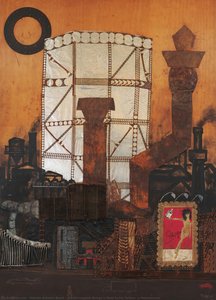
Perhaps Berni’s most enduring achievement lies in his creation of urban archetypes that have become etched into the popular imagination. Through his masterful use of collage, he breathed life into characters that represented the very heart of the Argentine working class. His most famous series, Juanito Laguna, utilizes found materials—scraps of cloth, wood, and industrial detritus—to depict a young boy living in the poverty-stricken outskirts of Buenos Aires. This technique was not merely aesthetic; it was symbolic, as the very textures of the artwork mirrored the discarded remnants of the industrial era that shaped Juanito's life.
Alongside Juanito, Berni introduced Ramona Montiel, a character representing a different facet of urban survival. Through these figures, Berni explored themes of:
- Social Inequality: The stark contrast between the growing industrial wealth and the surrounding poverty.
- Materiality as Narrative: Using actual refuse and collage to tell stories of waste and reconstruction.
- Human Resilience: Finding dignity and complex emotion within the struggles of the marginalized.
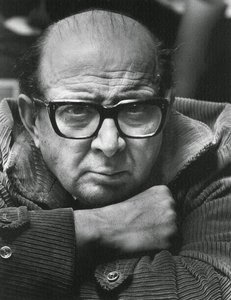
delesio antonio berni
1905 - 1981 , Argentina
Quick Facts
- Artistic Movement Or Style: Nuevo Realismo
- Artists Or Movements Influenced By This Artist: ['Social Realism']
- Artists Who Influenced This Artist: ['European Art Movements']
- Date Of Birth: May 14, 1905
- Date Of Death: October 13, 1981
- Full Name: Delesio Antonio Berni
- Nationality: Argentine
- Notable Artworks:
- Juanito Laguna Series
- Colla Market
- Place Of Birth: Rosario, Argentina