 Preview
 Send
Send Share
Share
 Details

 Download
 Similars
 X-Ray
X-Ray Diaporama
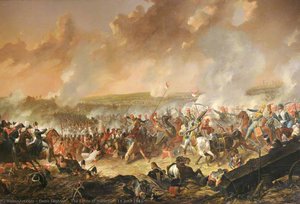
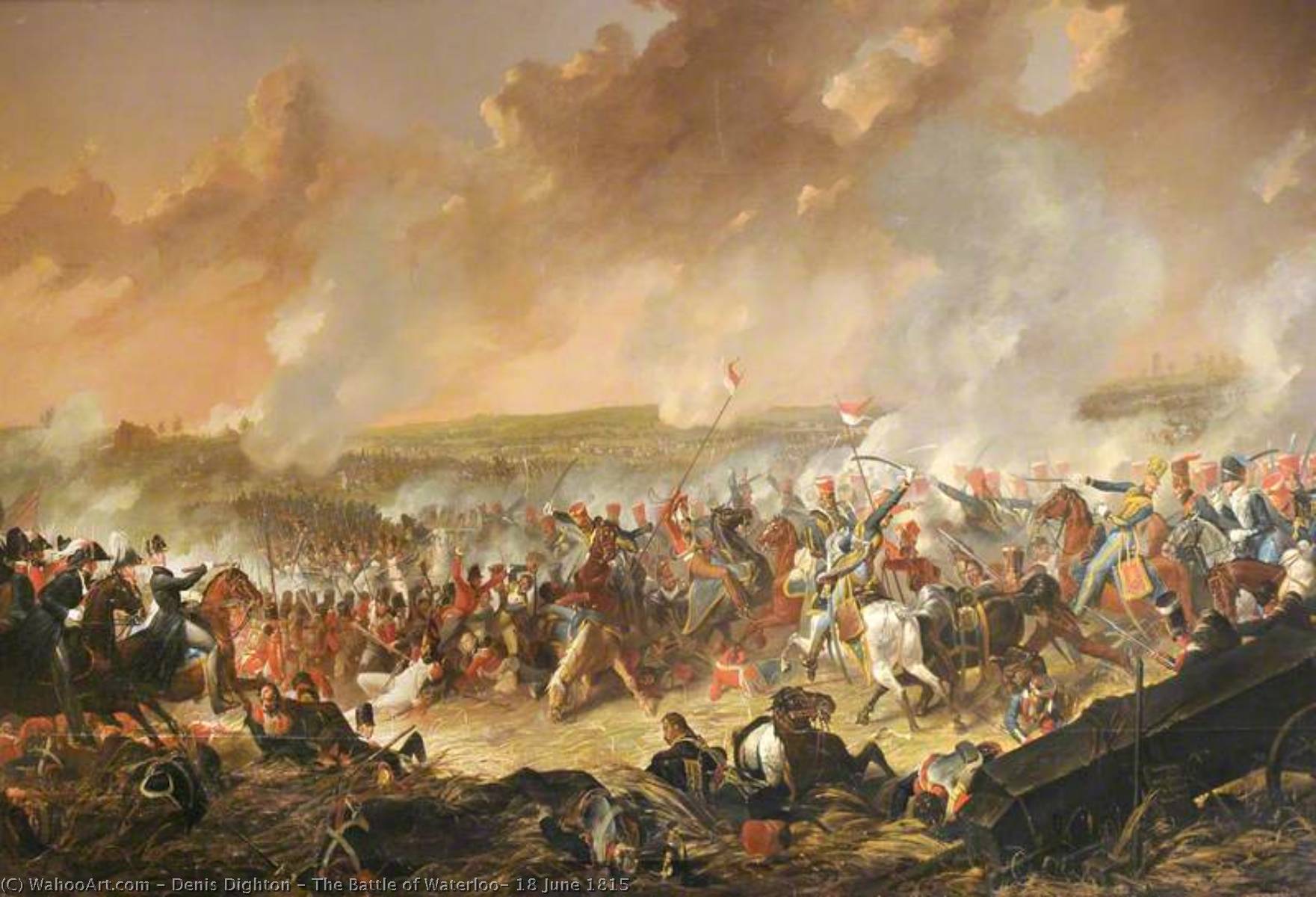
The Battle of Waterloo, 18 June 1815
 1816
1816 229.0 x 361.0 cm
 Read More
Hand Made Oil Reproduction
Hand-painted oil on canvas in your size and frame, made to order by our artists. ( Buy Print Buy Image)




































Pick from our preset sizes that match the artwork's original proportions.

You may enter your own dimensions to fit a specific frame or space. If your selected size does not match the original image's proportions, we will either crop the artwork or extend the painting with additional hand-painted elements. A digital mockup will be sent for your approval before production begins.
Please note that the on-screen preview does not reflect the actual cropping or extension. Only the mockup will accurately show the final composition.
While custom sizes are available, we recommend selecting a dimension from the predefined list to preserve the original proportions.
After order, ArtsDot.com team will email client for instructions and provide a mockup preview
Worldwide Delivery () in 3/4 weeks instead of standard 5 weeks. (22 August). No compromise on quality.

Free Worldwide Express Shipping

High-Quality Linen Canvas

Full Shipping Insurance

Customs Tax Refund Guarantee

True Color Matching Guarantee

60-Day Return Policy (Defects Only)

100% Money-Back Guarantee

Bulk Discount Offer
 Glass option is only available in size under 110 CM

The Battle of Waterloo, 18 June 1815
Reproduction Medium
Reproduction Size
-


Total Price
$ 263
Related Artworks





Artist Biography
Denis Dighton (1792–1827): The Painter of Waterloo
Denis Dighton, a British military painter whose dramatic depictions of battle scenes cemented his place in Victorian art history, remains an enigmatic figure despite the considerable scholarly attention devoted to his life and oeuvre. Born in London in 1792, he descended from a family steeped in artistic tradition—his father, Robert Dighton, was a celebrated caricaturist known for his satirical sketches of prominent figures—and possessed siblings who pursued careers as artists themselves. This familial legacy undoubtedly instilled within him an appreciation for visual representation and contributed to his formative artistic education at the Royal Academy of Arts in 1807.
- Early Life & Artistic Training: Dighton’s early years were marked by a fascination with theatrical performance alongside diligent study at the Academy. He honed his skills under influential instructors, absorbing techniques and stylistic conventions prevalent during the Romantic era. His initial artistic output focused on portraiture, capturing likenesses of individuals from diverse social strata—a practice that would continue throughout his career.
- The Prince Regent’s Patronage & Military Commissions: A pivotal moment arrived in 1811 when he secured a commission from the Prince Regent (later George IV), establishing a relationship that proved crucial to his artistic advancement and securing him royal patronage. This connection propelled him into the military sphere, where he served as a draughtsman for the British Army during the Peninsular War—a period of intense conflict against Napoleon’s forces—and subsequently gained acclaim for his monumental canvases commemorating the Battle of Waterloo.
- Waterloo & Artistic Innovation: Dighton's portrayal of Waterloo stands as arguably his most iconic achievement, capturing the visceral energy and chaos of the decisive battle with unparalleled realism and emotional intensity. He undertook multiple expeditions to the battlefield in the immediate aftermath of victory, meticulously documenting the carnage and heroism of the conflict—a feat that earned him considerable recognition within artistic circles. His canvases are characterized by bold brushstrokes, dramatic lighting effects, and a masterful command of composition, reflecting the influence of Romantic painters like Eugène Delacroix and Caspar David Friedrich.
- Notable Paintings & Artistic Style: Beyond Waterloo, Dighton produced numerous other significant artworks—including depictions of Trafalgar (1805), Nelson’s death at sea, and scenes from Napoleonic campaigns—demonstrating his versatility as a painter. His artistic style is distinguished by its expressive dynamism and meticulous attention to detail, prioritizing emotional impact over idealized beauty. He skillfully employed chiaroscuro techniques to heighten dramatic tension and convey the psychological complexities of his subjects.
- Later Life & Legacy: Despite achieving considerable success during his lifetime, Dighton’s personal life was marred by mental illness—he relocated to Brittany with his family in 1824 seeking respite from London's pressures—and tragically succumbed to tuberculosis at the young age of 35 in August 1827. Nevertheless, Dighton’s legacy persists as a pioneering military artist whose canvases continue to inspire admiration for their artistic merit and historical significance. His contribution to Victorian art history is undeniable, securing his place among the foremost painters of his era.
denis dighton
1792 - 1827
Quick Facts
- Artistic Movement Or Style: Military Art
- Artists Or Movements Influenced By This Artist: ['Romanticism']
- Artists Who Influenced This Artist: ['Robert Dighton']
- Date Of Birth: 1792
- Date Of Death: 1827
- Full Name: Denis Dighton
- Nationality: British
- Notable Artworks:
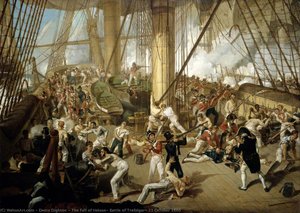
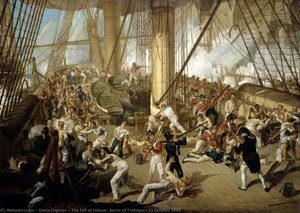
- The Fall of Nelson
- The Capture of the French Eagle
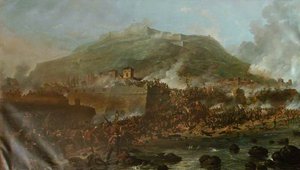
- The Storming of San Sebastian
- Place Of Birth: London