

 Preview
 Send
Send Share
Share
 Details

 Download
 Similars
 X-Ray
X-Ray Diaporama
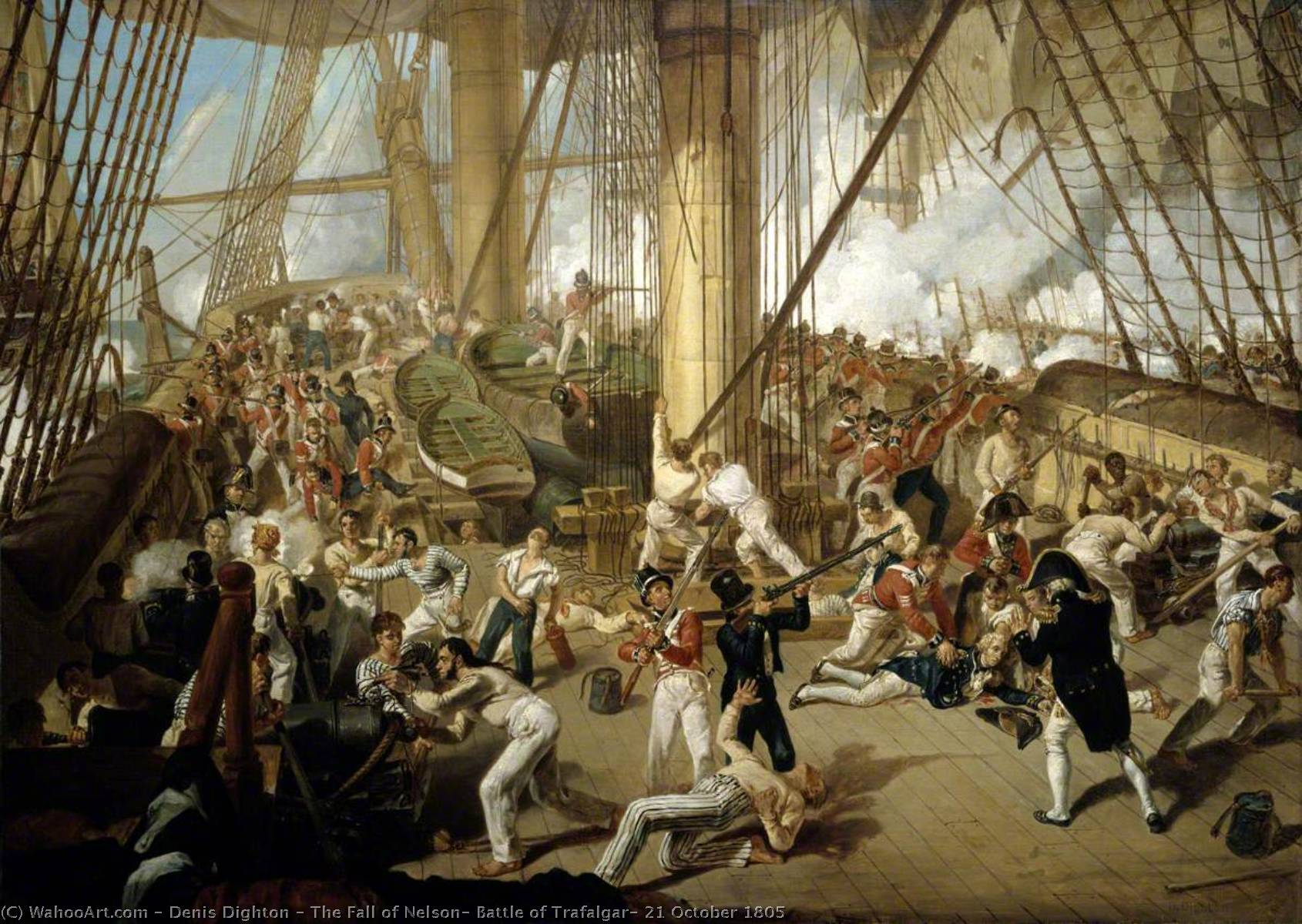
The Fall of Nelson, Battle of Trafalgar, 21 October 1805
 1825
1825 76.0 x 107.0 cm
 Read More
Purchase a high-resolution, enhanced digital image, far superior to the online preview.
Each file is meticulously prepared by our in-house specialists using advanced tools and expert manual retouching. We ensure every image has exceptional clarity, precise color accuracy, and fine detail.
The final file is delivered via email within 72 hours, optimized for immediate use in professional, editorial, and print environments. This is the same quality trusted by top-tier design studios, publishers, and galleries.
Digital Image
Download a high-resolution file for personal display, printing, and creative projects. ( Buy Print Buy Hand Made Painting)
Included in Every Digital Image Order
Expert Digital Delivery, Guaranteed
When you choose ArtsDot.com, you're not just getting an image - you're receiving a professionally enhanced digital artwork, crafted with precision and backed by a satisfaction guarantee. Here's everything that comes with your order, automatically:

Fast Email Delivery
Your high-resolution digital image file will be emailed to you within 72 hours of ordering - ready for immediate use.

AI-Enhanced Digital File
Your artwork is professionally optimized using advanced AI tools and manual editing, ensuring maximum detail, clarity, and color accuracy.

Free Lifetime Re-Delivery
Accidentally deleted or lost your file? No worries - we'll resend it to you anytime, free of charge.

No Import Fees - Ever
Enjoy your artwork instantly with zero customs, duties, or delivery fees - digital downloads are always tax-free.

Color Accuracy Guarantee
We ensure your digital image reflects the original colors as closely as possible using professional tools and color management.

60-Day Satisfaction Guarantee
If you're not satisfied with your digital image, we'll revise it or refund 100% within 60 days - no questions asked.

100% Money-Back Guarantee
Not satisfied? Get a full refund within 60 days of receiving your digital file - no questions asked.

Bulk Order Discounts
Buy 3 images, save 10% - Buy 5, save 15% - Buy 10+, save 20%. Great for creative projects, galleries, and agencies.
Related Artworks









Artist Biography
The Painter of Waterloo: The Dramatic Legacy of Denis Dighton
In the annals of British military art, few names evoke the thunderous chaos and visceral intensity of the Napoleonic era quite like Denis Dighton. Born in London in 1792, Dighton was a man whose very lineage was woven into the fabric of English visual culture. As the son of the celebrated caricaturist Robert Dighton, he grew up surrounded by the sharp, satirical wit of his father and the burgeoning artistic talents of his siblings, including the noted engraver Richard Dighton. This familial immersion in the arts provided a foundation of technical rigor, which he further refined upon enrolling as a student at the Royal Academy of Arts in 1807. While his early training touched upon the delicate nuances of portraiture, it was the smoke-filled battlefields and the rhythmic clash of cavalry that would ultimately define his artistic soul.
Dighton’s ascent within the upper echelons of British society was catalyzed by a stroke of royal fortune. In 1811, he secured the prestigious patronage of the Prince Regent (the future George IV), a connection that would fundamentally alter the trajectory of his career. This relationship did more than just provide financial stability; it granted him access to the heart of the British military machine. Under the influence of the Prince, Dighton received a commission in the army, serving as a draughtsman during the grueling campaigns of the Peninsular War. It was during these years of active service that his style transitioned from mere observation to a profound, immersive realism. He did not merely paint war; he witnessed its grit, its movement, and its devastating scale, allowing him to capture the kinetic energy of combat with an authenticity that few of his contemporaries could replicate.
A Master of Conflict and Chaos
The zenith of Dighton’s career arrived with the monumental conclusion of the Napoleonic Wars. His most enduring achievement remains his series of paintings commemorating the Battle of Waterloo. Unlike artists who sought to sanitize conflict through idealized heroism, Dighton possessed a rare ability to depict the visceral confusion of the battlefield. He famously visited the Waterloo site just five days after the decisive victory, an act that allowed him to infuse his canvases with a haunting sense of place and atmosphere. His works, such as The Battle of Waterloo and Waterloo - Charge of the Second Brigade of Cavalry, are masterclasses in composition, utilizing swirling smoke, charging horses, and the desperate struggle of infantry to draw the viewer into the very center of the fray.
Beyond the carnage of Waterloo, Dighton’s oeuvre serves as a vital historical record of several pivotal maritime and terrestrial engagements. His ability to translate the scale of naval warfare is evident in his poignant depiction of The Fall of Nelson at the Battle of Trafalgar. Through his brush, the viewer experiences the tragic grandeur of the moment, blending the technical precision of military detail with a deep, emotional resonance. His work often features:
- Dynamic Movement: The use of diagonal lines and overlapping figures to simulate the frantic motion of cavalry charges.
- Atmospheric Realism: A sophisticated use of light and shadow to replicate the heavy, sulfurous atmosphere of gunpowder-filled battlefields.
- Historical Accuracy: Meticulous attention to the uniforms, weaponry, and regimental distinctions of the British and French forces.
The Twilight of a Visionary
Despite his early triumphs and the prestigious title of Military Painter to H.R.H. the Prince Regent, Dighton’s life was marked by a poignant and tragic decline. The loss of royal patronage, following shifts in the royal household, stripped him of the influential connections that had once propelled him toward greatness. This period of professional isolation took a heavy toll on his mental well-being. In his later years, struggling with illness and the weight of his misfortunes, he moved to Brittany with his wife, Phoebe Earle—himself a talented artist and flower painter to Queen Adelaide. The man who had once captured the most triumphant moments of the British Empire passed away in 1827 at the young age of thirty-five.
Today, the historical significance of Denis Dighton extends far beyond the aesthetic value of his paintings. He remains a vital bridge between the satirical traditions of his father’s generation and the grand, romanticized military narratives of the Victorian era. His works are not merely art; they are windows into a transformative period of global history, preserving the fleeting, terrifying, and heroic moments of an age defined by empire and upheaval. Through his eyes, the triumphs and tragedies of the 19th century continue to breathe with a life that is as much about human emotion as it is about military might.
denis dighton
1792 - 1827
Quick Facts
- Artistic Movement Or Style: Military Art
- Artists Or Movements Influenced By This Artist: ['Romanticism']
- Artists Who Influenced This Artist: ['Robert Dighton']
- Date Of Birth: 1792
- Date Of Death: 1827
- Full Name: Denis Dighton
- Nationality: British
- Notable Artworks:
- The Fall of Nelson
- The Capture of the French Eagle
- The Storming of San Sebastian
- Place Of Birth: London

