

 Preview
 Send
Send Share
Share
 Details

 Download
 Similars
 X-Ray
X-Ray Diaporama
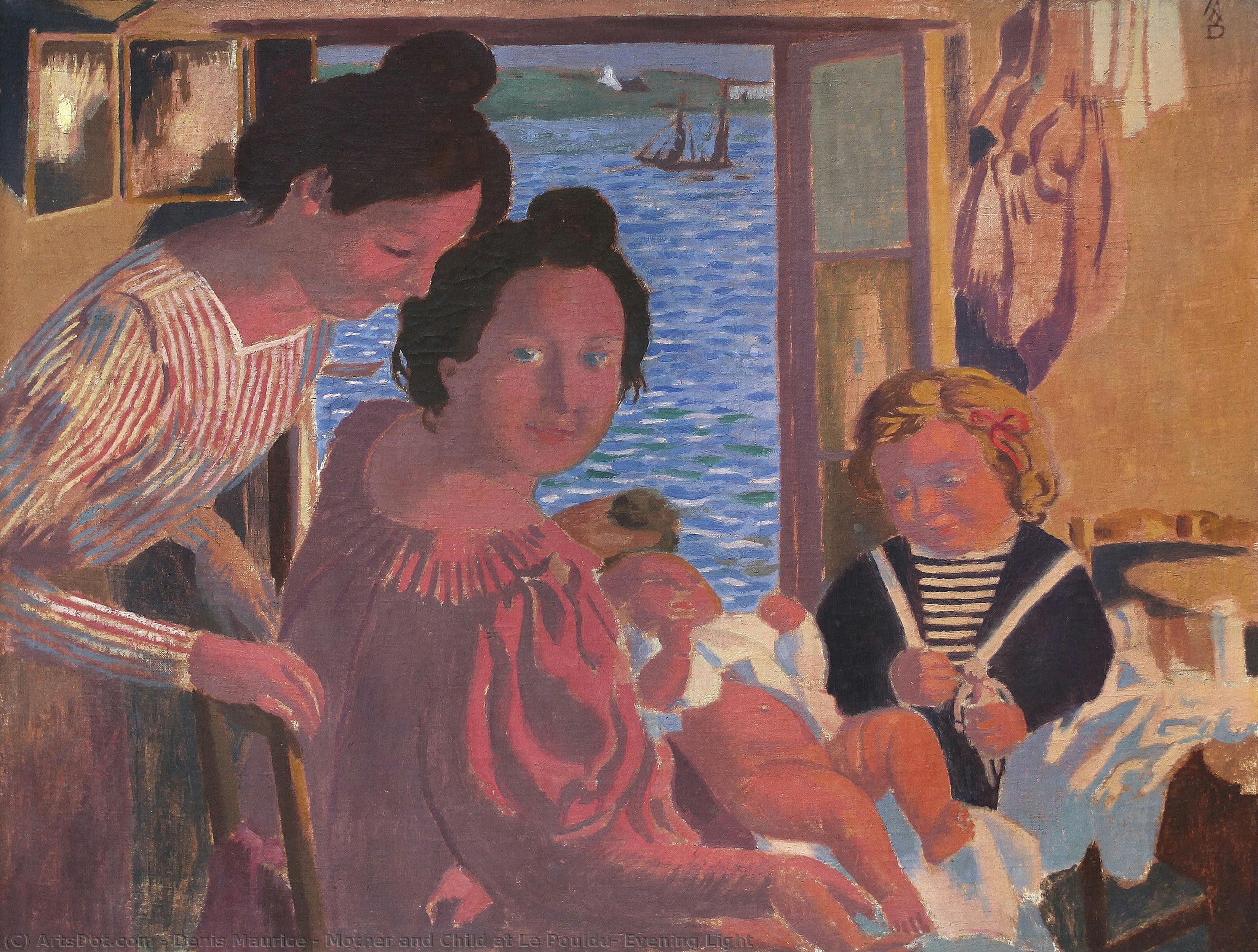
Mother and Child at Le Pouldu, Evening Light
 Acrylic On Canvas
- WallArt
- Nabis
 1899
1899- 19th Century
 49.0 x 65.0 cm
 Musée de Pont-Aven
 Read More
Purchase a high-resolution, enhanced digital image, far superior to the online preview.
Each file is meticulously prepared by our in-house specialists using advanced tools and expert manual retouching. We ensure every image has exceptional clarity, precise color accuracy, and fine detail.
The final file is delivered via email within 72 hours, optimized for immediate use in professional, editorial, and print environments. This is the same quality trusted by top-tier design studios, publishers, and galleries.
Digital Image
Download a high-resolution file for personal display, printing, and creative projects. ( Buy Print Buy Hand Made Painting)
Included in Every Digital Image Order
Expert Digital Delivery, Guaranteed
When you choose ArtsDot.com, you're not just getting an image - you're receiving a professionally enhanced digital artwork, crafted with precision and backed by a satisfaction guarantee. Here's everything that comes with your order, automatically:

Fast Email Delivery
Your high-resolution digital image file will be emailed to you within 72 hours of ordering - ready for immediate use.

AI-Enhanced Digital File
Your artwork is professionally optimized using advanced AI tools and manual editing, ensuring maximum detail, clarity, and color accuracy.

Free Lifetime Re-Delivery
Accidentally deleted or lost your file? No worries - we'll resend it to you anytime, free of charge.

No Import Fees - Ever
Enjoy your artwork instantly with zero customs, duties, or delivery fees - digital downloads are always tax-free.

Color Accuracy Guarantee
We ensure your digital image reflects the original colors as closely as possible using professional tools and color management.

60-Day Satisfaction Guarantee
If you're not satisfied with your digital image, we'll revise it or refund 100% within 60 days - no questions asked.

100% Money-Back Guarantee
Not satisfied? Get a full refund within 60 days of receiving your digital file - no questions asked.

Bulk Order Discounts
Buy 3 images, save 10% - Buy 5, save 15% - Buy 10+, save 20%. Great for creative projects, galleries, and agencies.
Collectible Description
A Glimpse of Coastal Intimacy: Mother and Child at Le Pouldu
To stand before this canvas is to step directly into the luminous, evocative atmosphere of late nineteenth-century Brittany. Mother and Child at Le Pouldu, Evening Light captures more than just a family portrait; it arrests a moment steeped in the confluence of domestic tenderness and the vast mystery of the sea at dusk. Painted in 1899 by Maurice Denis while on vacation at the Portier guest-house, this work is a quintessential expression of the Pont-Aven School's spirit—a place where artistic theory met vibrant coastal life. The scene unfolds with an almost palpable warmth emanating from the figures gathered indoors, contrasting beautifully with the deepening, cool tones visible through the open window overlooking the ocean.
The Harmony of Color and Light
Denis’ masterful handling of color is immediately captivating. The warm palette used for the family—the soft pinks of the mother's dress, the gentle hues adorning her companions—creates an immediate sense of intimacy and belonging. This internal warmth acts as a perfect foil to the background drama: the receding twilight over the water. One can almost feel the cool spray of the sea air mingling with the residual heat of the day. The composition guides the eye outward, past the scattered chairs and the visible details like the bottle on the right, toward the distant boats bobbing gently on the darkening surface. It is a study in complementary contrasts, where human connection glows against nature's sublime grandeur.
Historical Echoes and Artistic Lineage
This painting situates itself within a rich artistic lineage, deeply connected to the Nabis group and the theoretical underpinnings of modern art. Maurice Denis was not merely recording a scene; he was articulating a philosophy through pigment. His dedication to color as a structural and emotional element—a belief that art could convey spiritual resonance beyond mere imitation—is evident here. The subject matter, while seemingly simple—a family gathering—becomes elevated by this artistic lens. It speaks to the period's yearning for something more profound than the fleeting impression of light; it seeks permanence in emotion.
Symbolism and Emotional Resonance
The grouping of figures suggests a quiet narrative of lineage and continuity. The central focus on the mother and child anchors the piece in themes of nurturing and enduring bonds. Looking out at the sea, the family seems to be contemplating not just the water before them, but perhaps the passage of time itself. The juxtaposition of the sheltered interior life with the boundless ocean outside imbues the work with a gentle melancholy—a beautiful acknowledgment of both safety found within community and the irresistible pull toward the unknown horizon. It is an emotionally resonant piece that invites quiet contemplation.
Bringing the Coastal Dream Home
For collectors or designers seeking to infuse a space with artistic depth and nostalgic charm, this reproduction offers unparalleled character. The 49 x 65 cm scale allows it to function beautifully as a focal point in a drawing-room or study, evoking the sophisticated ambiance of an old French coastal villa. Owning this piece is acquiring not just paint on canvas, but a tangible echo of artistic theory meeting the sublime beauty of the Breton coast at twilight.
Related Artworks
Artist Biography
A Bridge Between Worlds: The Life and Art of Maurice Denis
Maurice Denis, born in the coastal town of Granville, France, in 1870, occupies a fascinating position in art history—a pivotal figure straddling the waning days of Impressionism and the burgeoning currents of modern art. His life was one dedicated to reconciling spiritual yearning with artistic innovation, resulting in a body of work that is both deeply personal and profoundly influential. From an early age, Denis demonstrated a sensitivity to the evocative power of visual experience, particularly within the sacred spaces of his childhood church. The interplay of light, color, and incense ignited a lifelong fascination with symbolism and the potential for art to convey something beyond mere representation. This formative influence would become a defining characteristic of his artistic vision, setting him apart from many of his contemporaries who were increasingly focused on capturing fleeting moments of sensory perception. He wasn’t simply interested in *what* he saw, but *how* it felt—and how that feeling could be translated into a visual language capable of expressing the intangible.
The Nabis and the Quest for Symbolism
Denis's artistic journey took a decisive turn when he became a central member of Les Nabis, a group of young artists who sought to revolutionize painting through a more spiritual and symbolic approach. The name “Nabis” itself—an anagram of "prophets"—revealed their ambition to create art that was not merely decorative but possessed a deeper, almost religious significance. Alongside figures like Paul Sérusier and Pierre Bonnard, Denis rejected the naturalism of Impressionism in favor of flattened perspectives, bold colors, and evocative patterns. This wasn’t about abandoning skill; it was about re-defining its purpose. The Nabis believed that art should be a synthesis of form and idea, a carefully constructed arrangement of elements designed to evoke emotion and suggest meaning. Denis articulated this philosophy most famously in his dictum: “Remember that painting—as a flat surface with colors arranged in certain relationships—has nothing to do with pictorial imitation of nature.” This statement became a cornerstone of modernist aesthetics, paving the way for movements like Cubism and Fauvism. His early works from this period, such as *Le Mystère Catholique* (1889), demonstrate his exploration of religious themes through a distinctly symbolic lens—a departure from traditional academic painting.
Evolving Styles: From Symbolism to Neo-Classicism
Throughout his career, Denis’s style underwent a fascinating evolution. While remaining committed to the principles of symbolism and spiritual expression, he experimented with various techniques and influences. Initially inspired by the vibrant colors and flattened forms of Gauguin and Japanese prints, he later turned towards the more structured compositions of Paul Cézanne, seeking a new form of classicism rooted in modern sensibilities. This shift is evident in his paintings from the 1890s and early 1900s, which exhibit a greater emphasis on form, balance, and clarity. He wasn’t simply imitating Cézanne; he was absorbing the lessons of structural rigor and applying them to his own unique vision. This period also saw him delve deeper into religious subject matter, believing that art had a vital role to play in revitalizing spiritual life. His work became increasingly imbued with a sense of serenity and contemplation, reflecting his personal faith and his desire to create images that would inspire reverence and devotion.
A Lasting Legacy: Art, Faith, and the Ateliers d'Art Sacré
Denis’s influence extended beyond his own paintings. He was also a prolific writer and art critic, articulating his aesthetic theories in numerous essays and articles. His ideas helped to shape the development of modern art, inspiring generations of artists to explore new ways of representing reality and expressing their inner worlds. In 1919, he founded the Ateliers d'Art Sacré (Workshops of Sacred Art), a collective dedicated to restoring churches and creating religious artworks that would embody both artistic excellence and spiritual depth. This initiative reflected his belief that art should be an integral part of everyday life, enriching the human experience and fostering a sense of community. He envisioned a revival of sacred art—not as a return to past styles, but as a reimagining of tradition in light of modern sensibilities. Maurice Denis passed away in 1943, leaving behind a rich and diverse body of work that continues to resonate with audiences today. His paintings, writings, and pedagogical efforts cemented his place as a pivotal figure in the transition from Impressionism to modern art—a bridge between worlds, forever shaping our understanding of the power and purpose of artistic expression.
Key Characteristics of Denis’s Work
- Symbolism: A pervasive use of symbols and allegorical imagery to convey deeper meanings.
- Spiritual Themes: Frequent exploration of religious subjects and a profound sense of spirituality.
- Flatness of Form: Emphasis on the two-dimensionality of the canvas, rejecting traditional perspective.
- Bold Color: Use of vibrant, often non-naturalistic colors to create emotional impact.
- Synthetism: A deliberate simplification of forms and a focus on creating harmonious compositions.
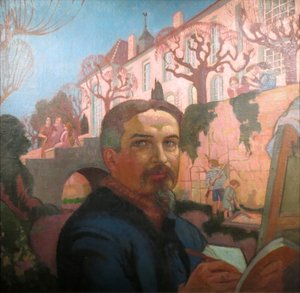
Denis Maurice
1870 - 1943 , France
Quick Facts
- Artistic Movement Or Style: Nabis, Symbolism
- Artists Or Movements Influenced By This Artist:
- Cubism
- Fauvism
- Abstract art
- Artists Who Influenced This Artist:
- Fra Angelico
- Raphael
- Botticelli
- Puvis de Chavannes
- Date Of Birth: November 25, 1870
- Date Of Death: November 13, 1943
- Full Name: Denis Maurice
- Nationality: French
- Notable Artworks:
- Le Mystère Catholique
- Motif Romanesque
- Beauty in Autumn Wood
- Bretons
- Place Of Birth: Granville, France

