 Preview
 Send
Send Share
Share
 Details

 Download
 Similars
 X-Ray
X-Ray Diaporama
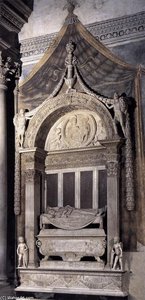
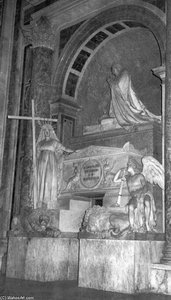
Tomb of Carlo Marsuppini


 Read More
Giclée / Art Print
Museum-quality giclée or canvas print with fast production and flexible finish options. ( Buy Hand Made Painting Buy Image)




P118B $10

P118H $10

P118W $10

P438Z $10

P508JH $12

P508YH $12

P805H $10

P805Z $10

P919BZ $10

P919G $10

P919XJ $10

P959ZH $10

P968JZ $12

W106C $8

W218G $10

W218JH $8

W218Y $10

W307PJ $10

W316G $10

W316PJ $8

W316Y $10

W398PJ $8

W4111J $10

W500HY $15

W500JH $15

W692G $12

W849H $8

W940BG $15

W953PJ $8




Pick from our preset sizes that match the artwork's original proportions.

You may enter your own dimensions to fit a specific frame or space. If your selected size does not match the original image's proportions, we will either crop the artwork or extend the image with a mirrored or solid-fill edge. A digital mockup will be sent for your approval before production begins.
Please note that the on-screen preview does not reflect the actual cropping or extension. Only the mockup will accurately show the final composition.
While custom sizes are available, we recommend selecting a dimension from the predefined list to preserve the original proportions.
Worldwide Delivery () in 2 weeks instead of standard 4/5 weeks. (29 August)

Free Worldwide Express Shipping

High-Quality Linen Canvas

Full Shipping Insurance

Customs Tax Refund Guarantee

True Color Matching Guarantee

60-Day Return Policy (Defects Only)

100% Money-Back Guarantee

Bulk Discount Offer
 Glass option is only available in size under 110 CM

Tomb of Carlo Marsuppini
Giclée / Art Print
Reproduction Size
-


Total Price
$ 63
The Monumental Legacy of Desiderio da Settignano: Exploring the Tomb of Carlo Marsuppini
Desiderio da Settignano (c. 1430 – 1464) stands as a beacon of Florentine artistic prowess during the Renaissance, embodying the fervent pursuit of realism and masterful craftsmanship that defined the era. Born in Settignano, nestled on the picturesque shores of Lake Como, he descended from a lineage steeped in stonemasonry—a heritage that profoundly shaped his artistic vision and propelled him to become one of Florence’s most celebrated sculptors. Biographical details remain somewhat elusive, yet scholarly consensus confirms his formative training under Bernardo Rossellino and Antonio Rossellino’s workshop, firmly anchoring him within the epicenter of Florentine artistic innovation. His matriculation into the arte dei maestri di pietra e legname—Florence's guild of stone and woodworkers—in 1453 solidified his connection to this influential institution and signaled his unwavering dedication to mastering the techniques of sculptural excellence.A Gothic Masterpiece Reflecting Florentine Artistic Sensibilities
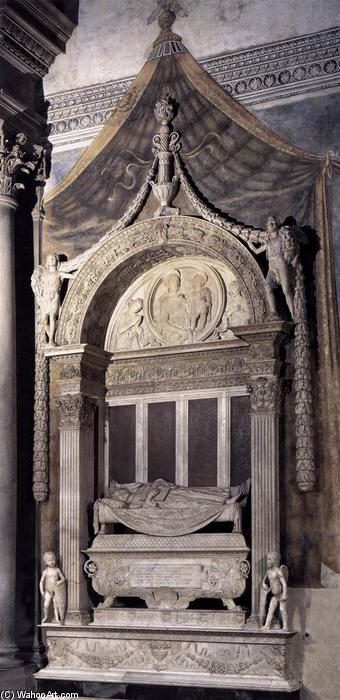
The Tomb of Carlo Marsuppini, commissioned in 1453, exemplifies Desiderio da Settignano’s signature style—a harmonious blend of Gothic grandeur and humanist observation. Situated within a cathedral interior, the tomb commands attention with its monumental scale and intricate sculptural decoration. Constructed primarily from Carrara marble, it showcases the meticulous artistry characteristic of Florentine sculptors during this period, mirroring the stylistic influences prevalent in the city at the time. The tomb’s design speaks volumes about the artistic values of the Renaissance: a reverence for classical ideals tempered by Gothic formalism—a testament to the intellectual dynamism of Florence and its enduring legacy in European art history.Detailed Sculptural Composition and Technique
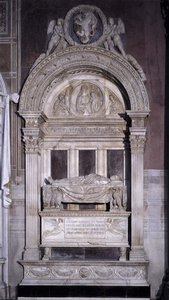
The tomb's central focus is dominated by a sarcophagus resting beneath an arched canopy adorned with a niche housing a recumbent statue – a poignant depiction of repose and remembrance. Flanking the sarcophagus are two smaller statues, skillfully carved to convey emotion and narrative detail. These figures demonstrate Desiderio’s unparalleled ability to capture human anatomy with remarkable accuracy—a hallmark of his artistic approach and a direct descendant of Donatello's pioneering explorations into naturalistic representation. The architectural backdrop—columns, arches, and ribbed vaults—further enhances the tomb’s visual impact, creating an immersive experience for viewers and reinforcing its symbolic significance as a sacred memorial. Desiderio skillfully employed techniques honed through years of apprenticeship to achieve this breathtaking level of realism and sculptural finesse.Symbolism and Emotional Resonance: A Reflection of Spiritual Belief
Beyond its aesthetic beauty, the Tomb of Carlo Marsuppini carries profound symbolic weight. The recumbent statue embodies spiritual serenity—a visual representation of faith and acceptance—while the flanking figures serve as guardians or attendants, symbolizing protection and divine grace. These elements resonate deeply with the religious sensibilities of the fifteenth century, reflecting the pervasive influence of Christianity on Florentine culture and artistic expression. The tomb’s overall impression is one of solemn reverence—a powerful testament to Desiderio da Settignano's ability to translate spiritual concepts into tangible sculptural form.A Legacy Enduring Through Reproduction
Today, a high-quality reproduction of the Tomb of Carlo Marsuppini offers art enthusiasts and interior designers alike an opportunity to experience the sublime beauty and intellectual depth of this Florentine masterpiece. ArtsDot’s meticulous reproductions capture the essence of Desiderio da Settignano's artistic vision—preserving the tomb’s monumental grandeur, textural richness, and evocative symbolism for generations to come.Related Artworks
Artist Biography
Desiderio da Settignano: A Sculptor Shaped by Florentine Tradition
Desiderio da Settignano (c. 1430 – 1464) stands as a testament to the dynamism of Renaissance sculpture, particularly within the vibrant artistic milieu of Florence. Born in Settignano, nestled on the slopes overlooking Lake Como, he emerged from a family deeply rooted in stonemasonry and craftsmanship—a lineage that profoundly shaped his artistic trajectory. While biographical details remain somewhat sparse, scholarly consensus points to training primarily under Bernardo Rossellino and Antonio Rossellino’s workshop, establishing him firmly within the epicenter of Florentine artistic innovation. His matriculation into the arte dei maestri di pietra e legname, Florence's guild of stone and woodworkers, in 1453 solidified his connection to this influential institution and signaled his commitment to mastering the techniques of sculptural excellence.Early Influences and Artistic Style
Desiderio’s artistic style bears unmistakable marks of Donatello's pioneering approach to sculpture—specifically, his masterful use of low relief. This stylistic choice reflects a broader trend toward naturalism and expressive detail prevalent during the period, prioritizing tactile realism over idealized grandeur. However, Desiderio wasn’t merely imitating his predecessor; he possessed an innate sensitivity to form and composition that distinguished him as an independent artist. His works demonstrate meticulous attention to surface texture and subtle nuances of expression—qualities indicative of a profound understanding of sculptural principles.Notable Commissions and Masterpieces
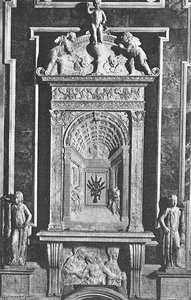
Desiderio’s career gained considerable momentum through prestigious commissions, notably the monumental tomb of Carlo Marsuppini for Santa Croce Basilica. This ambitious undertaking showcased his ability to synthesize stylistic precedents—drawing inspiration from Bernardo Rossellino's earlier tomb of Leonardo Bruni—into a cohesive and emotionally resonant artwork. The tomb’s design deliberately mirrored Rossellini’s approach, emphasizing an elevated triumphal arch incorporating a sarcophagus and effigy bier, thereby honoring the mentor’s legacy while simultaneously elevating Marsuppini’s memorial to new heights of artistic sophistication.The Tomb of Carlo Marsuppini: A Synthesis of Tradition
Perhaps Desiderio's most enduring achievement lies in his masterful reimagining of Rossellini’s tomb design. Recognizing the importance of precedent, he adopted the fundamental compositional scheme—the triumphal arch and sarcophagus—but infused it with a distinctly expressive quality. He skillfully positioned standing children flanking the sarcophagus, adorned with elaborate festoons cascading from an ornate candelabra, reflecting a deliberate homage to Rossellini’s artistic vision. This careful consideration of stylistic influences underscores Desiderio's intellectual engagement with Renaissance art history and his commitment to upholding artistic standards.Legacy and Historical Significance
Desiderio da Settignano’s relatively brief but impactful career cemented his place as a pivotal figure in Florentine sculpture. His work exemplifies the humanist spirit of the Renaissance, prioritizing human dignity and emotional depth alongside technical virtuosity. Though overshadowed by larger contemporaries like Michelangelo and Leonardo da Vinci, Desiderio's contributions to sculptural art—particularly his innovative approach to tomb design and his unwavering dedication to mastering traditional techniques—continue to inspire admiration and scholarly study. His legacy resides not merely in individual artworks but also in the transmission of artistic principles that shaped the course of Renaissance sculpture.
Desiderio da Settignano
1430 - 1464 , Italy
Quick Facts
- Artistic Movement Or Style: Renaissance Sculpture
- Artists Who Influenced This Artist:
- Donatello
- Bernardo Rossellino
- Date Of Birth: c. 1430
- Date Of Death: 1464
- Full Name: Desiderio de Bartolomeo di Francesco detto Ferro
- Nationality: Italian
- Notable Artworks:
- Meeting of Christ and St John the Baptist as Youth
- Virgin and Child
- The Christ Child (.)
- Place Of Birth: Settignano, Italy
Related Articles
The Enduring Allure of Marble in Art History: From Classical Sculpture to Modern Abstraction
Explore the captivating history of marble sculpture from ancient Greece to modern art. Discover renowned artists like Canova & Michelangelo, carving techniques, and investment insights at ArtsDot.

Bronze Sculptures That Defined Art History | ArtsDot
Journey through art history with our Top 10 bronze sculptures! Explore masterpieces by Rodin, Michelangelo & more. Discover stories behind iconic statues and find museum-quality reproductions for your home decor at ArtsDot.com.

The Enduring Form: Exploring Themes & Techniques in Sculpture Across Historical Periods
Explore the rich history of sculpture from ancient masterpieces to contemporary innovations. Discover key techniques, influential artists & investment potential for discerning art collectors.

The Enduring Form: Sculpture Across History, Technique & Emotional Resonance
Explore the rich history of sculpture with ArtsDot. Discover key techniques, influential artists & investment potential for discerning collectors. Expert insights into valuing and collecting timeless masterpieces.

Bronze Age to Modern Masters: 10 Sculptures That Redefined Art | ArtsDot
Journey through art history with 10 legendary bronze sculptures – from Michelangelo's David to Rodin’s Thinker. Explore the stories, techniques & timeless beauty of these masterpieces. Find museum-quality reproductions & elevate your home decor on ArtsDot.com.