 Preview
 Send
Send Share
Share
 Details

 Download
 Similars
 X-Ray
X-Ray Diaporama
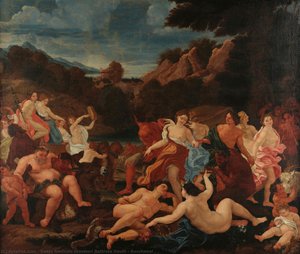
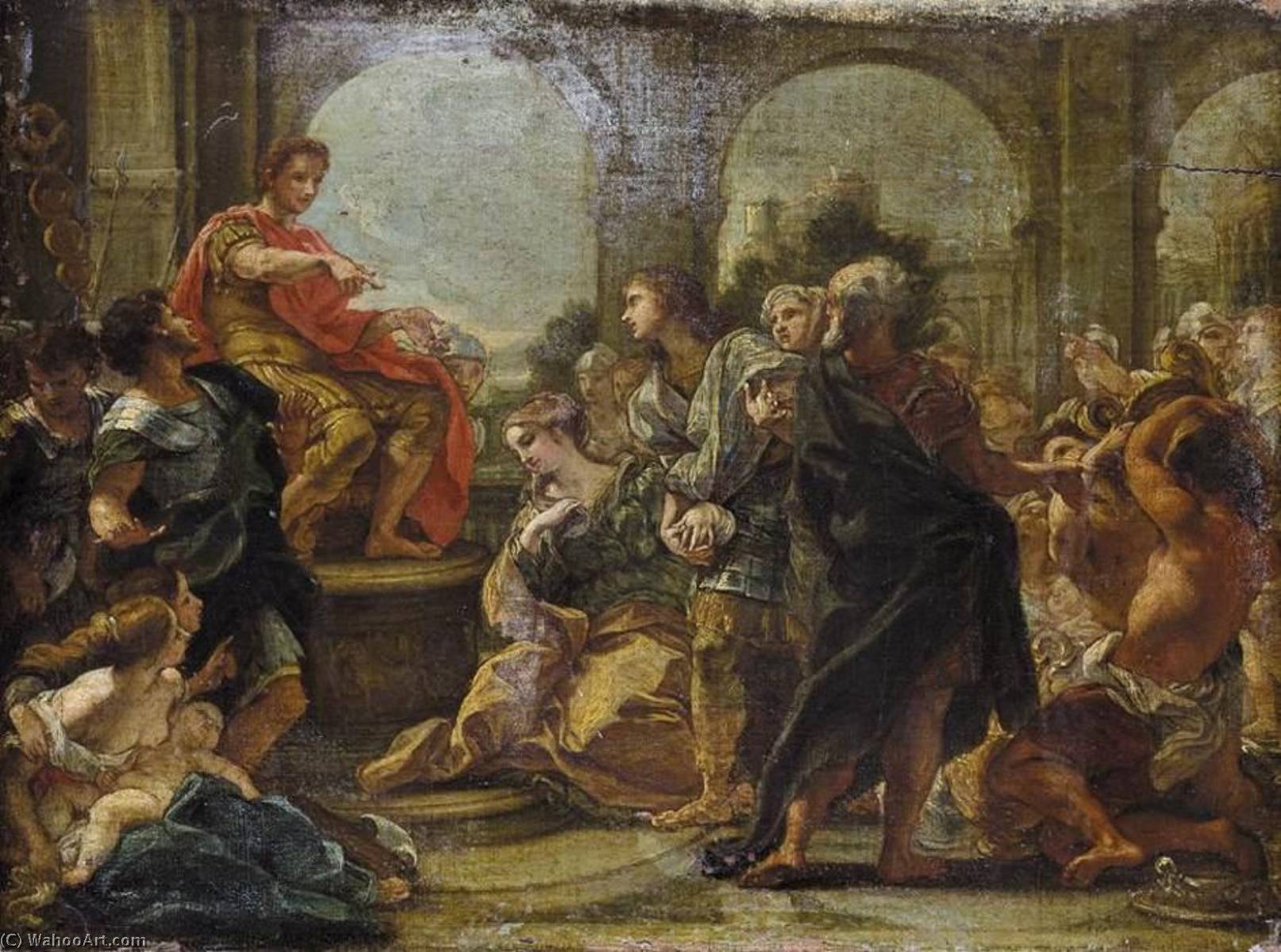
The Continence of Scipio
 1687
1687 33.0 x 44.0 cm
 Read More
Giclée / Art Print
Museum-quality giclée or canvas print with fast production and flexible finish options. ( Buy Hand Made Painting Buy Image)




































Pick from our preset sizes that match the artwork's original proportions.

You may enter your own dimensions to fit a specific frame or space. If your selected size does not match the original image's proportions, we will either crop the artwork or extend the image with a mirrored or solid-fill edge. A digital mockup will be sent for your approval before production begins.
Please note that the on-screen preview does not reflect the actual cropping or extension. Only the mockup will accurately show the final composition.
While custom sizes are available, we recommend selecting a dimension from the predefined list to preserve the original proportions.
Worldwide Delivery () in 2 weeks instead of standard 4/5 weeks. (3 September)

Free Worldwide Express Shipping

High-Quality Linen Canvas

Full Shipping Insurance

Customs Tax Refund Guarantee

True Color Matching Guarantee

60-Day Return Policy (Defects Only)

100% Money-Back Guarantee

Bulk Discount Offer
 Glass option is only available in size under 110 CM

The Continence of Scipio
Giclée / Art Print
Reproduction Size
-


Total Price
$ 63
Artistic Style and Composition
The painting features a range of earth tones, giving it a vintage feel. The composition is intricate, with at least 13 people visible in the image, some standing and others sitting or kneeling. An archway adds to the historical atmosphere of the scene, drawing the viewer's eye to the central figure of Scipio. The use of chiaroscuro creates a sense of depth and dimensionality, highlighting the artist's mastery of light and shadow.Artist Background and Influences
Giovanni Battista Gaulli was a prominent artist of the Baroque period, known for his work in Rome and his association with the Theatines order. His style was influenced by other notable artists of the time, including Luis Ricardo Falero and Jean Léon Gérôme. The Museum San Francesco della Vigna in Italy is home to a collection of artworks, including pieces by Gaulli and other notable artists.- View more paintings by Detto Baciccio Giovanni Battista Gaulli on ArtsDot.com
- Learn more about the artist and his works on WikiArt
- Discover other Baroque masterpieces, including Faust's Vision by Luis Ricardo Falero, on ArtsDot.com
The The Continence of Scipio is a remarkable example of Gaulli's skill as an artist and his ability to capture the essence of ancient Roman history. This painting is a must-see for anyone interested in Baroque art and the works of Detto Baciccio Giovanni Battista Gaulli.
Related Artworks








Artist Biography
The Architect of Illusion: The Life and Legacy of Giovanni Battista Gaulli
In the grand, theatrical theater of the Roman Baroque, few names command as much awe as Giovanni Battista Gaulli. Known affectionately to his contemporaries and history as Baciccio—a Genoese diminutive meaning “the little painter”—Gaulli did not merely paint surfaces; he dissolved them. Born in Genoa on May 8, 1639, his early life was shaped by the vibrant artistic currents of Northern Italy, yet it was his migration to Rome in 1657 that would forever alter the trajectory of Western art. This move placed him at the very heart of the Counter-Reformation's visual propaganda, where the goal of art was to overwhelm the senses and transport the soul toward the divine.
The foundation of Gaulli’s genius was laid within the orbit of the legendary Gian Lorenzo Bernini. Immersing himself in Bernini’s atelier, Gaulli absorbed the principles of sculptural grandeur and theatrical illusionism that defined the High Baroque. He learned to view a canvas not as a flat plane, but as a window into an infinite, celestial space. This profound influence is evident in his mastery of chiaroscuro, where the dramatic interplay between deep shadow and piercing light serves to sculpt figures with a weight and presence that rivals marble. By blending the painterly richness of masters like Rubens and Van Dyck with the structural drama of Bernini, Gaulli developed a style that prioritized emotional resonance and spiritual ecstasy over mere anatomical precision.
A Master of Celestial Spectacle
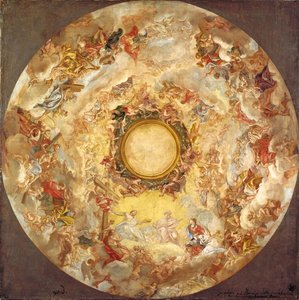
Gaulli’s most enduring achievements are found in his monumental frescoes, works that transformed the ceilings of Rome into portals to the heavens. His ability to execute quadratura—the technique of painting architectural perspectives that appear to extend the real space of a building—reached its zenith in the great churches of the city. Perhaps most breathtaking is his work in the Il Gesù church, specifically the Adoration of the Name of Jesus. In this masterpiece, Gaulli achieved a dizzying sense of movement; clouds seem to spill over the edges of the frame, and saints and angels appear to tumble through the very air of the nave, bathed in a holy, radiant light that blurs the line between the earthly and the eternal.
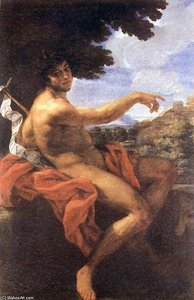
Beyond these vast ceiling compositions, Gaulli’s talent extended to more intimate, yet equally powerful, devotional works. His St John the Baptist, created around 1676, demonstrates his ability to capture intense human emotion through a realistic lens, utilizing vibrant colors and dynamic poses to engage the viewer's empathy. Whether working on a massive scale for papal commissions or crafting poignant altarpieces, his hand was always recognizable by its energy, its luminous palette, and an almost restless sense of motion.
Historical Significance and Artistic Triumph
The career of Baciccio represents the pinnacle of the High Baroque era, acting as a bridge between the heavy, muscular drama of the mid-17th century and the lighter, more decorative flourishes of the early Rococo. His ability to manipulate light and space left an indelible mark on the Roman school of painting, influencing generations of artists who sought to capture the sublime. As he moved through the late 17th century, his works became increasingly complex, pushing the boundaries of what could be achieved with pigment and plaster.
When Gaulli passed away in Rome on April 2, 1709, he left behind a legacy that continues to haunt the corridors of Italy's most sacred basilicas. To study his work is to witness the triumph of illusion; he remains an artist who understood that the true purpose of art was not just to show the world as it is, but to reveal the magnificent, unseen glory of the divine.
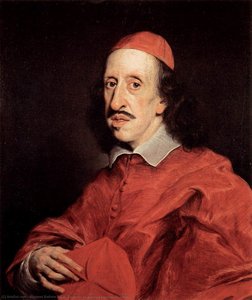
detto baciccio giovanni battista gaulli
1639 - 1709
Quick Facts
- Artistic Movement Or Style: High Baroque
- Artists Or Movements Influenced By This Artist: Baroque art
- Artists Who Influenced This Artist: Gian Lorenzo Bernini
- Date Of Birth: May 8, 1639
- Date Of Death: 1709
- Full Name: Giovanni Battista Gaulli (detto baciccio)
- Nationality: Italian
- Notable Artworks:
- St. Agnes is received into heaven
- The continence of Scipio
- Cupola decoration
- Place Of Birth: Genoa, Italy