 Preview
 Send
Send Share
Share
 Details

 Download
 Similars
 X-Ray
X-Ray Diaporama
 Stats
StatsMap of America

 Read More
Giclée / Art Print
Museum-quality giclée or canvas print with fast production and flexible finish options. ( Buy Hand Made Painting Switch to Digital Image)




































Pick from our preset sizes that match the artwork's original proportions.

You may enter your own dimensions to fit a specific frame or space. If your selected size does not match the original image's proportions, we will either crop the artwork or extend the image with a mirrored or solid-fill edge. A digital mockup will be sent for your approval before production begins.
Please note that the on-screen preview does not reflect the actual cropping or extension. Only the mockup will accurately show the final composition.
While custom sizes are available, we recommend selecting a dimension from the predefined list to preserve the original proportions.
Worldwide Delivery () in 2 weeks instead of standard 4/5 weeks. (8 September)

Free Worldwide Express Shipping

High-Quality Linen Canvas

Full Shipping Insurance

Customs Tax Refund Guarantee

True Color Matching Guarantee

100-Day Return Policy (Defects Only)

100% Money-Back Guarantee

Bulk Discount Offer
 Glass option is only available in size under 110 CM

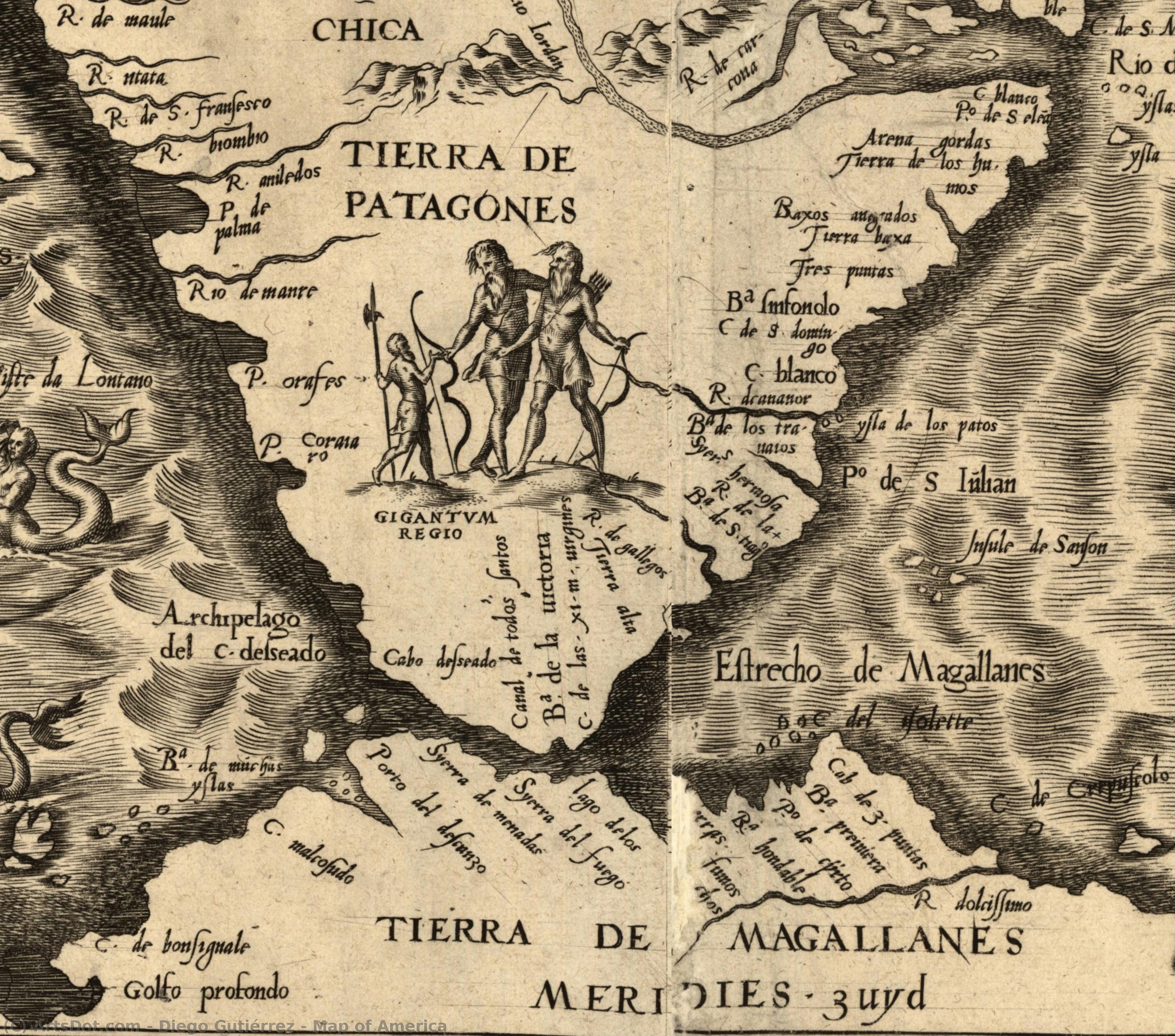
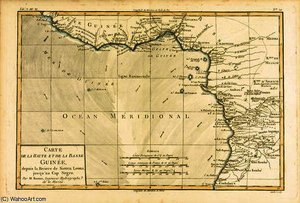
Map of America
Giclée / Art Print
Reproduction Size
-


Total Price
$ 63
Related Artworks







Artist Biography
The Architect of the Known World
In the golden age of Spanish maritime expansion, where the horizon was a frontier of both immense promise and terrifying mystery, few figures held the power to define reality as profoundly as Diego Gutiérrez. Born in the vibrant, intellectual hub of Seville around 1500, Gutiérrez did not merely draw lines upon parchment; he constructed the very framework through which the Spanish Empire perceived its growing dominion. He was a man born into a legacy of scientific inquiry, the son of Dylanger Gutiérrez, an esteemed astronomer and humanist. This lineage provided him with more than just a name; it gifted him a rigorous foundation in mathematics, astronomy, and geography—the essential languages required to translate the chaotic discoveries of the high seas into the structured certainty of a map.
Gutiérrez’s ascent within the Spanish Royal Court was marked by a rare fusion of scientific precision and artistic vision. Following the passing of his father in 1554, he was appointed by royal decree to a prestigious post within the Casa de la Contratación. This position placed him at the very heart of Spain's navigational intelligence. It was here that he undertook his most monumental contribution to history: the development of the Padrón Real. This was no mere collection of charts, but a living, breathing master map, a continuous work-in-progress updated with every new discovery brought back by the Spanish fleet. Working alongside collaborators such as Mateo Sánchez de Villermaga and Juan Ruiz Palau, Gutiérrez utilized advanced techniques of triangulation to ensure that the coastlines, islands, and currents of the Atlantic and Indian Oceans were rendered with an unprecedented level of accuracy, providing a strategic advantage that underpinned Spain's global maritime supremacy.
A Visionary Synthesis of Science and Myth
While his work for the Crown demanded rigorous empirical truth, Gutiérrez possessed the soul of a Renaissance humanist, capable of blending the clinical with the fantastical. This duality reached its zenith in 1562 with the publication of his celebrated map, Americae Sive Quartae Orbis Partis Nova Et Exactissima Descriptio. Produced in Antwerp in collaboration with the master printer Hieronymus Cock, this work remains a breathtaking masterpiece of cartographic art. Because the engravers in Spain lacked the specialized skill to print such intricate details, Gutiérrez looked toward the Spanish Netherlands, bringing a level of sophisticated European craftsmanship to his depiction of the New World.
To gaze upon his 1562 map is to embark on a journey through both geography and imagination. Within its borders, one finds the scientific triumphs of the era—the precise rendering of the Amazon River system and the notable presence of Lake Titicaca—intertwined with the marvelous and the monstrous. Gutiérrez populated his maps with the wonders that fueled the European imagination: vibrant parrots, playful monkeys, elusive mermaids, and colossal sea creatures lurking in the depths. He captured the era's profound sense of awe, even depicting an erupting volcano in central Mexico and the first recorded use of the toponym "California." His work also holds a significant linguistic place in history, as it contains one of the earliest appearances of the term "Apalchen," a precursor to the name Appalachia. Through this delicate balance of the documented and the legendary, Gutiérrez did more than map landmasses; he mapped the very spirit of discovery, creating a visual narrative that captured the tension between the known world and the infinite unknown.

diego gutiérrez
1500 - 1575 , Spain
Quick Facts
- Artistic Movement Or Style: Renaissance Art
- Date Of Birth: 1500 Seville Spain
- Date Of Death: 1575
- Full Name: Diego Gutiérrez
- Nationality: Spanish
- Notable Artworks:
- Americae sive quartae orbis partis nova et exactissima descriptio
- Padrón Real
- Place Of Birth: Seville Spain