

 Preview
 Send
Send Share
Share
 Details

 Download
 Similars
 X-Ray
X-Ray Diaporama
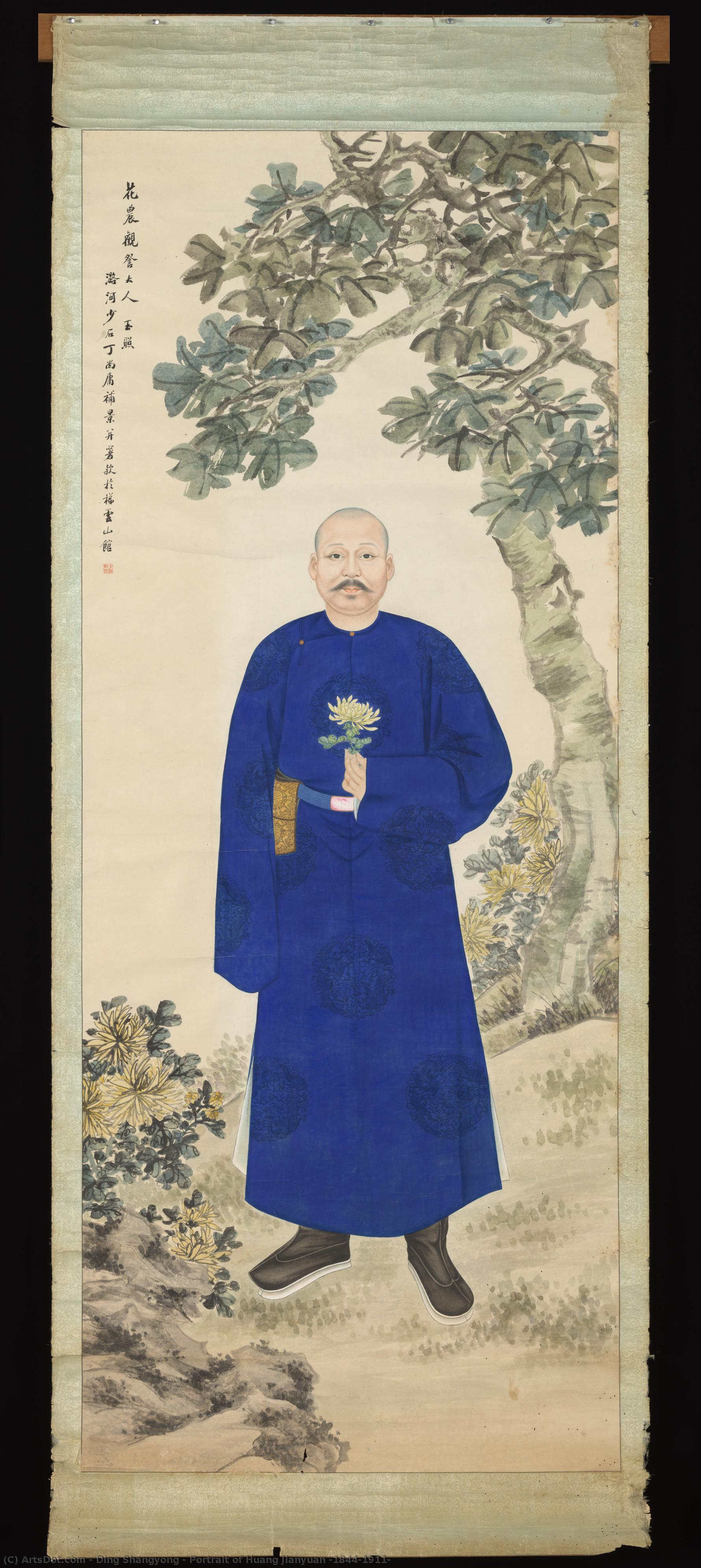
Portrait of Huang Jianyuan (1844–1911)
 130.0 x 92.0 cm
 Read More
Hand Made Oil Reproduction
Hand-painted oil on canvas in your size and frame, made to order by our artists. ( Buy Print Buy Image)




































Pick from our preset sizes that match the artwork's original proportions.

You may enter your own dimensions to fit a specific frame or space. If your selected size does not match the original image's proportions, we will either crop the artwork or extend the painting with additional hand-painted elements. A digital mockup will be sent for your approval before production begins.
Please note that the on-screen preview does not reflect the actual cropping or extension. Only the mockup will accurately show the final composition.
While custom sizes are available, we recommend selecting a dimension from the predefined list to preserve the original proportions.
After order, ArtsDot.com team will email client for instructions and provide a mockup preview
Worldwide Delivery () in 3/4 weeks instead of standard 5 weeks. (5 September). No compromise on quality.

Free Worldwide Express Shipping

High-Quality Linen Canvas

Full Shipping Insurance

Customs Tax Refund Guarantee

True Color Matching Guarantee

60-Day Return Policy (Defects Only)

100% Money-Back Guarantee

Bulk Discount Offer
 Glass option is only available in size under 110 CM

Portrait of Huang Jianyuan (1844–1911)
Reproduction Medium
Reproduction Size
-


Total Price
$ 263
Related Artworks









Artist Biography
The Synthesis of Two Worlds: The Life and Legacy of Ding Shangyong
In the grand tapestry of twentieth-century art, few threads are as vibrant or as complex as those woven by Ding Shangyong. Born in 1902 in Maoming County, Guangdong Province, Ding emerged as a visionary who refused to be confined by the borders of tradition or the limits of geography. Often celebrated with the evocative titles of “Matisse of the East” and “Bada Shanren of Modern Times,” his life’s work represents a profound dialogue between the ancient ink traditions of China and the bold, experimental energies of Western modernism. He was not merely a painter but an architect of a new visual language, one that sought to honor the soul of Chinese heritage while breathing in the revolutionary air of European Fauvism and Impressionism.
Ding’s artistic journey began with a foundational education in his homeland, yet it was his departure for Japan in 1920 that would irrevocably alter his creative DNA. Enrolling in the prestigious Tokyo Fine Arts School, he entered a crucible of intense cultural exchange. Under the mentorship of Wada Eisaku, Ding mastered the technical rigors of Western oil painting, learning to manipulate light and color with a precision that mirrored the European masters. However, this period was not an abandonment of his roots; rather, it was an expansion of them. By absorbing the nuances of Japanese art culture alongside the burgeoning influences of Western modernism, he developed a unique perspective that viewed artistic innovation as a necessity born from the engagement with diverse, often conflicting, traditions.
A Pioneer of Modernity and Artistic Education
Upon his return to Shanghai in 1926, Ding Shangyong became a central figure in the burgeoning modern art movement in China. His arrival coincided with a period of intense cultural transformation, and he met this moment with unparalleled entrepreneurial and academic spirit. Alongside collaborators such as Chen Baoyi and Hong Ye, he co-founded the Chinese Art Association, an institution dedicated to the radical idea of disseminating Western artistic principles within the Chinese landscape. This was more than an aesthetic movement; it was a pedagogical revolution aimed at broadening the horizons of a generation of artists.
His influence extended deep into the halls of academia, where his role as a Chair Professor at Zhonghua University of Fine Arts allowed him to shape the future of Chinese art education. By spearheading the creation of a graduate school, Ding ensured that the flame of innovation would be passed to successors who were equally capable of navigating the complexities of global art trends. His achievements during this era can be summarized by his commitment to several key pillars:
- Institutional Leadership: Establishing frameworks for the study and promotion of modern art principles in China.
- Pedagogical Innovation: Creating advanced academic structures to foster a new generation of trained, versatile artists.
- Cultural Synthesis: Bridging the gap between traditional Chinese ink aesthetics and the structural dynamism of Western oil painting.
The Enduring Resonance of an Innovative Spirit
The historical significance of Ding Shangyong lies in his ability to remain anchored in the past while reaching toward the future. His brushstrokes, much like his life, were a bridge. While he embraced the vibrant palettes and expressive forms of the West, he never lost the rhythmic elegance and spiritual depth inherent in traditional Chinese painting. This duality allowed him to create works that felt both timeless and strikingly contemporary, capturing the essence of a world in transition.
As we look back on his prolific career, we see an artist who defied the labels of "traditionalist" or "modernist" to become something far more significant: a pioneer of globalized art. His legacy continues to inspire those who seek beauty in the intersection of cultures, reminding us that true innovation occurs when we have the courage to blend the familiar with the unknown, and the ancient with the avant-garde.
ding shangyong
1902 - 1978 , China
Quick Facts
- Artistic Movement Or Style: Modern Chinese Art; Matisse of the East
- Artists Or Movements Influenced By This Artist: ['Bada Shanren']
- Artists Who Influenced This Artist:
- Matisse
- Picasso
- Date Of Birth: April 15, 1902
- Date Of Death: April 15, 1978
- Full Name: Ding Shangyong
- Nationality: Chinese
- Notable Artworks:
- Portrait of Huang Jianyuan
- Crane in the Wait for Flight
- Place Of Birth: Guangzhou, China

