 Preview
 Send
Send Share
Share
 Details

 Download
 Similars
 X-Ray
X-Ray Diaporama
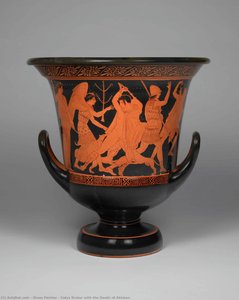
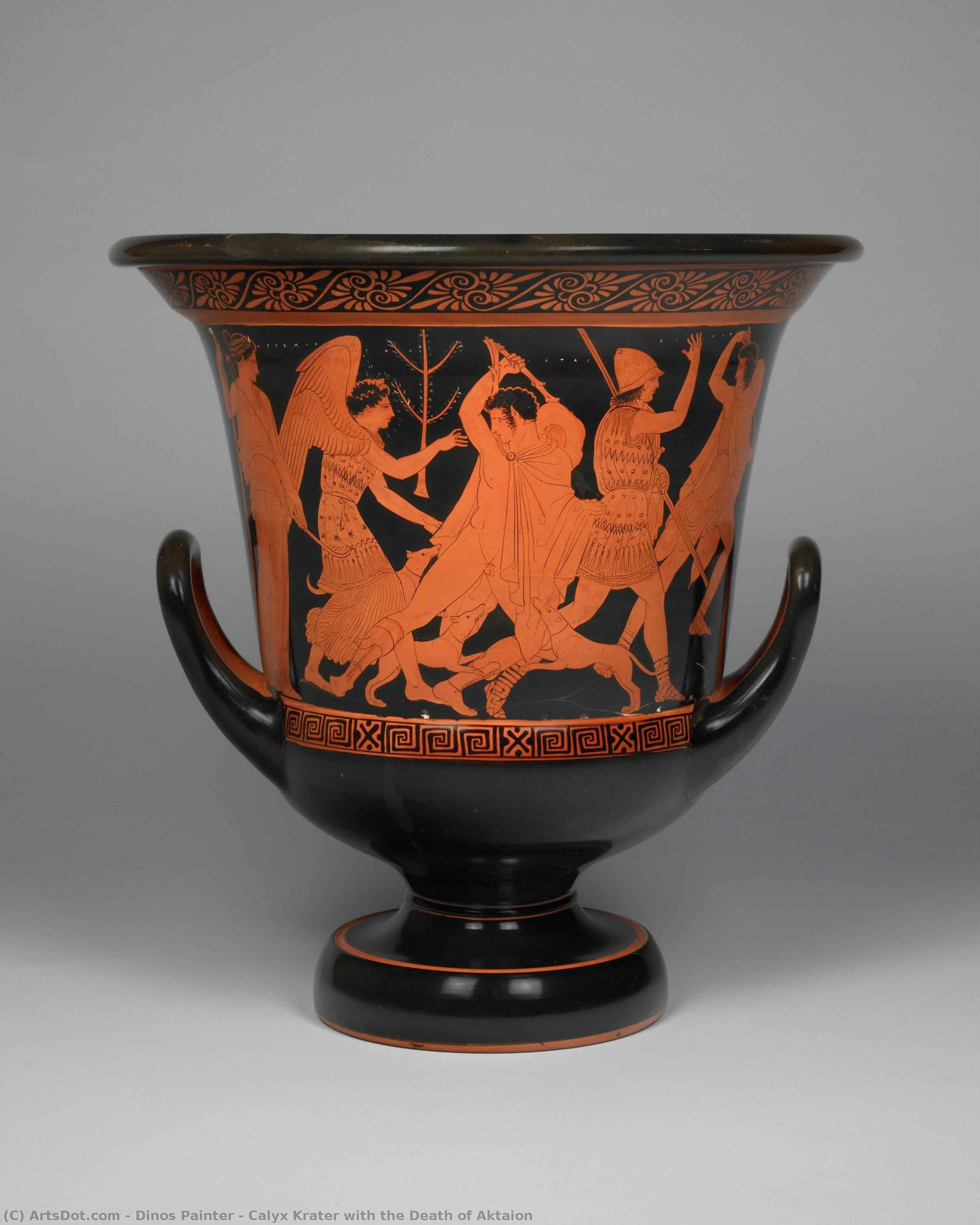
Calyx Krater with the Death of Aktaion
 49.0 x 47.0 cm
 Michael C. Carlos Museum
 Read More
Giclée / Art Print
Museum-quality giclée or canvas print with fast production and flexible finish options. ( Buy Hand Made Painting Buy Image)




































Pick from our preset sizes that match the artwork's original proportions.

You may enter your own dimensions to fit a specific frame or space. If your selected size does not match the original image's proportions, we will either crop the artwork or extend the image with a mirrored or solid-fill edge. A digital mockup will be sent for your approval before production begins.
Please note that the on-screen preview does not reflect the actual cropping or extension. Only the mockup will accurately show the final composition.
While custom sizes are available, we recommend selecting a dimension from the predefined list to preserve the original proportions.
Worldwide Delivery () in 2 weeks instead of standard 4/5 weeks. (27 August)

Free Worldwide Express Shipping

High-Quality Linen Canvas

Full Shipping Insurance

Customs Tax Refund Guarantee

True Color Matching Guarantee

60-Day Return Policy (Defects Only)

100% Money-Back Guarantee

Bulk Discount Offer
 Glass option is only available in size under 110 CM

Calyx Krater with the Death of Aktaion
Giclée / Art Print
Reproduction Size
-


Total Price
$ 63
Collectible Description
Related Artworks





Artist Biography
A Pioneer of Dynamic Narrative: The World of the Dinos Painter
The world of ancient Greek vase painting, a realm often perceived through the static elegance of black-figure pottery, underwent a remarkable transformation in the 5th century BC. At the forefront of this evolution stood an artist known simply as the Dinos Painter – a pseudonym bestowed by modern scholarship, yet one that encapsulates his defining contribution to the art form. Active in Athens around 425–410 BC, he wasn’t merely replicating established styles; he was injecting a new vitality into ceramic narrative, paving the way for the “rich style” that would characterize the subsequent generation of vase painters. Unlike many of his contemporaries who remain shrouded in anonymity, the Dinos Painter's legacy is secured through a distinctive body of work marked by dynamic compositions and an innovative use of white pigment to heighten visual impact.From Kleophon’s Tradition to a New Expressiveness
The Dinos Painter emerged from the workshop tradition of Kleophon, a respected painter known for his serious depictions of mythological scenes. However, where Kleophon favored a more solemn approach, the Dinos Painter infused his work with a delightful lightness and energy. He retained the clarity of form inherited from his predecessor but moved away from the frieze-like arrangements that had dominated earlier styles. Instead of presenting events as continuous narratives unfolding across the vase’s surface, he focused on pivotal moments, isolating them as central dramas. This shift in compositional strategy allowed for a greater emphasis on individual figures and their emotional states. His paintings are characterized by full-bodied forms, languid postures, and expressive eyes that convey a sense of inner life – qualities rarely seen in earlier Athenian vase painting.The Innovation of White: A New Palette for Storytelling
Perhaps the most defining characteristic of the Dinos Painter’s technique was his masterful use of added white pigment. While white had been used sparingly by previous artists, he elevated it to an integral element of his compositions. He employed it not merely as a decorative accent but as a means of highlighting details – the folds of drapery, the musculature of figures, and even the delicate features of faces. More significantly, he pioneered the use of white to depict *eros* (love) and furniture, innovations that would become standard practice for artists in the following generation. This technique not only enhanced the visual clarity of his paintings but also added a new dimension of realism and sophistication. The effect is particularly striking on large vases, where the interplay of red figures against a contrasting white background creates a sense of depth and movement.Dionysiac Revelry and Mythological Tales
The subject matter favored by the Dinos Painter often revolved around Dionysiac themes – scenes of maenads (female followers of Dionysus) and satyrs reveling in ecstatic worship. These depictions, rendered with a playful energy and sensuality, capture the intoxicating spirit of the god of wine and theater. However, his repertoire wasn’t limited to Dionysian mythology. He also tackled other narratives, including the death of Actaeon – a tragic tale from Greek legend – and episodes from the life of Theseus, showcasing his versatility as a storyteller. His compositions are often complex, featuring multi-level imagery that adds depth and visual interest. The vase depicting Dionysus reclining, after which he is named (housed in the Antikensammlung Berlin), remains one of his most celebrated works, exemplifying his mastery of form, composition, and narrative detail.A Lasting Influence on Athenian Ceramics
The Dinos Painter’s impact on Athenian vase painting extended far beyond his own prolific output. He is considered a key figure in the transition from earlier styles to the more ornate and dynamic aesthetic that would define the late 5th century BC. His emphasis on active movement, expressive figures, and innovative use of white pigment profoundly influenced subsequent artists, including the Pronomos Painter, who further developed his techniques and expanded upon his compositional strategies. While the artist’s personal life remains a mystery, his legacy is indelibly etched onto the surfaces of countless vases, offering a captivating glimpse into the artistic ferment of classical Athens and solidifying his position as a true pioneer of dynamic narrative in Greek ceramic art.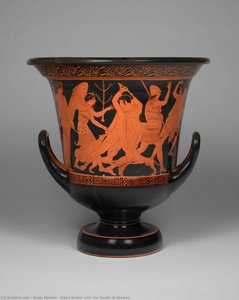
dinos painter
Greece
Quick Facts
- Artistic Movement Or Style: Rich Style
- Artists Or Movements Influenced By This Artist: ['Red-figure pottery']
- Artists Who Influenced This Artist: ['Kleophon painter']
- Full Name: dinos painter
- Nationality: Greek
- Notable Artworks: ['Dionysos reclining']
- Place Of Birth: Greece