 Preview
 Send
Send Share
Share
 Details

 Download
 Similars
 X-Ray
X-Ray Diaporama
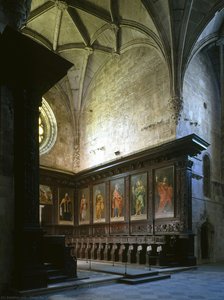
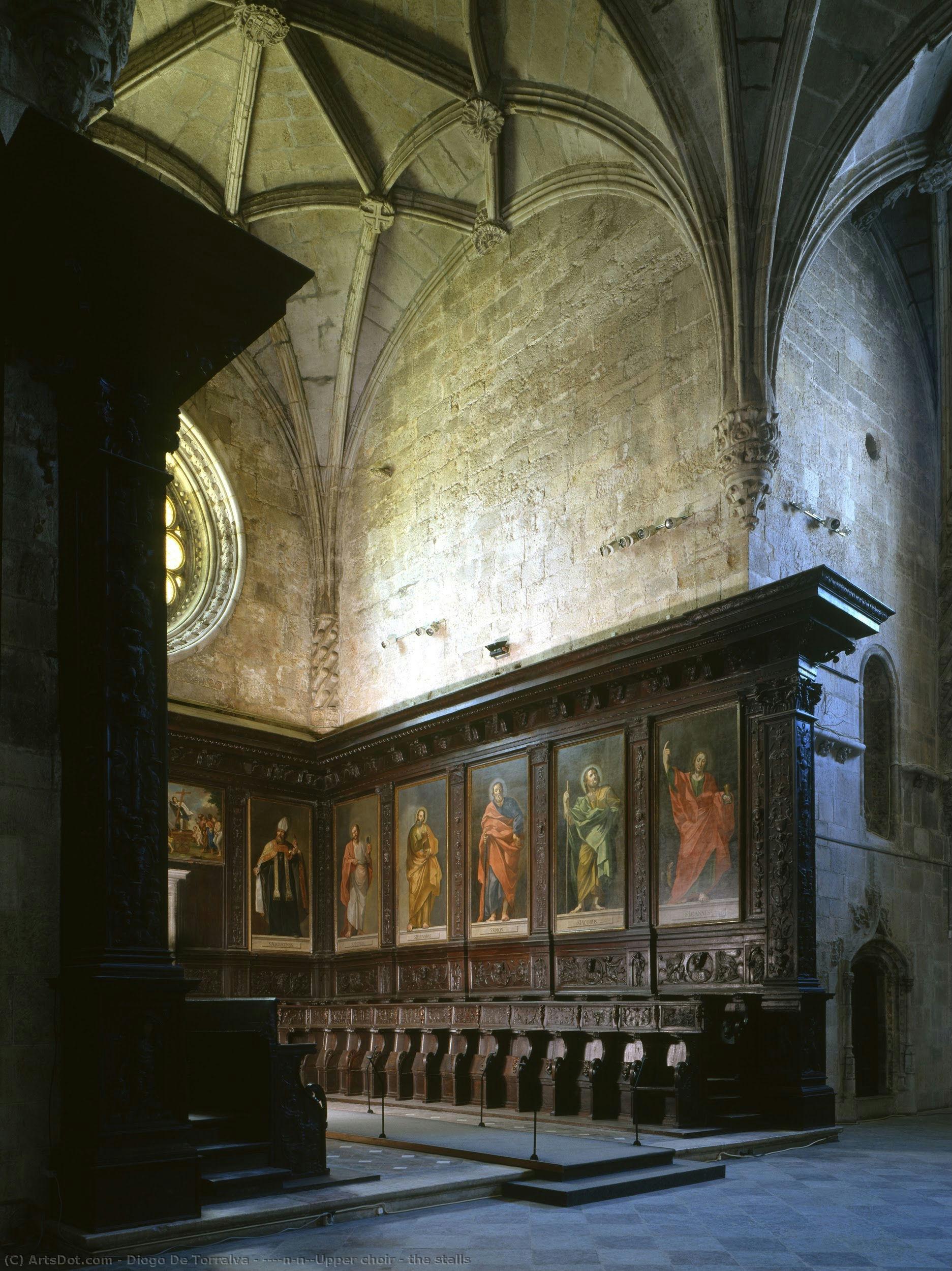
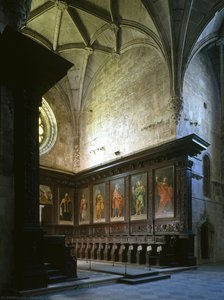
\n\nUpper choir - the stalls

 Read More
Hand Made Oil Reproduction
Hand-painted oil on canvas in your size and frame, made to order by our artists. ( Buy Print Buy Image)




































Pick from our preset sizes that match the artwork's original proportions.

You may enter your own dimensions to fit a specific frame or space. If your selected size does not match the original image's proportions, we will either crop the artwork or extend the painting with additional hand-painted elements. A digital mockup will be sent for your approval before production begins.
Please note that the on-screen preview does not reflect the actual cropping or extension. Only the mockup will accurately show the final composition.
While custom sizes are available, we recommend selecting a dimension from the predefined list to preserve the original proportions.
After order, ArtsDot.com team will email client for instructions and provide a mockup preview
Worldwide Delivery () in 3/4 weeks instead of standard 5 weeks. (22 August). No compromise on quality.

Free Worldwide Express Shipping

High-Quality Linen Canvas

Full Shipping Insurance

Customs Tax Refund Guarantee

True Color Matching Guarantee

60-Day Return Policy (Defects Only)

100% Money-Back Guarantee

Bulk Discount Offer
 Glass option is only available in size under 110 CM

\n\nUpper choir - the stalls
Reproduction Medium
Reproduction Size
-


Total Price
$ 263
Artwork Description
Related Artworks






Artist Biography
The Architect of Transition: The Legacy of Diogo de Torralva
In the grand tapestry of Portuguese architectural history, few figures loom as large or as transformatively as Diogo de Torralva. Living during a period of profound cultural shifts, Torralva acted as a vital bridge between two monumental eras: the opulent, structured grandeur of the Renaissance and the expressive, often tension-filled dynamism of Mannerism. While the precise details of his early life remain shrouded in the mists of the sixteenth century, his presence is felt through the very stone and mortar of Portugal’s most sacred monuments. His work does not merely occupy space; it narrates a period of intense intellectual evolution, where classical ideals met a new, more dramatic way of perceiving the world.
The foundations of Torralva's genius were rooted in a deep, scholarly devotion to antiquity. He was a student of the classical principles laid out by Vitruvius, whose treatise De Architectura provided the mathematical and proportional language that would define his career. This reverence for classical order allowed him to master the harmony and balance required of Renaissance masters. However, Torralva was far from a mere imitator. Through his marriage into the family of the renowned architect Francisco de Arruda, he became part of an elite circle of thinkers and creators, absorbing the burgeoning influences of Italian masters such as Bramante, Palladio, and Serlio. This exposure allowed him to infuse Portuguese traditions with a sophisticated, cosmopolitan flair that would eventually push his work toward the more complex and theatrical aesthetics of Mannerism.
A Masterpiece in Stone: The Convento de Cristo
The zenith of Torralva’s career is perhaps most breathtakingly realized in the Claustro de D. João III at the Convento de Cristo in Tomar. Begun in 1557, this project serves as a profound testament to his ability to synthesize disparate styles into a singular, cohesive vision. In this cloister, one can witness the seamless transition of his artistic soul; the structural clarity and geometric precision of the Renaissance are present, yet they are layered with the intricate sculptural ornamentation and dramatic spatial arrangements that define Mannerist exuberance. The monumental façade, characterized by its use of polychrome marble panels and deeply sculpted reliefs, creates a play of light and shadow that breathes life into the stone.
Beyond the grand scale of his architectural commissions, Torralva’s influence extended to the intimate details of religious spaces, such as the Upper Choir of significant monasteries. His ability to design spaces that facilitated the profound spiritual rhythms of the Hieronymite Order—spaces for prayer, song, and silent contemplation—demonstrates a deep understanding of the intersection between architecture and liturgy. Whether through the rhythmic rows of carved stalls or the soaring proportions of a nave, his work was designed to elevate the human spirit toward the divine.
Historical Significance and Enduring Influence
The historical importance of Diogo de Torralva lies in his role as a stylistic pioneer. He did not simply witness the transition from Renaissance to Mannerism; he orchestrated it within the Portuguese landscape. By blending the rigorous logic of classical antiquity with the emotive, experimental spirit of the sixteenth century, he helped create a unique architectural vernacular that is distinctly Iberian yet globally informed. His legacy is etched into the very identity of Portugal, providing a structural backbone to the nation's most cherished heritage sites.
To study Torralva is to study the evolution of an era. His work remains a vital subject for historians and art lovers alike, offering a window into a time when architecture was used to express the complex tensions of a changing world. Through his mastery of proportion, his command of ornament, and his visionary approach to space, Diogo de Torralva ensured that his name would be forever linked with the enduring beauty of the Portuguese Renaissance.
diogo de torralva
1500 - 1566 , Portugal
Quick Facts
- Artistic Movement Or Style: Renaissance & Mannerist
- Artists Or Movements Influenced By This Artist: ['Palladio']
- Artists Who Influenced This Artist:
- Vitruvius
- Diego de Sagredo
- Date Of Death: 1566
- Full Name: Diogo de Torralva
- Nationality: Portuguese
- Notable Artworks:
- Cloister of Tomar
- Claustro de D. João III
- Place Of Birth: Portugal