

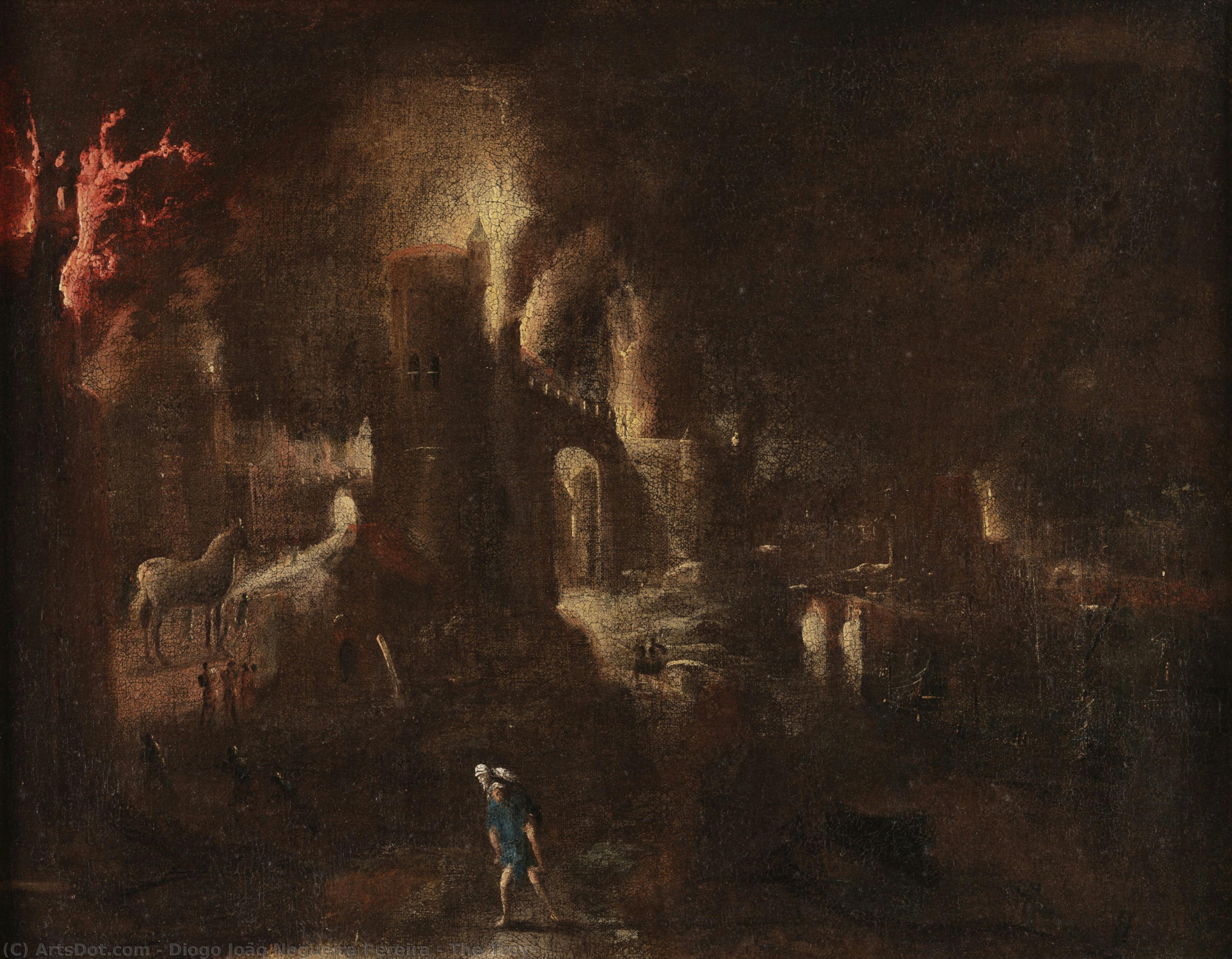
 Preview
 Send
Send Share
Share
 Details

 Download
 Similars
 X-Ray
X-Ray Diaporama
The Troy
 1640
1640 63.0 x 78.0 cm
 Machado de Castro National Museum
 Read More
Purchase a high-resolution, enhanced digital image, far superior to the online preview.
Each file is meticulously prepared by our in-house specialists using advanced tools and expert manual retouching. We ensure every image has exceptional clarity, precise color accuracy, and fine detail.
The final file is delivered via email within 72 hours, optimized for immediate use in professional, editorial, and print environments. This is the same quality trusted by top-tier design studios, publishers, and galleries.
Digital Image
Download a high-resolution file for personal display, printing, and creative projects. ( Buy Print Buy Hand Made Painting)
Included in Every Digital Image Order
Expert Digital Delivery, Guaranteed
When you choose ArtsDot.com, you're not just getting an image - you're receiving a professionally enhanced digital artwork, crafted with precision and backed by a satisfaction guarantee. Here's everything that comes with your order, automatically:

Fast Email Delivery
Your high-resolution digital image file will be emailed to you within 72 hours of ordering - ready for immediate use.

AI-Enhanced Digital File
Your artwork is professionally optimized using advanced AI tools and manual editing, ensuring maximum detail, clarity, and color accuracy.

Free Lifetime Re-Delivery
Accidentally deleted or lost your file? No worries - we'll resend it to you anytime, free of charge.

No Import Fees - Ever
Enjoy your artwork instantly with zero customs, duties, or delivery fees - digital downloads are always tax-free.

Color Accuracy Guarantee
We ensure your digital image reflects the original colors as closely as possible using professional tools and color management.

60-Day Satisfaction Guarantee
If you're not satisfied with your digital image, we'll revise it or refund 100% within 60 days - no questions asked.

100% Money-Back Guarantee
Not satisfied? Get a full refund within 60 days of receiving your digital file - no questions asked.

Bulk Order Discounts
Buy 3 images, save 10% - Buy 5, save 15% - Buy 10+, save 20%. Great for creative projects, galleries, and agencies.
Collectible Description
Related Artworks




Artist Biography
Robert Beauchamp: A World of Dramatic Creatures
The art world often seeks to define an artist through a singular style, but Robert Beauchamp resisted such neat categorization. Born in Denver, Colorado, in 1923, and tragically passing away in 1995, Beauchamp’s oeuvre defies easy description, existing instead as a richly layered tapestry of symbolic figures, unsettling landscapes, and intensely expressive color palettes. His work, largely unseen during his lifetime, now commands significant attention for its raw emotional power and unique visual language.
Beauchamp's early life was marked by hardship – the loss of both parents before he reached three years old and a childhood spent in poverty within a community house. This experience undoubtedly shaped his artistic sensibility, fostering a deep appreciation for resilience and a keen awareness of human vulnerability. Despite these challenges, Beauchamp’s passion for art ignited during high school, fueled by visits to local museums and an avid reading of French painting masters. He honed his skills at the Colorado Springs Fine Arts Center, laying the groundwork for a career that would ultimately challenge conventional notions of representation.
Early Influences and Artistic Evolution
Following a brief foray into pottery, Beauchamp’s path converged with Hans Hofmann in Provincetown, Massachusetts, during the early 1950s. Hofmann's emphasis on color theory and spontaneous gesture proved profoundly influential, shifting Beauchamp away from purely representational concerns and towards a more emotionally driven approach. This period saw him exhibiting at key galleries like the Tanager Gallery and Green Gallery in New York City, engaging with a vibrant community of artists pushing the boundaries of abstract expressionism. However, Beauchamp ultimately rejected the perceived stagnation within this movement, seeking instead to develop his own distinct voice.
A pivotal moment arrived with a Fulbright Award in 1960, allowing him to immerse himself in the art and culture of Italy. This extended period of study and travel profoundly impacted his artistic practice, deepening his understanding of color, composition, and the expressive potential of paint itself. Returning to New York, Beauchamp embraced a more tactile and gestural approach, utilizing techniques like pouring paint directly from cans and employing a “splattering” method that imbued his canvases with an almost sculptural quality. He often worked on the floor or even walls, allowing the process of creation to dictate the final form.
The Language of the Beauchamps
Beauchamp’s figures – which he affectionately termed "Beauchamps" – are instantly recognizable for their dramatic intensity and enigmatic presence. These creatures, often rendered in bold, saturated colors, possess a captivating blend of vulnerability and power. They rarely engage in conventional narratives; instead, they seem to exist within a timeless realm of symbolic significance. Many scholars believe that Beauchamp created these figures from his own subconscious, drawing upon personal experiences and anxieties.
The landscapes depicted by Beauchamp are equally compelling, characterized by swirling colors, distorted perspectives, and an unsettling sense of atmosphere. These aren’t idyllic vistas; they're often imbued with a palpable tension, reflecting the artist’s own complex emotional landscape. The recurring motifs – animals, skeletal figures, and ambiguous human forms – contribute to a rich tapestry of symbolism that invites endless interpretation.
Legacy and Recognition
Despite his consistent talent and critical recognition during his lifetime, Beauchamp remained largely obscure until recently. His work gained renewed attention in the late 1990s and early 2000s, fueled by a growing appreciation for his unique vision and the rediscovery of his extensive body of work. Today, Robert Beauchamp is recognized as one of the most important figurative artists of the mid-20th century, celebrated for his daring use of color, his evocative imagery, and his profound emotional depth.
His paintings are now exhibited in prestigious galleries and museums worldwide, attracting collectors and scholars eager to unravel the mysteries contained within these captivating works. Beauchamp’s legacy lies not only in the beauty of his art but also in its ability to provoke contemplation and ignite the imagination – a testament to the enduring power of an artist who dared to forge his own path.
diogo joão nogueira pereira
1995 - , Portugal
Quick Facts
- Artistic Movement Or Style: Figurative painting
- Artists Or Movements Influenced By This Artist: ['Abstract Expressionism']
- Artists Who Influenced This Artist: ['Hans Hofmann']
- Date Of Birth: 1923-08-17
- Date Of Death: 1995-06-24
- Full Name: Robert Beauchamp
- Nationality: American
- Notable Artworks:
- Woman and Skeleton
- Beauchamps
- Place Of Birth: Denver, Colorado, USA

