 Preview
 Send
Send Share
Share
 Details

 Download
 Similars
 X-Ray
X-Ray Diaporama
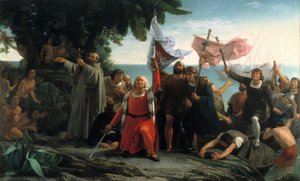
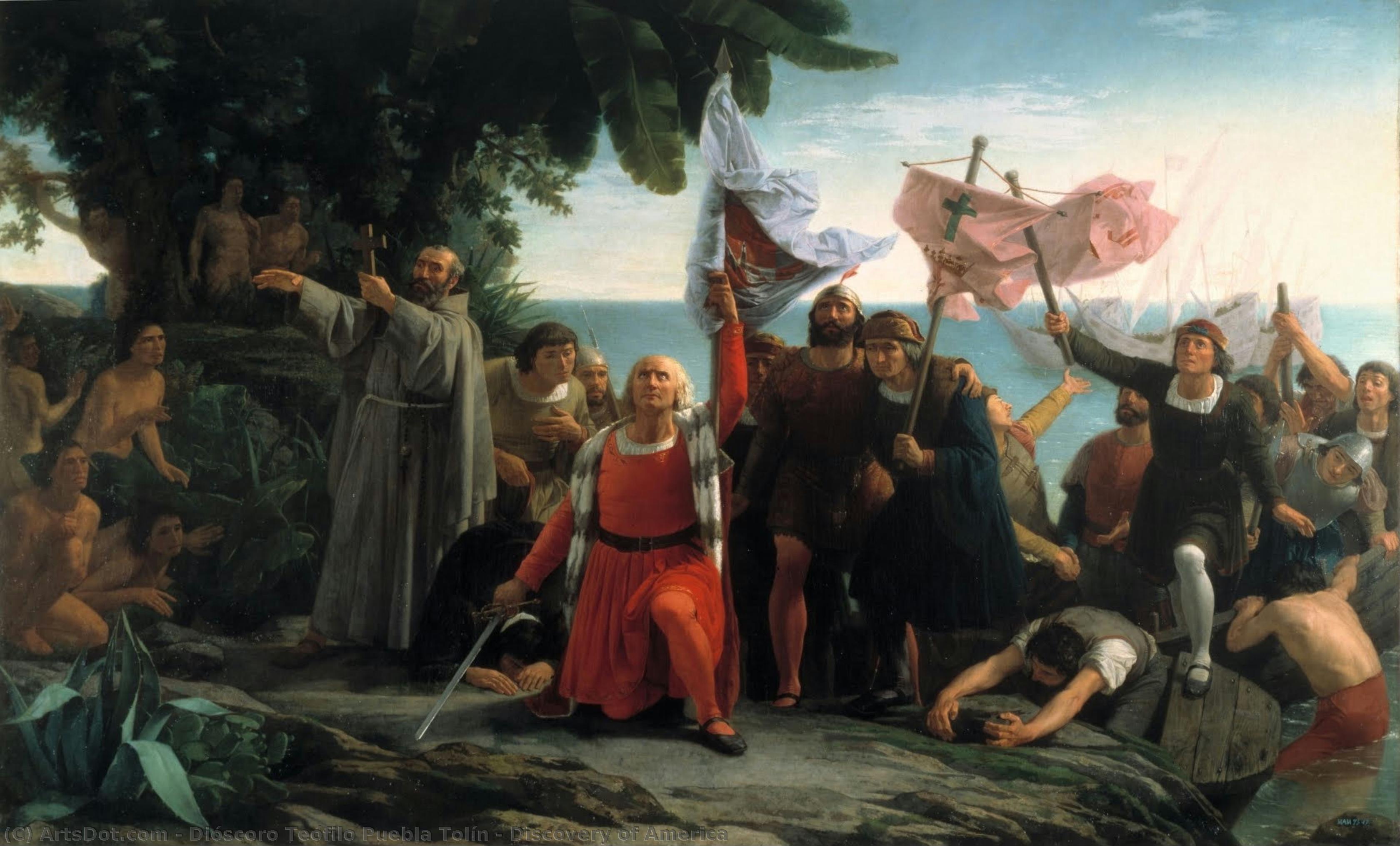
Discovery of America

 Read More
Hand Made Oil Reproduction
Hand-painted oil on canvas in your size and frame, made to order by our artists. ( Buy Print Buy Image)




































Pick from our preset sizes that match the artwork's original proportions.

You may enter your own dimensions to fit a specific frame or space. If your selected size does not match the original image's proportions, we will either crop the artwork or extend the painting with additional hand-painted elements. A digital mockup will be sent for your approval before production begins.
Please note that the on-screen preview does not reflect the actual cropping or extension. Only the mockup will accurately show the final composition.
While custom sizes are available, we recommend selecting a dimension from the predefined list to preserve the original proportions.
After order, ArtsDot.com team will email client for instructions and provide a mockup preview
Worldwide Delivery () in 3/4 weeks instead of standard 5 weeks. (28 August). No compromise on quality.

Free Worldwide Express Shipping

High-Quality Linen Canvas

Full Shipping Insurance

Customs Tax Refund Guarantee

True Color Matching Guarantee

60-Day Return Policy (Defects Only)

100% Money-Back Guarantee

Bulk Discount Offer
 Glass option is only available in size under 110 CM

Discovery of America
Reproduction Medium
Reproduction Size
-


Total Price
$ 538
Related Artworks






Artist Biography
A Life Immersed in Eclecticism: Dióscoro Teófilo Puebla Tolín
Dióscoro Teófilo Puebla Tolín, born in the quiet Spanish village of Melgar de Fernamental in 1831, emerged as a significant figure within the vibrant yet often politically charged landscape of 19th-century Spanish painting. His artistic journey was one defined by a restless pursuit of knowledge and an embrace of diverse styles – an eclecticism that would become his hallmark. From early demonstrations of drawing talent in the schools of Carrión de los Condes, Puebla’s path led him to the Real Academia de Bellas Artes de San Fernando in Madrid, where he studied under esteemed masters like José de Madrazo and Carlos Luis de Ribera y Fieve. This formal training provided a solid foundation, but it was his subsequent sojourn to Rome – secured through a competitive grant from the Ministry of Public Works – that truly ignited his artistic sensibility. In Rome, Puebla found himself amongst a community of Spanish painters congregating at the famed Antico Caffè Greco, fostering an environment of intellectual exchange and stylistic exploration. This period proved pivotal in shaping his mature aesthetic, allowing him to absorb influences beyond the strictures of academic tradition.The Flourishing Career: Portraits, History, and Genre
Upon returning to Spain in 1863, Puebla quickly established himself as a versatile and sought-after artist. While he briefly held a professorship at the Real Academia Provincial de Bellas Artes de Cádiz, his appointment to the Academy of San Fernando in 1865 cemented his position within the Spanish art establishment. Puebla’s oeuvre encompassed a broad range of subjects: portraits that captured the likenesses and status of prominent figures; genre scenes depicting everyday life with meticulous detail; and ambitious history paintings intended to evoke national pride and moral contemplation. He wasn't confined by a single approach, skillfully blending realism with elements of fantasy and dramatic composition. His participation in major exhibitions like the Weltausstellung 1873 Wien and the Centennial Exposition in Philadelphia further broadened his recognition, showcasing Spanish artistry on an international stage. Notably, Puebla’s work often served as a visual narrative for the prevailing ideologies of the time, reflecting both the romanticized view of Spain's past and its aspirations for the future.Academic Contributions and Artistic Legacy
Puebla’s influence extended beyond his own canvases; he became an active participant in shaping the artistic landscape of Spain through his academic roles. He frequently served on juries evaluating candidates for positions at the Academia Española de Bellas Artes de Roma, influencing the direction of young artists' training. His elevation to Officer status within both the Order of Isabella the Catholic and the Order of Charles III underscored his standing within Spanish society. In 1882, he was elected an “Academician” by his peers – a testament to their respect for his artistic achievements. Later in life, Puebla assumed the directorship of the School of Drawing, Painting and Engraving in 1897, succeeding Luis de Madrazo, further solidifying his commitment to fostering artistic talent. While his historical paintings remain his most recognizable works, it is the breadth of his artistic exploration – encompassing portraiture, genre scenes, and a willingness to experiment with style – that defines his enduring legacy.Symbolism and Historical Context
Puebla’s art wasn't merely decorative; it was deeply embedded in the socio-political currents of 19th-century Spain. His history paintings, though relatively few in number, are particularly revealing. Works like “The First Landing of Columbus on the Shores of the New World” – later popularized through prints by Currier & Ives – exemplify the era’s tendency to romanticize colonial narratives. The painting depicts a triumphant arrival, glossing over the devastating consequences for indigenous populations and presenting a vision of divine right and national glory. His portraits, often commissioned by members of the Spanish elite, served as statements of power and social standing. Even his genre scenes, while seemingly apolitical, were imbued with a sense of national identity and cultural pride. Understanding Puebla’s work requires acknowledging this context – recognizing that his art was not simply a reflection of reality but an active participant in shaping perceptions of history and society.A Lasting Impression
Dióscoro Teófilo Puebla Tolín passed away in Madrid in 1901, leaving behind a substantial body of work that continues to fascinate and provoke discussion. His paintings can be found in prominent collections, including the Congress of Deputies in Spain, where his portraits of figures like Nicomedes Pastor Díaz and Pedro José Pidal serve as enduring reminders of the nation’s political leaders. Puebla's significance lies not only in his technical skill but also in his ability to capture the spirit of a rapidly changing era. He was an artist who embraced eclecticism, skillfully blending realism with fantasy and tradition with innovation. While modern interpretations may challenge the romanticized narratives presented in some of his historical works, Puebla’s art remains a valuable window into the complexities of 19th-century Spanish society and its evolving artistic identity.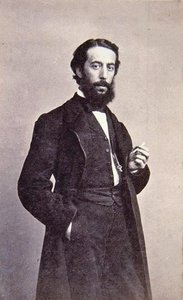
dióscoro teófilo puebla tolín
1831 - 1901 , Spain
Quick Facts
- Artistic Movement Or Style: Eclectic
- Artists Who Influenced This Artist:
- José de Madrazo
- Carlos Luis Ribera
- Date Of Birth: 1831
- Date Of Death: 1901
- Full Name: Dióscoro Teófilo Puebla Tolín
- Nationality: Spanish
- Notable Artworks: ['First Landing of Columbus']
- Place Of Birth: Melgar de Fernamental, Spain