 Preview
 Send
Send Share
Share
 Details

 Download
 Similars
 X-Ray
X-Ray Diaporama
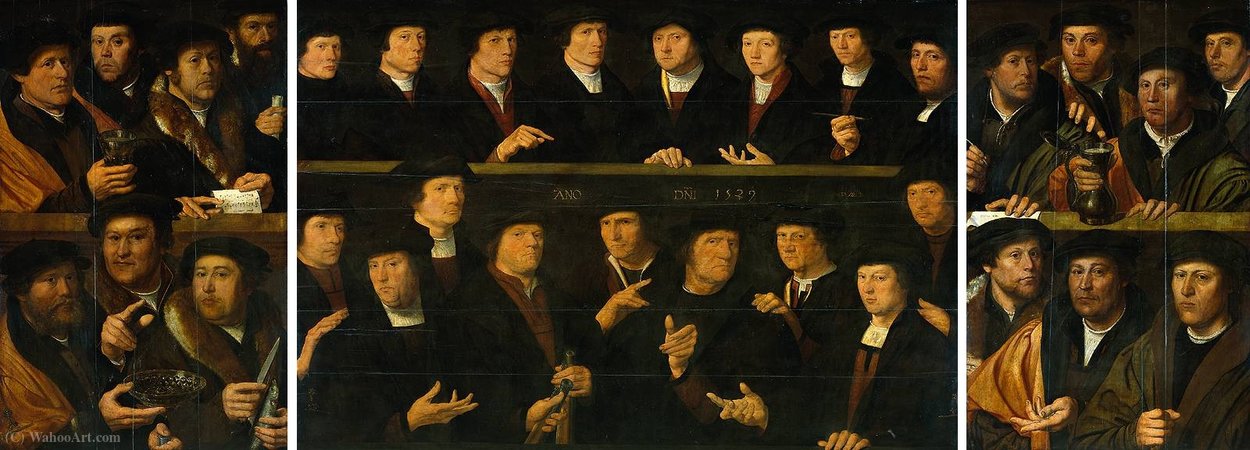
Militia painting in three parts.
 Read More
Giclée / Art Print
Museum-quality giclée or canvas print with fast production and flexible finish options. ( Buy Hand Made Painting Buy Image)




































Pick from our preset sizes that match the artwork's original proportions.

You may enter your own dimensions to fit a specific frame or space. If your selected size does not match the original image's proportions, we will either crop the artwork or extend the image with a mirrored or solid-fill edge. A digital mockup will be sent for your approval before production begins.
Please note that the on-screen preview does not reflect the actual cropping or extension. Only the mockup will accurately show the final composition.
While custom sizes are available, we recommend selecting a dimension from the predefined list to preserve the original proportions.
Worldwide Delivery () in 2 weeks instead of standard 4/5 weeks. (21 August)

Free Worldwide Express Shipping

High-Quality Linen Canvas

Full Shipping Insurance

Customs Tax Refund Guarantee

True Color Matching Guarantee

60-Day Return Policy (Defects Only)

100% Money-Back Guarantee

Bulk Discount Offer
 Glass option is only available in size under 110 CM

Militia painting in three parts.
Giclée / Art Print
Reproduction Size
-


Total Price
$ 63
Related Artworks






Artist Biography
Dirck Jacobsz (1497–1567): Pioneer of Dutch Militia Portraits
Dirck Jacobsz, whose exact birthplace remains shrouded in mystery—likely Amsterdam—stands as a pivotal figure in the burgeoning artistic landscape of 16th-century Holland. Born into a family steeped in painting tradition, he received his initial training from his father, Jacob Cornelisz van Oostsanen, establishing him firmly within the artistic lineage of his time. However, Jacobsz’s artistic journey truly blossomed under the profound influence of Jan van Scorel, a fellow Amsterdam painter whose Mannerist style captivated him and shaped his distinctive visual vocabulary. This stylistic kinship is particularly evident in ‘The Crossbowmen,’ completed around 1529—a monumental achievement that cemented Jacobsz's reputation as one of the era’s foremost artists and marked the genesis of Dutch militia portraits, a genre that would forever alter the artistic representation of civic life.- Early Life & Training: Jacobsz’s formative years were characterized by immersion in the artistic milieu of Amsterdam, where he honed his skills alongside established masters like Cornelisz van Asselen and Gerard Terwesten.
- Mannerist Influence: Jan van Scorel's Mannerist aesthetic—characterized by dramatic lighting, stylized figures, and a heightened sense of emotion—served as an indispensable catalyst for Jacobsz’s artistic development.
- The Crossbowmen (1529): This iconic painting represents Jacobsz’s breakthrough moment, establishing him as the progenitor of Dutch militia portraits and showcasing his mastery of composition and technique.
Marriage & Family: Establishing Roots in Amsterdam
In 1550, Dirck Jacobsz married Marritgen Gerritsdr., forging a familial bond that would endure for decades. Together they welcomed two children into their life—Maria dircksdr. and jacob dircksz.—who themselves pursued artistic endeavors, continuing the family’s legacy of creative expression. This domestic tranquility provided a backdrop against which Jacobsz cultivated his craft, furthering his reputation as a prolific painter.Notable Commissions & Artistic Output
Jacobsz's artistic output extended beyond individual portraits; he undertook significant commissions for civic organizations and guilds, notably producing two earlier group portraits of Amsterdam’s shooting corporation—works that now reside in the State Hermitage Museum in Saint Petersburg. These monumental paintings exemplify Jacobsz’s ability to capture complex social dynamics and convey profound symbolic meaning through meticulous detail and masterful execution.Legacy & Historical Significance
Dirck Jacobsz's contribution to Dutch art history transcends mere stylistic innovation; he fundamentally reshaped the visual representation of civic life, initiating a genre that would become synonymous with the humanist ideals of the Renaissance. His enduring influence can be discerned in subsequent generations of painters who embraced his Mannerist sensibilities and championed the depiction of prominent figures within the context of their communities. He remains an indispensable figure in understanding the artistic evolution of Amsterdam and the broader trajectory of Netherlandish painting during its golden age.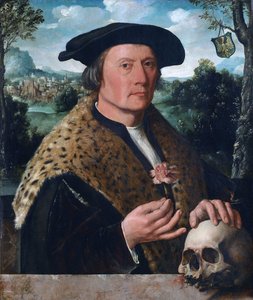
Dirck Jacobsz
1497 - 1567 , Netherlands
Quick Facts
- Artistic Movement Or Style: Renaissance Mannerism
- Artists Or Movements Influenced By This Artist: ['']
- Artists Who Influenced This Artist: ['Jan van Scorel']
- Date Of Birth: Amsterdam, Netherlands (1497)
- Date Of Death: 1567
- Full Name: Dirck Jacobsz
- Nationality: Dutch
- Notable Artworks:
- The Crossbowmen
- A Group of Guardsmen
- Place Of Birth: Amsterdam