

 Preview
 Send
Send Share
Share
 Details

 Download
 Similars
 X-Ray
X-Ray Diaporama
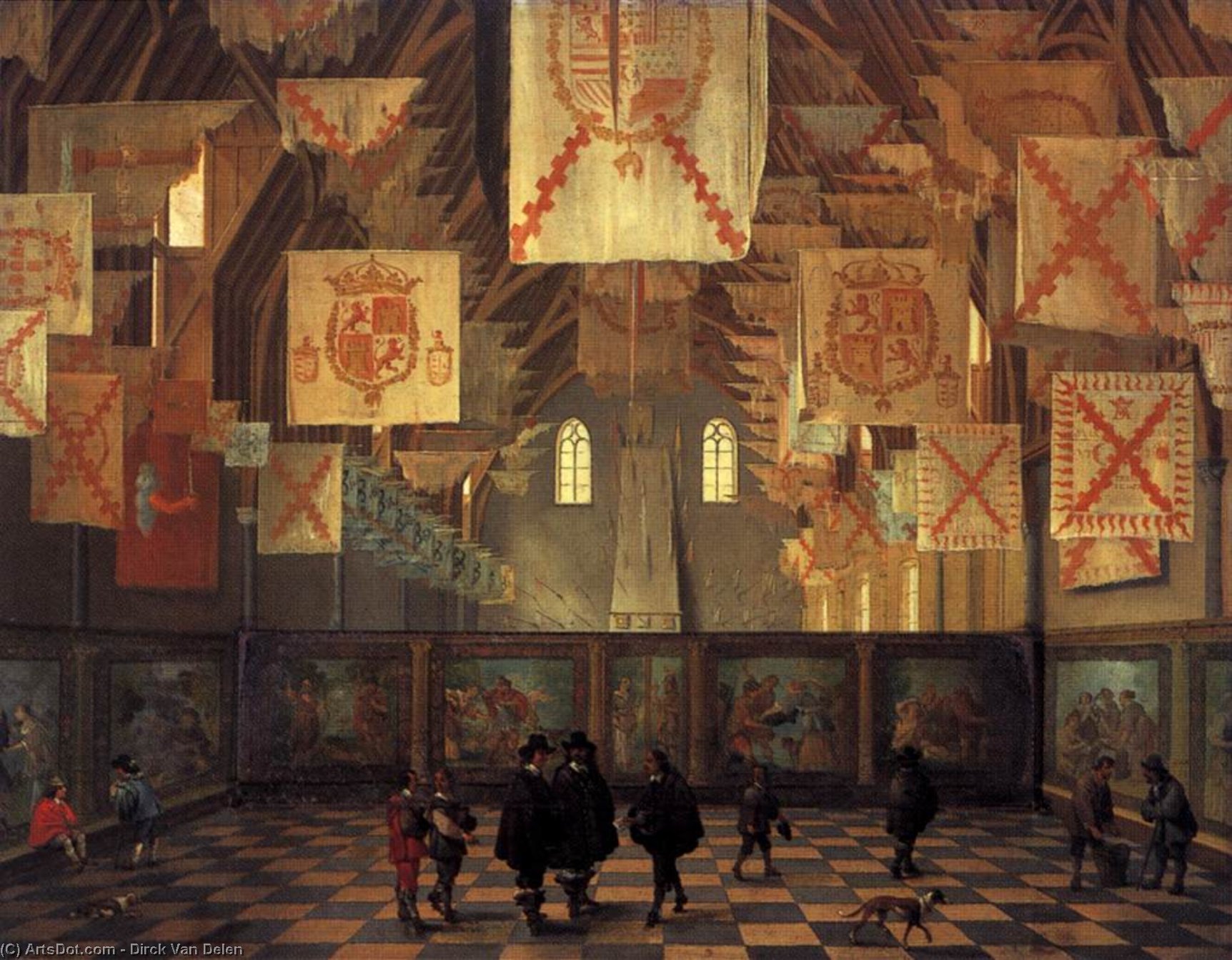
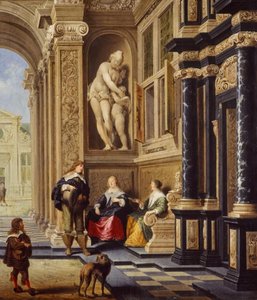
The Great Hall of the Binnenhof in The Hague
 Oil On Panel
- Dutch Golden Age
 1651
1651- Early Modern
 52.0 x 66.0 cm
 Rijksmuseum
 Read More
Purchase a high-resolution, enhanced digital image, far superior to the online preview.
Each file is meticulously prepared by our in-house specialists using advanced tools and expert manual retouching. We ensure every image has exceptional clarity, precise color accuracy, and fine detail.
The final file is delivered via email within 72 hours, optimized for immediate use in professional, editorial, and print environments. This is the same quality trusted by top-tier design studios, publishers, and galleries.
Digital Image
Download a high-resolution file for personal display, printing, and creative projects. ( Buy Print Buy Hand Made Painting)
Included in Every Digital Image Order
Expert Digital Delivery, Guaranteed
When you choose ArtsDot.com, you're not just getting an image - you're receiving a professionally enhanced digital artwork, crafted with precision and backed by a satisfaction guarantee. Here's everything that comes with your order, automatically:

Fast Email Delivery
Your high-resolution digital image file will be emailed to you within 72 hours of ordering - ready for immediate use.

AI-Enhanced Digital File
Your artwork is professionally optimized using advanced AI tools and manual editing, ensuring maximum detail, clarity, and color accuracy.

Free Lifetime Re-Delivery
Accidentally deleted or lost your file? No worries - we'll resend it to you anytime, free of charge.

No Import Fees - Ever
Enjoy your artwork instantly with zero customs, duties, or delivery fees - digital downloads are always tax-free.

Color Accuracy Guarantee
We ensure your digital image reflects the original colors as closely as possible using professional tools and color management.

60-Day Satisfaction Guarantee
If you're not satisfied with your digital image, we'll revise it or refund 100% within 60 days - no questions asked.

100% Money-Back Guarantee
Not satisfied? Get a full refund within 60 days of receiving your digital file - no questions asked.

Bulk Order Discounts
Buy 3 images, save 10% - Buy 5, save 15% - Buy 10+, save 20%. Great for creative projects, galleries, and agencies.
A Glimpse into Civic Life: The Great Hall of the Binnenhof
To stand before Dirck van Delen's depiction of the Great Hall of the Binnenhof is to step directly into the vibrant, bustling heart of 17th-century Dutch governance. This painting is far more than a mere record of an architectural space; it is a meticulously composed tableau vivant, capturing the very pulse of civic life in The Hague. Van Delen, known as an architect of illusion, uses this grand hall not just to display perspective mastery, but to immerse the viewer within a moment of historical confluence. One can almost hear the murmur of conversations echoing off the high ceilings and see the rich textures of the checkered floor beneath countless footsteps.
Mastery in Illusion: Technique and Composition
Van Delen’s technical prowess is immediately apparent upon viewing this work. The composition guides the eye through a complex arrangement of figures, suggesting depth and scale that are breathtaking to behold. Notice how the scattered individuals—some caught in intimate foreground moments, others receding into the background haze—create a dynamic sense of movement across the checkered expanse. The inclusion of details, such as the watchful dog near the center or the stately horse positioned subtly on the right, anchors the scene in tangible reality. These elements are not decorative afterthoughts; they are integral parts of Van Delen’s masterful illusionism, lending narrative weight to the architectural grandeur.
The Spirit of the Golden Age Gathering
Painted in 1651, this work resonates deeply with the spirit of the Dutch Golden Age—a period defined by burgeoning mercantile power, intellectual ferment, and visible civic pride. The Binnenhof itself was a nexus of political drama, making any depiction inherently charged with historical significance. While the scene appears lively, there is an underlying sense of ordered activity; people are gathered, yet they seem engaged in their own private dramas within the public sphere. It speaks to a society that valued both its monumental structures and the intricate tapestry of human interaction unfolding within them.
Echoes for the Modern Collector
For those who appreciate art that marries historical documentation with artistic fantasy, this piece offers profound resonance. Whether considering it as an investment in Dutch history or seeking decorative inspiration for a grand reception room, its atmosphere is unparalleled. A high-quality reproduction allows one to bring this captured moment of grandeur into a contemporary setting. It invites contemplation on the passage of time, the enduring nature of civic institutions, and the sheer artistry required to freeze such a vibrant, complex scene onto panel.
Related Artworks



Artist Biography
Dirck van Delen: Architect of Illusion
The Dutch Golden Age produced a dazzling array of artists, but few captured the imagination quite like Dirck van Delen (1605-1671). More than simply a painter, Van Delen was an architect of illusion, meticulously crafting impossible palaces and breathtaking church interiors that defied reality. His work, largely confined to architectural fantasies, offers a unique window into the aspirations and artistic sensibilities of 17th-century Europe – a period obsessed with grandeur, perspective, and the sublime.
Born in Heusden, Netherlands, Van Delen’s early life remains somewhat shrouded in mystery. The precise details of his apprenticeship are debated by art historians, with speculation centering on potential tutelage under both Frans Hals and Hendrick Aerts, though a more plausible influence stemmed from studies under Pieter van Bronckhorst and Bartholomeus van Bassen in Delft. This connection to Delft is significant, as it suggests an early exposure to the burgeoning artistic trends of the Low Countries – particularly the meticulous draftsmanship and architectural precision championed by figures like Jan van Londerseel whose prints profoundly shaped the visual language of his work.
Van Delen’s career unfolded primarily in Arnemuiden, where he served as toll house master and later held a prominent position on the town council. This civic engagement provided him with stability while allowing him to dedicate himself to his art. He married three times and, despite having no known children who survived beyond infancy, established a legacy through his pupils – Daniël de Blieck and Hans Jurriaensz. van Baden – who carried forward elements of his distinctive style.
The Architect’s Palette: Style and Technique
Van Delen's artistic identity is firmly rooted in the Baroque period, yet he developed a highly individual approach. His paintings are characterized by an almost obsessive attention to detail, meticulously rendering every column, cornice, and decorative element within his imagined architectural spaces. Unlike many of his contemporaries who focused on narrative scenes or portraiture, Van Delen’s subjects were entirely self-contained – grand palaces and imposing churches designed solely for the pleasure of the viewer.
His palette was remarkably consistent throughout his career, favoring a restrained yet sophisticated range of colors: cool blues and greens contrasted with warm ochres and reds, often punctuated by shimmering gold leaf. He expertly manipulated light and shadow to create an illusion of depth and volume, employing techniques borrowed from the Flemish masters but infused with his own unique sensibility. The influence of Hendrick Aerts is particularly evident in Van Delen’s early works, characterized by a meticulous rendering of architectural details and a subtle use of perspective.
Notably, Van Delen's work frequently involved collaborations with other artists, most notably Gonzales Coques and Pieter Codde. While the exact nature of these partnerships remains debated, it is believed that Van Delen primarily focused on painting the figures within his compositions, relying on the skills of others to execute the architectural elements. This division of labor reflects a pragmatic approach to artistic production – one that allowed him to concentrate on his core strength: creating compelling and believable illusions.
Imaginary Realms: Themes and Symbolism
Van Delen’s architectural fantasies are not merely decorative exercises; they are imbued with symbolic meaning. His palaces, often adorned with elaborate sculptures and opulent furnishings, represent the ideals of wealth, power, and divine authority – qualities highly valued during the Dutch Golden Age. The inclusion of figures within these spaces—often engaged in courtly activities or religious ceremonies—suggests a desire to explore the relationship between human ambition and spiritual aspiration.
His church interiors, equally impressive in their scale and detail, evoke a sense of awe and reverence. These meticulously rendered spaces, filled with soaring arches, stained glass windows, and intricate ornamentation, represent the glory of God and the enduring power of faith. The use of perspective is particularly striking, creating an illusion of vastness that draws the viewer into the heart of the architectural space.
A fascinating aspect of Van Delen’s work is his occasional inclusion of still lifes – notably a single flower arrangement—which stand in stark contrast to his predominantly architectural subjects. These intimate scenes offer a glimpse into a more personal side of the artist, suggesting an appreciation for beauty and natural forms.
Legacy and Influence
Despite his relative obscurity during his lifetime, Dirck van Delen’s work has gained increasing recognition in recent decades. His meticulously rendered architectural fantasies continue to captivate viewers with their illusionistic qualities and their evocative portrayal of the Dutch Golden Age. He is considered a key figure in the development of Dutch Baroque painting, particularly for his pioneering use of perspective and his ability to create convincing illusions of space.
Van Delen’s influence can be seen in the work of subsequent generations of Dutch artists, including Pieter van Bronckhorst and Bartholomeus van Bassen. His legacy endures as a testament to the power of artistic imagination – a reminder that even the most impossible dreams can be rendered with breathtaking detail and skill.
Dirck van Delen
1605 - 1671 , Netherlands
Quick Facts
- Artistic Movement Or Style: Baroque
- Artists Or Movements Influenced By This Artist: ['Jan van Goyen']
- Artists Who Influenced This Artist:
- Hendrick Aerts
- Pieter van Bronckhorst
- Date Of Birth: c. 1605
- Date Of Death: May 16, 1671
- Full Name: Dirck Christiaensz van Delen
- Nationality: Dutch
- Notable Artworks:
- Interior with Ladies and Cavalier
- Gallery Paintings
- Place Of Birth: Heusden, Netherlands

