 Preview
 Send
Send Share
Share
 Details

 Download
 Similars
 X-Ray
X-Ray Diaporama
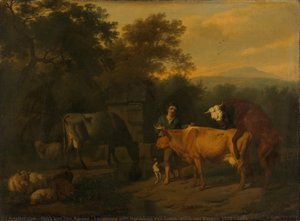
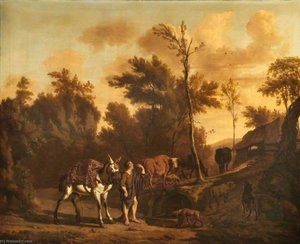
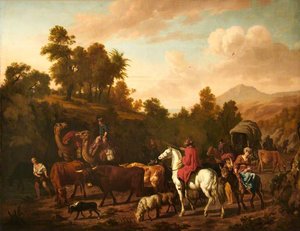
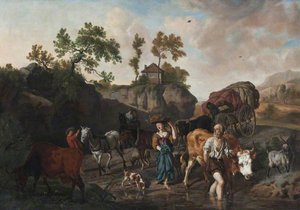
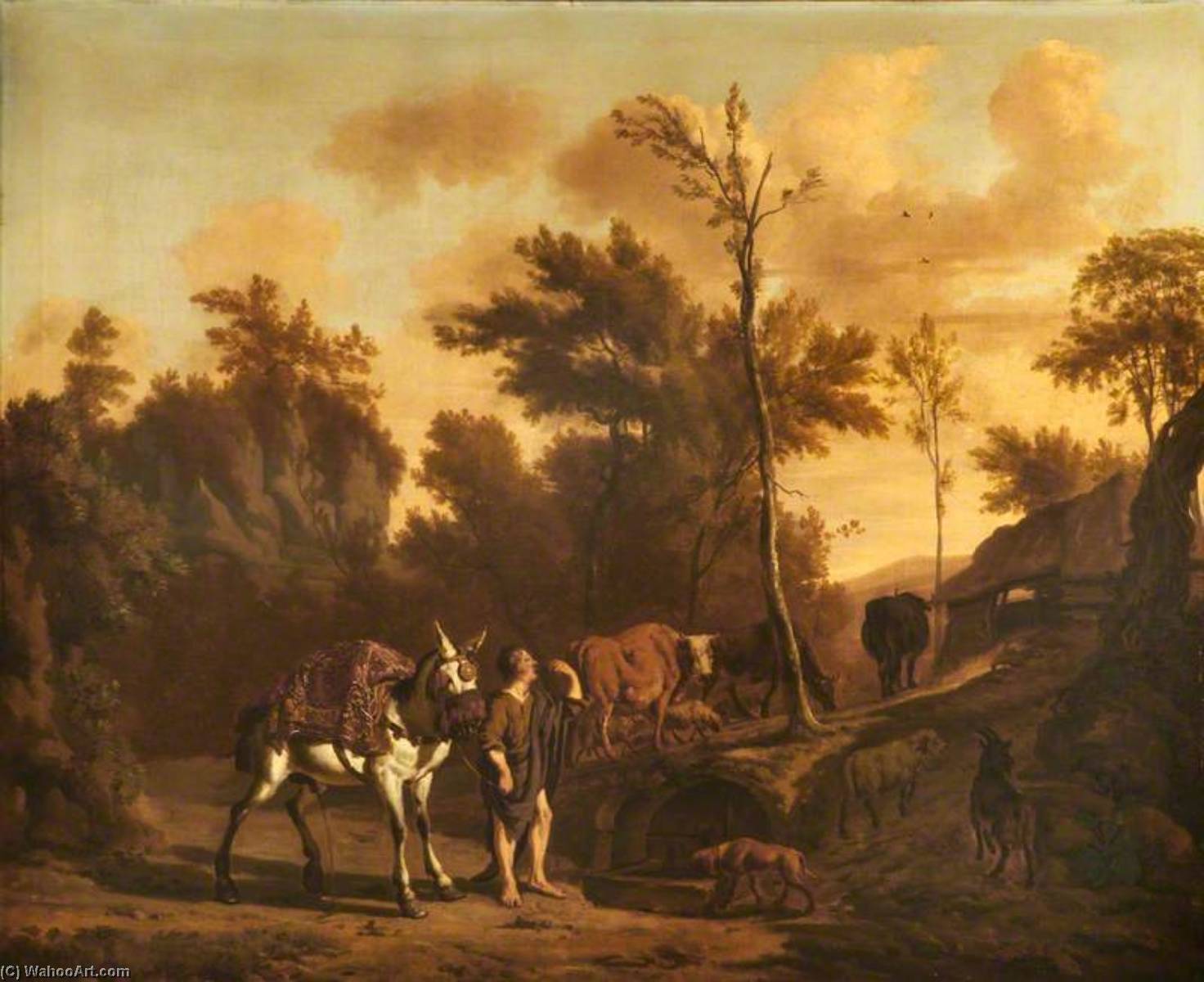
Landscape with a Herdsman Leading a Staling Mule, a Goat, Dog, Cattle and Sheep
 1677
1677 76.0 x 90.0 cm
 National Trust
 Read More
Hand Made Oil Reproduction
Hand-painted oil on canvas in your size and frame, made to order by our artists. ( Buy Print Buy Image)




































Pick from our preset sizes that match the artwork's original proportions.

You may enter your own dimensions to fit a specific frame or space. If your selected size does not match the original image's proportions, we will either crop the artwork or extend the painting with additional hand-painted elements. A digital mockup will be sent for your approval before production begins.
Please note that the on-screen preview does not reflect the actual cropping or extension. Only the mockup will accurately show the final composition.
While custom sizes are available, we recommend selecting a dimension from the predefined list to preserve the original proportions.
After order, ArtsDot.com team will email client for instructions and provide a mockup preview
Worldwide Delivery () in 3/4 weeks instead of standard 5 weeks. (17 August). No compromise on quality.

Free Worldwide Express Shipping

High-Quality Linen Canvas

Full Shipping Insurance

Customs Tax Refund Guarantee

True Color Matching Guarantee

60-Day Return Policy (Defects Only)

100% Money-Back Guarantee

Bulk Discount Offer
 Glass option is only available in size under 110 CM

Landscape with a Herdsman Leading a Staling Mule, a Goat, Dog, Cattle and Sheep
Reproduction Medium
Reproduction Size
-


Total Price
$ 263
Related Artworks
Artist Biography
The Quiet Brilliance of Dirck van den Bergen
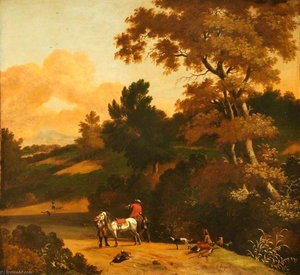
In the golden twilight of the Dutch Golden Age, a period defined by the monumental shadows of Rembrandt and the sweeping grandeur of Rubens, there existed a more intimate form of mastery. Dirck van den Bergen (1645 – c. 1700) emerged as a painter of profound subtlety, a master of the landscape who found the extraordinary within the ordinary. While history often favors the dramatic, van den Bergen’s work offers a different kind of enchantment—one rooted in the tranquil, atmospheric beauty of the Dutch and Flemish countryside. His canvases do not shout; instead, they whisper of moonlit pastures, the rhythmic toil of rural life, and the soft, shifting light that defines the northern European spirit.
Though much of his early life remains shrouded in the mists of time, we know that van den Bergen’s artistic soul was shaped by the rigorous traditions of his era. Born around 1645, he likely found his footing through the guidance of established masters. While some records suggest an apprenticeship under the Antwerp landscape painter Jacob Savertijns, other historical accounts point to him being a pupil of Adriaen van de Velde, a connection that would have deeply influenced his ability to capture delicate pastoral scenes. This formative training instilled in him a lifelong devotion to Baroque realism, a style where the meticulous observation of nature meets an almost poetic sense of atmosphere.
A Mastery of Light and Earthly Texture
To gaze upon a van den Bergen landscape is to experience the tactile reality of the seventeenth century. He possessed a singular ability to render the textures of the natural world, employing the impasto technique—the thick, sculptural application of paint—to breathe life into his subjects. Under his brush, the coarse wool of a sheep, the heavy hide of a grazing cow, and the weathered stone of an ancient ruin all possess a palpable weight and presence. His palette was one of sophisticated restraint, favoring the earthy, muted tones of ochre, umber, and slate grey, which allowed the subtle interplay of light to become the true protagonist of his compositions.
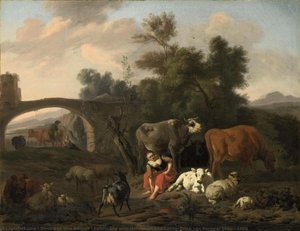
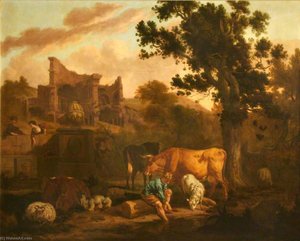
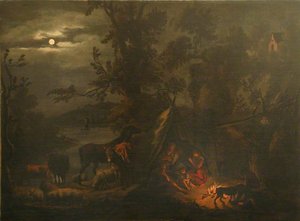
His oeuvre, consisting of approximately eighty known works, frequently explores the intersection of human presence and the vastness of nature. In masterpieces such as “Landscape with a Milkmaid Milking a Cow” (1677), we see his ability to transform a simple moment of agricultural labor into a scene of timeless grace. He was equally adept at capturing the nocturnal mysteries of the landscape; his “Night Scene with Figures Grouped around a Fire” demonstrates a breathtaking command over chiaroscuro, using the flickering glow of a campfire to pierce through the velvety darkness of a moonlit Dutch night. These works are not merely depictions of scenery but are emotional landscapes that evoke a sense of peace, solitude, and the enduring cycle of rural life.
Legacy and Historical Resonance
The significance of Dirck van den Bergen lies in his role as a bridge between the high drama of the early Baroque and the more refined, observational styles that followed. While he may not have sought the international fame of his contemporaries, his influence rippled through the generations of landscape painters who valued accuracy and atmospheric depth. His work provided a blueprint for capturing the pastoral ideal—a vision of the world that is both grounded in physical reality and elevated by artistic sensitivity.
As we reflect on his life, which saw him move between the vibrant art centers of Antwerp and Amsterdam before eventually settling in Haarlem, we see an artist who was deeply attuned to the rhythms of his time. His ability to find majesty in a herd of cattle or beauty in a ruined urn serves as a testament to the power of the observant eye. Today, his paintings remain vital touchstones for anyone seeking to understand the quiet, enduring heart of Dutch and Flemish landscape art, reminding us that true brilliance often resides in the most understated of moments.
dirck van den bergen
1645 - 1700
Quick Facts
- Artistic Movement Or Style: Baroque
- Artists Or Movements Influenced By This Artist: ['Dutch Baroque']
- Artists Who Influenced This Artist: ['Peter Paul Rubens']
- Date Of Death: 1700
- Full Name: Dirck van den Bergen
- Nationality: Dutch
- Notable Artworks:
- Landscape with a Milkmaid Milking a Cow
- Night Scene with Figures Grouped around a Fire
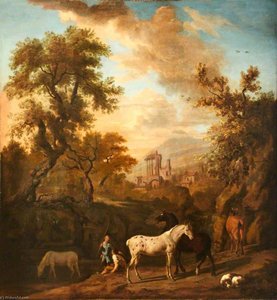
- Landscape with Figures, Cattle, Sheep and a Castle in the Distance
- Place Of Birth: Antwerp, Belgium