 Preview
 Send
Send Share
Share
 Details

 Download
 Similars
 X-Ray
X-Ray Diaporama
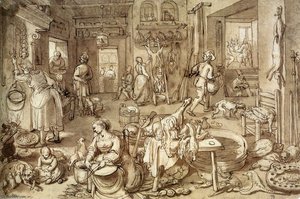
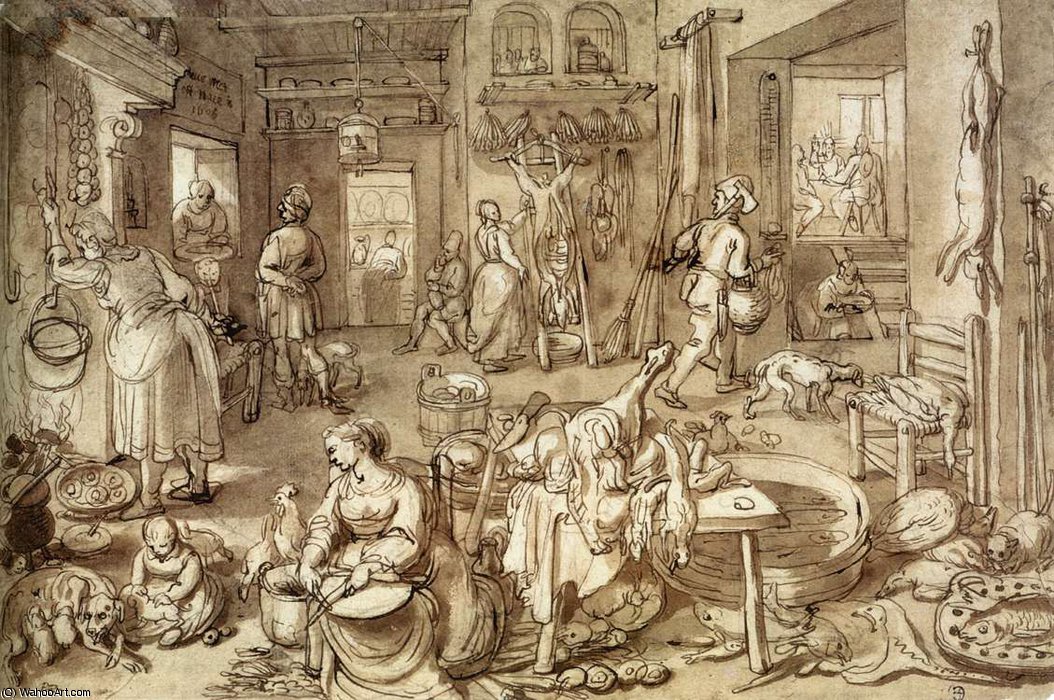
Kitchen Scene with the Supper at Emmaus
 Read More
Hand Made Oil Reproduction
Hand-painted oil on canvas in your size and frame, made to order by our artists. ( Buy Print Buy Image)




































Pick from our preset sizes that match the artwork's original proportions.

You may enter your own dimensions to fit a specific frame or space. If your selected size does not match the original image's proportions, we will either crop the artwork or extend the painting with additional hand-painted elements. A digital mockup will be sent for your approval before production begins.
Please note that the on-screen preview does not reflect the actual cropping or extension. Only the mockup will accurately show the final composition.
While custom sizes are available, we recommend selecting a dimension from the predefined list to preserve the original proportions.
After order, ArtsDot.com team will email client for instructions and provide a mockup preview
Worldwide Delivery () in 3/4 weeks instead of standard 5 weeks. (17 August). No compromise on quality.

Free Worldwide Express Shipping

High-Quality Linen Canvas

Full Shipping Insurance

Customs Tax Refund Guarantee

True Color Matching Guarantee

60-Day Return Policy (Defects Only)

100% Money-Back Guarantee

Bulk Discount Offer
 Glass option is only available in size under 110 CM

Kitchen Scene with the Supper at Emmaus
Reproduction Medium
Reproduction Size
-


Total Price
$ 263
Related Artworks
Artist Biography
The Gilded Eye: The Life and Art of Dirck van Rijswijck
To step into the world of Dirck van Rijswijck is to enter a realm where the mundane is elevated to the magnificent. A master of the Dutch Golden Age, Rijswijck possessed a rare ability to find profound beauty within the quiet corners of domesticity. While many of his contemporaries sought the grandeur of epic battles or the drama of mythological deities, Rijswijck turned his gaze inward, toward the soft light filtering through a kitchen window or the meticulous arrangement of a household task. His work serves as a luminous window into the 17th-century Dutch soul, capturing the rhythms of daily life with an intimacy that feels both timeless and deeply personal.
Born in 1596 in Kleve, Germany—a region then under the influence of the Spanish Netherlands—Rijswijck’s early years were steeped in the rich traditions of Flemish Mannerism. This formative period provided him with a foundational understanding of intricate detail and structured composition. The son of a painter and engraver, his apprenticeship was almost predestined, allowing him to absorb the technical rigors of his craft from a young age. As he moved toward the artistic epicenter of Haarlem around 1620, he began to synthesize these early influences with the burgeoning Dutch style, eventually settling in Amsterdam, where he would spend much of his prolific life.
A Mastery of Material and Light
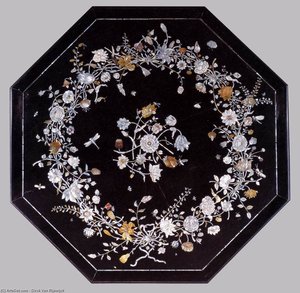
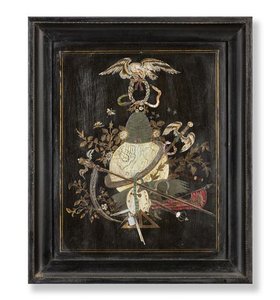
Rijswijck’s artistry was uniquely shaped by a dual identity: he was both a painter and a highly skilled goldsmith. This rare intersection of disciplines allowed him to approach the canvas—and other media—with a jeweler's precision. He was celebrated during his lifetime for his extraordinary ability to execute delicate inlaywork, often utilizing mother-of-pearl set against deep ebony or polished black marble. This technique, which blurred the line between fine art and decorative craft, resulted in breathtaking objects such as his famous tabletops, where organic floral motifs seemed to bloom from dark, lustrous surfaces.
In his paintings, this same obsession with texture and light manifests through a remarkable realism. Whether he was depicting the glint of a pewter plate or the soft translucency of a kitchen vegetable, his brushwork conveyed a tactile reality that invited the viewer to reach out and touch the scene. His style was heavily influenced by the dynamic energy of Peter Paul Rubens, yet Rijswijck tempered this Flemish exuberance with a uniquely Dutch restraint. He utilized rich, warm color palettes and carefully orchestrated compositions to guide the eye through his genre scenes, ensuring that even the smallest detail contributed to the overall narrative of domestic prosperity.
The Legacy of the Quiet Observer
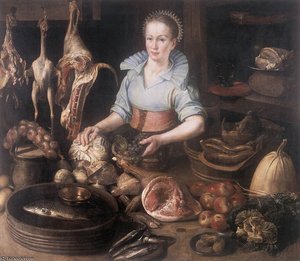
The historical significance of Dirck van Rijswijck lies in his role as a chronicler of the ordinary. His oeuvre, consisting of approximately 150 known works, remains a vital record of the social and material culture of the Dutch Golden Age. Through masterpieces such as “The Kitchen Maid” and “Kitchen Scene with the Supper at Emmaus,” he documented the rituals of a rising merchant class, celebrating the dignity found in labor and the quiet luxury of a well-ordered home.
His contributions to art history can be summarized through several enduring impacts:
- Elevation of Genre Painting: He helped transition the focus of European art from grand historical narratives toward the psychological depth of everyday life.
- Integration of Craft and Fine Art: His work as a goldsmith brought a level of material sophistication to decorative arts that few painters could replicate.
- Technical Precision: His mastery of light, shadow, and texture set a standard for the realism that would define much of 17th-century Dutch painting.
Ultimately, Rijswijck’s legacy is one of empathy. He did not merely observe his subjects; he understood them. By imbuing domestic interiors with such profound care and aesthetic splendor, he reminded the world that there is a sacredness to be found in the simplest of human moments.
dirck van rijswijck
1596 - 1679 , Germany
Quick Facts
- Artistic Movement Or Style: Dutch Golden Age
- Date Of Birth: 1596
- Full Name: Dirck van Rijswijck
- Nationality: Dutch
- Notable Artworks:
- Tabletop
- The kitchen maid
- Kitchen Scene with the Supper at Emmaus
- Place Of Birth: Kleve, Germany