

 Preview
 Send
Send Share
Share
 Details

 Download
 Similars
 X-Ray
X-Ray Diaporama
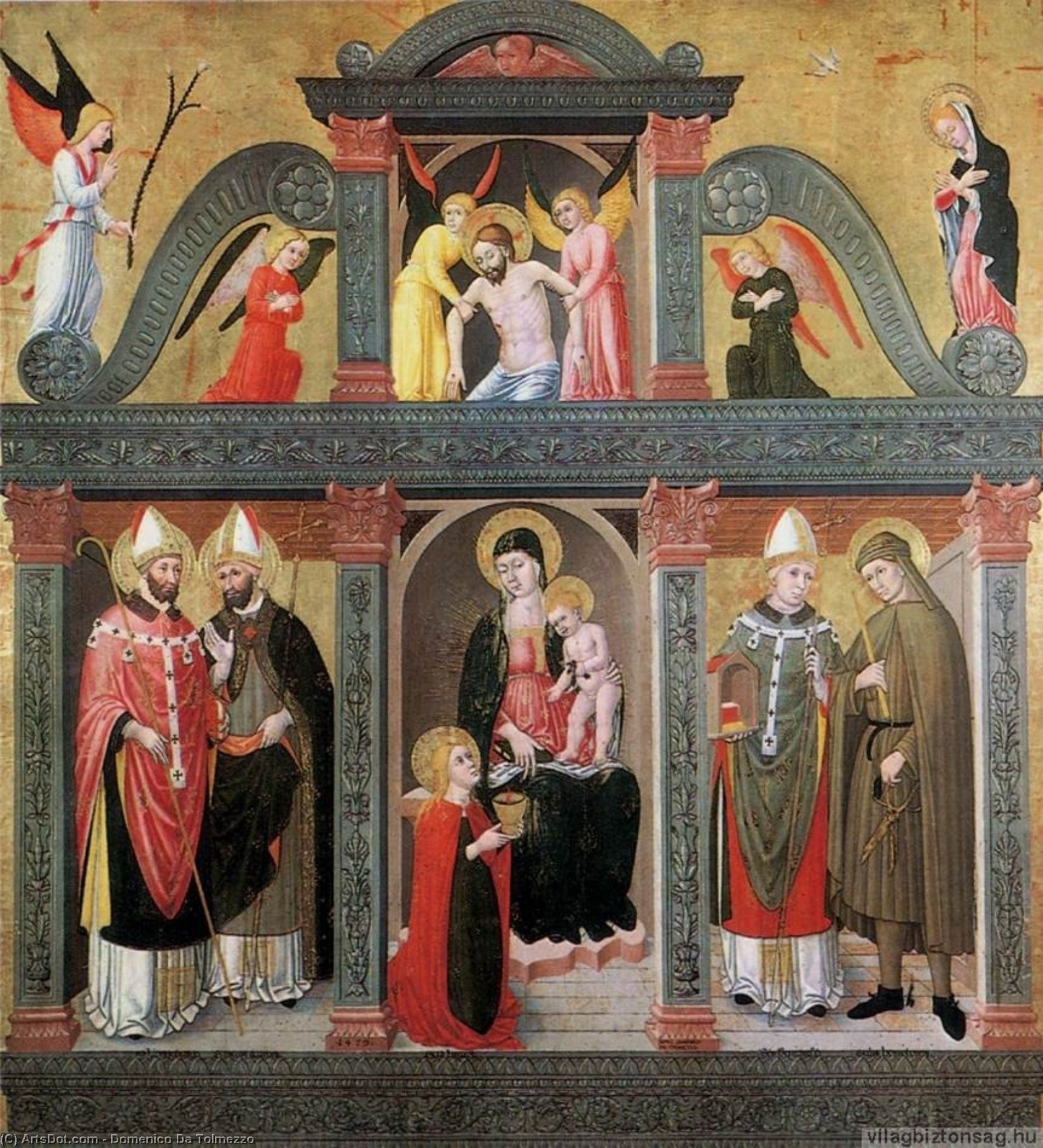
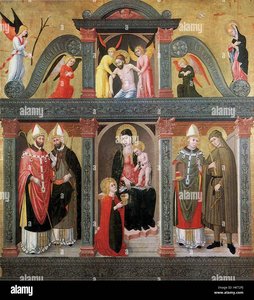
St Lucy Altarpiece (Pala di S. Lucia)


 Read More
Purchase a high-resolution, enhanced digital image, far superior to the online preview.
Each file is meticulously prepared by our in-house specialists using advanced tools and expert manual retouching. We ensure every image has exceptional clarity, precise color accuracy, and fine detail.
The final file is delivered via email within 72 hours, optimized for immediate use in professional, editorial, and print environments. This is the same quality trusted by top-tier design studios, publishers, and galleries.
Digital Image
Download a high-resolution file for personal display, printing, and creative projects. ( Buy Print Buy Hand Made Painting)
Included in Every Digital Image Order
Expert Digital Delivery, Guaranteed
When you choose ArtsDot.com, you're not just getting an image - you're receiving a professionally enhanced digital artwork, crafted with precision and backed by a satisfaction guarantee. Here's everything that comes with your order, automatically:

Fast Email Delivery
Your high-resolution digital image file will be emailed to you within 72 hours of ordering - ready for immediate use.

AI-Enhanced Digital File
Your artwork is professionally optimized using advanced AI tools and manual editing, ensuring maximum detail, clarity, and color accuracy.

Free Lifetime Re-Delivery
Accidentally deleted or lost your file? No worries - we'll resend it to you anytime, free of charge.

No Import Fees - Ever
Enjoy your artwork instantly with zero customs, duties, or delivery fees - digital downloads are always tax-free.

Color Accuracy Guarantee
We ensure your digital image reflects the original colors as closely as possible using professional tools and color management.

60-Day Satisfaction Guarantee
If you're not satisfied with your digital image, we'll revise it or refund 100% within 60 days - no questions asked.

100% Money-Back Guarantee
Not satisfied? Get a full refund within 60 days of receiving your digital file - no questions asked.

Bulk Order Discounts
Buy 3 images, save 10% - Buy 5, save 15% - Buy 10+, save 20%. Great for creative projects, galleries, and agencies.
A Vision of Divine Grace: The St Lucy Altarpiece
In the quiet, hallowed atmosphere of the Italian Renaissance, few works capture the transition from the medieval soul to the humanistic dawn as poignantly as Domenico da Tolmezzo’s St Lucy Altarpiece (Pala di S. Lucia). Created around 1500, this masterpiece serves as a breathtaking window into a period where the rigid, golden splendor of Byzantine tradition began to dance with the emerging naturalism of the High Renaissance. The composition is a masterclass in hierarchical arrangement, drawing the viewer’s eye toward the central sanctity of Mary, Christ, and Joseph. Within its structured panels, a celestial assembly of saints and angels gathers, their forms arranged with a rhythmic symmetry that suggests both earthly order and divine harmony. For the discerning collector or interior designer, this piece offers more than mere decoration; it provides a profound focal point of spiritual gravity and historical depth.
The technique employed by Da Tolmezzo is nothing short of meticulous, showcasing a brilliant command over oil pigments and the luminous quality of light. The artist utilizes a sophisticated layering of glazes to achieve a jewel-toned palette that seems to glow from within, particularly in the rich draperies and the radiant halos that crown the holy figures. While the perspective remains somewhat flattened—a stylistic nod to the Gothic influences that still lingered in Northern Italy—the use of light creates a dramatic, almost theatrical atmosphere. Strong highlights and deep, velvety shadows define the contours of the faces and the intricate folds of the garments, lending a sense of tactile reality to the divine subjects. This interplay of light and shadow invites the observer to linger on the fine details, from the delicate facial expressions to the ornate architectural elements that frame the sacred scene.
Beyond its visual splendor, the altarpiece is a dense tapestry of Christian iconography and symbolic meaning. Every gesture, every object, and every placement within the panels is imbued with theological significance. The presence of Saint Lucy herself, alongside other venerated figures, serves as a testament to the era's devotion and the communal nature of faith. The use of gold leaf provides a celestial shimmer, elevating the wooden support from a mere surface to a sacred vessel of light. For those seeking to integrate art into a sophisticated living space, a high-quality reproduction of this work brings an air of timeless elegance and solemnity. It is an invitation to contemplation, offering a sense of peace and grandeur that transcends the centuries, making it an incomparable addition to any collection dedicated to the enduring beauty of the Renaissance.
Related Artworks

![Legend Of St Francis - [23] - St Francis Mourned By St Clare — Giotto Di Bondone, Gothic](/media/artworks/images-thumb/17/1c/171c284c41dc3ef8bca83e51c1e1e531.jpg)




Artist Biography
A Master of the Friulian Renaissance
Domenico da Tolmezzo, a name that echoes through the hallowed halls of Northern Italian art history, stands as a luminous figure of the High Renaissance. Born around 1448 in the fertile artistic landscape of Fruili-Visenza, he emerged from a period where the rigid structures of the Middle Ages were beginning to dissolve into the breathtaking light of humanism. While his name may not carry the immediate global recognition of a Michelangelo or a Raphael, his presence was felt deeply across the religious and civic landscapes of Italy, particularly through his monumental contributions to the churches of Rome and Orvieto. He was an artist who bridged worlds, acting as a vital conduit between the venerable traditions of Byzantine iconography and the burgeoning innovations of the Renaissance.
The early life of this master remains partially veiled by the mists of time, yet we can discern the shape of his genius through the stylistic lineage he inhabited. Emerging from the Veneto artistic milieu, Da Tolmezzo was deeply shaped by the atmosphere of a region undergoing profound transformation. It is widely believed that he honed his craft within the influential orbit of Giovanni Bellini, whose workshop served as a crucible for the exploration of color and perspective. From this lineage, Da Tolmezzo inherited a profound respect for the sanctity of the image, yet he possessed the forward-looking vision to infuse religious subjects with a new, palpable vitality. His early works often reveal a lingering devotion to Byzantine aesthetics—characterized by a certain formal stillness and symbolic weight—which he would later marry to the more fluid, naturalistic tendencies of his era.
The Synthesis of Tradition and Innovation
At the heart of Da Tolmezzo’s enduring legacy lies his ability to synthesize disparate artistic languages into a singular, harmonious vision. This is perhaps most exquisitely realized in his St Lucy Altarpiece, completed around 1500 for the Benedictine Abbey of San Nicola da Tolrium. In this masterpiece, one does not merely see paint on wood or canvas; one witnesses a profound theological and aesthetic dialogue. The work is a breathtaking display of hierarchical composition, where the arrangement of figures guides the viewer’s eye through a celestial narrative of divine grace. He utilized a rich, vibrant color palette that breathed life into the sacred figures, creating a sense of presence that was both otherworldly and intimately human.
His technical prowess extended beyond the brush to include the delicate art of sculpture, specifically wood carving, which allowed him to understand the physical weight and three-dimensional presence of his subjects. This sculptural sensibility is evident in the way he rendered drapery and form within his frescoes and altarpieces. His work often features:
- A masterful blend of styles: The integration of Gothic elegance with the emerging Renaissance focus on anatomical realism.
- Luminous color theory: A use of pigment that captures the interplay of light and shadow, reminiscent of the Venetian school.
- Iconographic depth: A profound understanding of religious symbolism, ensuring that every saint and gesture served a higher narrative purpose.
As his career progressed, Da Tolmezzo’s frescoes in San Domenico and other significant sites demonstrated an increasing command over spatial depth. He moved away from the flatter, more decorative surfaces of the late Gothic period toward a more immersive experience for the faithful. This evolution was not merely a change in technique but a reflection of the changing soul of Italy itself—a movement toward a more human-centric view of the divine.
A Lasting Legacy in the Italian Landscape
The historical significance of Domenico da Tolmezzo lies in his role as a transitional architect of the visual vocabulary. He was a painter who understood that to move forward, one must respect the foundations of the past. By maintaining the spiritual gravity of Byzantine and Gothic traditions while embracing the light and logic of the Renaissance, he helped create a bridge that allowed Italian art to cross into its most celebrated era. His work provided a sense of continuity in a time of radical change, offering a visual language that was both familiar to the traditionalist and exhilarating to the innovator.
Though his life ended in 1507, leaving behind a body of work that continues to inspire awe, his influence persists in the very fabric of Northern Italian art. To study Da Tolmezzo is to witness the birth of a new way of seeing—a way that celebrates the beauty of the natural world while never losing sight of the eternal. His frescoes and altarpieces remain as silent, powerful witnesses to a period of unparalleled creative flowering, reminding us that true mastery lies in the ability to harmonize the old with the new, and the earthly with the divine.
domenico da tolmezzo
1448 - 1507 , Italy
Quick Facts
- Artistic Movement Or Style: Renaissance
- Artists Or Movements Influenced By This Artist:
- Raphael
- Botticelli
- Artists Who Influenced This Artist:
- Byzantine Art
- Gothic Art
- Date Of Birth: 1448
- Date Of Death: 1507
- Full Name: Domenico da Tolmezzo
- Nationality: Italian
- Notable Artworks: ['St Lucy Altarpiece']
- Place Of Birth: Fruili-Visenza, Italy

