 Preview
 Send
Send Share
Share
 Details

 Download
 Similars
 X-Ray
X-Ray Diaporama
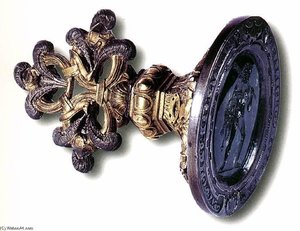
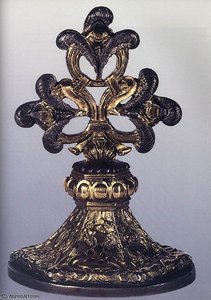
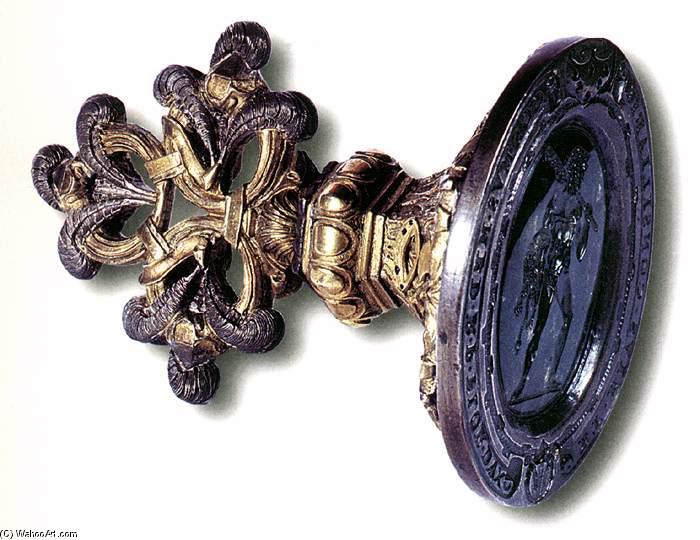
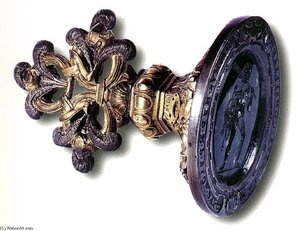
Seal of Duke Alessandro de' Medici


 Read More
Hand Made Oil Reproduction
Hand-painted oil on canvas in your size and frame, made to order by our artists. ( Buy Print Buy Image)




































Pick from our preset sizes that match the artwork's original proportions.

You may enter your own dimensions to fit a specific frame or space. If your selected size does not match the original image's proportions, we will either crop the artwork or extend the painting with additional hand-painted elements. A digital mockup will be sent for your approval before production begins.
Please note that the on-screen preview does not reflect the actual cropping or extension. Only the mockup will accurately show the final composition.
While custom sizes are available, we recommend selecting a dimension from the predefined list to preserve the original proportions.
After order, ArtsDot.com team will email client for instructions and provide a mockup preview
Worldwide Delivery () in 3/4 weeks instead of standard 5 weeks. (31 August). No compromise on quality.

Free Worldwide Express Shipping

High-Quality Linen Canvas

Full Shipping Insurance

Customs Tax Refund Guarantee

True Color Matching Guarantee

60-Day Return Policy (Defects Only)

100% Money-Back Guarantee

Bulk Discount Offer
 Glass option is only available in size under 110 CM

Seal of Duke Alessandro de' Medici
Reproduction Medium
Reproduction Size
-


Total Price
$ 263
Related Artworks
Artist Biography
The Master of the Medallion: The Legacy of Domenico de' Vetri
In the vibrant, sun-drenched heart of the Italian Renaissance, where the prestige of the Medici family dictated the very pulse of Florentine culture, there existed a master of miniature grandeur named Domenico de' Vetri. Known also by his more lyrical name, Domenico di Polo di Angelo, this Florentine virtuoso operated at the delicate intersection of metallurgy and fine art. Born in Florence around 1480, De' Vetri did not seek the sprawling canvases of fresco painters, but rather the intimate, tactile world of the medallist and gem-engraver. His life’s work was a testament to the power of the small scale, proving that profound political authority and classical elegance could be captured within the diameter of a single bronze coin.
The artistry of De' Vetri was deeply rooted in the precision of his craft, a skill likely honed through years of studying the intricate details of engraving. As an Italian medallist, he possessed a rare ability to translate the monumental weight of Renaissance power into portable, exquisite objects. His most significant achievements lie in his series of medals dedicated to the Medici dynasty. Through these works, he established a visual language for the ruling house, creating official portraits that served as both propaganda and high art. One can observe his mastery in the Seal of Duke Alessandro de' Medici, where the interplay of light and shadow on bronze conveys a sense of permanence and divine right.
Classical Echoes and Renaissance Innovation
What truly elevated De' Vetri above the mere craftsmen of his era was his profound engagement with antiquity. He did not simply copy the past; he breathed new life into it by integrating classical motifs with contemporary Florentine identity. His technique involved a sophisticated use of interchangeable reverses, a method that allowed him to pair a steady, recognizable portrait of a ruler—such as Cosimo I de' Medici—with various allegorical figures. These reverses often drew direct inspiration from ancient Greek and Roman coinage, featuring celestial constellations like Capricorn or personifications of virtue. This stylistic choice bridged the gap between the modern Florentine state and the glorious heritage of the Roman Empire.
The technical execution of his medals was nothing short of extraordinary. Unlike many mint-struck pieces of the period which could often appear stiff or lifeless, De' Vetri’s work possessed a rhythmic vitality. His portraits maintained the meticulous precision of a gem-cutter, yet they were imbued with a subtle warmth and character that prevented them from feeling sterile. This balance of technical rigor and artistic soul allowed his medals to function as much more than currency; they were miniature sculptures that captured the very essence of the Renaissance spirit.
A Lasting Impression on Florentine History
Though the era of the great medallic masters eventually transitioned into new artistic movements, the historical significance of Domenico de' Vetri remains anchored in his ability to document the faces of power. His work provides a vital window into the 16th-century political landscape, offering us a tangible connection to figures like Alessandro and Cosimo I. Through his hands, the ephemeral glory of the Medici was cast in bronze, ensuring that their legacy would endure long after the Florentine Republic had faded.
Today, the surviving works of De' Vetri, held in prestigious collections such as the National Gallery of Art and the British Museum, continue to fascinate scholars and art lovers alike. They serve as a reminder that true artistic impact is not measured by the size of the medium, but by the depth of the vision. His ability to marry the precision of engraving with the grand narratives of his age ensures his place in the pantheon of Florentine masters, a silent chronicler of an era defined by beauty, intellect, and unyielding ambition.
domenico de' vetri
1480 - 1547 , Italy
Quick Facts
- Artistic Movement Or Style: Stained glass
- Artists Or Movements Influenced By This Artist: ['Macchiaioli']
- Artists Who Influenced This Artist: ['Angelo Visconti']
- Date Of Birth: 1827
- Full Name: Ulisse De Matteis
- Nationality: Italian
- Notable Artworks: ["Alessandro de' Medici, 1532"]
- Place Of Birth: Florence, Italy
Related Articles

Goya's Masterpieces: Explore 25 Iconic Paintings & Art Prints | ArtsDot
Delve into the world of Francisco Goya with ArtsDot. Explore 25 iconic paintings – from 'The Third of May' to his haunting Black Paintings. Discover the stories, techniques & emotions behind these Spanish masterpieces. Find museum-quality art reproductions for your home at ArtsDot.com!

The Enduring Legacy of Bronze: A Historical & Artistic Exploration for the Collector
Explore the rich history & enduring appeal of bronze sculpture with expert insights for collectors at ArtsDot. Learn about casting techniques, iconic artists, collecting tips & contemporary interpretations.

Bronze Age to Modern Masters: 10 Sculptures That Redefined Art | ArtsDot
Journey through art history with 10 legendary bronze sculptures – from Michelangelo's David to Rodin’s Thinker. Explore the stories, techniques & timeless beauty of these masterpieces. Find museum-quality reproductions & elevate your home decor on ArtsDot.com.

About Us
Discover our story! We bring world-class art into your life through expert curation, personalized creations, and free previews. Trusted by individuals and businesses since 2000.
The Enduring Legacy of Bronze: History, Technique & Artistic Expression for the Collector
Explore the rich history & enduring appeal of bronze sculpture with expert insights for collectors at ArtsDot. Learn about casting techniques, iconic artists, and collecting tips.