 Preview
 Send
Send Share
Share
 Details

 Download
 Similars
 X-Ray
X-Ray Diaporama
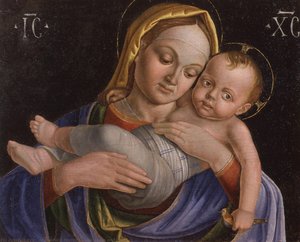
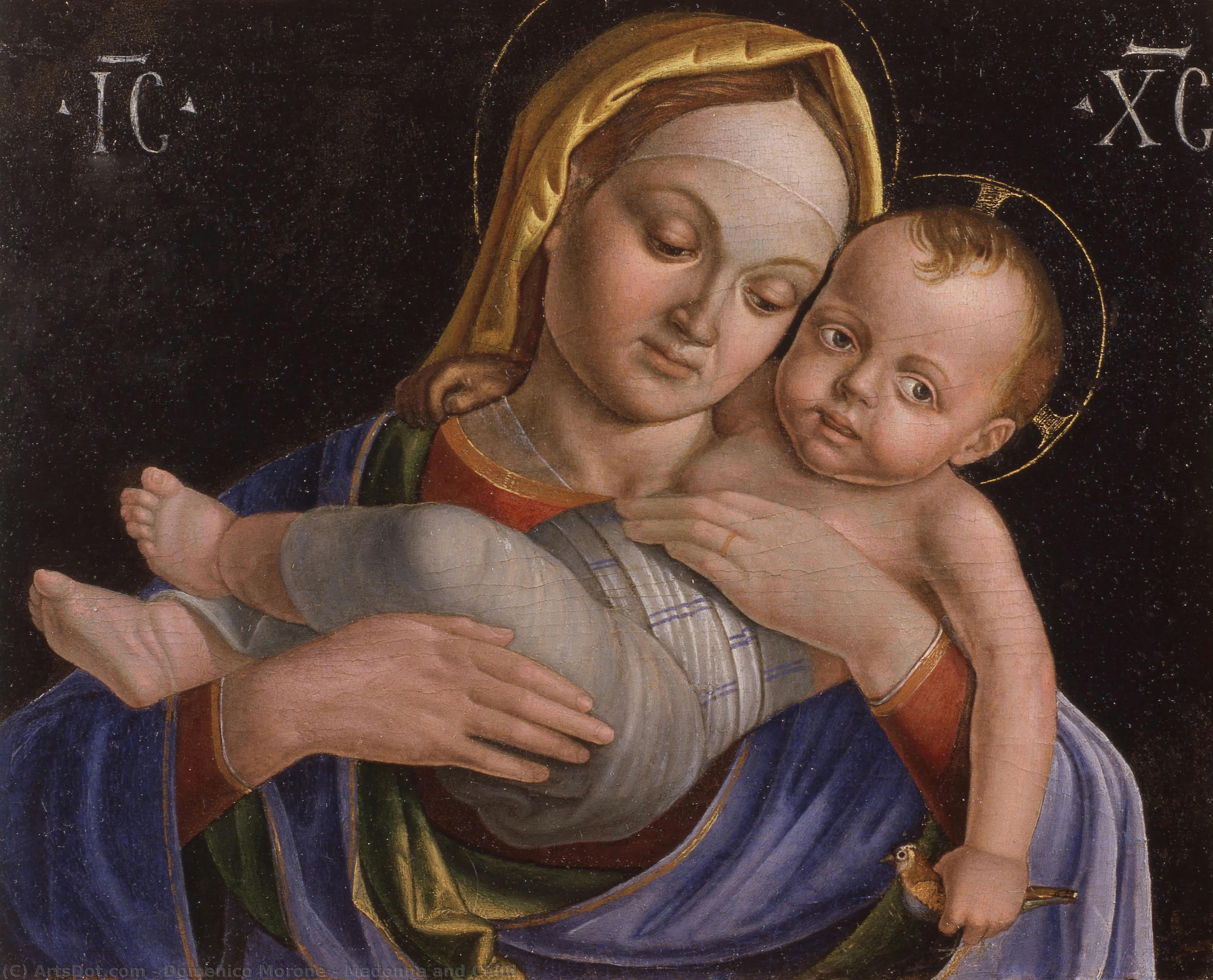
Madonna and Child


 Read More
Hand Made Oil Reproduction
Hand-painted oil on canvas in your size and frame, made to order by our artists. ( Buy Print Buy Image)




































Pick from our preset sizes that match the artwork's original proportions.

You may enter your own dimensions to fit a specific frame or space. If your selected size does not match the original image's proportions, we will either crop the artwork or extend the painting with additional hand-painted elements. A digital mockup will be sent for your approval before production begins.
Please note that the on-screen preview does not reflect the actual cropping or extension. Only the mockup will accurately show the final composition.
While custom sizes are available, we recommend selecting a dimension from the predefined list to preserve the original proportions.
After order, ArtsDot.com team will email client for instructions and provide a mockup preview
Worldwide Delivery () in 3/4 weeks instead of standard 5 weeks. (17 August). No compromise on quality.

Free Worldwide Express Shipping

High-Quality Linen Canvas

Full Shipping Insurance

Customs Tax Refund Guarantee

True Color Matching Guarantee

60-Day Return Policy (Defects Only)

100% Money-Back Guarantee

Bulk Discount Offer
 Glass option is only available in size under 110 CM

Madonna and Child
Reproduction Medium
Reproduction Size
-


Total Price
$ 263
Related Artworks
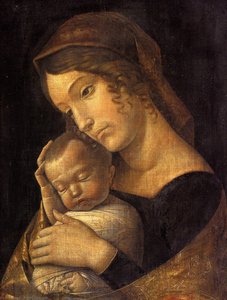
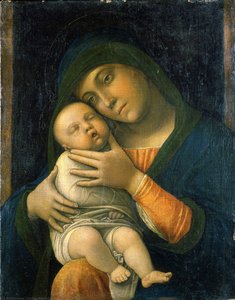
Artist Biography
The Vibrant Legacy of Domenico Morone
In the heart of the Italian Renaissance, amidst the burgeoning cultural renaissance of Verona, lived Domenico Morone, an artist whose brush captured the kinetic energy of a changing era. Born around 1442, Morone emerged from a distinguished lineage of Veronese painters, a fact that deeply rooted his practice in the local traditions of Northern Italy. While much of his personal biography remains shrouded in the mists of the fifteenth century, his presence is felt through the enduring vitality of his compositions. As a central figure in the early Renaissance movement, Morone did not merely observe history; he sought to dramatize it, infusing his canvases with a sense of motion and communal spirit that set him apart from the more static, contemplative works of his contemporaries.
The artistry of Morone is most profoundly realized through his mastery of crowded, panoramic narratives. He possessed a singular ability to orchestrate large groups of figures within a single frame, transforming historical events and public festivities into breathing, pulsing spectacles. His technique often relied on the use of small, intricately detailed figures to convey the chaos and splendor of tournaments or political upheoric. This approach allowed him to capture the very essence of dynamism—the clashing of steel in battle, the swirling robes of dancers, and the collective tension of a city in flux. His work serves as a window into the social fabric of the Quattrocento, where the public square was a stage for both triumph and tragedy.
Masterworks and Artistic Achievements
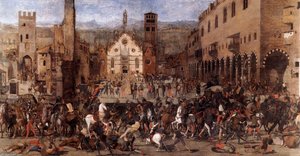
Among the most celebrated achievements in Morone's repertoire is his monumental contribution to the Ducal Palace of Mantua. His work, Cacciata dei Bonacolsi (The Expulsion of the Bonacolsi), stands as a testament to his skill in historical storytelling. In this piece, the artist navigates the complexities of political upheaval with a remarkable command of scale and energy, guiding the viewer's eye through a sea of movement that mirrors the instability of the era. This ability to translate historical gravity into visual drama is perhaps his greatest gift to the art historian.
Beyond the grand scale of fresco and historical narrative, Morone demonstrated a profound capacity for intimacy and devotion. His Madonna, originally painted for the organ shutters of the San Bernardino Church in Verona, showcases a different facet of his talent—one of grace, serenity, and delicate ornamentation. This duality between the epic and the intimate defines his oeuvre. Other notable works that highlight his versatility include:
- The Rape of the Sabines: A pair of panels housed in the National Gallery of Art in London, which explores legendary myth through a lens of intense human drama.
- Cristo Portacroce con le Marie: A painting that delves into the emotional and spiritual depths of the Crucifixion, showcasing his ability to handle profound sorrow and religious intensity.
- L'expulsion des Bonacolsi: A work that reinforces his reputation as a master of capturing the frantic energy of historical turning points.
Influence and Historical Significance
The significance of Domenico Morone extends far beyond the borders of Verona. As a teacher and patriarch, he helped shape the next generation of Italian masters. His pupils, including Michele da Verona and Girolamo dai Libri, carried forward the traditions of detailed narrative and rhythmic composition that he had pioneered. Furthermore, his work exists in a fascinating dialogue with the influence of Andrea Mantegna, reflecting the broader stylistic shifts occurring across the Italian peninsula during the transition from the late Gothic to the High Renaissance.
Though the number of surviving works by Morone is relatively small, each piece acts as a vital link to the cultural identity of the Veronese school. He remains a pivotal figure whose work bridged the gap between the symbolic rigidity of the past and the humanistic realism of the future. Through his ability to populate the canvas with the lifeblood of his era, Domenico Morone ensured that the festivals, battles, and religious fervor of the fifteenth century would remain eternally vibrant for generations to come.
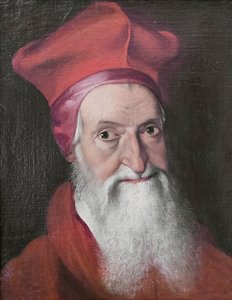
Domenico Morone
1442 - 1518 , Italy
Quick Facts
- Artistic Movement Or Style: Early Renaissance
- Artists Or Movements Influenced By This Artist: ['Giorgione']
- Artists Who Influenced This Artist: ['Liberale da Verona']
- Date Of Birth: ca. 1442
- Date Of Death: ca. 1518
- Full Name: domenico morone
- Nationality: Italian
- Notable Artworks:
- Cacciata dei Bonacolsi
- Madonna
- Rape of the Sabines
- Cristo Portacroce con le Marie
- Place Of Birth: Verona, Italy