 Preview
 Send
Send Share
Share
 Details

 Download
 Similars
 X-Ray
X-Ray Diaporama
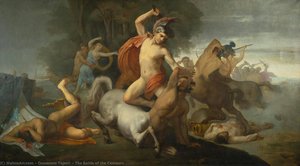
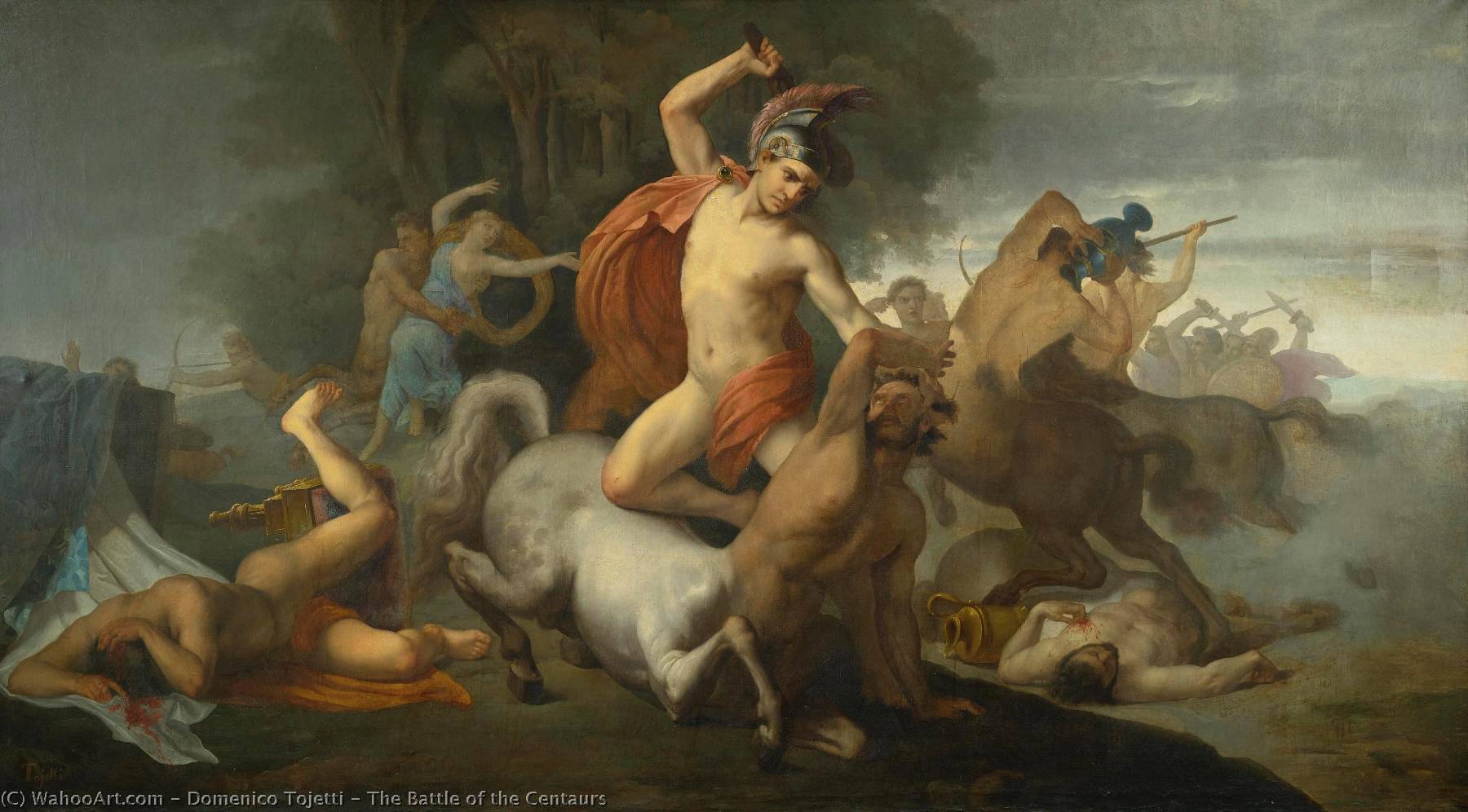
The Battle of the Centaurs
 175.0 x 315.0 cm
 Read More
Giclée / Art Print
Museum-quality giclée or canvas print with fast production and flexible finish options. ( Buy Hand Made Painting Buy Image)




































Pick from our preset sizes that match the artwork's original proportions.

You may enter your own dimensions to fit a specific frame or space. If your selected size does not match the original image's proportions, we will either crop the artwork or extend the image with a mirrored or solid-fill edge. A digital mockup will be sent for your approval before production begins.
Please note that the on-screen preview does not reflect the actual cropping or extension. Only the mockup will accurately show the final composition.
While custom sizes are available, we recommend selecting a dimension from the predefined list to preserve the original proportions.
Worldwide Delivery () in 2 weeks instead of standard 4/5 weeks. (25 August)

Free Worldwide Express Shipping

High-Quality Linen Canvas

Full Shipping Insurance

Customs Tax Refund Guarantee

True Color Matching Guarantee

60-Day Return Policy (Defects Only)

100% Money-Back Guarantee

Bulk Discount Offer
 Glass option is only available in size under 110 CM

The Battle of the Centaurs
Giclée / Art Print
Reproduction Size
-


Total Price
$ 63
Related Artworks








Artist Biography
A Transatlantic Journey: The Life and Art of Domenico Tojetti
Domenico Tojetti, a name perhaps less celebrated than some of his contemporaries, nevertheless represents a fascinating intersection of Italian artistic tradition and the burgeoning art scenes of the Americas. Born in Rocca di Papa, near Rome, Tojetti’s early life was steeped in the rich visual culture of the Papal States. He wasn't merely a product of this environment; he actively contributed to it, becoming a sought-after fresco painter within the Roman aristocracy. His initial training under Francesco Coghetti provided him with a solid foundation in traditional techniques, and his work at Villa Torlonia – decorating the ballroom for the prestigious Torlonia princes – immediately established his reputation. This early period saw Tojetti immersed in religious commissions, adorning churches like the Basilica di San Paolo fuori le Mura and Sant'Agnese fuori le Mura with vibrant depictions of sacred narratives. These frescoes weren’t simply exercises in technical skill; they were expressions of deep faith, rendered with a burgeoning stylistic flair that hinted at future developments. Crucially, his Roman years fostered important artistic relationships, notably with Constantino Brumidi – who would later become renowned for his work in the U.S. Capitol Building – and Leonardo Massabò, connections that would subtly shape his trajectory.From Italian Churches to American Canvases
The year 1867 marked a pivotal shift in Tojetti’s life and career. He embarked on a journey with his family, leaving Italy for Guatemala, then Mexico, before finally settling in San Francisco, California. This wasn't an impulsive move; it reflected the growing demand for skilled artists in the rapidly expanding American West, fueled by economic prosperity and a desire to cultivate a sophisticated cultural landscape. Tojetti’s arrival in San Francisco coincided with a period of significant artistic growth in the city, but he didn’t simply assimilate into the existing style. He brought with him the Italianate traditions of fresco painting and religious iconography, offering something distinct from the prevailing trends. His work quickly found patronage among churches, public institutions, and private collectors. While documentation remains fragmented, it's clear that Tojetti continued to produce paintings on a substantial scale, adapting his skills to suit the needs and tastes of his new audience. He wasn’t merely replicating Italian models; he was synthesizing them with American sensibilities, creating a unique artistic voice.Style and Influences: A Blend of Traditions
Tojetti's style is characterized by a vibrant palette, dynamic compositions, and a meticulous attention to detail – hallmarks of the Italian Renaissance tradition. However, his work isn’t simply derivative. The influence of Venetian painting is palpable in his use of color and light, creating an atmospheric quality that draws the viewer into the scene. His early training also instilled a strong sense of narrative clarity, evident in his religious frescoes which often depict complex theological themes with accessible visual language. His connection to artists like Brumidi and Massabò likely contributed to this stylistic development, exposing him to different approaches to composition and technique. While he wasn’t directly associated with the Pre-Raphaelite movement, a certain romanticism and attention to detail can be observed in his later works. It's important to note that Tojetti operated within a specific context – fulfilling commissions for religious institutions often required adherence to established iconographic conventions. This meant he wasn’t entirely free to experiment with radical stylistic departures, but he consistently demonstrated an ability to infuse traditional subjects with his own artistic sensibility.Legacy and Historical Significance
Domenico Tojetti's death in San Francisco in 1892 marked the end of a life dedicated to art, spanning continents and cultures. While not a household name today, his contribution to the development of American art is significant. He played a crucial role in introducing Italian artistic traditions to the West Coast, influencing subsequent generations of artists. His frescoes, though often overlooked, represent important examples of religious art produced during a period of rapid social and cultural change.- He bridged the gap between European artistic techniques and American patronage.
- His work provides valuable insight into the tastes and preferences of the 19th-century American public.
- Tojetti’s story exemplifies the transnational nature of art history, demonstrating how artists migrated and adapted their skills to new environments.
Quick Facts
- Artistic Movement Or Style: Venetian painting style
- Artists Or Movements Influenced By This Artist: ['El Greco paintings']
- Artists Who Influenced This Artist:
- Francesco Coghetti
- Constantino Brumidi
- Date Of Death: 1892
- Full Name: domenico tojetti
- Nationality: Italian American
- Notable Artworks:
- Margaret Deane
- Music and Science
- Place Of Birth: Rocca di papa, Italy