

 Preview
 Send
Send Share
Share
 Details

 Download
 Similars
 X-Ray
X-Ray Diaporama
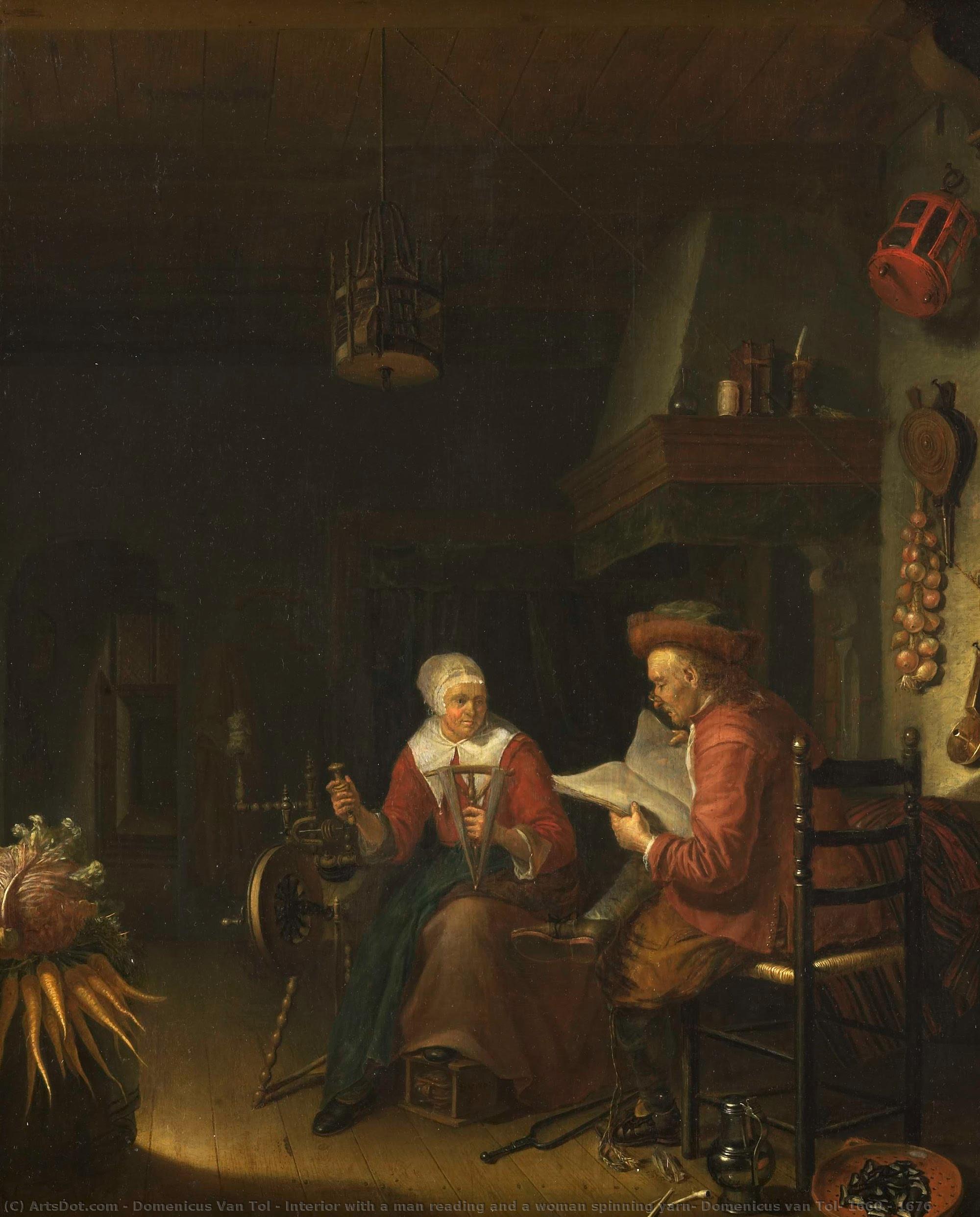
Interior with a man reading and a woman spinning yarn, Domenicus van Tol, 1660 - 1676
 1676
1676 53.0 x 42.0 cm
 Read More
Purchase a high-resolution, enhanced digital image, far superior to the online preview.
Each file is meticulously prepared by our in-house specialists using advanced tools and expert manual retouching. We ensure every image has exceptional clarity, precise color accuracy, and fine detail.
The final file is delivered via email within 72 hours, optimized for immediate use in professional, editorial, and print environments. This is the same quality trusted by top-tier design studios, publishers, and galleries.
Digital Image
Download a high-resolution file for personal display, printing, and creative projects. ( Buy Print Buy Hand Made Painting)
Included in Every Digital Image Order
Expert Digital Delivery, Guaranteed
When you choose ArtsDot.com, you're not just getting an image - you're receiving a professionally enhanced digital artwork, crafted with precision and backed by a satisfaction guarantee. Here's everything that comes with your order, automatically:

Fast Email Delivery
Your high-resolution digital image file will be emailed to you within 72 hours of ordering - ready for immediate use.

AI-Enhanced Digital File
Your artwork is professionally optimized using advanced AI tools and manual editing, ensuring maximum detail, clarity, and color accuracy.

Free Lifetime Re-Delivery
Accidentally deleted or lost your file? No worries - we'll resend it to you anytime, free of charge.

No Import Fees - Ever
Enjoy your artwork instantly with zero customs, duties, or delivery fees - digital downloads are always tax-free.

Color Accuracy Guarantee
We ensure your digital image reflects the original colors as closely as possible using professional tools and color management.

60-Day Satisfaction Guarantee
If you're not satisfied with your digital image, we'll revise it or refund 100% within 60 days - no questions asked.

100% Money-Back Guarantee
Not satisfied? Get a full refund within 60 days of receiving your digital file - no questions asked.

Bulk Order Discounts
Buy 3 images, save 10% - Buy 5, save 15% - Buy 10+, save 20%. Great for creative projects, galleries, and agencies.
Collectible Description
Related Artworks







Artist Biography
Domenicus van Tol: A Master of Dutch Intimacy
The world of 17th-century Dutch painting is often associated with grand landscapes and heroic portraits, yet within this celebrated realm resided a quiet master – Domenicus van Tol. Born in Bodegraven around 1635, the son of a notary, Van Tol’s life unfolded not amidst the bustling courts or military campaigns, but within the intimate confines of domestic scenes, offering viewers glimpses into the tender moments of everyday existence. His legacy isn't one of flamboyant spectacle, but rather a profound ability to capture the subtle nuances of human connection and emotion – a hallmark of what is known as “fijnschilder,” or fine painter.
Van Tol’s artistic journey was inextricably linked to his uncle, Gerrit Dou, a figure whose influence on the young artist is undeniable. Dou, renowned for his masterful use of light and shadow, created an atmosphere of quiet contemplation within his works, and it's believed Van Tol learned much from observing his uncle’s techniques. This connection is evident in Van Tol’s own paintings – a deliberate restraint in color, a careful consideration of composition, and a remarkable sensitivity to the play of light that mirrors Dou’s approach. While often compared to his more famous relative, Van Tol developed a distinct style, characterized by an almost photographic realism combined with a deeply humanistic sensibility.
A Life Marked by Movement and Transition
Van Tol's life was one of constant relocation, shaped by both personal circumstances and the fluctuating economic climate of the Dutch Republic. He began his career in Leiden, quickly joining the prestigious Guild of St. Luke in 1664. However, the city’s artistic market proved challenging, leading him to seek opportunities elsewhere around 1669. He found a new home in Utrecht, drawn by the connections offered through his aunt Machtelt van Tol and her influential husband, Frederick van Beeck. This period saw him marry Maria Pollion and father a daughter, Johanna Catherina, reflecting a burgeoning family life.
The political turmoil of 1672 – known as “The Year of Disaster” – forced Van Tol to flee Utrecht with his family, ultimately settling in Amsterdam. He continued to paint there for several years, establishing his daughter’s birth and contributing to the vibrant artistic community of the city. Yet, despite this relative stability, financial difficulties persisted. In 1675, he returned to Leiden, seeking a renewed connection with the Guild, but his fortunes remained bleak. He died in December 1676, leaving behind considerable debts and a legacy marked by both talent and hardship.
The Language of Domesticity
Van Tol’s most celebrated works depict scenes from everyday life – mothers nursing their children, women engaged in domestic tasks, and intimate moments between family members. These paintings are not grand narratives; instead, they offer quiet observations of human interaction, imbued with a remarkable sense of realism and empathy. His masterful use of light is particularly noteworthy, creating a soft, diffused glow that illuminates the subjects and draws the viewer into their world. The details are meticulously rendered – the texture of fabric, the expression on faces, the subtle gestures – all contributing to a powerful sense of immediacy.
Consider his iconic work, “A Mother giving her Child the Breast.” The scene is remarkably simple: a woman and child in an intimate embrace. Yet, Van Tol elevates this commonplace subject into a profound meditation on motherhood, love, and vulnerability. The composition is carefully balanced, the lighting is exquisitely controlled, and the expressions of the figures are imbued with genuine emotion. It’s a testament to his ability to find beauty and meaning in the ordinary.
Legacy and Influence
Domenicus van Tol may not be as widely recognized as some of his contemporaries – Rembrandt or Vermeer, for example – but his contribution to Dutch painting is significant. His work exemplifies the “fijnschilder” style, characterized by a meticulous attention to detail, a subtle use of light and shadow, and an emphasis on capturing the nuances of human emotion. His paintings offer a rare glimpse into the private lives of 17th-century Dutch families, providing valuable insights into their customs, beliefs, and values.
Van Tol’s influence can be seen in the work of later artists who followed in his footsteps, particularly those interested in depicting domestic scenes with realism and psychological depth. His legacy endures through the quiet beauty and profound humanity of his paintings – a testament to the enduring power of intimate observation.
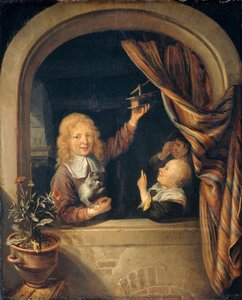
domenicus van tol
1676 , Netherlands
Quick Facts
- Artistic Movement Or Style: Fijnschilder
- Artists Or Movements Influenced By This Artist: ['Dutch Golden Age']
- Artists Who Influenced This Artist: ['Gerard Dou']
- Date Of Birth: c.1635
- Date Of Death: 1676
- Full Name: Domenicus van Tol
- Nationality: Dutch
- Notable Artworks:
- A Mother giving her Child
- Various portraits and scenes
- Place Of Birth: Bodegraven, Netherlands

