 Preview
 Send
Send Share
Share
 Details

 Download
 Similars
 X-Ray
X-Ray Diaporama
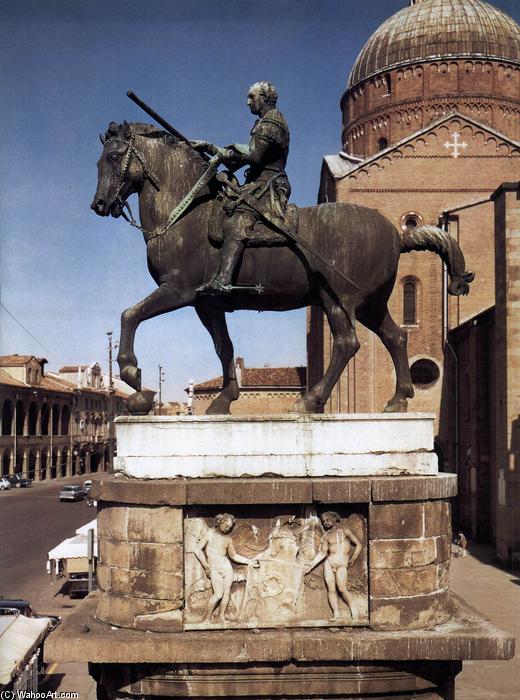
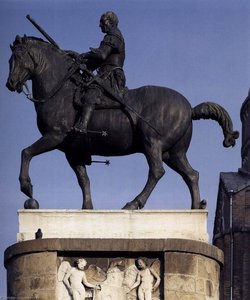
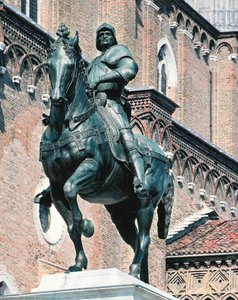
Equestrian Statue of Gattamelata
 Early Renaissance
 1447
1447 340.0 x 390.0 cm
 Piazza del Santo
 Read More
Hand Made Oil Reproduction
Hand-painted oil on canvas in your size and frame, made to order by our artists. ( Buy Print Buy Image)




P118B $10

P118H $10

P118W $10

P438Z $10

P508JH $12

P508YH $12

P805H $10

P805Z $10

P919BZ $10

P919G $10

P919XJ $10

P959ZH $10

P968JZ $12

W106C $8

W218G $10

W218JH $8

W218Y $10

W307PJ $10

W316G $10

W316PJ $8

W316Y $10

W398PJ $8

W4111J $10

W500HY $15

W500JH $15

W692G $12

W849H $8

W940BG $15

W953PJ $8




Pick from our preset sizes that match the artwork's original proportions.

You may enter your own dimensions to fit a specific frame or space. If your selected size does not match the original image's proportions, we will either crop the artwork or extend the painting with additional hand-painted elements. A digital mockup will be sent for your approval before production begins.
Please note that the on-screen preview does not reflect the actual cropping or extension. Only the mockup will accurately show the final composition.
While custom sizes are available, we recommend selecting a dimension from the predefined list to preserve the original proportions.
After order, ArtsDot.com team will email client for instructions and provide a mockup preview
Worldwide Delivery () in 3/4 weeks instead of standard 5 weeks. (17 August). No compromise on quality.

Free Worldwide Express Shipping

High-Quality Linen Canvas

Full Shipping Insurance

Customs Tax Refund Guarantee

True Color Matching Guarantee

60-Day Return Policy (Defects Only)

100% Money-Back Guarantee

Bulk Discount Offer
 Glass option is only available in size under 110 CM

Equestrian Statue of Gattamelata
Reproduction Medium
Reproduction Size
-


Total Price
$ 263
Artwork Description
The Majesty of Power: Donatello’s Equestrian Portrait
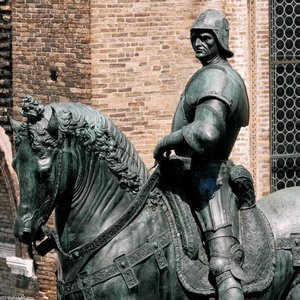
Donatello's Equestrian Statue of Gattamelata, a monumental bronze sculpture residing in Padua, Italy, isn’t merely a depiction of a historical figure; it’s an embodiment of Renaissance ideals – a testament to humanism, military prowess, and the enduring power of portraiture. Completed around 1453, this imposing work transcends its subject, Erasmo da Narni, known as Gattamelata, becoming a symbol of Venice's strategic brilliance and the condottiero’s own commanding presence. The statue immediately commands attention, dwarfing its surroundings with its sheer scale (a remarkable 340 cm in height) and the palpable sense of dynamism it conveys – a feeling of movement captured eternally in bronze.
The sculpture's genesis is rooted in a fascinating historical anecdote: Venice commissioned the statue as a lavish tribute to Gattamelata, recognizing his crucial role in securing Venetian dominance over Padua. However, the exact circumstances surrounding the commission remain shrouded in some mystery, adding an intriguing layer of speculation to its story. Regardless of the precise details, Donatello’s creation represents a pivotal moment in Renaissance art – a deliberate return to the grandeur and heroic scale of classical equestrian statues, while simultaneously imbuing them with a distinctly humanistic sensibility.
A Masterclass in Bronze Technique
Donatello's skill as a sculptor is immediately evident in the remarkable realism achieved through his masterful manipulation of bronze. The statue’s surface isn’t smooth and polished; instead, it boasts a deliberately textured quality – a deliberate roughness that invites touch and emphasizes the material’s inherent weight and solidity. This technique, combined with the careful modeling of musculature and drapery, creates an astonishingly lifelike effect, capturing not just the outward appearance but also the underlying strength and character of Gattamelata.
- Lost Wax Casting: The statue was created using the traditional lost-wax method, a complex process involving creating a wax model, covering it in plaster to create a mold, melting out the wax, and then pouring molten bronze into the resulting cavity.
- Dynamic Pose: Gattamelata is depicted in a powerfully dynamic pose – seated on horseback, his body angled slightly forward as if poised for action. This isn’t a static portrait; it's an image of movement, conveying alertness and readiness.
- Attention to Detail: The intricate details—the folds of the saddlecloth, the texture of the horse’s mane and tail, the subtle expression on Gattamelata’s face—demonstrate Donatello’s meticulous approach and his commitment to capturing every nuance of the subject's appearance.
Symbolism and the Portrait of a Leader
Beyond its technical brilliance, the statue is rich in symbolic meaning. Gattamelata isn’t simply portrayed as a warrior; he embodies qualities of leadership, strategic thinking, and military acumen. The orb resting on the horse's hoof – a cannonball – serves as a potent symbol of his victories and Venice’s expanding influence. The placement of the rider’s foot upon the orb is particularly significant, suggesting control and dominion over both the battlefield and the surrounding territory.
Furthermore, Donatello deliberately departs from the conventions of classical equestrian portraiture. Rather than depicting Gattamelata as an idealized god-like figure, he presents him as a relatable human being – a man of action, courage, and strategic intelligence. This shift reflects the Renaissance emphasis on individualism and the celebration of earthly achievements, rather than solely focusing on divine attributes.
A Legacy of Grandeur
The Equestrian Statue of Gattamelata stands as a landmark achievement in Renaissance sculpture, influencing generations of artists who followed. Its impact extends beyond its aesthetic qualities; it represents a revival of classical ideals within a new artistic context – a testament to the enduring power of bronze and the ability of art to capture not just likeness but also character, ambition, and the spirit of an age. Today, standing in Padua’s Piazza del Santo, this magnificent statue continues to inspire awe and admiration, reminding us of the brilliance and creativity of Donatello and the legacy of Renaissance Italy.
Related Artworks
Artist Biography
early life and career
donato di niccolò di betto bardi, known as donatello, was born in florence, italy around 1386. he studied classical sculpture, which heavily influenced his development of an early renaissance style. this new approach to art and culture would eventually become the hallmark of the florentine renaissance.key works and innovations
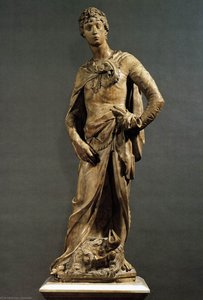
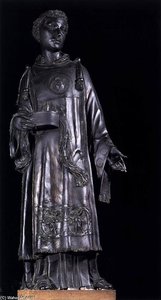
donatello's most famous work, david, was the first freestanding nude male sculpture since antiquity. commissioned by the medici family, it showcased his innovative style and technical expertise. other notable works include:- st. louis of toulouse (now in the museum of the basilica di santa croce), which featured a classical frame designed by donatello.
- the sacrifice of isaac, created for the campanile of santa maria del fiore in florence, characterized by strong portrait details.
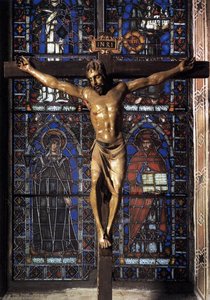
- crucifix (1425) for santa croce, which portrayed christ in a moment of agony.
artistic style and legacy
donatello's style can be divided into broad phases, beginning with the development of expressiveness and classical monumentality. his work was not immediately accepted by the community but eventually became the most popular, influencing other italian courts and european artists. key art movements:personal life and working style
donatello was known for being amiable and well-liked, but poor at the business side of his career. he tended to accept more commissions than he could handle, often completing works late or handing them over to other sculptors. notable artworks and artists:- leonardo da vinci: annunciation (detail)
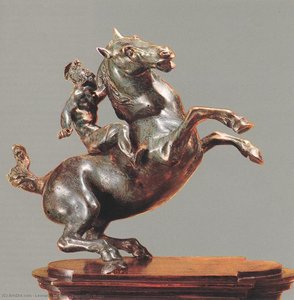
- amico aspertini: statua di pan/leone che azzanna un cavallo
- michelangelo buonarroti: tondo pitt
museums and art collections:
- museo della collegiata (empoli, italy): a hidden gem of the renaissance, featuring works by francesco botticini and raffaello botticini.
- the early italian renaissance art movement
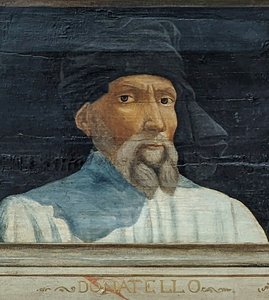
Donatello
1386 - 1466 , Italy
Quick Facts
- Artistic Movement Or Style: Early Renaissance
- Artists Or Movements Influenced By This Artist:
- Italian Renaissance
- Early Renaissance
- Florentine Renaissance
- Artists Who Influenced This Artist: ['Classical sculpture']
- Date Of Birth: c. 1386
- Date Of Death: 1466
- Full Name: Donatello di Niccolò
- Nationality: Italian
- Notable Artworks:
- David
- St. Louis of Toulouse
- Sacrifice of Isaac
- Crucifix
- Place Of Birth: Florence, Italy
Related Articles

Bronze Age to Modern Masters: 10 Sculptures That Redefined Art | ArtsDot
Journey through art history with 10 legendary bronze sculptures – from Michelangelo's David to Rodin’s Thinker. Explore the stories, techniques & timeless beauty of these masterpieces. Find museum-quality reproductions & elevate your home decor on ArtsDot.com.

Bronze Sculptures That Defined Art History | ArtsDot
Journey through art history with our Top 10 bronze sculptures! Explore masterpieces by Rodin, Michelangelo & more. Discover stories behind iconic statues and find museum-quality reproductions for your home decor at ArtsDot.com.

The Enduring Legacy of Bronze: A Historical & Artistic Exploration for the Collector
Explore the rich history & enduring appeal of bronze sculpture with expert insights for collectors at ArtsDot. Learn about casting techniques, iconic artists, collecting tips & contemporary interpretations.
The Enduring Legacy of Bronze: History, Technique & Artistic Expression for the Collector
Explore the rich history & enduring appeal of bronze sculpture with expert insights for collectors at ArtsDot. Learn about casting techniques, iconic artists, and collecting tips.
The Enduring Legacy of Bronze Sculpture: History, Techniques & Contemporary Interpretations
Explore the rich history & enduring appeal of bronze sculpture. Learn about casting techniques, iconic artists, collecting tips, & contemporary interpretations. Expert insights for discerning art collectors.