

 Send
Send Share
Share
 Details

 Download
 Similars
 Diaporama
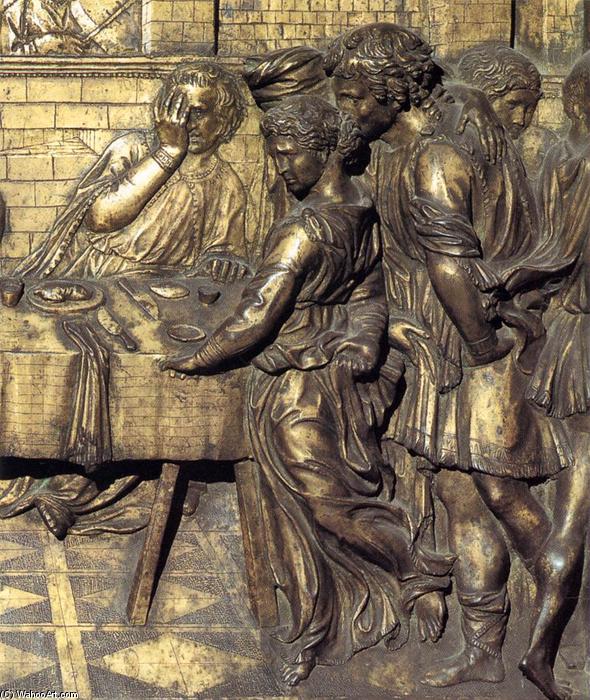
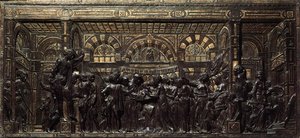
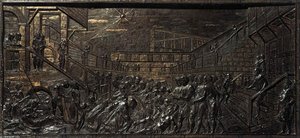
Herod's Banquet (detail)


 Read More
Purchase a high-resolution, enhanced digital image, far superior to the online preview.
Each file is meticulously prepared by our in-house specialists using advanced tools and expert manual retouching. We ensure every image has exceptional clarity, precise color accuracy, and fine detail.
The final file is delivered via email within 72 hours, optimized for immediate use in professional, editorial, and print environments. This is the same quality trusted by top-tier design studios, publishers, and galleries.
Digital Image
Download a high-resolution file for personal display, printing, and creative projects. ( Buy Print Buy Hand Made Painting)
Included in Every Digital Image Order
Expert Digital Delivery, Guaranteed
When you choose ArtsDot.com, you're not just getting an image - you're receiving a professionally enhanced digital artwork, crafted with precision and backed by a satisfaction guarantee. Here's everything that comes with your order, automatically:

Fast Email Delivery
Your high-resolution digital image file will be emailed to you within 72 hours of ordering - ready for immediate use.

AI-Enhanced Digital File
Your artwork is professionally optimized using advanced AI tools and manual editing, ensuring maximum detail, clarity, and color accuracy.

Free Lifetime Re-Delivery
Accidentally deleted or lost your file? No worries - we'll resend it to you anytime, free of charge.

No Import Fees - Ever
Enjoy your artwork instantly with zero customs, duties, or delivery fees - digital downloads are always tax-free.

Color Accuracy Guarantee
We ensure your digital image reflects the original colors as closely as possible using professional tools and color management.

60-Day Satisfaction Guarantee
If you're not satisfied with your digital image, we'll revise it or refund 100% within 60 days - no questions asked.

100% Money-Back Guarantee
Not satisfied? Get a full refund within 60 days of receiving your digital file - no questions asked.

Bulk Order Discounts
Buy 3 images, save 10% - Buy 5, save 15% - Buy 10+, save 20%. Great for creative projects, galleries, and agencies.
Collectible Description
A Moment Frozen in Bronze: Donatello’s “The Feast of Herod”
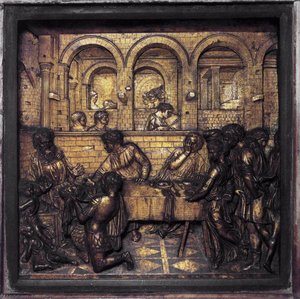
Donatello's "The Feast of Herod," crafted in 1427 for the Baptistery of Siena, Italy, stands as a cornerstone of early Renaissance sculpture—a testament to humanist ideals and masterful artistic innovation. More than just a depiction of biblical narrative, it’s an exquisitely rendered tableau that invites contemplation on themes of piety, judgment, and the human condition. Located within the cathedral's serene interior, the sculpture commands attention with its palpable stillness despite capturing a dramatic scene from Matthew 22:1-13—the parable of the Wedding Banquet.The Sculpture’s Composition and Technique
The bronze relief portrays Herod Agrippa I hosting a banquet attended by dignitaries and scribes, ostensibly to honor John the Baptist's execution. Donatello skillfully employs classical sculptural principles, notably contrapposto – a stance where the torso tilts slightly away from the center of gravity—to imbue each figure with dynamism and psychological depth. The sculptor’s meticulous attention to detail is evident in every aspect of the artwork: the drapery folds ripple realistically, conveying movement and texture; the facial expressions are subtly nuanced, reflecting inner turmoil and contemplation; and the musculature is rendered with anatomical precision, demonstrating Donatello's profound understanding of human anatomy—a pursuit rooted in his classical studies. The bronze casting process itself was revolutionary for its time, utilizing a lost-wax method that ensured exceptional accuracy and surface finish.Symbolism Within the Narrative
Beyond its technical brilliance, “The Feast of Herod” is laden with symbolic significance. The central figure – believed to represent John the Baptist—is positioned at the table’s apex, gazing downwards with solemnity. This posture symbolizes humility and acceptance of divine judgment. Surrounding him are representatives of Jewish leadership, their faces etched with disappointment and frustration as they witness the banquet's failure to honor the prophet’s message. The inclusion of Herod Agrippa I—a figure embodying earthly power—highlights the contrast between spiritual righteousness and temporal authority. The overall scene serves as a powerful meditation on faith versus disbelief, reminding viewers that true honor lies not in outward displays of grandeur but in adherence to moral principles.A Renaissance Masterpiece Illuminated
Donatello’s “The Feast of Herod” embodies the humanist spirit of the Florentine Renaissance—a period marked by renewed interest in classical art and philosophy and a belief in human potential. It reflects the burgeoning artistic fervor of Siena during this transformative era, demonstrating the city's commitment to preserving cultural heritage and fostering intellectual curiosity. The sculpture’s enduring appeal lies in its ability to transcend time, prompting viewers to grapple with fundamental questions about morality, faith, and the complexities of human experience. Its placement within the Baptistery underscores its spiritual importance—a reminder that art can serve as a conduit for profound contemplation and inspiration.Further Exploration
To appreciate the full impact of Donatello’s masterpiece, consider visiting the Baptistery in Siena. Examining the sculpture firsthand allows one to observe the subtle nuances of color and texture achieved through bronze casting – techniques perfected during the Renaissance—and to contemplate the artist's masterful portrayal of human emotion and psychological realism. Reproductions of “The Feast of Herod” are available from reputable art dealers, offering collectors a chance to experience this iconic artwork in their own homes.Related Artworks
Artist Biography
early life and career
donato di niccolò di betto bardi, known as donatello, was born in florence, italy around 1386. he studied classical sculpture, which heavily influenced his development of an early renaissance style. this new approach to art and culture would eventually become the hallmark of the florentine renaissance.key works and innovations
donatello's most famous work, david, was the first freestanding nude male sculpture since antiquity. commissioned by the medici family, it showcased his innovative style and technical expertise. other notable works include:- st. louis of toulouse (now in the museum of the basilica di santa croce), which featured a classical frame designed by donatello.
- the sacrifice of isaac, created for the campanile of santa maria del fiore in florence, characterized by strong portrait details.
- crucifix (1425) for santa croce, which portrayed christ in a moment of agony.
artistic style and legacy
donatello's style can be divided into broad phases, beginning with the development of expressiveness and classical monumentality. his work was not immediately accepted by the community but eventually became the most popular, influencing other italian courts and european artists. key art movements:personal life and working style
donatello was known for being amiable and well-liked, but poor at the business side of his career. he tended to accept more commissions than he could handle, often completing works late or handing them over to other sculptors. notable artworks and artists:- leonardo da vinci: annunciation (detail)
- amico aspertini: statua di pan/leone che azzanna un cavallo
- michelangelo buonarroti: tondo pitt
museums and art collections:
- museo della collegiata (empoli, italy): a hidden gem of the renaissance, featuring works by francesco botticini and raffaello botticini.
- the early italian renaissance art movement
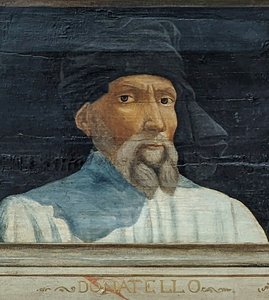
Donatello
1386 - 1466 , Italy
Quick Facts
- Artistic Movement Or Style: Early Renaissance
- Artists Or Movements Influenced By This Artist:
- Italian Renaissance
- Early Renaissance
- Florentine Renaissance
- Artists Who Influenced This Artist: ['Classical sculpture']
- Date Of Birth: c. 1386
- Date Of Death: 1466
- Full Name: Donatello di Niccolò
- Nationality: Italian
- Notable Artworks:
- David
- St. Louis of Toulouse
- Sacrifice of Isaac
- Crucifix
- Place Of Birth: Florence, Italy

