 Preview
 Send
Send Share
Share
 Details

 Download
 Similars
 X-Ray
X-Ray Diaporama
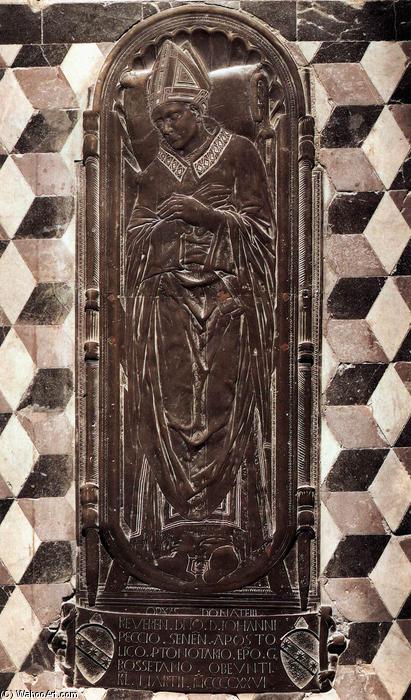
Tombstone of Bishop Giovanni Pecci
 Acrylic On Canvas
- WallArt
- Early Renaissance
 1426
1426 247.0 x 88.0 cm
 Duomo
Duomo
 Read More
Hand Made Oil Reproduction
Hand-painted oil on canvas in your size and frame, made to order by our artists. ( Buy Print Buy Image)




P118B $10

P118H $10

P118W $10

P438Z $10

P508JH $12

P508YH $12

P805H $10

P805Z $10

P919BZ $10

P919G $10

P919XJ $10

P959ZH $10

P968JZ $12

W106C $8

W218G $10

W218JH $8

W218Y $10

W307PJ $10

W316G $10

W316PJ $8

W316Y $10

W398PJ $8

W4111J $10

W500HY $15

W500JH $15

W692G $12

W849H $8

W940BG $15

W953PJ $8




Pick from our preset sizes that match the artwork's original proportions.

You may enter your own dimensions to fit a specific frame or space. If your selected size does not match the original image's proportions, we will either crop the artwork or extend the painting with additional hand-painted elements. A digital mockup will be sent for your approval before production begins.
Please note that the on-screen preview does not reflect the actual cropping or extension. Only the mockup will accurately show the final composition.
While custom sizes are available, we recommend selecting a dimension from the predefined list to preserve the original proportions.
After order, ArtsDot.com team will email client for instructions and provide a mockup preview
Worldwide Delivery () in 3/4 weeks instead of standard 5 weeks. (28 August). No compromise on quality.

Free Worldwide Express Shipping

High-Quality Linen Canvas

Full Shipping Insurance

Customs Tax Refund Guarantee

True Color Matching Guarantee

60-Day Return Policy (Defects Only)

100% Money-Back Guarantee

Bulk Discount Offer
 Glass option is only available in size under 110 CM

Tombstone of Bishop Giovanni Pecci
Reproduction Medium
Reproduction Size
-


Total Price
$ 263
The Bishop’s Silent Testament: Donatello's Tombstone of Giovanni Pecci
Within the echoing grandeur of Siena Cathedral resides a sculpture that transcends mere funerary art – it is, fundamentally, a meditation on life, death, and the enduring power of memory. Donatello’s “Tombstone of Bishop Giovanni Pecci,” crafted around 1427, isn't simply a depiction of a deceased cleric; it’s an exquisitely realized illusion, a carefully constructed stage for contemplation, and a testament to the artist’s mastery of both classical form and deeply human emotion. The piece immediately captivates with its remarkably lifelike portrayal of Pecci, lying supine within a concave bier, his face serene yet imbued with a palpable sense of repose. This isn't a static representation; Donatello deliberately manipulates perspective to draw the viewer into the scene, creating an intimate and almost unsettlingly realistic encounter with the departed bishop.
A Renaissance Masterpiece: Technique and Materials
Sculted in pristine white marble, the tomb’s surface is a marvel of technical precision. Donatello employed a technique known as “contrapposto,” positioning Pecci's body with a subtle shift in weight that lends him an air of naturalism and movement. The drapery, meticulously rendered, cascades around his form, suggesting both the formality of ecclesiastical attire and the vulnerability of human flesh. Crucially, Donatello utilized a shallow relief technique – a departure from the more deeply incised forms favored by his predecessors – which allowed for greater detail and luminosity within the marble itself. This choice dramatically enhanced the illusion of three-dimensionality, making the tomb appear as if it were an actual space containing a tangible figure. The use of polished marble further contributes to this effect, reflecting light and creating a sense of depth and atmosphere.
Symbolism and Context: A Bishop’s Legacy
The “Tombstone of Giovanni Pecci” is deeply rooted in the cultural and religious context of 15th-century Siena. Pecci, as bishop of Grosseto and apostolic protonotary, held a significant position within the city's ecclesiastical hierarchy. The tomb’s placement within the cathedral’s central choir – a location reserved for prominent figures – underscores his importance and reflects the community’s desire to honor his memory. Beyond its purely commemorative function, the sculpture is laden with symbolic meaning. The concave bier itself represents the embrace of death, while the serene expression on Pecci's face suggests acceptance and peace. The inclusion of a book in his hand—a common motif in funerary art—symbolizes his spiritual life and readiness for judgment. Interestingly, Donatello’s work also reflects humanist ideals prevalent during the Renaissance, emphasizing human dignity and individual worth even in death.
Beyond the Stone: The Viewer's Role
Donatello wasn’t merely creating a portrait of a deceased bishop; he was designing an experience. The artist meticulously positioned the tomb to be viewed from a specific angle, inviting the viewer to step into the scene and become an active participant in Pecci’s remembrance. This deliberate manipulation of perspective—a technique often referred to as “active viewing”—transforms the tomb into a stage for contemplation. The illusion of depth created by Donatello's masterful carving draws the eye inward, fostering a sense of intimacy and connection with the departed figure. The placement within the cathedral further amplified this effect, creating a sacred space where visitors could pause, reflect, and engage in a silent dialogue with Pecci’s memory. It is a powerful reminder that art, at its most profound, invites us to transcend the boundaries of time and space.
A Timeless Reflection: Reproduction and Appreciation
Reproductions of Donatello's “Tombstone of Bishop Giovanni Pecci” offer a remarkable opportunity to experience the artistry and emotional depth of this iconic sculpture. When selecting a reproduction, consider the materials used – high-quality archival paper and pigment are essential for capturing the nuances of color and texture. The scale of the reproduction should also be carefully considered, allowing you to appreciate the intricate details of Donatello’s carving. Whether displayed in a private residence or a public space, this artwork continues to resonate with viewers, serving as a poignant reminder of the enduring power of art to capture the essence of human experience and preserve our collective memory.
Related Artworks
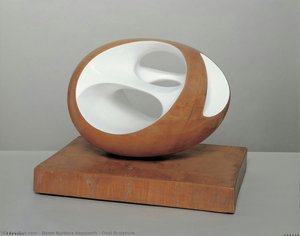
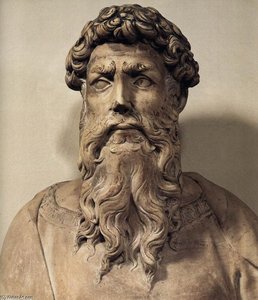
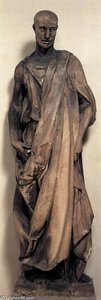
Artist Biography
early life and career
donato di niccolò di betto bardi, known as donatello, was born in florence, italy around 1386. he studied classical sculpture, which heavily influenced his development of an early renaissance style. this new approach to art and culture would eventually become the hallmark of the florentine renaissance.key works and innovations
donatello's most famous work, david, was the first freestanding nude male sculpture since antiquity. commissioned by the medici family, it showcased his innovative style and technical expertise. other notable works include:- st. louis of toulouse (now in the museum of the basilica di santa croce), which featured a classical frame designed by donatello.
- the sacrifice of isaac, created for the campanile of santa maria del fiore in florence, characterized by strong portrait details.
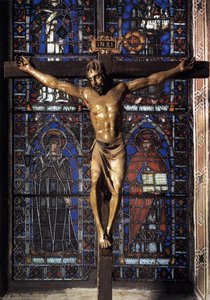
- crucifix (1425) for santa croce, which portrayed christ in a moment of agony.
artistic style and legacy
donatello's style can be divided into broad phases, beginning with the development of expressiveness and classical monumentality. his work was not immediately accepted by the community but eventually became the most popular, influencing other italian courts and european artists. key art movements:personal life and working style
donatello was known for being amiable and well-liked, but poor at the business side of his career. he tended to accept more commissions than he could handle, often completing works late or handing them over to other sculptors. notable artworks and artists:- leonardo da vinci: annunciation (detail)
- amico aspertini: statua di pan/leone che azzanna un cavallo
- michelangelo buonarroti: tondo pitt
museums and art collections:
- museo della collegiata (empoli, italy): a hidden gem of the renaissance, featuring works by francesco botticini and raffaello botticini.
- the early italian renaissance art movement
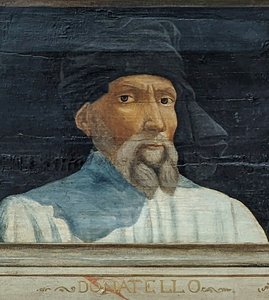
Donatello
1386 - 1466 , Italy
Quick Facts
- Artistic Movement Or Style: Early Renaissance
- Artists Or Movements Influenced By This Artist:
- Italian Renaissance
- Early Renaissance
- Florentine Renaissance
- Artists Who Influenced This Artist: ['Classical sculpture']
- Date Of Birth: c. 1386
- Date Of Death: 1466
- Full Name: Donatello di Niccolò
- Nationality: Italian
- Notable Artworks:
- David
- St. Louis of Toulouse
- Sacrifice of Isaac
- Crucifix
- Place Of Birth: Florence, Italy
Related Articles

Bronze Sculptures That Defined Art History | ArtsDot
Journey through art history with our Top 10 bronze sculptures! Explore masterpieces by Rodin, Michelangelo & more. Discover stories behind iconic statues and find museum-quality reproductions for your home decor at ArtsDot.com.

The Enduring Form: Exploring Themes & Techniques in Sculpture Across Historical Periods
Explore the rich history of sculpture from ancient masterpieces to contemporary innovations. Discover key techniques, influential artists & investment potential for discerning art collectors.

Bronze Age to Modern Masters: 10 Sculptures That Redefined Art | ArtsDot
Journey through art history with 10 legendary bronze sculptures – from Michelangelo's David to Rodin’s Thinker. Explore the stories, techniques & timeless beauty of these masterpieces. Find museum-quality reproductions & elevate your home decor on ArtsDot.com.

The Enduring Form: Sculpture Across History, Technique & Emotional Resonance
Explore the rich history of sculpture with ArtsDot. Discover key techniques, influential artists & investment potential for discerning collectors. Expert insights into valuing and collecting timeless masterpieces.
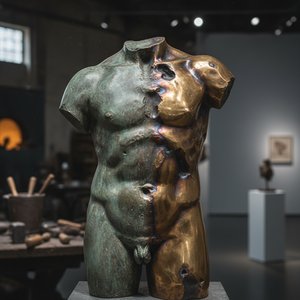
The Enduring Legacy of Bronze Sculpture: History, Techniques & Contemporary Interpretations
Explore the rich history & enduring appeal of bronze sculpture. Learn about casting techniques, iconic artists, collecting tips, & contemporary interpretations. Expert insights for discerning art collectors.