 Preview
 Send
Send Share
Share
 Details

 Download
 Similars
 X-Ray
X-Ray Diaporama
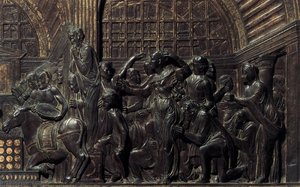
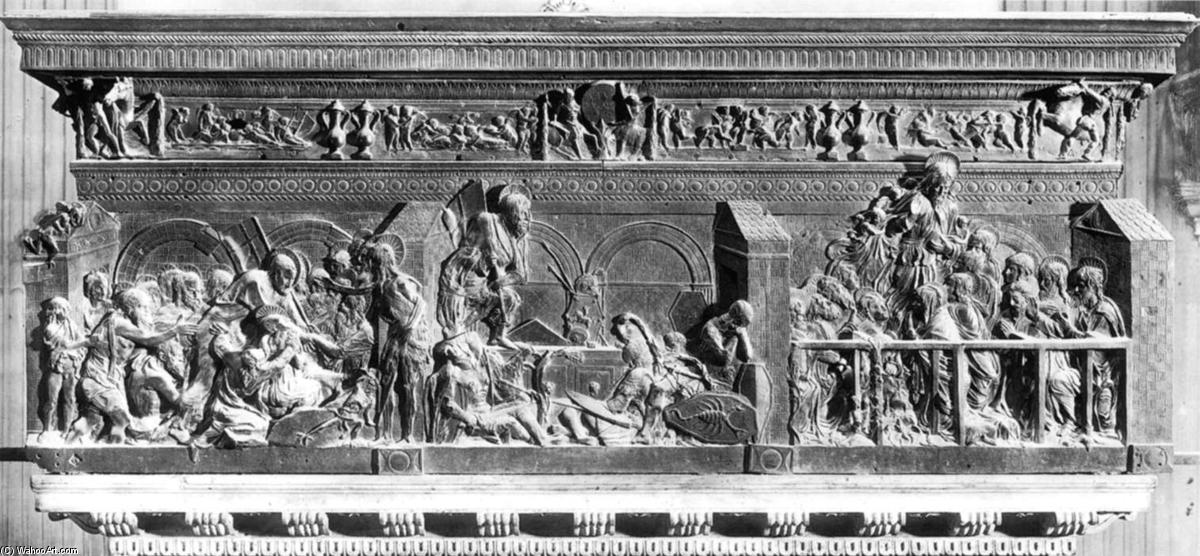
Torture of St Lawrence


 Read More
Giclée / Art Print
Museum-quality giclée or canvas print with fast production and flexible finish options. ( Buy Hand Made Painting Buy Image)




P118B $10

P118H $10

P118W $10

P438Z $10

P508JH $12

P508YH $12

P805H $10

P805Z $10

P919BZ $10

P919G $10

P919XJ $10

P959ZH $10

P968JZ $12

W106C $8

W218G $10

W218JH $8

W218Y $10

W307PJ $10

W316G $10

W316PJ $8

W316Y $10

W398PJ $8

W4111J $10

W500HY $15

W500JH $15

W692G $12

W849H $8

W940BG $15

W953PJ $8




Pick from our preset sizes that match the artwork's original proportions.

You may enter your own dimensions to fit a specific frame or space. If your selected size does not match the original image's proportions, we will either crop the artwork or extend the image with a mirrored or solid-fill edge. A digital mockup will be sent for your approval before production begins.
Please note that the on-screen preview does not reflect the actual cropping or extension. Only the mockup will accurately show the final composition.
While custom sizes are available, we recommend selecting a dimension from the predefined list to preserve the original proportions.
Worldwide Delivery () in 2 weeks instead of standard 4/5 weeks. (22 August)

Free Worldwide Express Shipping

High-Quality Linen Canvas

Full Shipping Insurance

Customs Tax Refund Guarantee

True Color Matching Guarantee

60-Day Return Policy (Defects Only)

100% Money-Back Guarantee

Bulk Discount Offer
 Glass option is only available in size under 110 CM

Torture of St Lawrence
Giclée / Art Print
Reproduction Size
-


Total Price
$ 63
Collectible Description
Torture of St Lawrence by Donatello
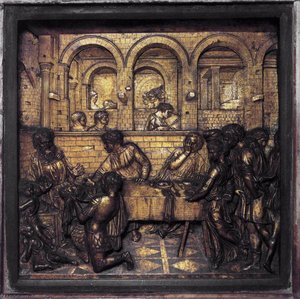
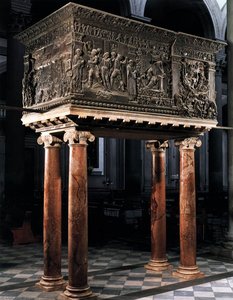
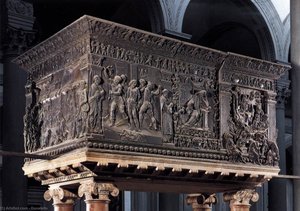
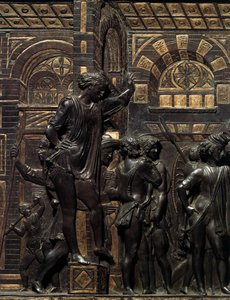
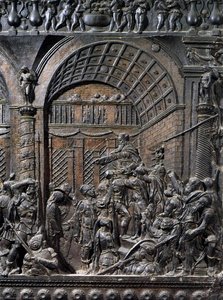
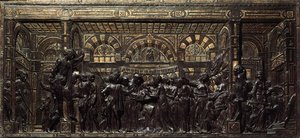
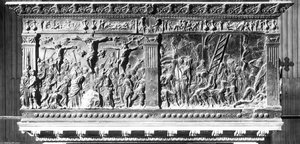
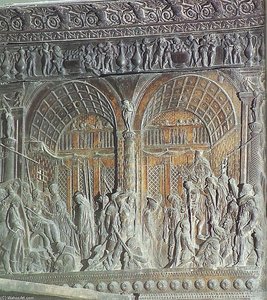
Donatello’s “Torture of St Lawrence,” completed in 1465, stands as a monumental testament to Florentine Romanesque sculpture and the artist's groundbreaking approach to portraying biblical narratives. Located within the Basilica di San Lorenzo, Florence – Michelangelo’s masterpiece alongside Brunelleschi – this bronze relief captures a harrowing scene from the Gospels: Saint Lawrence, Bishop of Rome, enduring agonizing torment for refusing to renounce his faith during Diocletian’s persecution. Donatello's daring decision to depict Christ crucified in reverse—a technique previously unheard of—revolutionized sculptural representation and cemented his legacy as one of the Renaissance’s foremost innovators. The sculpture’s composition is deliberately unsettling. Lawrence, positioned centrally on the horizontal plane, is subjected to a brutal process of flaying – depicted with unflinching realism by Donatello. The artist meticulously rendered the textures of skin and flesh, conveying both physical pain and spiritual anguish. Around Lawrence swirl figures representing demons and attendants, emphasizing the severity of his ordeal and highlighting the struggle between earthly suffering and divine compassion. The pyramidal structure supporting the scene lends stability to the chaotic depiction, grounding the narrative within a framework of classical architectural principles. Donatello’s stylistic brilliance lies in his masterful manipulation of form and space. Unlike earlier sculptures that prioritized idealized beauty, “Torture of St Lawrence” embraces expressive distortion—a hallmark of Romanesque art—to heighten emotional impact. The elongated proportions of Lawrence's body contribute to a sense of vulnerability and emphasize the immensity of his torment. Lines are bold and decisive, delineating anatomical contours with precision while simultaneously conveying movement and dynamism. The sculptor’s meticulous attention to detail – from the gruesome instruments of torture to the anguished expressions on the faces of the figures – underscores Donatello's commitment to capturing the psychological depth of biblical drama. Beyond its artistic merits, “Torture of St Lawrence” carries profound symbolic significance. It serves as a poignant reminder of Christian martyrdom and embodies the unwavering devotion required to uphold one’s beliefs in the face of adversity. The depiction of Christ crucified in reverse—a deliberate challenge to convention—represents Donatello's desire to elevate biblical storytelling beyond mere imitation, striving instead for an emotionally resonant portrayal that communicates the essence of faith and suffering. This sculpture continues to inspire contemplation on themes of resilience, compassion, and the enduring power of spiritual conviction.- Artist: Donatello
- Year Created: 1465
- Medium: Bronze
- Location: Basilica di San Lorenzo, Florence
- Style: Romanesque Sculpture
- Technique: Subtractive Sculpture (Carving away stone)
- Notable Features: Reverse Crucifixion Technique; Anatomical Detail; Expressive Distortion
- Historical Context: Diocletian’s Persecution of Christians
- Symbolism: Martyrdom; Faith; Suffering; Divine Compassion
- Emotional Impact: Awe; Fear; Solemnity; Reflection on Spiritual Conviction
- Further Research Links:
- Torture of St Lawrence
- San Lorenzo
- Oratorio di San Lorenzo
- San Lorenzo in Lucina
- Related Artworks:
- Torture of St Lawrence by Donatello
Related Artworks
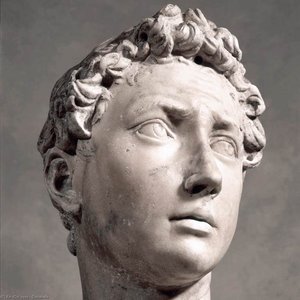
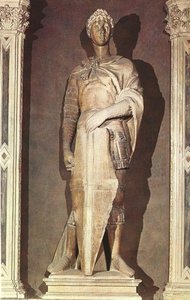
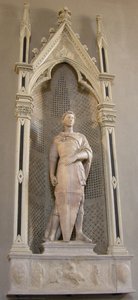
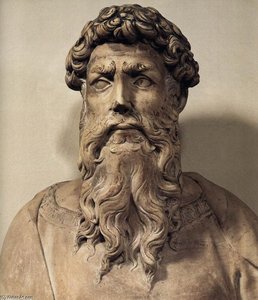
Artist Biography
early life and career
donato di niccolò di betto bardi, known as donatello, was born in florence, italy around 1386. he studied classical sculpture, which heavily influenced his development of an early renaissance style. this new approach to art and culture would eventually become the hallmark of the florentine renaissance.key works and innovations
donatello's most famous work, david, was the first freestanding nude male sculpture since antiquity. commissioned by the medici family, it showcased his innovative style and technical expertise. other notable works include:- st. louis of toulouse (now in the museum of the basilica di santa croce), which featured a classical frame designed by donatello.
- the sacrifice of isaac, created for the campanile of santa maria del fiore in florence, characterized by strong portrait details.
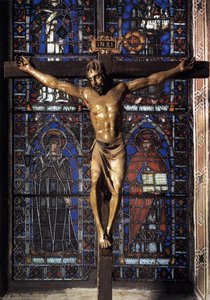
- crucifix (1425) for santa croce, which portrayed christ in a moment of agony.
artistic style and legacy
donatello's style can be divided into broad phases, beginning with the development of expressiveness and classical monumentality. his work was not immediately accepted by the community but eventually became the most popular, influencing other italian courts and european artists. key art movements:personal life and working style
donatello was known for being amiable and well-liked, but poor at the business side of his career. he tended to accept more commissions than he could handle, often completing works late or handing them over to other sculptors. notable artworks and artists:- leonardo da vinci: annunciation (detail)
- amico aspertini: statua di pan/leone che azzanna un cavallo
- michelangelo buonarroti: tondo pitt
museums and art collections:
- museo della collegiata (empoli, italy): a hidden gem of the renaissance, featuring works by francesco botticini and raffaello botticini.
- the early italian renaissance art movement
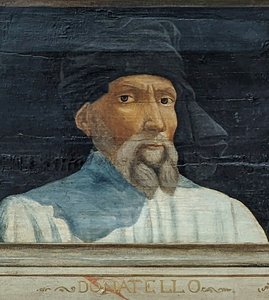
Donatello
1386 - 1466 , Italy
Quick Facts
- Artistic Movement Or Style: Early Renaissance
- Artists Or Movements Influenced By This Artist:
- Italian Renaissance
- Early Renaissance
- Florentine Renaissance
- Artists Who Influenced This Artist: ['Classical sculpture']
- Date Of Birth: c. 1386
- Date Of Death: 1466
- Full Name: Donatello di Niccolò
- Nationality: Italian
- Notable Artworks:
- David
- St. Louis of Toulouse
- Sacrifice of Isaac
- Crucifix
- Place Of Birth: Florence, Italy
Related Articles

Bronze Sculptures That Defined Art History | ArtsDot
Journey through art history with our Top 10 bronze sculptures! Explore masterpieces by Rodin, Michelangelo & more. Discover stories behind iconic statues and find museum-quality reproductions for your home decor at ArtsDot.com.

Bronze Age to Modern Masters: 10 Sculptures That Redefined Art | ArtsDot
Journey through art history with 10 legendary bronze sculptures – from Michelangelo's David to Rodin’s Thinker. Explore the stories, techniques & timeless beauty of these masterpieces. Find museum-quality reproductions & elevate your home decor on ArtsDot.com.

The Enduring Form: Exploring Themes & Techniques in Sculpture Across Historical Periods
Explore the rich history of sculpture from ancient masterpieces to contemporary innovations. Discover key techniques, influential artists & investment potential for discerning art collectors.
The Enduring Form: Sculpture Across History, Technique & Emotional Resonance
Explore the rich history of sculpture with ArtsDot. Discover key techniques, influential artists & investment potential for discerning collectors. Expert insights into valuing and collecting timeless masterpieces.
The Enduring Legacy of Bronze Sculpture: History, Techniques & Contemporary Interpretations
Explore the rich history & enduring appeal of bronze sculpture. Learn about casting techniques, iconic artists, collecting tips, & contemporary interpretations. Expert insights for discerning art collectors.