

 Preview
 Send
Send Share
Share
 Details

 Download
 Similars
 X-Ray
X-Ray Diaporama
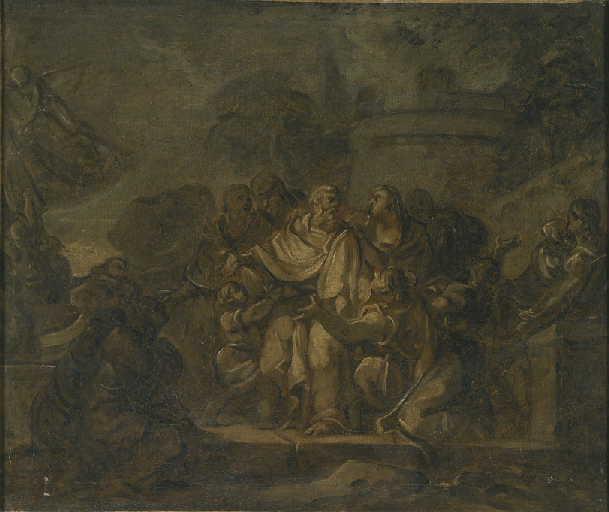
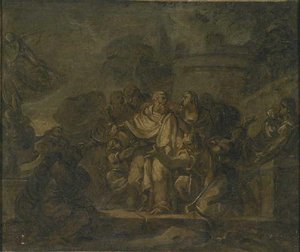
Régulus quittant sa famille pour retourner à Carthage

 Read More
Purchase a high-resolution, enhanced digital image, far superior to the online preview.
Each file is meticulously prepared by our in-house specialists using advanced tools and expert manual retouching. We ensure every image has exceptional clarity, precise color accuracy, and fine detail.
The final file is delivered via email within 72 hours, optimized for immediate use in professional, editorial, and print environments. This is the same quality trusted by top-tier design studios, publishers, and galleries.
Digital Image
Download a high-resolution file for personal display, printing, and creative projects. ( Buy Print Buy Hand Made Painting)
Included in Every Digital Image Order
Expert Digital Delivery, Guaranteed
When you choose ArtsDot.com, you're not just getting an image - you're receiving a professionally enhanced digital artwork, crafted with precision and backed by a satisfaction guarantee. Here's everything that comes with your order, automatically:

Fast Email Delivery
Your high-resolution digital image file will be emailed to you within 72 hours of ordering - ready for immediate use.

AI-Enhanced Digital File
Your artwork is professionally optimized using advanced AI tools and manual editing, ensuring maximum detail, clarity, and color accuracy.

Free Lifetime Re-Delivery
Accidentally deleted or lost your file? No worries - we'll resend it to you anytime, free of charge.

No Import Fees - Ever
Enjoy your artwork instantly with zero customs, duties, or delivery fees - digital downloads are always tax-free.

Color Accuracy Guarantee
We ensure your digital image reflects the original colors as closely as possible using professional tools and color management.

60-Day Satisfaction Guarantee
If you're not satisfied with your digital image, we'll revise it or refund 100% within 60 days - no questions asked.

100% Money-Back Guarantee
Not satisfied? Get a full refund within 60 days of receiving your digital file - no questions asked.

Bulk Order Discounts
Buy 3 images, save 10% - Buy 5, save 15% - Buy 10+, save 20%. Great for creative projects, galleries, and agencies.
Related Artworks


Artist Biography
Donatien Nonnotte: A Master of Dramatic Allegory and Baroque Portraiture
Donatien Nonnotte (1708-1785), a name perhaps less familiar than many of his contemporaries, nevertheless stands as a significant figure in 18th-century French art. Born in Besançon, France, he rose from humble beginnings to become a respected portraitist and, crucially, a painter deeply invested in the dramatic narratives of biblical and mythological scenes. His career spanned several decades, marked by a shift from early academic portraiture to a more expressive and emotionally charged style that reflects the evolving tastes of his era – a period bridging the formality of the Baroque with the burgeoning sensibilities of Rococo.
Nonnotte’s artistic journey began within the framework of the Académie royale de peinture et de sculpture in Paris. Receiving admission in 1741, he initially focused on portraiture, establishing a solid reputation for his ability to capture likeness with technical precision. However, it was during this period that he began to experiment with larger-scale compositions and increasingly theatrical subject matter. This transition wasn’t merely stylistic; it reflected a growing interest in the allegorical and moralistic themes prevalent in art at the time – a desire to communicate complex ideas through visual storytelling.
The Rise of Dramatic Narrative
A pivotal moment in Nonnotte's career arrived with his relocation to Lyon in 1754. Here, he secured the prestigious title of “official painter” for the city, a recognition that underscored his growing influence and artistic standing. Lyon, a thriving center of commerce and culture, provided a fertile ground for his evolving style. It was during this period that Nonnotte truly embraced the dramatic narrative, moving beyond simple likeness to create works brimming with emotion, symbolism, and carefully orchestrated compositions.
His most celebrated works exemplify this shift. Paintings like “Régulus quittant sa famille pour retourner à Carthage” (Regulus Leaving His Family to Return to Carthage) are particularly compelling. The scene depicts the Roman general’s agonizing decision to abandon his wife and children in order to fulfill his duty to Rome, a powerful allegory of loyalty versus personal devotion. The painting is characterized by its intense emotionalism – Regulus's grief palpable in his posture and expression – and its masterful use of light and shadow to heighten the drama. Similarly, “Esther présentée à Assuerus” (Esther Presented to Ahasuerus) showcases Nonnotte’s ability to infuse biblical narratives with a sense of intrigue and psychological depth. The composition is meticulously arranged, drawing the viewer's eye to the central figures while subtly hinting at the underlying tensions and potential dangers within the scene.
Technique and Influences
Nonnotte’s artistic style can be characterized by a rich, layered technique—a hallmark of Baroque painting. He employed a complex system of glazing and scumbling to achieve a luminous quality in his colors and create a sense of depth and texture. His brushwork is often loose and expressive, particularly in the rendering of drapery and facial features, contributing to the overall dynamism of his compositions. While firmly rooted in the traditions of Baroque painting, Nonnotte’s work also reveals subtle influences from Rococo style – a preference for elegant curves, delicate colors, and an emphasis on decorative elements.
His training under François-Hubert Drouais, a prominent portraitist, undoubtedly played a role in shaping his early artistic development. However, Nonnotte quickly surpassed his teacher, developing a distinctive voice that combined technical skill with a profound understanding of human emotion and narrative potential. He was also influenced by the works of Caravaggio, whose dramatic use of light and shadow served as a model for his own approach to composition and rendering.
Legacy and Significance
Donatien Nonnotte’s legacy is one of artistic versatility and dramatic flair. While he may not be as widely recognized as some of his contemporaries, his paintings continue to captivate viewers with their emotional intensity and masterful storytelling. His work represents a crucial bridge between the formal conventions of academic portraiture and the more expressive styles that would emerge in the following decades. His influence can be seen in the works of later artists who sought to infuse narrative into their art, demonstrating his lasting contribution to the development of French painting.
Today, Nonnotte’s paintings are housed in museums across France and beyond, offering a valuable glimpse into the artistic landscape of 18th-century Europe. His ability to transform historical and mythological subjects into compelling visual narratives ensures that his work will continue to resonate with audiences for generations to come.
donatien nonnotte
1708 - 1785
Quick Facts
- Artistic Movement Or Style: Baroque, Portraiture
- Artists Who Influenced This Artist: ['François-Hubert Drouais']
- Date Of Birth: 1708
- Date Of Death: 1785
- Full Name: Donatien Nonnotte
- Nationality: French
- Notable Artworks:
- Régulus quittant sa famille
- Esther présentée à Assuerus
- Le banquet de Balthazar
- Place Of Birth: Besançon, France

