 Preview
 Send
Send Share
Share
 Details

 Download
 Similars
 X-Ray
X-Ray Diaporama
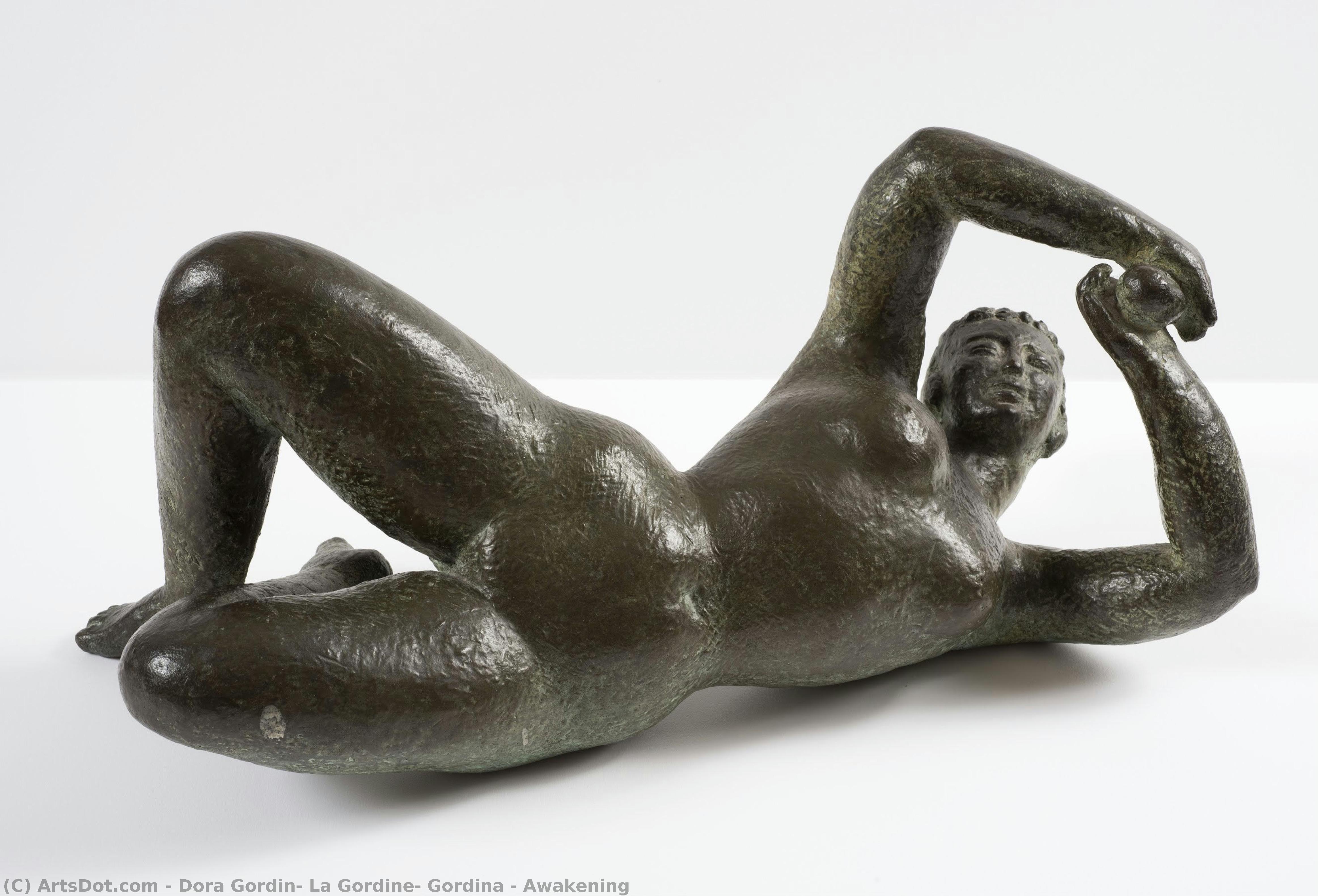
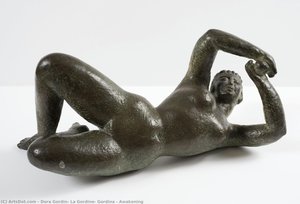
Awakening


 Read More
Hand Made Oil Reproduction
Hand-painted oil on canvas in your size and frame, made to order by our artists. ( Buy Print Buy Image)




































Pick from our preset sizes that match the artwork's original proportions.

You may enter your own dimensions to fit a specific frame or space. If your selected size does not match the original image's proportions, we will either crop the artwork or extend the painting with additional hand-painted elements. A digital mockup will be sent for your approval before production begins.
Please note that the on-screen preview does not reflect the actual cropping or extension. Only the mockup will accurately show the final composition.
While custom sizes are available, we recommend selecting a dimension from the predefined list to preserve the original proportions.
After order, ArtsDot.com team will email client for instructions and provide a mockup preview
Worldwide Delivery () in 3/4 weeks instead of standard 5 weeks. (29 August). No compromise on quality.

Free Worldwide Express Shipping

High-Quality Linen Canvas

Full Shipping Insurance

Customs Tax Refund Guarantee

True Color Matching Guarantee

60-Day Return Policy (Defects Only)

100% Money-Back Guarantee

Bulk Discount Offer
 Glass option is only available in size under 110 CM

Awakening
Reproduction Medium
Reproduction Size
-


Total Price
$ 263
Related Artworks




Artist Biography
The Sculptor of Emotion and Remembrance
Dora Gordine, a name that resonates with the delicate strength of her medium, was an artist who breathed life into stone and bronze. An Estonian Jewish modernist, her journey was one of profound movement—across borders, through shifting political landscapes, and between the realms of classical anatomical precision and evocative emotional expression. Born in Liepāja, Latvia, in 1895, Gordine’s early years were steeped in a world of cultural complexity. As the youngest of four children born to Russian Jewish parents, her formative environment was shaped by the aesthetic currents of the time, most notably the Noor Eesti (‘Young Estonia’) movement. This group, which championed the flowing, organic motifs of Art Nouveau, instilled in her an early appreciation for the rhythmic beauty found in nature and form.
Her life, while marked by immense artistic triumph, was also shadowed by the profound tragedies of the twentieth century. The loss of her siblings, Nikolai and Anna, to the horrors of the Holocaust in 1941 remains a poignant backdrop to her creative output, lending a certain depth of soul and perhaps a sense of fleeting beauty to her portraiture. As she moved from the Baltic shores to the vibrant, intellectual heart of Paris in 1924, Gordine began to refine her voice. Under the tutelage of the renowned Catalan sculptor Aristide Maillol, she mastered the art of anatomical accuracy, yet she never allowed technical perfection to overshadow the psychological essence of her subjects. She possessed a rare ability to capture not just the likeness of a face, but the very breath and temperament of the individual.
A Mastery of Form and Portraiture
Gordine’s career reached its zenith when she settled in London, where her talent for portrait sculpture attracted an international circle of admirers. Her subjects were drawn from the highest echelons of the political, social, and theatrical worlds, yet her work transcended mere celebrity documentation. Whether working in clay, plaster, or bronze, she sought to find the universal within the particular. Her sculptures are celebrated for their ability to convey a sense of movement and internal life; one can almost feel the pulse beneath the surface of her finely rendered figures.
Her technical repertoire was as diverse as her influences, encompassing:
- Portrait Sculpture: Renowned for capturing the psychological depth and character of her sitters.
- Figurative Works: Exploring themes of motherhood, infancy, and the human condition through works like Mother and Child and Happy Baby.
- Interior Design and Painting: Demonstrating a holistic approach to the aesthetic environment.
The expansion of her career was further bolstered by her marriage to the Honorable Richard Hare, which provided her with the stability to pursue increasingly ambitious projects. Critics of her era often regarded her as one of the finest sculptors of her generation, a sentiment supported by her election as a Fellow of the Royal British Society of Sculptors. Her work stands as a bridge between the classical traditions of the past and the modernist explorations of the twentieth century, blending a reverence for form with an avant-garde sensibility.
Legacy and the Preservation of Vision
Though the latter years of her life saw a period of relative obscurity, the true magnitude of Dora Gordine’s contribution to art was rediscovered in the decades following her death in 1991. Major exhibitions in London during the early twenty-first century served to revive her standing, reminding the world of the sculptor who could command both the monumental and the intimate. Her legacy is not merely found in museum collections like the Tate Modern, but is physically preserved in Dorich House, her former home.
Today, Dorich House stands as a museum and a testament to her life’s work, housing much of her estate and serving as a sanctuary for her artistic vision. It remains a vital link to an era of profound transformation, where the scars of history and the triumphs of creativity exist in a delicate, permanent balance. Through her sculptures, Gordine continues to invite viewers into a dialogue with the past, offering a timeless exploration of what it means to be human.
dora gordin, la gordine, gordina
1895 - 1991 , Estonia
Quick Facts
- Artistic Movement Or Style: Modernist Sculpture
- Artists Or Movements Influenced By This Artist: ['Art Nouveau']
- Artists Who Influenced This Artist: ['Noor Eesti Group']
- Date Of Birth: June 8, 1895
- Date Of Death: December 29, 1991
- Full Name: Dora Gordine
- Nationality: Estonian British
- Notable Artworks:
- Awakening
- Happy Baby
- Place Of Birth: Liepāja, Estonia