 Preview
 Send
Send Share
Share
 Details

 Download
 Similars
 X-Ray
X-Ray Diaporama
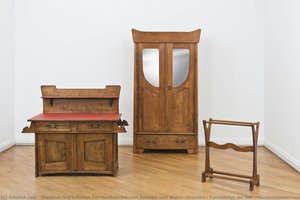
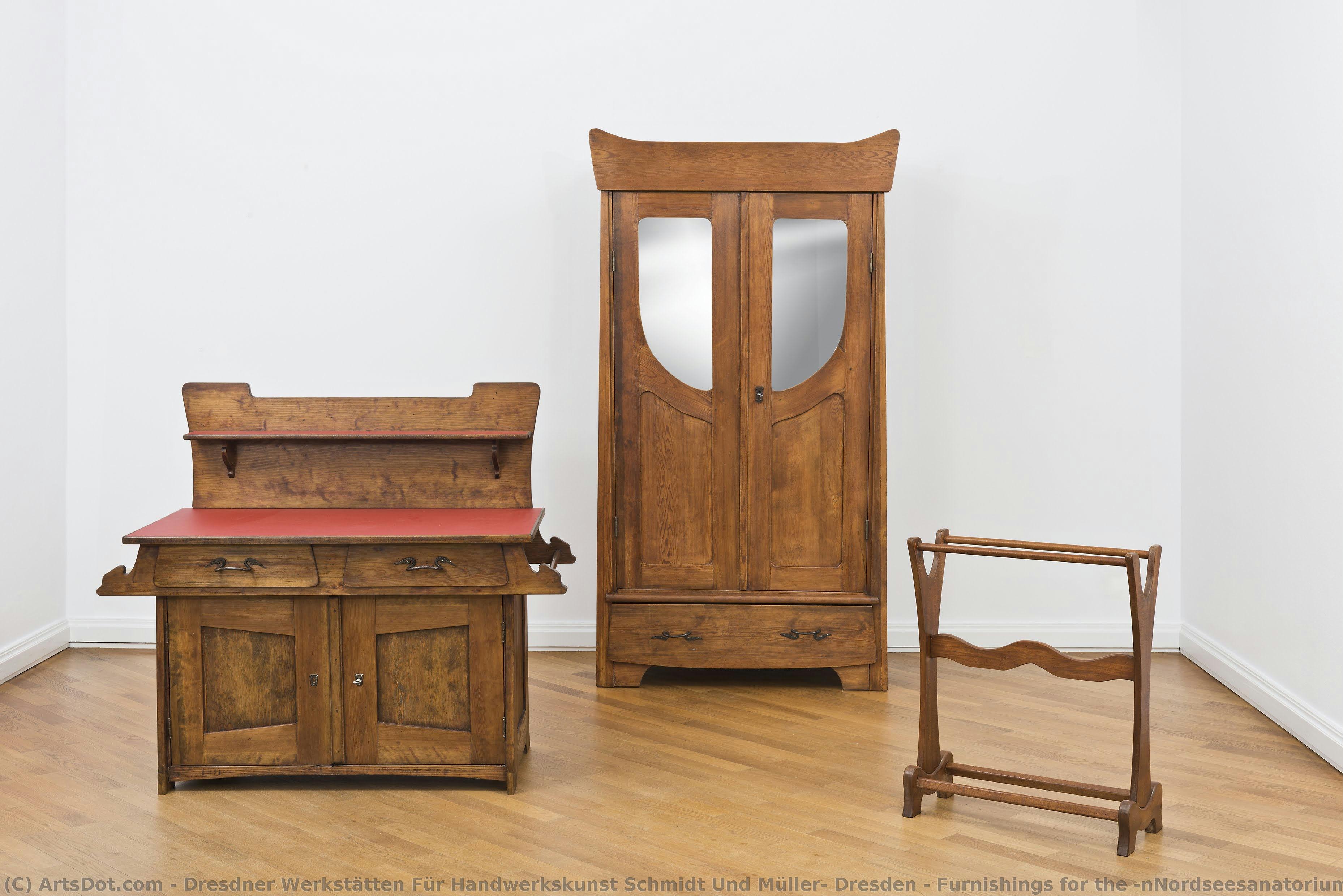
Furnishings for the \nNordseesanatorium Wyk

 Read More
Hand Made Oil Reproduction
Hand-painted oil on canvas in your size and frame, made to order by our artists. ( Buy Print Buy Image)




































Pick from our preset sizes that match the artwork's original proportions.

You may enter your own dimensions to fit a specific frame or space. If your selected size does not match the original image's proportions, we will either crop the artwork or extend the painting with additional hand-painted elements. A digital mockup will be sent for your approval before production begins.
Please note that the on-screen preview does not reflect the actual cropping or extension. Only the mockup will accurately show the final composition.
While custom sizes are available, we recommend selecting a dimension from the predefined list to preserve the original proportions.
After order, ArtsDot.com team will email client for instructions and provide a mockup preview
Worldwide Delivery () in 3/4 weeks instead of standard 5 weeks. (2 September). No compromise on quality.

Free Worldwide Express Shipping

High-Quality Linen Canvas

Full Shipping Insurance

Customs Tax Refund Guarantee

True Color Matching Guarantee

60-Day Return Policy (Defects Only)

100% Money-Back Guarantee

Bulk Discount Offer
 Glass option is only available in size under 110 CM

Furnishings for the \nNordseesanatorium Wyk
Reproduction Medium
Reproduction Size
-


Total Price
$ 263
Related Artworks









Artist Biography
August Endell: Architect of the German Soul
August Endell, a name perhaps less familiar than those of his Jugendstil contemporaries, remains a pivotal figure in the evolution of German art and design at the turn of the 20th century. Born in Berlin in 1871 and tragically passing away in 1925, Endell’s legacy lies not just in grand architectural projects but in a profound philosophical approach to aesthetics – a concept he termed “form-feeling.” His work, particularly through the Dresdner Werkstätten für Handwerkskunst Schmidt und Müller, embodies an organic sensibility deeply rooted in German Romanticism and a nascent understanding of modern urban life. He was more than just an architect; he was a theorist, a designer, and a keen observer of the human condition reflected within the built environment.Early Life and Influences: A Berlin Intellectual
Endell’s early life was steeped in intellectual ferment. Born into a family with strong ties to the Prussian military, he initially pursued a scientific education, studying mathematics and physics at the University of Berlin. However, his artistic inclinations quickly superseded these academic pursuits. He found himself drawn to the burgeoning circles of artists, writers, and philosophers that were transforming Berlin’s cultural landscape – a scene heavily influenced by figures like Walter Hasenclever and Richard Dehmel. These encounters exposed him to the ideas of Symbolism, Decadence, and the growing dissatisfaction with industrialization and its impact on human experience. Crucially, Endell was deeply affected by the writings of Friedrich Nietzsche, particularly his concept of the “will to power,” which informed his belief that art should be a force for shaping and transforming reality. The burgeoning movement of Art Nouveau, or Jugendstil as it became known in Germany, provided him with a framework for expressing these ideas visually.The Dresdner Werkstätten and Organic Design
Endell’s most significant contribution to the art world came through his collaboration with the Dresdner Werkstätten für Handwerkskunst Schmidt und Müller. This workshop, renowned for its high-quality craftsmanship and innovative designs, became a vehicle for Endell's aesthetic vision. He wasn’t simply designing furniture or decorative objects; he was crafting entire environments – from elaborate facades to interior furnishings – that sought to evoke a sense of organic harmony and emotional resonance. His work for the “Furnishings for the Nordseesanatorium Wyk” (1903-1904), a seaside health resort in Northern Germany, is perhaps his most celebrated achievement. This project showcased his ability to seamlessly integrate architecture, furniture, textiles, and lighting into a cohesive whole, creating spaces that were both functional and deeply evocative. The undulating forms, rich colors, and intricate detailing of the Nordseesanatorium exemplify Endell’s signature style – a blend of flowing lines, natural motifs, and a subtle sense of melancholy. His designs rejected rigid geometric shapes in favor of curves and asymmetrical arrangements, mirroring the rhythms and textures of nature.Theoretical Foundations: Form-Feeling and the Urban Experience
Beyond his practical design work, Endell developed a sophisticated theory of aesthetics centered around the concept of “form-feeling.” He believed that true beauty wasn’t simply about visual appeal but about an emotional connection between the observer and the object. This "form-feeling" arose from a deep understanding of the underlying forms and patterns within the environment – the way light played on surfaces, the flow of water, the growth of plants. He argued that by consciously perceiving these forms, individuals could cultivate a heightened sense of awareness and appreciation for the world around them. His 1905 review of the *Deutscher Künstlerbund* exhibition articulated this philosophy, suggesting that art should strive to capture not just appearances but the underlying emotional resonance of form. He wrote extensively on the subject in his book *Die Schönheit der großen Stadt*, exploring how cities could be designed to foster a sense of belonging and connection among their inhabitants.Legacy and Historical Significance
August Endell’s influence extends beyond his immediate designs. He played a crucial role in shaping the aesthetic sensibilities of a generation of German artists and designers, particularly within the context of Jugendstil. His emphasis on organic forms, emotional resonance, and the integration of art into everyday life anticipated many of the key principles of Expressionism that would emerge in the years following World War I. While his work was largely forgotten after his death, it has experienced a resurgence of interest in recent decades, as scholars and collectors recognize Endell’s unique contribution to German art history. His vision of an architecture that nurtures the soul remains remarkably relevant today, offering a powerful counterpoint to the often-sterile and impersonal nature of modern design. The Dresdner Werkstätten continue to produce reproductions of his designs, ensuring that this architect of the German soul continues to inspire and captivate audiences worldwide.
dresdner werkstätten für handwerkskunst schmidt und müller, dresden
1871 - 1925 , Germany
Quick Facts
- Artistic Movement Or Style: Jugendstil, Art Nouveau
- Artists Or Movements Influenced By This Artist:
- German Art Nouveau
- Expressionism
- Artists Who Influenced This Artist:
- Gustav Klimt
- Aubrey Beardsley
- Date Of Birth: April 12, 1871
- Date Of Death: April 13, 1925
- Full Name: August Endell
- Nationality: German
- Notable Artworks:
- Furnishings for Wyk
- Dresden Werkstätten
- Place Of Birth: Berlin, Germany