

 Preview
 Send
Send Share
Share
 Details

 Download
 Similars
 X-Ray
X-Ray Diaporama
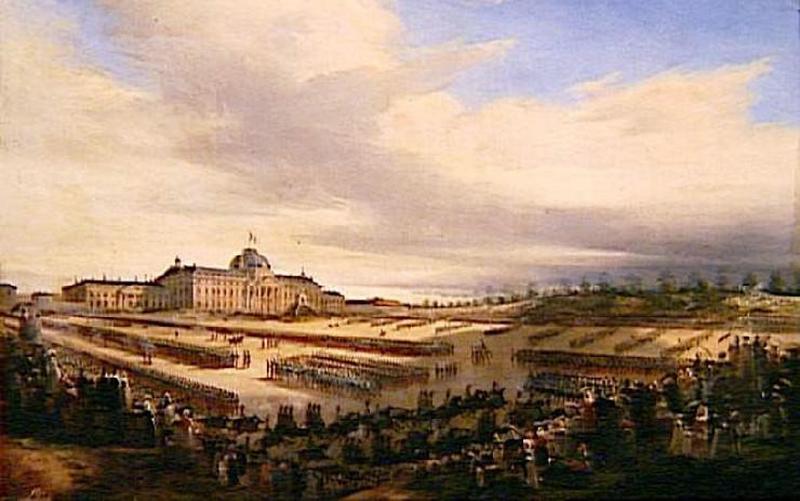
DISTRIBUTION DES DRAPEAUX A L'ARMEE.27 MARS 1831
 Read More
Purchase a high-resolution, enhanced digital image, far superior to the online preview.
Each file is meticulously prepared by our in-house specialists using advanced tools and expert manual retouching. We ensure every image has exceptional clarity, precise color accuracy, and fine detail.
The final file is delivered via email within 72 hours, optimized for immediate use in professional, editorial, and print environments. This is the same quality trusted by top-tier design studios, publishers, and galleries.
Digital Image
Download a high-resolution file for personal display, printing, and creative projects. ( Buy Print Buy Hand Made Painting)
Included in Every Digital Image Order
Expert Digital Delivery, Guaranteed
When you choose ArtsDot.com, you're not just getting an image - you're receiving a professionally enhanced digital artwork, crafted with precision and backed by a satisfaction guarantee. Here's everything that comes with your order, automatically:

Fast Email Delivery
Your high-resolution digital image file will be emailed to you within 72 hours of ordering - ready for immediate use.

AI-Enhanced Digital File
Your artwork is professionally optimized using advanced AI tools and manual editing, ensuring maximum detail, clarity, and color accuracy.

Free Lifetime Re-Delivery
Accidentally deleted or lost your file? No worries - we'll resend it to you anytime, free of charge.

No Import Fees - Ever
Enjoy your artwork instantly with zero customs, duties, or delivery fees - digital downloads are always tax-free.

Color Accuracy Guarantee
We ensure your digital image reflects the original colors as closely as possible using professional tools and color management.

60-Day Satisfaction Guarantee
If you're not satisfied with your digital image, we'll revise it or refund 100% within 60 days - no questions asked.

100% Money-Back Guarantee
Not satisfied? Get a full refund within 60 days of receiving your digital file - no questions asked.

Bulk Order Discounts
Buy 3 images, save 10% - Buy 5, save 15% - Buy 10+, save 20%. Great for creative projects, galleries, and agencies.
Related Artworks









Artist Biography
François Dubois: A Silent Witness to Turbulent Times
François Dubois (1529 – 1584) remains an enigmatic figure in French Renaissance art, largely overshadowed by his contemporaries yet profoundly impactful through a single masterpiece—the monumental depiction of the St. Bartholomew’s Day Massacre of 1572. Born in Amiens, Dubois' artistic trajectory unfolded against the backdrop of religious upheaval and political instability, shaping him into a Huguenot painter deeply attuned to the anxieties of his era. While biographical details remain scarce, scholarly research suggests he honed his skills under Jean Goujon, a prominent sculptor at Fontainebleau Palace, absorbing the stylistic conventions of Mannerism – a movement characterized by elongated figures, dramatic contrasts of light and shadow, and an obsession with psychological realism.- Early Life & Training: Dubois’ formative years coincided with the escalating tensions between Catholics and Huguenots following Calvinist reforms. His familial connections to influential Huguenot families undoubtedly instilled in him a commitment to humanist ideals and artistic excellence amidst persecution.
- The Massacre Scene: Dubois' fame rests almost entirely upon his monumental canvas commemorating the horrific St. Bartholomew’s Day Massacre, commissioned by Jean Baptiste Briçonnet, a banker from Lyon who sought to honor the memory of Antoine Dubois—Dubois’ cousin and surgeon—who perished during the violence. This painting transcends mere historical record; it is a visceral portrayal of terror and suffering, meticulously crafted with painstaking detail.
- Composition & Technique: Dubois' masterful technique—characterized by smooth brushstrokes and subtle tonal gradations—contributes significantly to the painting’s expressive power. He meticulously rendered textures and drapery folds, conveying a palpable sense of realism that distinguishes him from many of his peers.
- Roman Triumvirate: Beyond the Massacre scene, Dubois produced a striking depiction of the Roman triumvirate—Julius Caesar, Pompey Magnus, and Marcus Crassus—demonstrating an understanding of classical iconography and artistic conventions. This work exemplifies the influence of humanist scholarship on Renaissance art.
dubois françois
1529 - 1584
Quick Facts
- Artistic Movement Or Style: Fontainebleau School
- Artists Or Movements Influenced By This Artist: ['Renaissance']
- Artists Who Influenced This Artist: ['Jean Goujon']
- Date Of Birth: 1529
- Date Of Death: 1584
- Full Name: François Dubois
- Nationality: French
- Notable Artworks: ['Saint Bartholomew’s Day Massacre']
- Place Of Birth: Amiens, France

