 Preview
 Send
Send Share
Share
 Details

 Download
 Similars
 X-Ray
X-Ray Diaporama
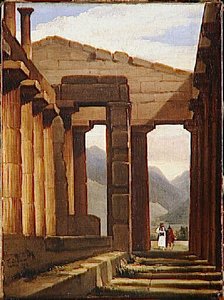
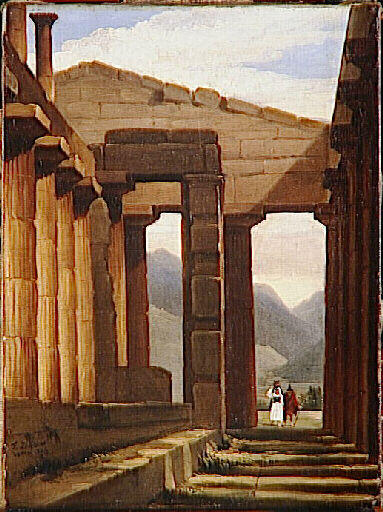
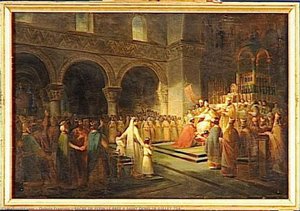
Intérieur d'un temple dorique

 Read More
Giclée / Art Print
Museum-quality giclée or canvas print with fast production and flexible finish options. ( Buy Hand Made Painting Buy Image)




































Pick from our preset sizes that match the artwork's original proportions.

You may enter your own dimensions to fit a specific frame or space. If your selected size does not match the original image's proportions, we will either crop the artwork or extend the image with a mirrored or solid-fill edge. A digital mockup will be sent for your approval before production begins.
Please note that the on-screen preview does not reflect the actual cropping or extension. Only the mockup will accurately show the final composition.
While custom sizes are available, we recommend selecting a dimension from the predefined list to preserve the original proportions.
Worldwide Delivery () in 2 weeks instead of standard 4/5 weeks. (26 August)

Free Worldwide Express Shipping

High-Quality Linen Canvas

Full Shipping Insurance

Customs Tax Refund Guarantee

True Color Matching Guarantee

60-Day Return Policy (Defects Only)

100% Money-Back Guarantee

Bulk Discount Offer
 Glass option is only available in size under 110 CM

Intérieur d'un temple dorique
Giclée / Art Print
Reproduction Size
-


Total Price
$ 63
Related Artworks









Artist Biography
A Silent Witness to Turbulent Times
François Dubois remains one of the most enigmatic and haunting figures of the French Renaissance, an artist whose legacy is etched into the very fabric of religious and political tragedy. Born around 1529 in Amiens, Dubois lived through an era defined by profound upheaval, where the spiritual landscape of France was being violently reshaped by the Reformation. As a Huguenot painter, his life and art were inextricably linked to the escalating tensions between Catholics and Protestants. While biographical records from this period are often fragmented, scholarly whispers suggest he may have refined his craft under the tutified influence of Jean Goujon, the celebrated sculptor of the Fontainebleau Palace. This connection likely introduced him to the sophisticated language of Mannerism, a style characterized by its elongated, elegant figures and a dramatic, almost theatrical use of light and shadow that would later serve his most visceral narratives.
The trajectory of Dubois’ life was irrevocably altered by the blood-soaked streets of Paris in 1572. The St. Bartholomew’s Day Massacre, a period of horrific targeted violence against Huguenots, forced him into exile. Seeking refuge in the Protestant Republic of Geneva, he carried with him not only the trauma of his people but also a profound artistic mission. It is believed that while he may not have personally witnessed every horror of the massacre, the loss of kin—specifically his cousin, the surgeon Antoine Dubois—deeply informed the emotional gravity of his work. This personal connection transformed his art from mere historical documentation into a poignant, spiritual lamentation.
The Masterpiece of Memory and Martyrdom
Dubois’ fame rests almost entirely upon a single, monumental achievement: his harrowing depiction of the St. Bartholomew’s Day Massacre. Commissioned by Jean Baptiste Briçonnet, a banker from Lyon who sought to memorialize the fallen Antoine Dubois, this canvas transcends the boundaries of traditional history painting. It is a work of profound psychological realism and symbolic depth, capturing the simultaneous chaos of two distinct yet interconnected episodes of violence. The composition is masterfully structured to guide the viewer through a landscape of terror, where the line between earthly slaughter and divine martyrdom becomes blurred.
In one of the most arresting sequences of the painting, the lifeless body of the Huguenot leader Gaspard de Coligny hangs precariously from a window. This imagery is far from accidental; it serves as a deliberate, somber allusion to the crucifixion of Christ, casting the fallen Protestant leader as a martyr for his faith. Below this suspended figure, the brutal reality of the conflict is laid bare through the depiction of his decapitated head, a chilling symbol of the systematic suppression of the Huguenot cause. To the left, the presence of Catherine de' Medici emerging from the Louvre Palace adds a layer of political intrigue and cold authority to the scene, as she inspects the mounting carnage. Through these meticulously crafted details, Dubois captures the visceral essence of fear, making the viewer an involuntary witness to one of history's most dark and transformative moments.
Legacy within the Fontainebleau School
Beyond his singular masterpiece, Dubois is recognized as a significant contributor to the Fontainebleau School, a movement that brought a unique French flavor to the broader European Mannerist tradition. His ability to weave complex historical and religious themes into a cohesive visual narrative demonstrates a sophisticated understanding of the era's aesthetic demands. While his surviving body of work may be limited, the impact of his vision remains undiminished. He stands as a testament to the power of art to act as a vessel for collective memory, ensuring that the shadows of the 16th century are never truly forgotten.
The historical significance of François Dubois lies in his role as a chronicler of conscience. His work does not merely record facts; it captures the atmosphere of an age defined by conviction and catastrophe. Through his brush, the political struggles of the French Wars of Religion are elevated to the level of universal human tragedy, securing his place in the annals of art history as a painter who dared to look directly into the heart of darkness.
dubois françois
1529 - 1584
Quick Facts
- Artistic Movement Or Style: Fontainebleau School
- Artists Or Movements Influenced By This Artist: ['Renaissance']
- Artists Who Influenced This Artist: ['Jean Goujon']
- Date Of Birth: 1529
- Date Of Death: 1584
- Full Name: François Dubois
- Nationality: French
- Notable Artworks: ['Saint Bartholomew’s Day Massacre']
- Place Of Birth: Amiens, France