

 Preview
 Send
Send Share
Share
 Details

 Download
 Similars
 X-Ray
X-Ray Diaporama
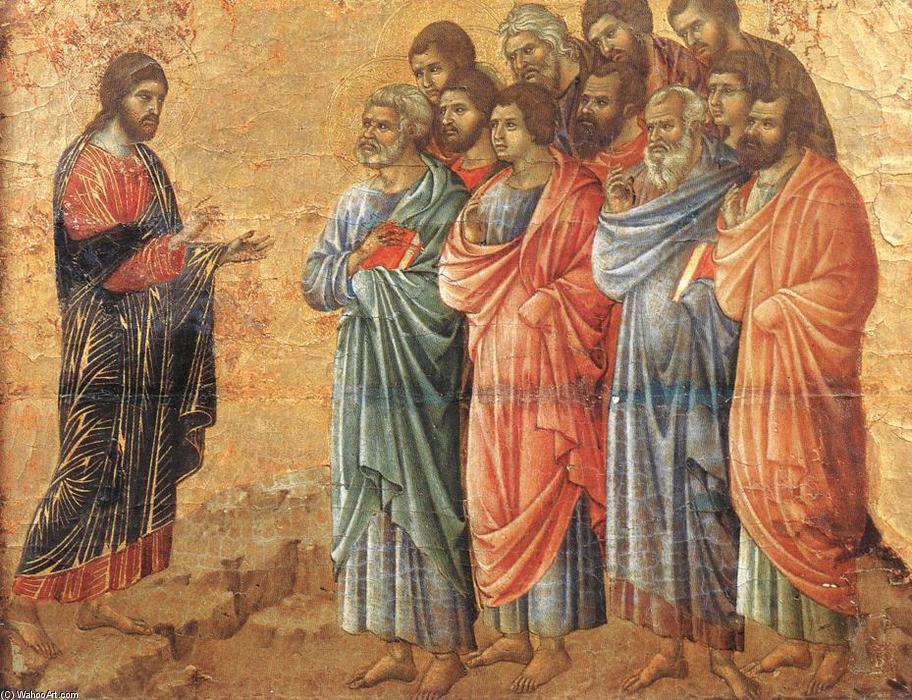
Appearence on the Mountain in Galilee
 Tempera On Panel
- WallArt
- Late Gothic
 1308
1308- Late Medieval
 36.0 x 47.0 cm
 Museo dell'Opera del Duomo
 Read More
Purchase a high-resolution, enhanced digital image, far superior to the online preview.
Each file is meticulously prepared by our in-house specialists using advanced tools and expert manual retouching. We ensure every image has exceptional clarity, precise color accuracy, and fine detail.
The final file is delivered via email within 72 hours, optimized for immediate use in professional, editorial, and print environments. This is the same quality trusted by top-tier design studios, publishers, and galleries.
Digital Image
Download a high-resolution file for personal display, printing, and creative projects. ( Buy Print Buy Hand Made Painting)
Included in Every Digital Image Order
Expert Digital Delivery, Guaranteed
When you choose ArtsDot.com, you're not just getting an image - you're receiving a professionally enhanced digital artwork, crafted with precision and backed by a satisfaction guarantee. Here's everything that comes with your order, automatically:

Fast Email Delivery
Your high-resolution digital image file will be emailed to you within 72 hours of ordering - ready for immediate use.

AI-Enhanced Digital File
Your artwork is professionally optimized using advanced AI tools and manual editing, ensuring maximum detail, clarity, and color accuracy.

Free Lifetime Re-Delivery
Accidentally deleted or lost your file? No worries - we'll resend it to you anytime, free of charge.

No Import Fees - Ever
Enjoy your artwork instantly with zero customs, duties, or delivery fees - digital downloads are always tax-free.

Color Accuracy Guarantee
We ensure your digital image reflects the original colors as closely as possible using professional tools and color management.

60-Day Satisfaction Guarantee
If you're not satisfied with your digital image, we'll revise it or refund 100% within 60 days - no questions asked.

100% Money-Back Guarantee
Not satisfied? Get a full refund within 60 days of receiving your digital file - no questions asked.

Bulk Order Discounts
Buy 3 images, save 10% - Buy 5, save 15% - Buy 10+, save 20%. Great for creative projects, galleries, and agencies.
A Sacred Ascent: The Ethereal Landscape of Duccio
In the quietude of the early fourteenth century, a transformative vision began to emerge from the Sienese workshops, and few works capture this dawn of humanism as poignantly as “Appearance on the Mountain in Galilee.” Attributed to the master Duccio di Buoninsegna, this masterpiece serves as much more than a religious chronicle; it is a profound meditation on the intersection between the earthly and the divine. As one gazes upon this panel, created around 1308, there is an immediate sense of being transported to a moment of sacred revelation. The scene depicts Jesus Christ surrounded by his disciples, their faces etched with the weight of profound spiritual encounter. It is a painting that does not merely show a story but invites the viewer to participate in the very atmosphere of contemplation and awe.
The brilliance of Duccio’s technique lies in his revolutionary departure from the rigid, flattened aesthetics of the Byzantine tradition. Instead of static, iconographic figures, we encounter a world imbued with movement and breath. The artist employs an early form of atmospheric perspective, layering delicate blues and verdant greens to construct a mountainous backdrop that feels infinitely deep. These mountains are not mere scenery; they act as a powerful symbol of transcendence, representing the arduous spiritual ascent required to reach divine understanding. For the discerning collector or interior designer, this use of depth and color provides a serene yet commanding presence, making it an ideal focal point for spaces dedicated to reflection and quiet elegance.
The Human Spirit in Sienese Gold
Beyond the sweeping vistas, the true soul of the work resides in its intimate portrayal of human emotion. Duccio was a pioneer of the Siena School, a movement characterized by a tender, organic approach to form. This is most evident in the expressive drapery of the figures; the folds of the robes do not merely hang but ripple with a rhythmic vitality, suggesting the inner turmoil and earnest deliberation of the disciples as they listen to the words of Christ. This attention to anatomy and gesture marks a pivotal moment in art history—the transition from symbolic representation to the portrayal of individuals experiencing real, palpable emotion.
Every element within the composition is meticulously placed to guide the eye and stir the heart. From the subtle presence of birds that animate the periphery to the way light seems to catch the folds of the heavy fabrics, the painting offers a rich tapestry of detail for the observant viewer. To possess a high-quality reproduction of this work is to bring a piece of history’s most significant stylistic shift into one's home. It offers an unparalleled opportunity to surround oneself with the grace of the Trecento period, providing an infusion of classical beauty, historical depth, and a timeless sense of peace that transcends the centuries.
Related Artworks
Artist Biography
The Sienese Luminary: Duccio di Buoninsegna and the Dawn of a New Italian Vision
Duccio di Buoninsegna, born in Siena around 1255, stands as a pivotal figure bridging the stylistic chasm between the Byzantine world and the burgeoning artistic sensibilities of Italy. While biographical details remain frustratingly scarce—the man himself often obscured by the brilliance of his art—his impact on the Sienese School and the trajectory of Italian painting is undeniable. He emerged during a period where religious iconography was deeply entrenched, yet a yearning for greater naturalism and emotional resonance was beginning to stir within artistic circles. Duccio wasn’t merely a painter; he was an innovator who dared to infuse sacred narratives with human feeling, subtly shifting the focus from rigid formality towards a more intimate connection between the divine and the earthly realm. His early training remains somewhat mysterious, though speculation suggests possible influences ranging from Florentine masters to direct exposure to Byzantine artistry—perhaps even travels to Constantinople itself. Whatever his formative experiences, they coalesced into a unique style that would define an era.
A Synthesis of Tradition and Innovation
Duccio’s artistic development wasn't a sudden rupture with the past but rather a graceful evolution. His initial works were deeply rooted in Byzantine conventions: the lavish use of gold leaf to evoke celestial light, stylized figures possessing an ethereal quality, and a meticulous attention to religious symbolism. However, even within these established parameters, Duccio began to subtly introduce elements that foreshadowed his later innovations. He experimented with spatial arrangements, hinting at depth where flatness had previously reigned supreme. His color palettes, while still vibrant, gained a newfound subtlety and harmony. More importantly, he started imbuing his figures with a nascent sense of humanity—a gentle curve of the mouth suggesting a smile, a slight tilt of the head conveying contemplation. This wasn’t a rejection of Byzantine ideals but a refinement, an infusion of life into what had often been static representations. He skillfully blended tradition and innovation, creating a style that was both reverent and remarkably fresh.
Masterpieces of Faith and Artistry
Two works stand as testaments to Duccio’s genius: the *Rucellai Madonna* (1285) and, most famously, the *Maestà* (1308-1311). The *Rucellai Madonna*, commissioned for a chapel in Florence, marked a significant departure from conventional Byzantine iconography. Its composition, while still adhering to traditional forms, displayed a greater sense of spatial organization and a more naturalistic depiction of the Virgin Mary and Child. But it was the *Maestà*—a monumental altarpiece created for Siena Cathedral—that truly cemented Duccio’s legacy. This sprawling masterpiece comprises numerous panels depicting scenes from the life of the Virgin Mary and Christ, each one a miniature work of art in itself. The Maestà is not merely a collection of paintings; it's a visual narrative, unfolding with breathtaking detail and emotional depth. Duccio’s mastery of light and shadow, his ability to convey complex emotions through subtle gestures, and his innovative use of perspective all converge in this single, awe-inspiring work. Beyond these monumental pieces, works like *Polyptych No. 28* demonstrate his continued compositional skill and meticulous attention to detail.
A Lasting Legacy: Shaping the Future of Italian Art
Duccio di Buoninsegna’s influence extended far beyond his lifetime. He revolutionized Italian painting, paving the way for the development of the Sienese School—a distinct artistic tradition characterized by its elegance, refinement, and emotional intensity. His emphasis on naturalism, spatial depth, and human emotion directly impacted subsequent generations of artists, influencing not only those within Siena but also painters in Florence and beyond. While Giotto is often credited with initiating the Renaissance style, Duccio’s contributions were equally crucial, laying the groundwork for the artistic innovations that would define the 14th century and beyond.
- He pioneered new approaches to depicting space and perspective.
- His paintings are renowned for their vibrant and harmonious color schemes.
- He infused his figures with a sense of humanity and emotional resonance.
Despite facing financial hardships during his life, Duccio’s artistic legacy endures. His masterpieces continue to inspire awe and admiration, serving as a powerful reminder of the transformative power of art. He helped define the Trecento art movement, leaving an indelible mark on the history of Western painting. Today, his works can be found in prominent museums worldwide, offering glimpses into a world where faith, artistry, and human emotion converged with breathtaking beauty.
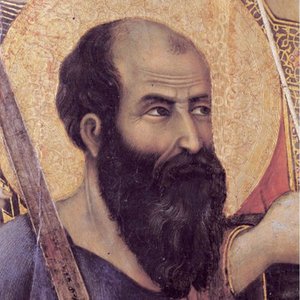
Duccio di Buoninsegna
1255 - 1319 , Italy
Quick Facts
- Artistic Movement Or Style: Gothic, Sienese School
- Artists Or Movements Influenced By This Artist:
- Sienese School
- Italian Gothic
- Artists Who Influenced This Artist: ['Byzantine art']
- Date Of Birth: c. 1255
- Date Of Death: 1319
- Full Name: Duccio di Buoninsegna
- Nationality: Italian
- Notable Artworks:
- Rucellai Madonna
- Maestà
- Polyptych No. 28
- Place Of Birth: Siena, Italy

