

 Preview
 Send
Send Share
Share
 Details

 Download
 Similars
 X-Ray
X-Ray Diaporama
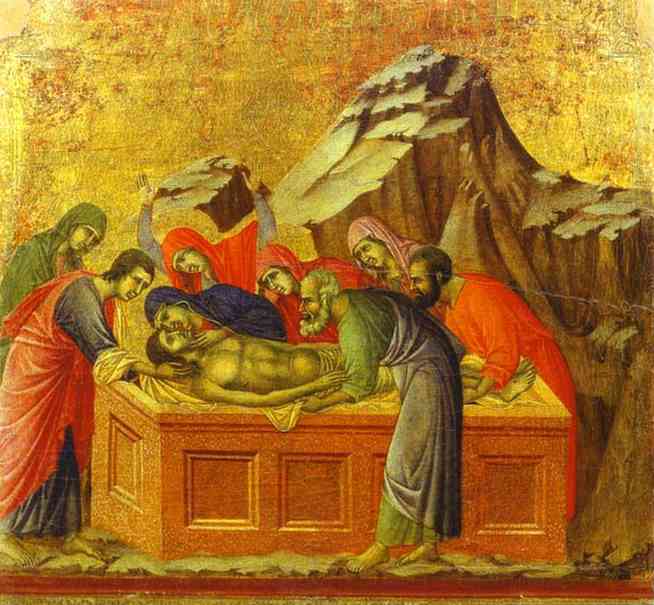
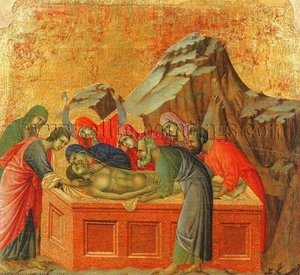
MaestÓ (back, central panel), The Entombment


 Read More
Purchase a high-resolution, enhanced digital image, far superior to the online preview.
Each file is meticulously prepared by our in-house specialists using advanced tools and expert manual retouching. We ensure every image has exceptional clarity, precise color accuracy, and fine detail.
The final file is delivered via email within 72 hours, optimized for immediate use in professional, editorial, and print environments. This is the same quality trusted by top-tier design studios, publishers, and galleries.
Digital Image
Download a high-resolution file for personal display, printing, and creative projects. ( Buy Print Buy Hand Made Painting)
Included in Every Digital Image Order
Expert Digital Delivery, Guaranteed
When you choose ArtsDot.com, you're not just getting an image - you're receiving a professionally enhanced digital artwork, crafted with precision and backed by a satisfaction guarantee. Here's everything that comes with your order, automatically:

Fast Email Delivery
Your high-resolution digital image file will be emailed to you within 72 hours of ordering - ready for immediate use.

AI-Enhanced Digital File
Your artwork is professionally optimized using advanced AI tools and manual editing, ensuring maximum detail, clarity, and color accuracy.

Free Lifetime Re-Delivery
Accidentally deleted or lost your file? No worries - we'll resend it to you anytime, free of charge.

No Import Fees - Ever
Enjoy your artwork instantly with zero customs, duties, or delivery fees - digital downloads are always tax-free.

Color Accuracy Guarantee
We ensure your digital image reflects the original colors as closely as possible using professional tools and color management.

60-Day Satisfaction Guarantee
If you're not satisfied with your digital image, we'll revise it or refund 100% within 60 days - no questions asked.

100% Money-Back Guarantee
Not satisfied? Get a full refund within 60 days of receiving your digital file - no questions asked.

Bulk Order Discounts
Buy 3 images, save 10% - Buy 5, save 15% - Buy 10+, save 20%. Great for creative projects, galleries, and agencies.
Collectible Description
A Moment of Profound Loss: Duccio’s *The Entombment* from the Maestà
Duccio di Buoninsegna's *The Entombment*, a central panel from the back of his monumental *Maestà* altarpiece, is not merely a depiction of Christ being taken down from the cross; it’s a deeply moving meditation on grief, faith, and the human condition. Created between 1308-1311 in Siena, Italy, this tempera and gold leaf painting exemplifies the pinnacle of Sienese Gothic art and stands as a testament to Duccio's revolutionary approach to religious narrative.The Scene Unfolds: Narrative & Composition
The scene is powerfully intimate despite its numerous figures – at least twelve are present, clustered around the lifeless body of Christ. We witness the solemn act of lowering Jesus from the cross, a moment fraught with sorrow and reverence. The composition isn’t rigidly formal; instead, Duccio masterfully arranges the mourners in a dynamic grouping that draws the eye towards the central figure. Notice how figures support and cradle Christ's body, their gestures conveying both physical strain and profound emotional weight. Mary Magdalene is prominently featured at the foot of the cross, her grief palpable. The background features stylized mountains rendered in shimmering gold leaf, creating a sense of otherworldly solemnity rather than realistic landscape.A Master of Emotion: Style & Technique
Duccio’s skill lies not only in his technical prowess but also in his ability to imbue his figures with genuine emotion. The faces are expressive, conveying deep sorrow and a quiet dignity. This is a departure from the more static representations common in earlier Byzantine art. *I*t's important to note Duccio’s use of modeling – subtle gradations of light and shadow – to give form and volume to his figures, adding to their realism and emotional impact. The rich, vibrant colors—deep reds, blues, and golds—enhance the painting’s dramatic effect and underscore its spiritual significance. The tempera technique, applied in delicate layers on a wood panel, allows for meticulous detail and luminous color.Historical & Religious Context
Commissioned for Siena Cathedral, the *Maestà* altarpiece was a landmark achievement, representing a significant shift in Italian painting. Duccio moved away from the rigid conventions of Byzantine art, incorporating elements of naturalism and emotional realism. The *Entombment* panel specifically depicts a pivotal moment in the Passion of Christ – a scene central to Christian belief and devotion. During this period, religious art served not only as decoration but also as a powerful tool for teaching and inspiring faith. The inclusion of medieval attire grounds the sacred event within a relatable human context.Symbolism & Emotional Resonance
Beyond its narrative content, *The Entombment* is rich in symbolism. The gold background represents divine light and the heavenly realm. The gestures of mourning – hands clasped in prayer, faces turned downwards in sorrow – are universal expressions of grief. More importantly, Duccio doesn’t shy away from depicting the physical reality of death; Christ's body is shown with a poignant vulnerability that evokes empathy and compassion. This emotional honesty is what makes the painting so deeply moving even today.A Legacy of Innovation
Duccio di Buoninsegna (1255-1319) is rightfully celebrated as one of the most important Italian painters of the Middle Ages. His work bridged the gap between Byzantine tradition and the emerging Renaissance style, influencing generations of artists to come. *The Entombment* exemplifies his mastery of composition, color, and emotional expression, solidifying his place in art history.Bringing History Home: Reproductions & Inspiration
- For collectors seeking a timeless masterpiece for their home or office, high-quality oil reproductions of *The Entombment* are available.
- Interior designers will find that the painting’s rich colors and dramatic composition can add depth and sophistication to any space.
- Art enthusiasts will appreciate the opportunity to own a piece of art history that continues to inspire awe and contemplation.
Related Artworks
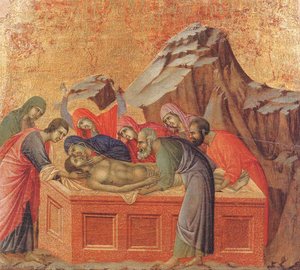
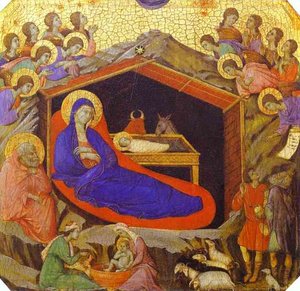
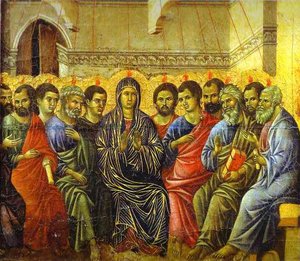
Artist Biography
The Sienese Luminary: Duccio di Buoninsegna and the Dawn of a New Italian Vision
Duccio di Buoninsegna, born in Siena around 1255, stands as a pivotal figure bridging the stylistic chasm between the Byzantine world and the burgeoning artistic sensibilities of Italy. While biographical details remain frustratingly scarce—the man himself often obscured by the brilliance of his art—his impact on the Sienese School and the trajectory of Italian painting is undeniable. He emerged during a period where religious iconography was deeply entrenched, yet a yearning for greater naturalism and emotional resonance was beginning to stir within artistic circles. Duccio wasn’t merely a painter; he was an innovator who dared to infuse sacred narratives with human feeling, subtly shifting the focus from rigid formality towards a more intimate connection between the divine and the earthly realm. His early training remains somewhat mysterious, though speculation suggests possible influences ranging from Florentine masters to direct exposure to Byzantine artistry—perhaps even travels to Constantinople itself. Whatever his formative experiences, they coalesced into a unique style that would define an era.
A Synthesis of Tradition and Innovation
Duccio’s artistic development wasn't a sudden rupture with the past but rather a graceful evolution. His initial works were deeply rooted in Byzantine conventions: the lavish use of gold leaf to evoke celestial light, stylized figures possessing an ethereal quality, and a meticulous attention to religious symbolism. However, even within these established parameters, Duccio began to subtly introduce elements that foreshadowed his later innovations. He experimented with spatial arrangements, hinting at depth where flatness had previously reigned supreme. His color palettes, while still vibrant, gained a newfound subtlety and harmony. More importantly, he started imbuing his figures with a nascent sense of humanity—a gentle curve of the mouth suggesting a smile, a slight tilt of the head conveying contemplation. This wasn’t a rejection of Byzantine ideals but a refinement, an infusion of life into what had often been static representations. He skillfully blended tradition and innovation, creating a style that was both reverent and remarkably fresh.
Masterpieces of Faith and Artistry
Two works stand as testaments to Duccio’s genius: the *Rucellai Madonna* (1285) and, most famously, the *Maestà* (1308-1311). The *Rucellai Madonna*, commissioned for a chapel in Florence, marked a significant departure from conventional Byzantine iconography. Its composition, while still adhering to traditional forms, displayed a greater sense of spatial organization and a more naturalistic depiction of the Virgin Mary and Child. But it was the *Maestà*—a monumental altarpiece created for Siena Cathedral—that truly cemented Duccio’s legacy. This sprawling masterpiece comprises numerous panels depicting scenes from the life of the Virgin Mary and Christ, each one a miniature work of art in itself. The Maestà is not merely a collection of paintings; it's a visual narrative, unfolding with breathtaking detail and emotional depth. Duccio’s mastery of light and shadow, his ability to convey complex emotions through subtle gestures, and his innovative use of perspective all converge in this single, awe-inspiring work. Beyond these monumental pieces, works like *Polyptych No. 28* demonstrate his continued compositional skill and meticulous attention to detail.
A Lasting Legacy: Shaping the Future of Italian Art
Duccio di Buoninsegna’s influence extended far beyond his lifetime. He revolutionized Italian painting, paving the way for the development of the Sienese School—a distinct artistic tradition characterized by its elegance, refinement, and emotional intensity. His emphasis on naturalism, spatial depth, and human emotion directly impacted subsequent generations of artists, influencing not only those within Siena but also painters in Florence and beyond. While Giotto is often credited with initiating the Renaissance style, Duccio’s contributions were equally crucial, laying the groundwork for the artistic innovations that would define the 14th century and beyond.
- He pioneered new approaches to depicting space and perspective.
- His paintings are renowned for their vibrant and harmonious color schemes.
- He infused his figures with a sense of humanity and emotional resonance.
Despite facing financial hardships during his life, Duccio’s artistic legacy endures. His masterpieces continue to inspire awe and admiration, serving as a powerful reminder of the transformative power of art. He helped define the Trecento art movement, leaving an indelible mark on the history of Western painting. Today, his works can be found in prominent museums worldwide, offering glimpses into a world where faith, artistry, and human emotion converged with breathtaking beauty.
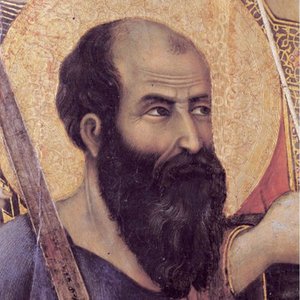
Duccio di Buoninsegna
1255 - 1319 , Italy
Quick Facts
- Artistic Movement Or Style: Gothic, Sienese School
- Artists Or Movements Influenced By This Artist:
- Sienese School
- Italian Gothic
- Artists Who Influenced This Artist: ['Byzantine art']
- Date Of Birth: c. 1255
- Date Of Death: 1319
- Full Name: Duccio di Buoninsegna
- Nationality: Italian
- Notable Artworks:
- Rucellai Madonna
- Maestà
- Polyptych No. 28
- Place Of Birth: Siena, Italy

