 Send
Send Share
Share
 Details

 Download
 Similars
 Diaporama
Rune of Ruin (33°51


 Read More
Giclée / Art Print
Museum-quality giclée or canvas print with fast production and flexible finish options. ( Buy Hand Made Painting Buy Image)




































Pick from our preset sizes that match the artwork's original proportions.

You may enter your own dimensions to fit a specific frame or space. If your selected size does not match the original image's proportions, we will either crop the artwork or extend the image with a mirrored or solid-fill edge. A digital mockup will be sent for your approval before production begins.
Please note that the on-screen preview does not reflect the actual cropping or extension. Only the mockup will accurately show the final composition.
While custom sizes are available, we recommend selecting a dimension from the predefined list to preserve the original proportions.
Worldwide Delivery () in 2 weeks instead of standard 4/5 weeks. (26 August)

Free Worldwide Express Shipping

High-Quality Linen Canvas

Full Shipping Insurance

Customs Tax Refund Guarantee

True Color Matching Guarantee

60-Day Return Policy (Defects Only)

100% Money-Back Guarantee

Bulk Discount Offer
 Glass option is only available in size under 110 CM

Rune of Ruin (33°51
Giclée / Art Print
Reproduction Size
-


Total Price
$ 63
Collectible Description
The Echoes of Newtown Creek
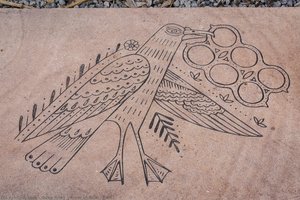
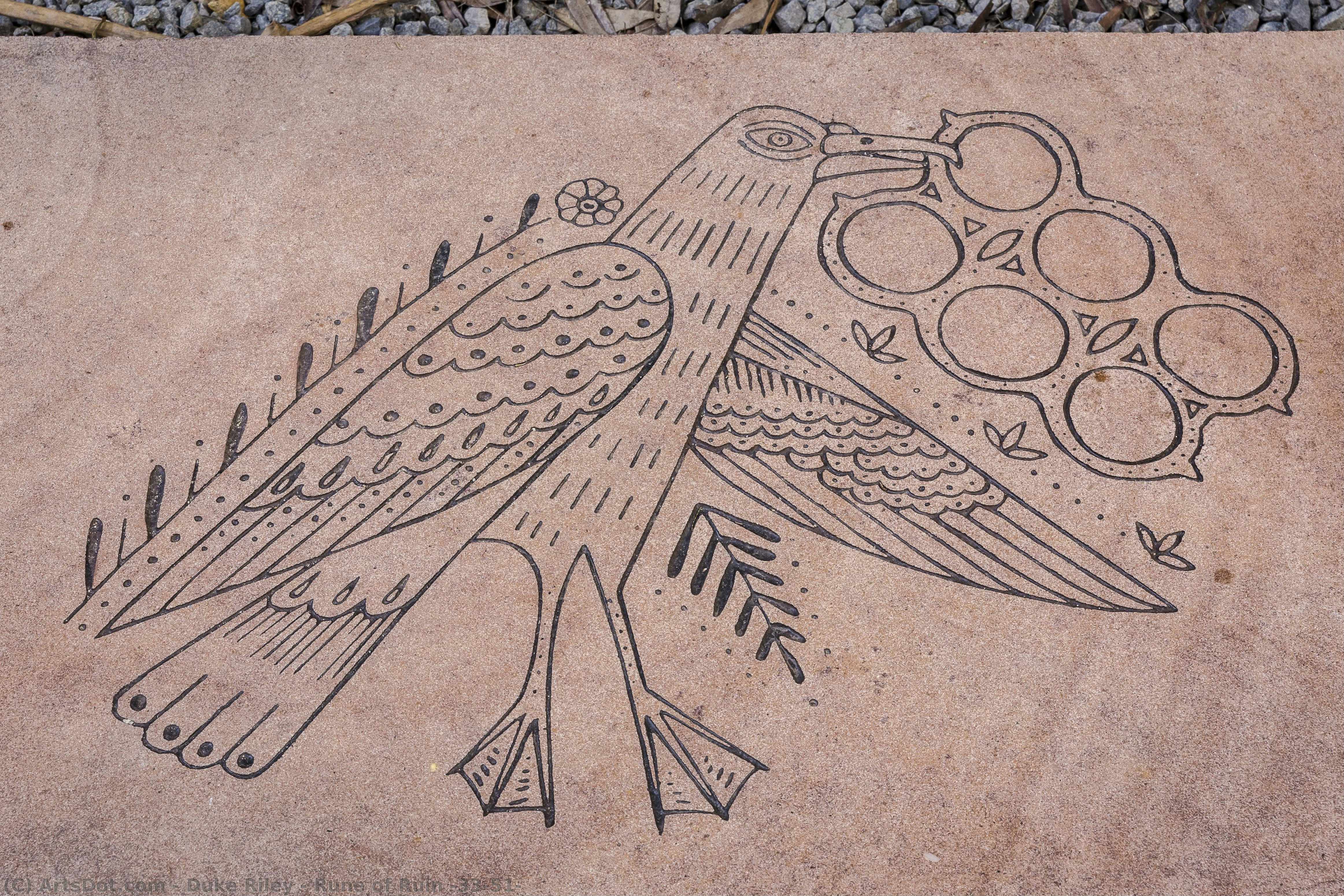
In the evocative piece Rune of Ruin (33°51, artist Duke Riley invites us into a visceral exploration of the forgotten fringes of urban existence. Drawing deep inspiration from the murky, storied waters of Brooklyn’s Newtown Creek—one of the most heavily polluted waterways in the United States—Riley crafts a narrative that transcends mere depiction. The work serves as a haunting meditation on the spaces where human industry and nature collide in a state of beautiful decay. Through his lens, the creek is not just a site of environmental neglect, but a sanctuary for those living on the margins, a place where vessels are moored illegally and stories are whispered among the shadows of industrial relics.
The composition presents a striking, surrealist tableau that demands immediate attention. At the heart of this visual drama is a powerful avian figure, an eagle with wings spread in a gesture that feels both majestic and strangely domestic. In a startling subversion of natural majesty, the bird holds a cigarette lighter within its beak, a detail that injects a sense of gritty, urban surrealism into the scene. This juxtaposition of the wild, predatory instinct of the eagle with the mundane, man-made artifact of the lighter creates a profound tension, suggesting a world where even the most primal elements of nature have been touched—and perhaps corrupted—by human presence.
Symbolism and the Subversive Spirit
Riley’s technique masterfully blends the boundaries between sculpture and painting, creating a textured depth that pulls the viewer into his meticulously constructed world. The presence of other birds scattered throughout the frame, some small and peripheral, adds layers of complexity to the ecosystem he has built. These figures act as silent witnesses to the central drama, contributing to an atmosphere of watchful stillness. The inclusion of a cup placed near the center of the scene further anchors the work in a realm of found objects and everyday life, blurring the line between high art and the detritus of the street.
Symbolically, the piece functions as a rune—a sign or a mark of something ancient and hidden. The title itself suggests a cryptic language of ruin, where the decay of the waterway is transformed into a form of modern folklore. For the collector or interior designer, this artwork offers more than just visual interest; it provides a profound emotional resonance. It is a piece that speaks to the resilience of life within neglected spaces and the ability to find striking beauty in the most unlikely of places. Whether displayed in a contemporary gallery setting or as a focal point in a sophisticated residential space, Rune of Ruin (33°51 serves as a captivating conversation starter, inviting contemplation on the intersection of ecology, history, and the enduring spirit of the urban frontier.
Related Artworks


Artist Biography
Duke Riley: Bridging the Gap Between Seafarer and Shore
Born in Buras, Louisiana, in 1994, Duke Riley’s artistic journey is a compelling narrative of urban exploration, maritime fascination, and a deliberate blurring of boundaries between art and life. His work isn't simply about depicting ships or the sea; it’s an investigation into the spaces where water meets land – the forgotten edges of cities, the echoes of seafaring history, and the subversive spirit of New York’s artistic community. Riley’s background in painting and sculpture from Rhode Island School of Design and Pratt Institute provides a solid foundation for his unique approach, but it's his restless curiosity and willingness to engage with the world directly that truly defines his practice.
Early influences are deeply rooted in Louisiana’s rich maritime heritage. Growing up near the Mississippi River instilled a profound appreciation for water – its power, its beauty, and its inherent connection to human history. This early fascination evolved into a broader interest in nautical lore, folklore, and the stories of those who have navigated the seas. Riley's work frequently incorporates elements of these narratives, often reinterpreting them through a distinctly contemporary lens. The deliberate inclusion of seemingly disparate materials – driftwood, salvaged metal, found objects – speaks to a desire to reclaim discarded histories and transform them into something new.
The Brooklyn Waterfront and Subversive Ritual
Riley’s artistic practice gained significant momentum in Brooklyn, New York, where he has established himself as a key figure within the city's vibrant art scene. He is particularly known for his unconventional methods of engagement – most notably, his series of illegal clambakes on the Brooklyn waterfront. These events weren’t merely performances; they were carefully orchestrated gatherings designed to challenge legal boundaries and foster a sense of community among artists. As Riley himself has stated, “I've always been interested in the space where water meets land in the urban landscape.” These actions are not simply acts of rebellion but rather a deliberate attempt to reclaim public spaces and inject a dose of playful chaos into the city’s cultural fabric.
The 2009 "Those About to Die Salute You" installation at the Queens Museum of Art stands as a particularly striking example of Riley's conceptual approach. This ambitious project, inspired by Roman naval battles (Naumachiae), involved constructing miniature ships from various historical periods and staging a mock battle in a reflecting pool. The event was described as a delightful collision between a toga party and a fraternity food fight, highlighting Riley’s ability to seamlessly blend history, performance art, and social commentary.
Notable Works and Recognition
Riley's work has garnered considerable attention within the art world, culminating in prestigious exhibitions such as the Biennale of Sydney in 2021. His sculpture, “Rune of Ruin,” a complex assemblage of found materials, demonstrated his ability to combine abstract elements with figurative representations – a hallmark of his artistic style. The piece’s title suggests a meditation on decay and transformation, reflecting Riley's broader interest in the cyclical nature of history and the enduring power of memory.
Beyond sculpture, Riley has consistently explored painting and installation art, often incorporating nautical imagery and folklore into his work. His 2017 exhibition, “Now Those Days Are Gone,” featured a series of drawings and samplers depicting individual birds – primarily pigeons – alongside other found objects, creating a poignant commentary on urban life and the fleeting nature of time. The inclusion of these seemingly mundane subjects elevates them to symbolic status, inviting viewers to contemplate their own place within the larger narrative of the city.
Legacy and Continuing Influence
Duke Riley’s work transcends simple categorization; it occupies a unique space at the intersection of art, history, and social engagement. His willingness to challenge conventions, his deep connection to maritime lore, and his commitment to fostering community within the New York artistic scene have solidified his position as a significant contemporary artist. His influence extends beyond individual artworks, shaping conversations about public space, cultural memory, and the role of art in challenging established norms. Riley’s ongoing projects continue to push boundaries and invite audiences to reconsider their relationship with both the sea and the shore.

Duke Riley
1994 - , United States of America
Quick Facts
- Artistic Movement Or Style: Seafarer's craft & nautical history
- Artists Or Movements Influenced By This Artist: ['Nautical art']
- Artists Who Influenced This Artist: ['Various seafarers']
- Date Of Birth: 1994
- Full Name: Duke Riley
- Nationality: American
- Notable Artworks:
- Rune of ruin (2021)
- Fly by Night
- Place Of Birth: Buras, USA
Related Articles

Bronze Sculptures That Defined Art History | ArtsDot
Journey through art history with our Top 10 bronze sculptures! Explore masterpieces by Rodin, Michelangelo & more. Discover stories behind iconic statues and find museum-quality reproductions for your home decor at ArtsDot.com.

The Enduring Form: Exploring Themes & Techniques in Sculpture Across Historical Periods
Explore the rich history of sculpture from ancient masterpieces to contemporary innovations. Discover key techniques, influential artists & investment potential for discerning art collectors.

Bronze Age to Modern Masters: 10 Sculptures That Redefined Art | ArtsDot
Journey through art history with 10 legendary bronze sculptures – from Michelangelo's David to Rodin’s Thinker. Explore the stories, techniques & timeless beauty of these masterpieces. Find museum-quality reproductions & elevate your home decor on ArtsDot.com.

The Enduring Form: Sculpture Across History, Technique & Emotional Resonance
Explore the rich history of sculpture with ArtsDot. Discover key techniques, influential artists & investment potential for discerning collectors. Expert insights into valuing and collecting timeless masterpieces.
The Enduring Legacy of Bronze Sculpture: History, Techniques & Contemporary Interpretations
Explore the rich history & enduring appeal of bronze sculpture. Learn about casting techniques, iconic artists, collecting tips, & contemporary interpretations. Expert insights for discerning art collectors.